
Direct Answer: What FDA Auditors Flag in Overseas Gummy Factories
FDA cGMP audits for dietary supplements under 21 CFR Part 111 do not just check paperwork. For Gummy Factories overseas, auditors focus on whether the facility can consistently control water activity, heat-sensitive actives, microbial risk, and batch traceability at commercial scale. Most FDA 483 observations for overseas sites trace back to the same root causes: incomplete identity testing of incoming ingredients, no science-based control for water activity and pH, weak process validation for cooking and depositing, and quality systems that cannot link a finished lot to its raw materials, in-process checks, and lab results.
If you are sourcing private label gummies, the question you are really answering is not “does the factory have a certificate on the wall” but “can this factory prove, with data, that every gummy unit contains what the label says, without contamination, and remains stable for its shelf life.” This article breaks down the actual audit checklist FDA uses and the red flags that should stop a buying decision.
Why cGMP Scrutiny Is Higher for Gummies Than for Capsules or Tablets
Capsules and tablets are low-moisture systems. Gummies are intermediate-moisture confections with a water activity (Aw) typically between 0.55 and 0.75. That range is low enough to inhibit most pathogens if controlled, but high enough to allow yeast, mold, and texture failure if drying, conditioning, and packaging are not validated.
Gummy manufacturing also involves cooking. Gelatin melts around 35-40°C and requires cooking at 80-95°C for the sugar mass. Pectin requires high solids and a narrow pH window of 3.2 to 3.8 to set. Any active added before cooking faces heat degradation. Any acid added too early breaks the gel network. This is why auditors pay special attention to when, how, and at what temperature actives, acids, and flavors are added.
For overseas gummy factories, the complexity multiplies with scale-up. A 50 kg lab batch can be hand-mixed and deposited slowly. A 500 kg commercial batch requires precise control of mixing time, depositing temperature, mold cooling rate, and drying room relative humidity. Without that control, you get inconsistent gummy weight, active ingredient segregation, and Aw variation across trays.
FDA cGMP Audit Checklist: 8 Critical Areas Where Overseas Gummy Factories Fail
1. Quality Management System and Batch Traceability
The quality system is the first area an FDA investigator reviews. A common red flag is a quality unit that reports to production. 21 CFR 111 requires an independent quality unit with authority to reject raw materials and release or reject finished product.
Ask to see how a single finished lot traces back. A compliant system must link: supplier lot -> incoming QC -> batch manufacturing record (BMR) with time-stamped additions -> in-process weight checks -> drying logs -> bulk hold testing -> packaging record -> finished product COA. If the factory can only show a final COA without linked BMRs and raw material test records, traceability is broken.
Another red flag is templated BMRs with no deviation records. Commercial gummy production always has minor deviations: a depositing hopper temperature drift, a slightly longer drying time. A factory that claims zero deviations across hundreds of lots is not documenting reality.
2. Raw Material Identity Testing and Supplier Qualification
21 CFR 111.75(a)(1) requires identity testing for each lot of each dietary ingredient before use. Many overseas factories rely solely on supplier COAs. That is not compliant for identity.
Red flags include: FTIR or microscopy only for botanical extracts without a second confirmatory method, no identity test for pectin or gelatin type, and no allergen verification for starch-based molds. For high-risk ingredients such as minerals (zinc citrate, iron bisglycinate), botanicals, and probiotics, the auditor expects supplier qualification files, including audits, specifications, and a history of testing.
From a formulation view, this matters commercially. If gelatin bloom strength varies from 150 to 250 without incoming testing, texture and chew will shift. If pectin degree of esterification is not controlled, pectin gummies will fail to set or will set too firm after acid addition.
3. Water Activity, pH, and Microbiological Controls
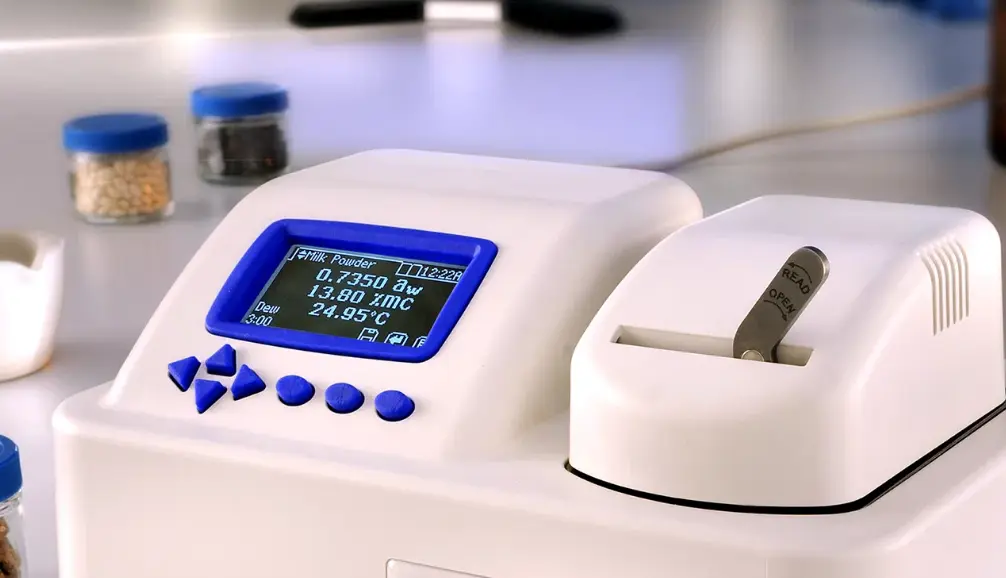
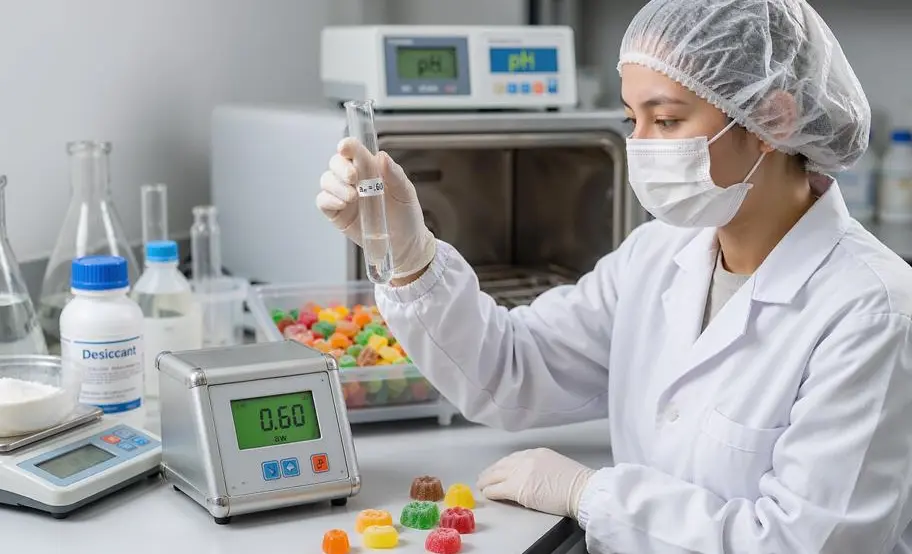
Water activity is the most misunderstood control in gummy factories. It directly predicts microbial growth, texture hardening, and ingredient degradation. FDA auditors now routinely ask for Aw data, not just moisture content.
Red flags: No Aw meter on site, Aw tested only at release instead of after drying and during stability, no specification for Aw (e.g., NMT 0.75 for gelatin, NMT 0.65 for pectin), and drying rooms without humidity and temperature mapping. A compliant factory controls drying to a target Aw range, validates drying time by tray position, and has environmental monitoring for yeast and mold in drying and packing areas.
pH control is equally critical for pectin systems. If acid is added when the mass is too hot, pectin hydrolysis occurs and viscosity drops. If pH is below 3.0, syneresis and sour taste increase. If pH is above 4.0, the gel will not set. Look for in-process pH measurement records and a defined order of addition: actives after cooling to <80°C, acids and flavors below 75°C.
4. Formulation Compatibility and Heat-Sensitive Active Handling
Gummies are a poor delivery system for certain actives unless the formulation is engineered. Minerals like calcium and zinc compete with pectin for water binding and create bitter, metallic notes that require masking. High-dose vitamin C lowers pH and softens gelatin gels. Creatine monohydrate is unstable at low pH and high moisture. Probiotics require low-temperature depositing and low Aw packaging.
A red flag is a factory that claims “any formula works at any dose.” In practice, active loading changes everything. A 500 mg apple cider vinegar gummy needs a larger mold (typically 3.0-4.0 g) than a 100 mg vitamin D3 gummy. High hygroscopic ingredients like ashwagandha extract or magnesium citrate increase stickiness and drying time.
Ask how the factory handles heat-sensitive ingredients: vitamin C, B vitamins, probiotics, and enzymes. A credible answer includes a process flow: cook sugar mass first, cool to a validated temperature, pre-mix actives with a carrier, add under vacuum or low-shear mixing, and verify potency after depositing. If the factory cannot show pre- and post-cook potency data, degradation risk is unmanaged.
5. Cross-Contamination, Allergen, and Line Clearance
Many gummy factories run vegan pectin and non-vegan gelatin on the same line, plus allergens like soy lecithin. FDA looks for validated cleaning, allergen swab testing, and line clearance documentation.
Red flags: Use of starch molds without cleaning validation between allergen and non-allergen products, silicone molds with residual product in cavities, shared oil spray systems without cleaning records, and no allergen ELISA testing for soy or milk. For Halal, Kosher, or Vegan claims, the auditor expects segregation and documentation, not just a certificate.
6. Process Validation and Batch-to-Batch Consistency
Commercial-scale gummy production requires validation of four stages: cooking/mixing, depositing, cooling/setting, and drying/conditioning. Each stage affects gummy weight, texture, and potency uniformity.
Red flags: No depositing weight checks (e.g., every 15 minutes with statistical limits), no checkweigher or vision system for under/over-weight gummies, no metal detection after demolding, and no content uniformity data for low-dose actives like vitamin D3 or B12.
From a manufacturing logic standpoint, depositing is where most consistency is lost. The mass viscosity changes as it cools in the hopper. If the factory does not control hopper temperature and depositing speed, the first trays and last trays of the same batch will have different weights and active distribution. Look for BMRs that record hopper temperature, depositing time per tray, and corrective actions.
7. Laboratory Controls, OOS Investigations, and Stability Data
An FDA auditor will review lab notebooks, instrument calibration, and out-of-specification (OOS) investigations. Common failures: no OOS procedure, retesting without root cause, release based on retest without invalidating the original result, and no method verification for gummy matrices.
Gummy matrices are difficult to test. Gelatin or pectin interferes with extraction of minerals and botanicals. A compliant lab has verified methods for identity, potency, and contaminants specific to gummies, not just raw powders. Ask for method verification reports and recent OOS logs.
Stability is another gap. Many factories show only 3 months of accelerated data for a 24-month claim. A credible program includes Aw, pH, potency, texture (hardness), and microbial counts at 0, 3, 6, 9, 12, 18, and 24 months under ICH conditions, plus packaging compatibility data. For probiotics or omega-3 gummies, refrigerated or nitrogen-flushed packaging may be needed, and that must be reflected in stability protocols.
8. Packaging, Label Controls, and Distribution Chain
Gummy stability is packaging-dependent. High-barrier bottles with induction seals and desiccants are often needed for hygroscopic or probiotic formulas. Red flags include bulk gummies held in open trays in non-controlled rooms, counting machines without weight reconciliation, and no label reconciliation to prevent mix-ups.
FDA also checks label claims against manufacturing records. If your private label gummies claim “sugar-free,” the factory must show formulation and testing to support it. If you claim “60 gummies” on the front and “2 per serving” on the supplement facts, counting accuracy and label control become audit points.
Manufacturing Process Risks Specific to Gummy Factories
A compliant gummy factory follows a controlled sequence that directly protects cGMP compliance:
- Specification review and formula feasibility: Review active dose, gummy weight, gel system, pH, and flavor masking before lab work. High-dose or acidic actives may require pectin over gelatin.
- Raw material testing: Identity, potency, moisture, and microbial screening for every lot. Gelatin bloom strength and pectin grade verified.
- Batch preparation and cooking: Sugar, glucose syrup, and water cooked to target Brix. Temperature controls prevent caramelization and moisture loss.
- Active addition: Cooling step to 75-82°C before adding heat-sensitive vitamins, minerals, or botanicals. Low-shear mixing to avoid air entrapment.
- Acid and flavor addition: Added at <75°C to avoid gel damage and volatile loss. pH measured before depositing.
- Deposition, cooling, and setting: Servo-driven depositors with weight checks. Cooling tunnels with validated time and temperature.
- Drying and conditioning: Controlled to target Aw, not just time. Environmental monitoring for yeast and mold.
- Inspection and packaging: Metal detection, vision inspection, and Aw verification before bottling in low-humidity packing rooms.
When any of these steps is skipped or not recorded, you have a compliance gap that will appear in an FDA inspection.
How Compliance Gaps Directly Affect Private Label Gummies Cost and Timeline
Compliance is not just regulatory; it drives commercial economics. A factory that does not control Aw will have higher rejection rates, shorter shelf life, and more customer complaints. A factory that does not validate depositing will need to overfill gummies to meet weight, increasing ingredient cost.
Key cost drivers linked to cGMP:
- Active overage: Poor heat control forces higher vitamin overages to compensate for degradation, raising cost.
- MOQ and mold cost: Custom gummy shapes require custom silicone molds. Low MOQ orders may use stock molds only. Changing gel system from gelatin to pectin changes mold and process.
- Testing burden: Factories without in-house verified methods must outsource testing, adding 7-14 days to lead time per batch.
- Packaging selection: Low-Aw pectin gummies may tolerate simple bottles. High-moisture or probiotic gummies need high-barrier film and desiccant, increasing packaging cost but preventing stability failure.
A factory with robust GMP systems typically has higher upfront pricing but lower total cost due to fewer failures, reworks, and import holds.
Supplier Evaluation Checklist for Buyers Sourcing Overseas
Before placing an OEM/ODM order, evaluate verifiable capabilities rather than certificates alone:
- Does the quality unit have final authority for release and rejection?
- Can they show identity testing records for every dietary ingredient lot, with method references?
- Do they measure and control water activity with calibrated meters and drying validation data?
- How do they handle heat-sensitive and hygroscopic ingredients? Ask for temperature logs and post-deposit potency data.
- Is there cleaning validation and allergen swab data for shared lines, especially between gelatin and pectin?
- Do they have content uniformity data for low-dose actives and weight variation data for the depositing process?
- Can they provide OOS investigations and CAPA records from the last 12 months?
- Do they have stability data in your intended packaging, including Aw, potency, and texture?
- What is their export documentation capability: COA format, allergen statement, BSE/TSE, Halal/Kosher/Vegan traceability, and FDA facility registration?
Shenzhen Gothink Biotech Co., Ltd. operates a GMP-certified facility with a 100,000-class cleanroom and a 10,000-class R&D laboratory, supporting gummy, capsule, tablet, powder, liquid, and drop formats. Its quality systems include ISO9001, ISO22000, HACCP, BRC, FSSC 22000, and FDA registration, with daily capacity of approximately 16 tons and annual capacity of approximately 5,000 tons. This type of infrastructure is relevant because gummy compliance depends on cleanroom control, validated equipment, and lab capability, not just formulation.
Practical FDA cGMP Red Flag Checklist
| Audit Area | What Compliant Gummy Factories Show | Red Flag for Buyers | Question to Ask |
| Quality System | Independent QA, full lot traceability, deviation logs | No deviations ever recorded, QA reports to production | Show me traceability for your last 3 shipped lots |
| Raw Material Testing | Identity test per lot per 111.75, supplier qualification file | Only supplier COA used for identity | What identity method do you use for each ingredient in my formula? |
| Water Activity Control | Aw spec, drying validation, calibrated Aw meters | Moisture % only, no Aw control or mapping | What is your Aw target and drying validation for this gel system? |
| Heat-Sensitive Handling | Cooling before active addition, potency before/after cook | All ingredients cooked together | At what temperature do you add my actives and how do you verify potency? |
| Contamination Control | Cleaning validation, allergen swabs, mold sanitation | Visual clean only, no swab data | Show cleaning and allergen validation between gelatin and pectin runs |
| Lab and Stability | Method verification for gummy matrix, OOS procedure, 12-24 month stability | No OOS log, only 3-month accelerated stability | Share method verification and stability in my packaging |
Common Mistakes Brands Make Before Ordering
Brands often send only a marketing brief: “apple cider vinegar gummies, tasty, 60 count.” A manufacturer cannot quote accurately or assess compliance from that. Provide target dose per serving, gummy weight preference, gel preference (gelatin or pectin), dietary claims (vegan, sugar-free, Halal), flavor direction, and packaging format.
Another mistake is prioritizing low unit price over documented controls. A $0.02 lower price per gummy is irrelevant if a batch fails microbial testing on import and triggers an FDA import alert. Evaluate total cost: testing, stability, packaging barrier, and risk of rework.
Finally, brands skip pilot validation. For new private label gummies, request a pilot batch of 20-50 kg with full testing including Aw, potency, weight variation, and microbial before committing to full MOQ. This pilot reveals formulation compatibility issues early.
FAQ
1. What is the biggest FDA cGMP red flag specific to overseas gummy factories?
Lack of water activity control and documentation. Many factories still rely on moisture content only. FDA now expects Aw specifications, validated drying, calibrated Aw meters, and environmental monitoring in drying and packing areas. Without it, yeast and mold risk is uncontrolled.
2. Does FDA require identity testing for every ingredient in gummies?
Yes, under 21 CFR 111.75(a)(1), each lot of each dietary ingredient must be identity tested before use, using scientifically valid methods. Supplier COAs alone do not meet the identity requirement. For botanicals, minerals, and gel agents, this is a frequent 483 observation.
3. Can heat-sensitive vitamins and probiotics be made into gummies compliantly?
Yes, but only with process controls. Heat-sensitive actives must be added after the sugar mass is cooled below a validated temperature, typically below 80°C, with low-shear mixing and potency verification. Probiotics also need low Aw, barrier packaging, and stability data demonstrating viability through shelf life.
4. How does pH affect pectin vs gelatin gummy compliance?
Pectin requires pH 3.2-3.8 to gel and is sensitive to acid timing. Gelatin is less pH sensitive but softens at low pH and high temperature. If pH is not measured in-process, you risk gel failure, syneresis, or texture hardening. Auditors look for pH records in BMRs for pectin formulas.
5. What documents should I request before auditing a gummy factory?
Request: GMP certificate and FDA registration, quality manual, sample BMR for a similar product, recent COAs with method references, Aw and drying validation summary, cleaning and allergen validation, OOS/CAPA procedure, and stability protocol in your intended packaging. Redact sensitive data, but the structure should be complete.
6. How do cGMP gaps affect MOQ and lead time for private label gummies?
Factories with weak process validation often need larger MOQs to compensate for yield loss and rework. Lead time extends when testing is outsourced or stability data is missing. A factory with in-house verified methods and validated drying can offer more flexible MOQ and 15-25 day production after pilot approval, because fewer batches fail.
7. What is a practical way to compare two overseas gummy factories?
Compare the same data set: three recent lot traceability packages, Aw control charts, depositing weight variation data, content uniformity for low-dose actives, and 12-month stability in barrier bottles. The factory that can provide complete, time-stamped data rather than summary certificates is typically more audit-ready.
Next Step: Turning Compliance into a Commercial Advantage
Audit readiness is a manufacturing capability, not a marketing claim. When evaluating gummy factories, focus on whether they can prove control of water activity, heat-sensitive addition, and batch traceability with data you can review.
If you are developing a new gummy concept, provide your target actives, dose, gel preference, dietary requirements, and packaging format. A technically capable manufacturer will return a feasibility assessment covering gel compatibility, gummy weight impact, flavor masking needs, and testing plan before quoting.
Review related technical resources in the Knowledge Hub and compliance documentation standards in Quality & Compliance Center to prepare your specification package. When ready, request a custom formulation review and pilot batch plan to validate compliance and commercial viability before scaling to full OEM/ODM production.
Jack Luo|Senior Technical Advisor, Nutrition Research Center Representing Gothink Biology, a GMP-certified dietary supplement manufacturer based in Shenzhen, China.