
Adrian Chen|Scientific Affairs & Product Development Advanced Nutrition Innovation Center
Three Formulation Decisions That Determine Whether Your Gummy Product Sinks or Sells
To make gummies that stand out in a saturated market, you must differentiate on three technical axes: your gelling system choice, your active ingredient protection strategy during thermal processing, and your moisture-content control for texture consistency. Most commodity gummy products fail to optimize even one of these variables, which means a brand that engineers all three gains an immediate structural advantage. The bottleneck is rarely the idea — it is the manufacturing partner’s ability to execute precise formulation at scale.
The Gelling Agent Decision: Pectin, Gelatin, or Starch
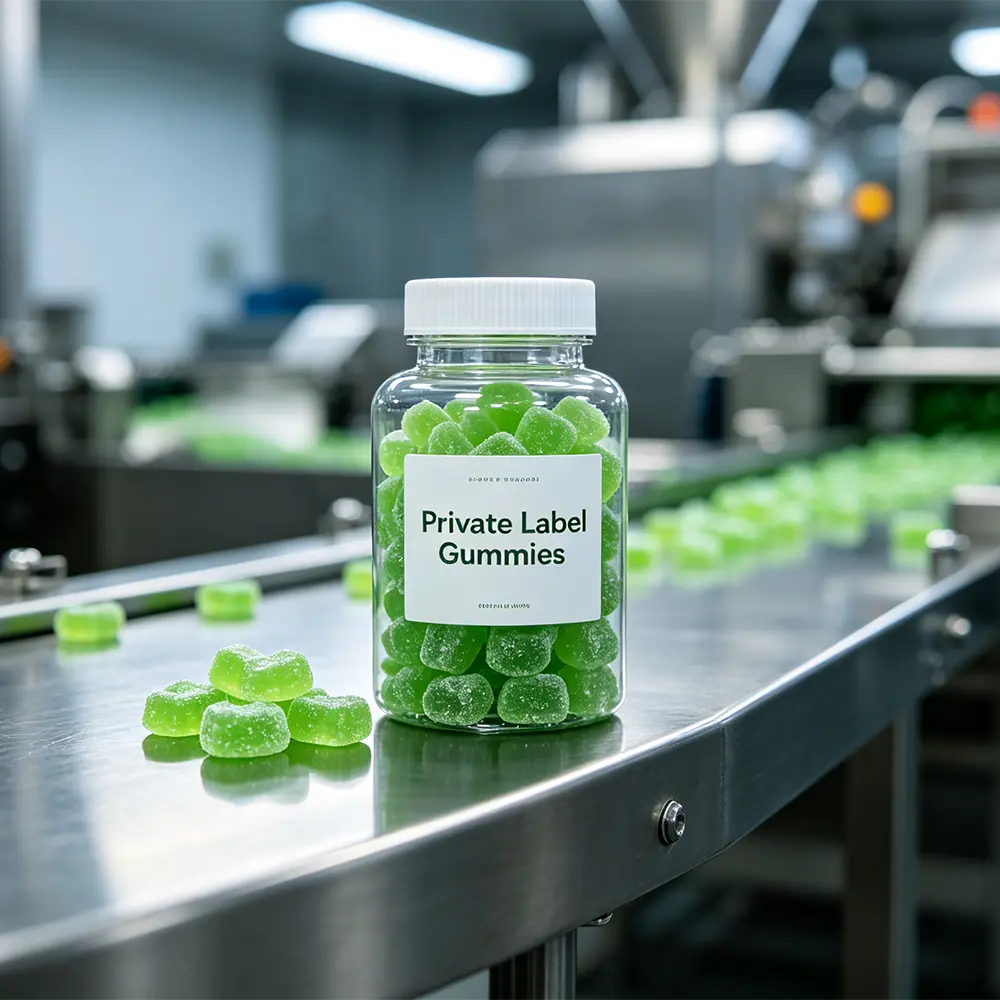
The gelling agent is the single most important formulation variable because it determines texture, dietary compatibility, melting behavior, and processing parameters. Gelatin, derived from bovine or porcine collagen, sets at 20–25°C and melts near body temperature, producing a smooth, elastic chew. Pectin, a plant-derived polysaccharide extracted from citrus peel or apple pomace, requires calcium ions for gelation, sets at a higher temperature (50–60°C), and delivers a firmer, shorter bite that holds its shape in warmer climates. Starch-based gels use modified corn or tapioca starch, require the highest cooking temperatures (80–90°C), and produce the densest, most resistant texture.
| Parameter | Gelatin | Pectin | Starch |
|---|---|---|---|
| Source | Bovine / porcine | Citrus peel / apple | Corn / tapioca |
| Setting temperature | 20–25°C | 50–60°C | 40–50°C |
| Melting point | ~35°C | Does not melt; softens above 70°C | Does not melt; softens above 80°C |
| Vegan / Halal compatible | No (unless bovine certified Halal) | Yes | Yes |
| Texture profile | Elastic, smooth, long chew | Firm, short bite, clean release | Dense, hard, resistant chew |
| Typical usage level | 6–10% of formula weight | 1.5–3% of formula weight | 10–15% of formula weight |
| Shelf stability in heat | Poor — blooms or deforms above 30°C | Good — maintains shape up to 45°C | Excellent — stable up to 50°C |
Pectin and carrageenan have become the preferred natural gelling agents for brands targeting vegan, Halal, and Kosher demographics simultaneously. A facility using pectin and carrageenan systems can produce 2,000 or more new gummy formulations annually, which reflects the formulation flexibility these plant-based gelling agents enable. The practical implication for brand owners is that pectin-based Custom Gummy Manufacturing allows you to address dietary-restriction labeling claims without sacrificing texture quality — provided the manufacturer has precise control over pH (must be 3.2–3.8 for optimal pectin gel) and soluble solids content (75–82° Brix).
Step-by-Step: How Gummies Are Manufactured at Commercial Scale
Understanding the production sequence is essential for any procurement manager evaluating a gummy factory, because process control at each stage directly determines yield, consistency, and active ingredient potency in the finished product.
Step 1: Raw Material Preparation and Pre-Blending
Dry ingredients — gelling agent, sweeteners (sucrose, glucose syrup, or isomalt for sugar-free), acids, colors, and actives — are weighed to ±0.1% accuracy and pre-blended. Hygroscopic ingredients like pectin must be dry-mixed with a portion of sugar to prevent clumping during hydration. This step typically takes 15–20 minutes in a ribbon blender for a 500 kg batch.
Step 2: Dissolution and Cooking
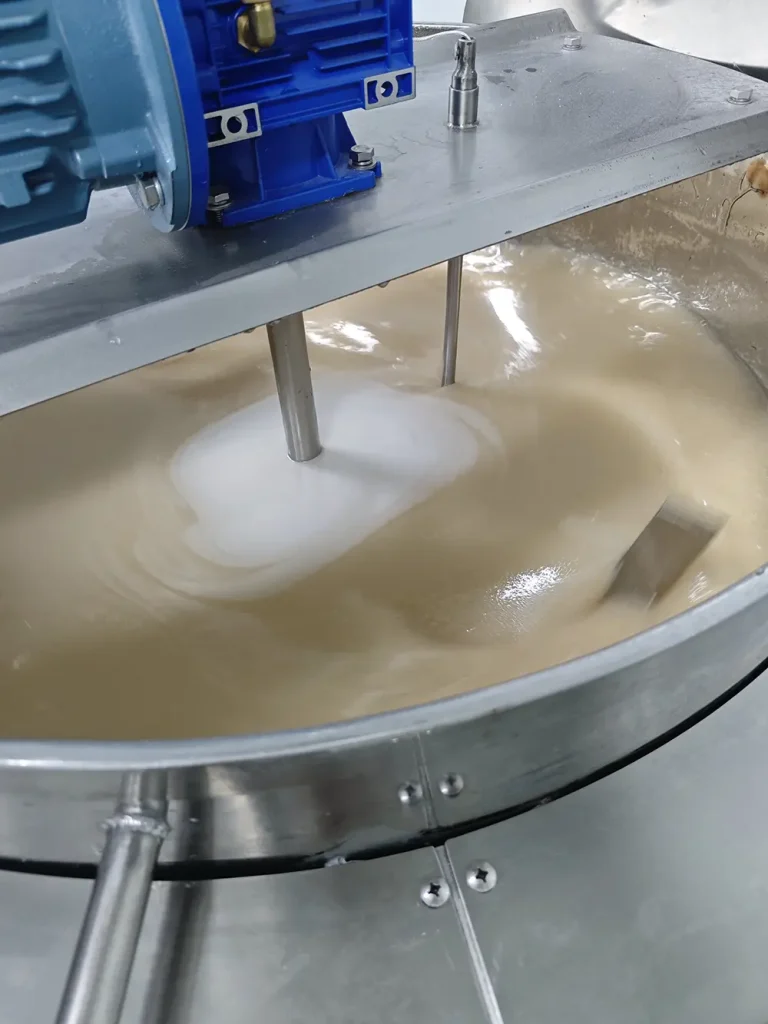
The pre-blend is transferred to a vacuum cooking vessel where glucose syrup and water are added. The mixture is heated to 110–120°C under vacuum (approximately 0.8 bar) for 8–12 minutes to achieve the target Brix level. Vacuum cooking is critical because it removes moisture without excessive thermal exposure — a standard batch loses approximately 15–18% of its initial water mass during this stage. Heat-sensitive actives like probiotics or certain vitamins are never added at this point.
Step 3: Active Ingredient Incorporation
After cooking, the slurry is cooled to 60–65°C before heat-sensitive ingredients are added. This temperature window is narrow: above 70°C, vitamin C degrades at a measurable rate (approximately 2–5% loss per minute at pH 3.5), and below 55°C, the viscosity increases to the point where uniform dispersion becomes difficult. Oil-soluble actives require emulsification using lecithin or modified starch before incorporation to prevent phase separation in the final product.
Step 4: Deaeration
The mixed slurry is transferred to a vacuum deaeration chamber operating at 0.1–0.2 bar for 3–5 minutes. Entrapped air bubbles cause visible defects in the gummy and create micro-voids that accelerate oxidation of sensitive actives. Proper deaeration reduces entrapped air volume to below 0.5% of total mass.
Step 5: Depositing and Molding
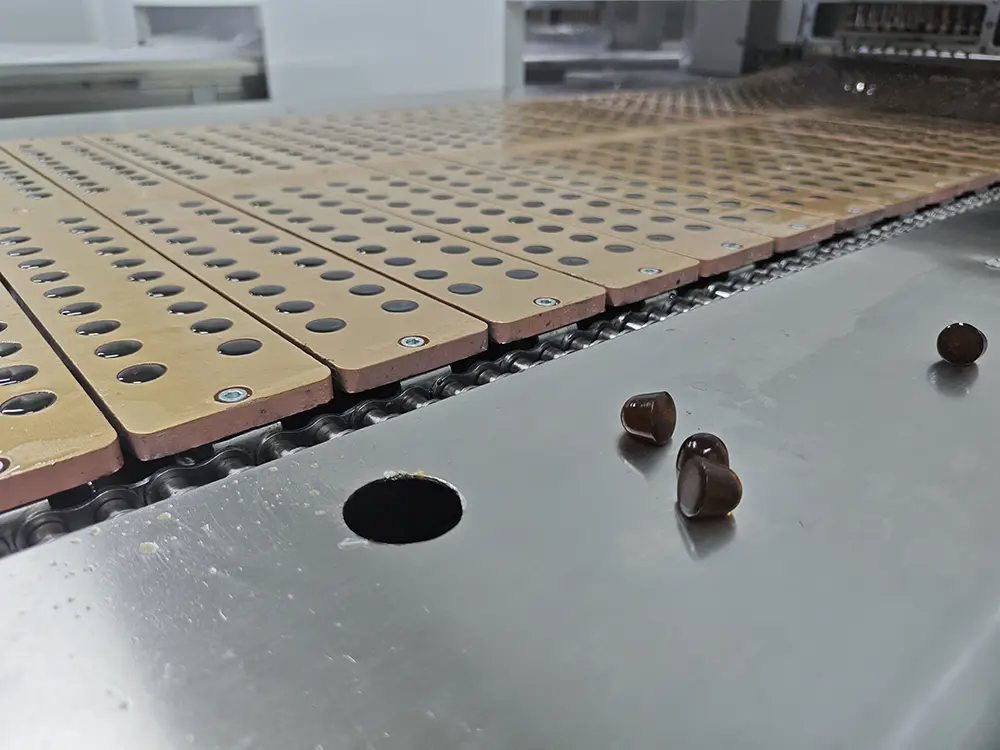
The deaerated slurry is pumped through temperature-controlled hoses (maintained at 60–65°C) to a starch depositor or silicone mold depositor. Starch molding involves depositing into dry cornstarch impressions at a starch bed temperature of 25–30°C and starch moisture below 8%. Silicone mold depositing allows for non-starch surfaces, which eliminates starch dust contamination but requires higher initial tooling investment. Deposit weight accuracy must be within ±2% for dosage compliance.
Step 6: Cooling, Conditioning, and Drying
Molded gummies enter a controlled drying room at 20–25°C and 35–45% relative humidity for 12–36 hours, depending on the target final moisture content. Pectin gummies typically require 18–24 hours to reach 16–18% moisture, while gelatin gummies stabilize faster at 12–16 hours to reach 18–22% moisture. The drying phase is where most texture defects originate — over-drying causes a glassy, hard exterior, while under-drying leads to sticking and mold growth during storage.
Step 7: Demolding, Oiling, and Packaging
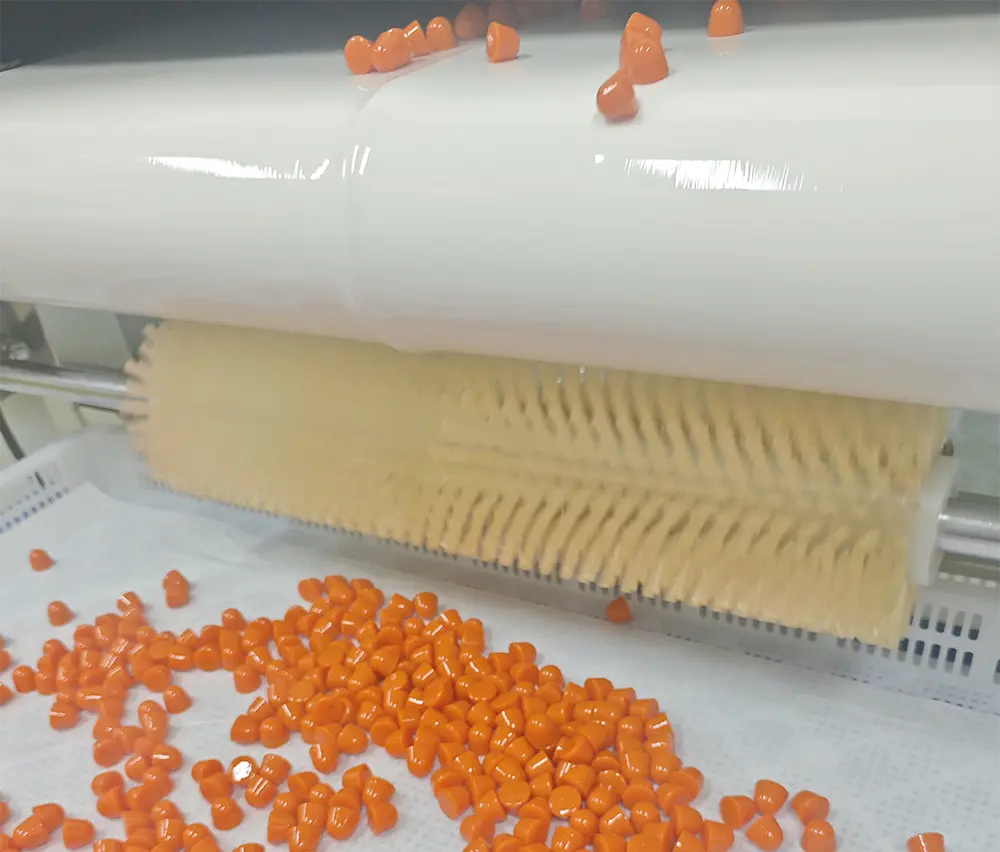
Gummies are separated from starch molds using vibration screens, then tumble-coated with a minimal application of carnauba wax or coconut oil (0.1–0.3% by weight) to prevent sticking in the final package. They are immediately transferred to primary packaging — typically a high-barrier foil pouch or PET bottle with a desiccant — within 30 minutes of demolding to prevent moisture reabsorption from ambient air.
Regulatory Compliance and Quality Risks in Gummy Production
Dietary supplement gummies sold in the United States must comply with 21 CFR Part 111 (Current Good Manufacturing Practice for Dietary Supplements), which mandates identity testing of all incoming raw materials, in-process controls at defined critical control points, and finished product testing for potency, heavy metals, and microbial contamination. A gummy factory operating under ISO 22000:2018 and FSSC 22000 has integrated HACCP principles into its quality management system, which provides a documented framework for hazard analysis at each production stage.
Certification stacking matters because different market channels impose different requirements. A gummy product destined for major U.S. retailers typically requires the manufacturing facility to hold BRC Global Standard for Food Safety (Grade B or higher), which audits against 290+ clauses covering hygiene, process control, and traceability. Halal and Kosher certifications require segregated production lines or validated cleaning protocols to prevent cross-contamination with non-compliant ingredients. Vegan certification demands documentation of no animal-derived processing aids — a common pitfall is that some pectin suppliers use non-vegan fining agents during pectin extraction, which must be verified at the raw material level.
Common Quality Failures and Their Root Causes
- Bloom (white surface film): Caused by sugar recrystallization when the gummy is exposed to temperature cycling above 25°C or humidity fluctuations. Prevented by maintaining stable storage conditions and using a glucose syrup-to-sucrose ratio of at least 60:40.
- Active ingredient potency loss: Heat-labile compounds like vitamin B12 lose 10–15% potency during standard cooking at 115°C if added before cooking. Solution: post-cooking addition at 60–65°C combined with nitrogen blanketing in the mixing vessel.
- Sticking in package: Occurs when final moisture content exceeds 20% or when oiling is insufficient. Controlled drying rooms with ±2% RH accuracy are required to prevent batch-to-batch variation.
- Uneven dosage: Depositor pump calibration drift causes weight variation beyond the ±2% tolerance. Requires verification every 2 hours during production runs.
Sourcing Considerations: Evaluating a Gummy Manufacturing Partner
Production scalability is the most underestimated variable in gummy sourcing decisions. A facility with a daily output of 16 tons and an annual capacity of 5,000 tons can accommodate both startup trial runs of 10,000–50,000 units and full-scale orders exceeding 10 million units without re-tooling. This range matters because brands that outgrow their manufacturer’s capacity face 6–12 month delays in transitioning to a larger facility, during which shelf life is consumed and market momentum is lost.
Minimum order quantity (MOQ) structure reveals a manufacturer’s operational flexibility. Facilities that maintain flexible MOQs for startups and scaling brands typically offer tiered minimums — for example, 30,000 units for a first production run with a single SKU, scaling to 100,000+ units for established reorders. The per-unit cost differential between a 30,000-unit run and a 300,000-unit run is typically 25–40% due to fixed setup costs (mold fabrication, batch testing, line changeover) being amortized over larger volumes.
Lead time from formula approval to finished goods delivery follows a predictable sequence: 5–10 business days for raw material procurement, 1–2 days for pilot batch production and quality testing, 3–5 days for commercial production, and 7–14 days for packaging and export logistics. Total lead time for a first order typically ranges from 25–35 business days. Subsequent reorders with confirmed formulas and in-stock raw materials can compress to 15–20 business days.
Supplier Evaluation Checklist for Gummy Contract Manufacturing
- Verify the facility holds current, audited certifications (ISO 22000, HACCP, BRC, FSSC 22000) — request audit reports, not just certificate copies.
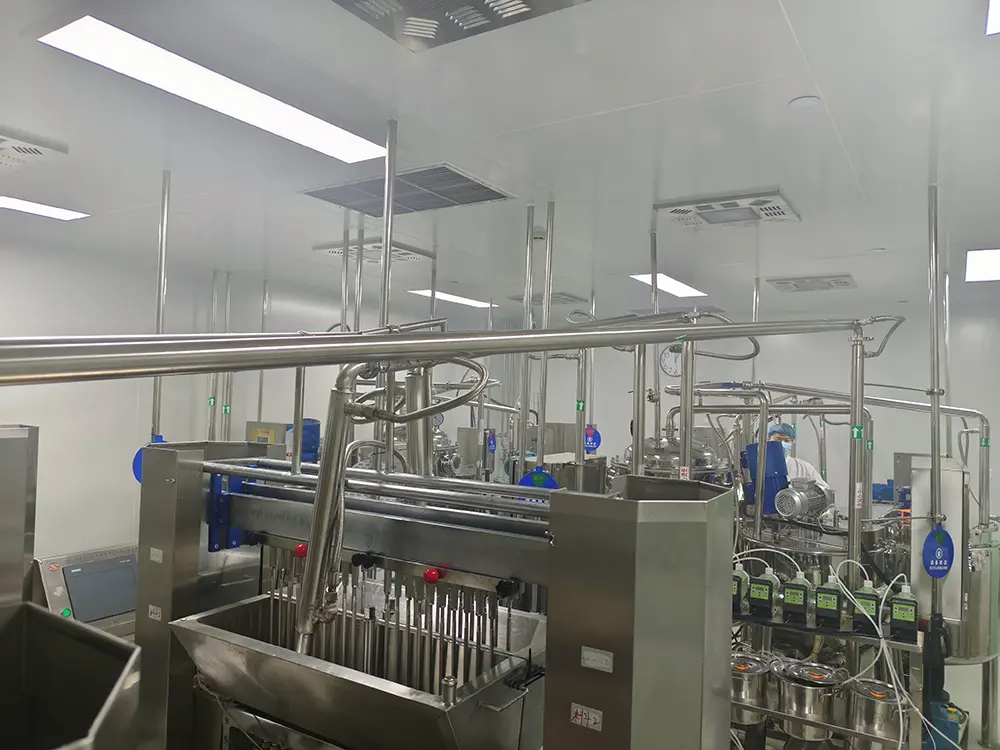
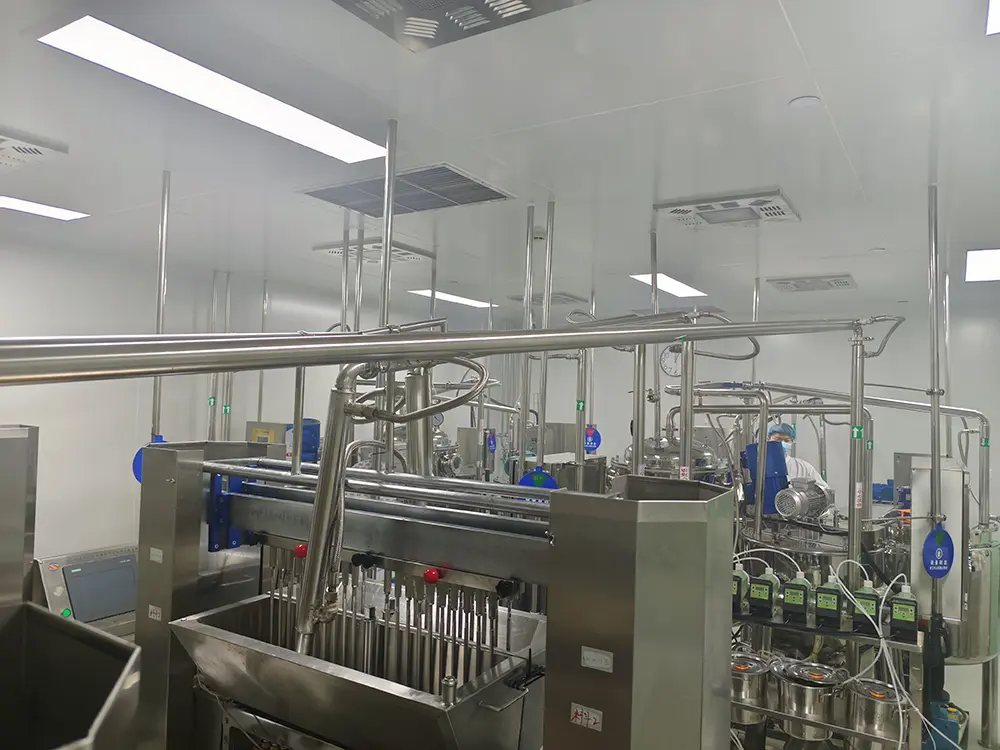
- Confirm cleanroom classification: a 100,000-class cleanroom for production with a 10,000-class pharmaceutical-grade R&D laboratory indicates serious contamination control.
- Request at least three pilot batch records for products with similar gelling systems and active ingredient types to your target formulation.
- Evaluate in-house R&D capability: manufacturers developing 2,000+ new formulations annually have the empirical data library to accelerate your formula optimization.
- Confirm raw material traceability to batch level with documented supplier qualification records for every input, including minor ingredients like colors and flavors.
Frequently Asked Questions
What is the typical lead time from formula approval to first gummy production batch?
First orders typically require 25–35 business days from approved formula to delivered finished goods, broken down as 5–10 days for raw material procurement, 1–2 days for pilot batch and testing, 3–5 days for commercial production, and 7–14 days for packaging and logistics.
How does pectin-based gummy manufacturing differ from gelatin-based in terms of equipment requirements?
The core cooking and depositing equipment is the same, but pectin systems require tighter pH control (3.2–3.8) monitored with in-line pH probes, calcium dosing equipment for gel activation, and slightly longer drying cycles (18–24 hours versus 12–16 hours for gelatin) due to pectin’s higher moisture retention.
What certifications should a gummy contract manufacturer hold for U.S. market entry?
At minimum, the facility must operate under FDA-registered cGMP (21 CFR Part 111). For retailer acceptance, BRC Global Standard (Grade B or higher), ISO 22000:2018, and FSSC 22000 are effectively required by major U.S. supplement retailers. Halal, Kosher, and Vegan certifications are necessary if those label claims appear on the product.
What is the minimum order quantity for custom gummy supplement production?
MOQs vary by manufacturer, but facilities offering flexible minimums typically set first-run MOQs at 30,000–50,000 units for a single SKU. Reorder MOQs are often lower (10,000–30,000 units) once the formula is locked and production parameters are established.
How do you prevent active ingredient degradation during gummy cooking at high temperatures?
Heat-sensitive actives must be added post-cooking in a controlled temperature window of 55–65°C, after the slurry has cooled from the 110–120°C cooking phase. Additional protection methods include nitrogen blanketing during mixing, microencapsulation of the active ingredient, and pH optimization to minimize thermal degradation kinetics.
This article is provided by Gothink Biology, a dietary supplement manufacturer based in Shenzhen, China, specializing in OEM/ODM services for health and wellness brands worldwide.
Shenzhen Gothink Biology Technology Co., Ltd. is a China-based nutrition supplement supplier offering OEM, ODM, CMO, and CDMO services. Our GMP-certified facility features a 100,000-class cleanroom with a daily output of 16 tons and an annual capacity of 5,000 tons. We hold certifications including ISO9001, ISO22000, HACCP, FDA, HALAL, GMP, KOSHER, BRC, FSSC 22000, PJPH, and Vegan. Our R&D team, led by scientists with postdoctoral experience at institutions including Cold Spring Harbor Laboratory and Emory University, supports custom formulation development across gummy, capsule, tablet, powder, liquid, and drop supplement categories.
For more information, visit gothinkbio.com or contact our expert team.