
Direct Answer: What a Gummy COA Actually Proves
A Certificate of Analysis (COA) is a batch-specific document that proves whether a finished gummy lot meets its agreed specifications for identity, potency, physical characteristics, and safety. For supplement buyers, reading a gummy COA correctly means verifying that the active dose is accurate, water activity and moisture are controlled for stability, microbiological and heavy metal results are within limits, and test methods are traceable to a release decision.
If you are sourcing private label gummies or developing a custom formula, the COA is your first line of defense before shipment, Amazon compliance, or retail distribution. Any experienced gummy manufacturer will treat the COA not as marketing paperwork, but as the output of its formulation logic, process control, and quality system. Learning to read it helps you avoid potency failures, texture issues, customs holds, and costly rework.
Why COA Review Is a Commercial Decision for Supplement Brands
Buyers often search this topic after receiving a COA that does not match their purchase order, or before approving a first production run. The real question is: can I trust this batch to be safe, stable, and sellable, and can I trust this supplier to repeat it?
A gummy is a high-moisture, pH-sensitive delivery system. Unlike tablets, gummies require cooking, depositing, cooling, and drying stages where heat, acidity, and water can degrade vitamins, oxidize botanicals, or change gel structure. The COA shows whether those risks were controlled. A well-written COA protects you on three commercial fronts: regulatory documentation for market entry, inventory risk by confirming shelf-life potential, and negotiation power by exposing specification gaps before payment.
What a Gummy Manufacturer Includes in a Complete COA Report
A technically sound COA is structured to be auditable. While formats vary, a GMP-compliant document should contain the same core sections regardless of whether the product is pectin, gelatin, or starch-based.
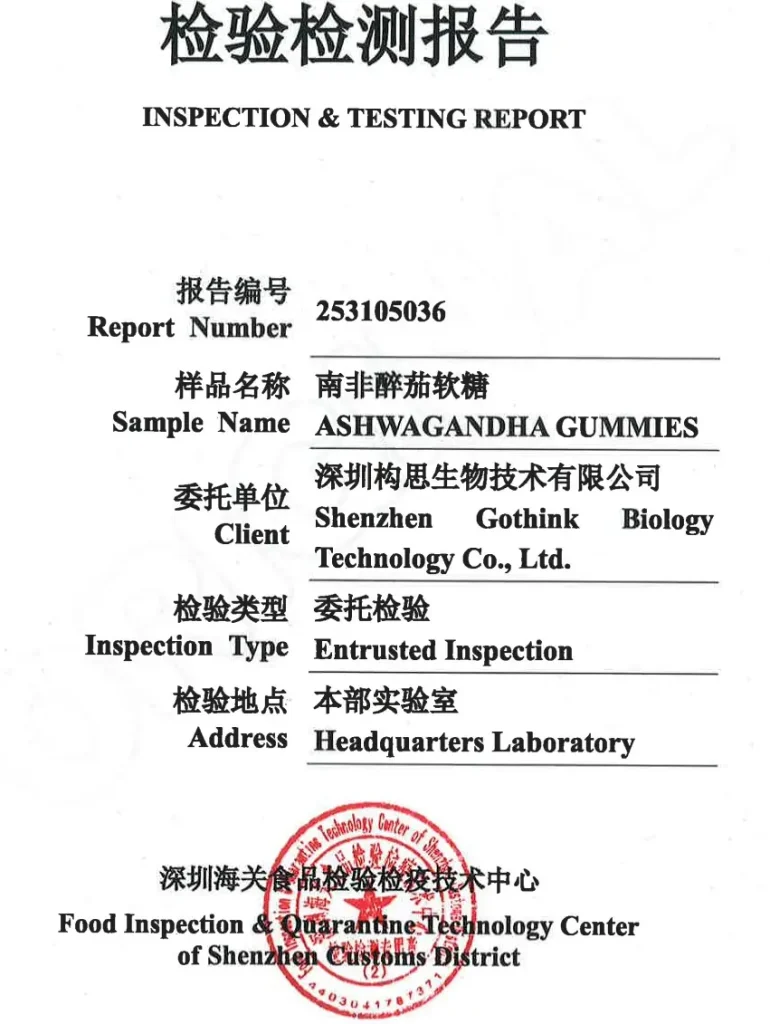
Expect to see: document control information, product traceability, specification reference, analytical results with methods and limits, and a clear disposition (Pass/Fail, Release/Reject) signed by QA. If any of these are missing, you are reviewing an incomplete record, not a true COA.
Step-by-Step: How to Read Each Section of a Gummy COA
Step 1: Verify Header, Traceability and Sample Information
Start at the top. Check product name, flavor, gummy type (gelatin or pectin), batch or lot number, manufacturing date, best-by date, batch size, sample size, and COA issue date. The batch number must match your carton labels and packing list.
Manufacturing logic: commercial gummy production involves multiple sub-batches cooked in kettles and deposited on a mogul or silicone line. Traceability allows the manufacturer to link raw material lots, cooking temperature logs, and depositing records to the finished batch. If the header lacks a specification version or internal item code, ask how the factory controls formula changes. For startups ordering private label gummies, confirm that the product name on the COA matches your private label registration exactly to avoid customs mismatch.
Step 2: Confirm Identity and Physical Characteristics
This section proves the factory made the product you ordered. Typical items: gummy appearance, color, flavor, shape, average piece weight, count per bottle, and count per serving.
Why it matters: active ingredient loading directly affects gummy weight and size. A high-dose mineral like calcium or magnesium, or a multi-ingredient immune blend, often requires a larger mold (e.g., 3.0g to 4.5g per piece) to accommodate the load without compromising texture. If average weight is below target, potency per piece may be inconsistent. If weight is too high, you pay more in raw materials and shipping. Look for weight variation stated as individual weight and average weight. A tight range indicates good depositing control and homogenization during mixing.
Step 3: Evaluate Potency and Assay Results
This is the most scrutinized section. It lists each claimed active ingredient, its label claim per serving, the measured result per serving, the unit (mg, mcg, IU, CFU for probiotics), test method, and acceptance range.
Direct answer: assay should be reported as measured value versus specification, not just “conforms.” A common spec is 90% to 120% of label claim for vitamins, but your agreement with the manufacturer may be tighter.
Manufacturing logic: heat-sensitive actives such as Vitamin C, B12, folate, or probiotics degrade if added too early. In a qualified process, the gummy base (sweetener, water, gelling agent) is cooked to 80-110°C, then cooled to below 80°C before actives, acids, and flavors are added with low-shear mixing. Botanical extracts with strong flavor or color, like ashwagandha or elderberry, may also interact with pH and affect potency recovery. If a potency result is at the low end of spec on a high-heat product, ask about addition temperature and overage strategy. Overage is an intentional small excess added to compensate for processing loss, but it must be justified by stability data, not used to mask poor control.
Step 4: Check Moisture, Water Activity and pH
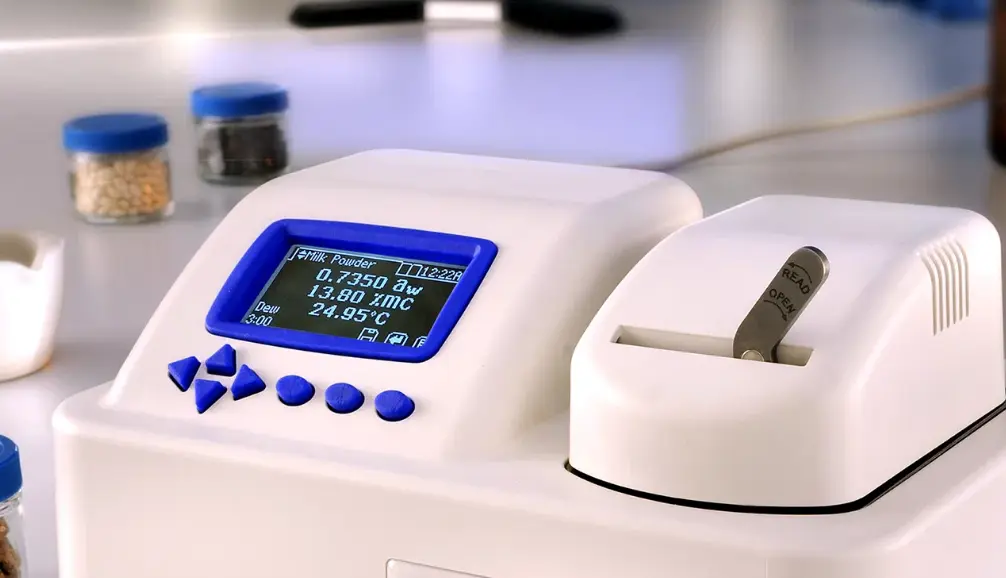
For gummies, this section predicts shelf life. Look for moisture content (%), water activity (Aw), and pH where applicable.
Definitions: moisture content is total water in the gummy. Water activity measures free water available for microbial growth and chemical reactions. pH affects both pectin gel formation and active stability.
Why manufacturers control it: pectin requires an acidic environment (typically pH 3.2-3.8) to set, while gelatin sets by cooling and is sensitive to high acidity that can weaken its gel structure. If pH is too low, you may see texture softening or syneresis during storage. If Aw is above 0.75, risk of yeast and mold growth and sticky texture increases, even if initial micro testing passed. Drying or conditioning after demolding is used to bring Aw down to a target range, often 0.55-0.70 depending on formula and packaging. A stable COA will show both moisture and Aw, not just one. For hygroscopic ingredients like choline or certain mineral salts, tighter Aw control is critical.
Step 5: Review Microbiological Results
This confirms safety for a high water activity product. Standard panel includes Total Plate Count (TPC), Yeast and Mold, E. coli, Salmonella, Staphylococcus aureus, and sometimes Coliforms. Probiotic gummies may have additional identification testing.
Manufacturing logic: gummy production is not a terminal sterilization process. Control comes from GMP, cleanroom environment, water quality, rapid cooling, drying to target Aw, and packaging with induction sealing. A 100,000-class cleanroom and controlled drying room reduce airborne contamination. If yeast and mold counts are borderline, check whether Aw was high or packaging compatibility was poor. Bottles without desiccant or pouches with low barrier film can raise Aw during transit.
Step 6: Review Chemical Safety – Heavy Metals, Residual Solvents and Pesticides
Look for lead, arsenic, cadmium, mercury, with limits in ppm. For botanical-heavy formulas, pesticide residues or residual solvents from extracts may be included based on risk assessment.
Supplier capability matters here. A gummy manufacturer with strong raw material testing will test incoming botanical extracts and minerals before batching, not only the finished gummy. If heavy metals are close to limits, request the raw material COAs and method references (e.g., ICP-MS per USP <233>). For markets like the US and EU, limits may differ, so confirm which regulatory standard the spec follows.
Step 7: Confirm Test Methods, Specifications and Release Decision
Every result should reference a method: USP, AOAC, FCC, in-house validated method, or ISO method. The COA should show specification limits, not just results. Finally, there must be a QA disposition and signature.
A common mistake is accepting a COA that says “meets spec” without stating the spec. Without method and limit, you cannot compare lots for batch consistency or defend the product during a retailer audit. Ask for a specification sheet that defines the agreed limits before production starts.
Typical Specification Ranges You Should Expect
Specifications vary by formula, market, and packaging, but the structure below shows what a buyer should expect to see on a gummy COA. Use it to spot missing data.
| COA Parameter | What It Tells You | Typical Documentation on COA |
|---|---|---|
| Average Piece Weight | Dose uniformity and cost control | Target g, measured g, RSD |
| Assay per Serving | Whether active loading met label claim | Label claim, result, % of claim, method |
| Moisture Content | Texture and drying control | % result, limit, e.g., NMT 15% |
| Water Activity (Aw) | Microbial risk and shelf-life predictor | Aw value, limit, e.g., NMT 0.70 |
| pH | Gel system compatibility and flavor stability | Measured pH, range for pectin or gelatin system |
| Microbiology Panel | GMP and safety control | TPC, Yeast/Mold, E. coli, Salmonella, methods and limits |
| Heavy Metals | Raw material and process safety | Pb, As, Cd, Hg in ppm, ICP-MS method |
Red Flags That Indicate Weak Quality Control
- No method reference: Results without USP, AOAC, or validated in-house method numbers cannot be reproduced or challenged.
- No specification limits: A COA that only says “Pass” hides whether the spec is appropriate for gummies. Request the finished product specification sheet.
- Missing water activity: Moisture alone is insufficient for a gummy. Aw is required to judge stability and packaging needs.
- Identical results across different lots: Potency or micro results that are exactly the same lot after lot may indicate copy-paste reporting rather than actual testing.
- No distinction between in-process and finished testing: For example, assay reported on syrup stage instead of finished gummy after drying can overstate dose.
- No QA signature and release status: A lab report is not a COA until QA reviews and releases the batch.
- Photocopied raw material COAs attached as finished COA: Common with low-cost suppliers. Finished gummies must have finished-product testing.
What to Provide and What to Ask Before You Get the COA
To receive a useful COA, you must define the specification before production. Provide your manufacturer with:
- Exact dosage per serving and serving size (e.g., 2 gummies = 500 mg Vitamin C)
- Gummy type preference and dietary claims (gelatin, pectin, vegan, halal, kosher)
- Target gummy weight and mold shape, if you have packaging constraints
- Flavor, sweetener system, and any allergen restrictions
- Target market and required compliance documents (FDA facility registration, BRC, FSSC 22000, etc.)
- Packaging format (bottle count, pouch, desiccant requirement) because it affects Aw and stability
Questions to ask your gummy manufacturer:
- What is the addition temperature for my heat-sensitive actives and how do you verify homogeneity?
- Do you test water activity and moisture on every batch, and what are your internal limits for this formula?
- What is your batch traceability process from raw material lot to finished lot?
- Which tests are performed in-house versus at a third-party lab, and what is the typical lead time for the final COA?
- Can you provide pilot-batch COA and stability data before commercial scale-up?
How to Evaluate a Gummy Manufacturer Through Its COA and Quality System
A COA reflects the factory behind it. When evaluating a supplier for OEM or ODM gummies, look beyond the document itself.
Verifiable capabilities include: GMP-certified facility with controlled cleanroom classification, documented R&D process for formula development, ingredient sourcing controls, in-house QC lab for weight, pH, Aw, and rapid micro screening, validated depositing and drying equipment, metal detection and inspection, and full batch traceability.
Shenzhen Gothink Biotech Co., Ltd. operates a GMP-certified facility with a 100,000-class cleanroom and a 10,000-class R&D laboratory, with approximately 16 tons of daily production capacity across gummy, capsule, tablet, powder, liquid, and drop formats. The facility maintains quality systems including ISO9001, ISO22000, HACCP, FDA, HALAL, GMP, KOSHER, BRC, FSSC 22000, and Vegan, which support batch-specific documentation and export requirements for private label gummies and custom formulations.
For commercial evaluation, request: GMP certificate scope, latest audit summary where permitted, lab method list, sample COA with spec sheet, and examples of how they handle out-of-specification results. A capable partner will explain corrective actions, not just retest until pass.
Cost, MOQ and Lead Time Factors Linked to COA Requirements
COA requirements directly influence cost structure. Additional active assays, third-party micro testing, pesticide panels for botanical blends, and stability testing add testing cost and time. High-dose or multi-active formulas often require larger gummy weight, custom molds, and longer mixing to ensure homogeneity, which increases material use and production time.
MOQ becomes important when you require full-panel heavy metal and micro testing on every batch, or when you request low water activity for extended shelf life that requires extended drying. Packaging also matters: high-barrier bottles with induction seals and desiccants help maintain Aw and protect flavor, but add cost compared to standard pouches.
Typical lead time sequence: raw material release (3-7 days), pilot or first production batch (7-15 days), drying/conditioning (24-72 hours), QC testing and third-party verification (5-10 days), and QA release with final COA. Build this timeline into your launch plan rather than requesting a COA before testing is complete.
Practical COA Review Checklist for Buyers
- Batch number matches labels, packing list, and purchase order
- Product name, flavor, gummy type, and count per bottle are correct
- Average weight and assay results are within agreed spec with method stated
- Moisture, water activity, and pH are reported and within range for gel system
- Microbiology panel includes TPC, yeast/mold, E. coli, Salmonella with limits
- Heavy metals tested with ppm results and method
- Specification version referenced and QA release signature present
- Any deviation noted with investigation summary, not hidden
FAQ
What is the difference between a raw material COA and a finished gummy COA?
A raw material COA covers a single ingredient, such as ascorbic acid or pectin, tested upon arrival. A finished gummy COA covers the final product after cooking, active addition, depositing, drying, and packaging. For brand owners, only the finished COA proves dose and safety of the sellable batch.
Why does my gummy COA show potency below 100% even though the batch passed?
Many gummy specs allow 90% to 120% of label claim to account for analytical variation and minor processing loss. If your product is heat-sensitive or acidic, potency can shift during cooking. Review the measured value, method, and whether an overage was agreed. Consistent low-end results may indicate addition temperature or mixing time needs adjustment.
Is water activity required on every gummy COA?
Yes for technical control. Water activity predicts microbial stability and texture changes better than moisture alone. Reputable gummy manufacturers include Aw on every batch. If Aw is missing, request it and ask about drying conditions and packaging barrier properties.
Can I accept a COA that only says “conforms” without numeric results?
No for B2B decisions. “Conforms” without numeric assay, Aw, or micro counts prevents trend analysis and retailer audits. Request quantitative results with specification limits and method references.
How should probiotic gummy COAs be read differently?
Probiotic gummies require CFU count at end of shelf life, not just at manufacture. Check whether the COA reports CFU at release and whether stability data supports the label claim. Probiotics also need tighter Aw control, often below 0.60, and cold-chain aware storage recommendations.
What documents should accompany a COA for export?
Depending on market, you may need finished product specification sheet, manufacturing flow chart, allergen statement, GMP certificate, and third-party lab reports for micro and heavy metals. The COA itself does not prove market approval. Confirm documentation needs with your target market before production.
What should I do if a COA shows an out-of-specification result?
Do not accept a retest without investigation. Ask the manufacturer for an OOS report that includes root cause analysis, affected quantity, corrective action, and QA decision on release, rework, or rejection. Consistent OOS on Aw or micro may indicate insufficient drying or cleanroom control.
Next Step: Turn the COA Into a Sourcing Decision
Reading a gummy COA is not about memorizing pharmacopeial limits. It is about connecting each number to a manufacturing decision: active addition point, drying time, gel system choice, and packaging. When you can trace a result back to process control, you can evaluate whether a supplier can repeat quality at scale.
If you are developing a new gummy or auditing an existing supplier, bring your target dosage, gummy weight range, flavor direction, and packaging format to the discussion. Ask for a specification sheet first, then compare it to the actual COA structure. For private label gummies or custom ODM projects, request a pilot-batch COA with full quantitative data before committing to commercial volume.
To review formulation options, discuss heat-sensitive ingredient handling, or request an OEM/ODM quotation with COA and specification templates, contact the technical team with your product brief.
Explore more in our resource hubs: Gummy Manufacturing Knowledge Center and Quality & Compliance at Gothink
Jack Luo|Senior Technical Advisor, Nutrition Research Center Representing Gothink Biology, a GMP-certified dietary supplement manufacturer based in Shenzhen, China.