
Direct Answer: How Gummy OEMs Calculate MOQ
If you have ever wondered why one factory quotes 20,000 bottles and another quotes 3,000 for the same gummy, you are looking at batch-size economics. Every Gummy Manufacturer sets Minimum Order Quantity (MOQ) based on the smallest batch that can be produced consistently, tested completely, and packed efficiently without losing money or quality. MOQ is not an arbitrary sales rule. It is a calculation that starts with kettle size, depositing line speed, drying capacity, and quality control overhead.
In short, most Gummy OEMs calculate MOQ by working backward from their equipment minimums. They determine the smallest cooking batch that ensures active ingredient homogeneity, then calculate how many gummies that batch yields after depositing, drying, and sorting losses. That number becomes the base MOQ, and packaging efficiency, testing requirements, and changeover costs are added on top. Once you understand this breakdown, you can negotiate smarter and avoid underfilled or unstable production runs.
Why MOQ Matters More for Gummies Than for Other Formats
Capsules and tablets can be blended in small V-blenders and run on a manual press. Gummies cannot. Gummy production is a continuous thermal process. You must cook a full kettle of pectin or gelatin mass, deposit it within a narrow temperature window, and condition it for 24 to 72 hours to reach target water activity.
If you try to run a half kettle, you face three risks. First, dosing accuracy drops because actives are not uniformly dispersed in a low fill level. Second, texture varies because gelation depends on solids concentration and cooling rate. Third, cost per unit spikes because energy, labor, and cleaning time are almost the same for a small batch as for a full batch. That is why MOQ is commercially important from day one.
What Is a Production Batch in Gummy Manufacturing?
A production batch is the amount of gummy mass cooked, deposited, and dried together as one traceable lot. In commercial operations, a single batch is defined by one kettle cook. Most mid-size to large facilities use 150 kg to 350 kg kettles for pectin and 200 kg to 500 kg for gelatin.
At an average gummy weight of 3.0 g, a 150 kg cook yields roughly 50,000 pieces before drying loss and visual sorting. After 10% to 15% moisture loss during conditioning and 2% to 5% rejection for misshapen pieces, the saleable yield is often 42,000 to 45,000 pieces. If your bottle count is 60 gummies per bottle, that one cook is about 700 to 750 bottles. This is why most factories cannot offer 100 bottles of a custom formula.
How a Gummy Manufacturer Calculates MOQ: The 5 Core Drivers
MOQ is not set by sales. It is set by production, quality, and packaging engineering. Here are the five drivers every experienced factory uses.
1. Cooking Kettle and Depositing Line Minimum
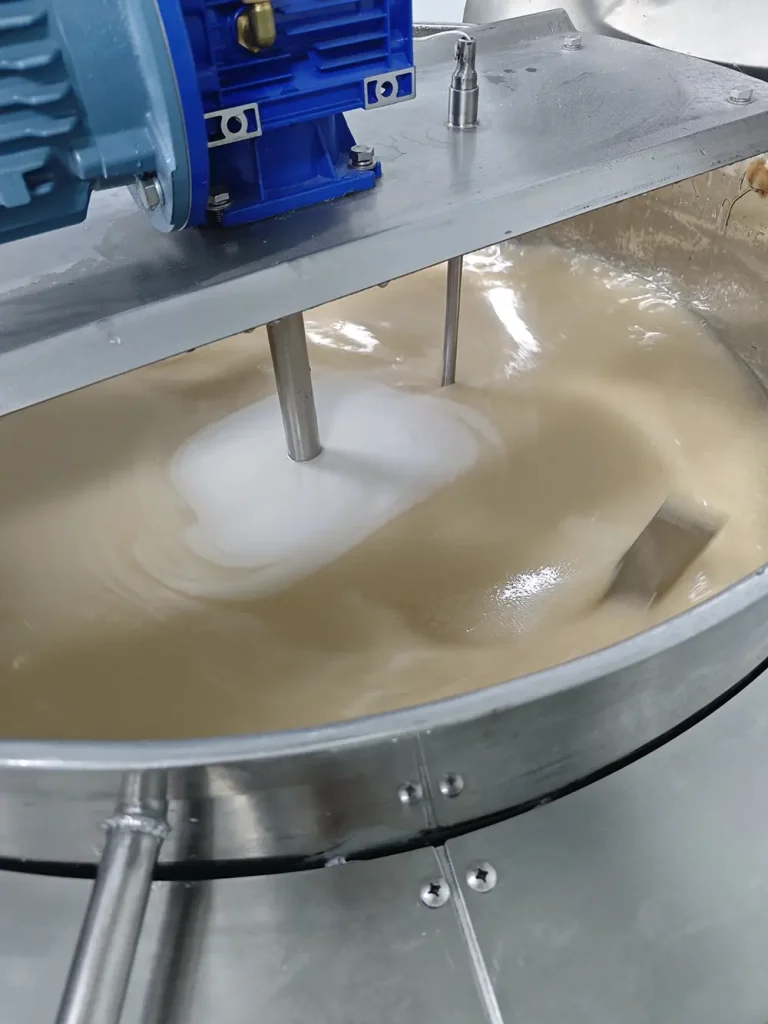
Each kettle has a minimum working volume to keep the mixer submerged and temperature uniform. Below that, you get hot spots, incomplete hydration of pectin, and poor active dispersion. Depositing hoppers also require a minimum level to maintain constant pressure and accurate fill weight.
For pectin gummies, the cook happens at 105°C to 110°C, then the mass is cooled to 85°C to 90°C before actives, acid, flavor, and color are added. Heat-sensitive ingredients like probiotics, Vitamin C, or methylated B vitamins cannot be added at 110°C. They require a low-temperature holding step, which extends mixing time and makes small batches more prone to premature gelling. This is one reason custom functional formulas carry higher MOQs than standard vitamin C or apple cider vinegar pectin gummies.
2. Active Ingredient Homogeneity and Dosing Accuracy
Active ingredient loading determines how much mass you need to achieve label claim per gummy. Low-dose actives like Vitamin D3 at 25 mcg per gummy are easy to disperse but require precise pre-mixing to avoid content uniformity failure. High-dose actives like calcium, magnesium citrate, or fiber like inulin increase gummy weight and change texture.
For example, adding 200 mg of magnesium citrate per 3.5 g gummy raises solids by about 5.7%. That changes pH, increases bitterness, and requires additional flavor masking and buffering. The factory must prepare a larger pre-mix batch of the active to ensure each deposit receives the same dose. If the batch is too small, relative standard deviation (RSD) for content uniformity often exceeds 6%, which most GMP systems will not release.
3. Drying and Conditioning Capacity
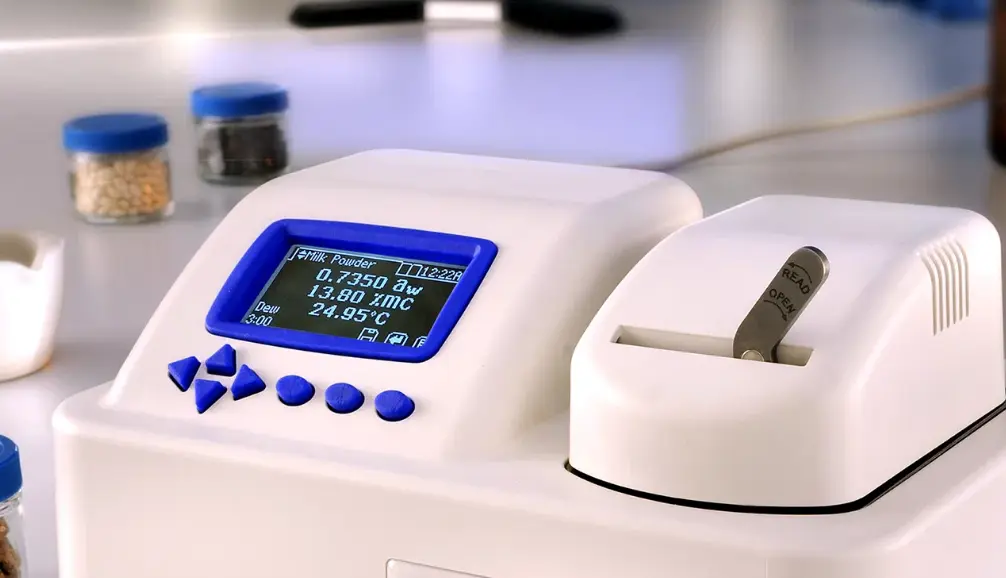
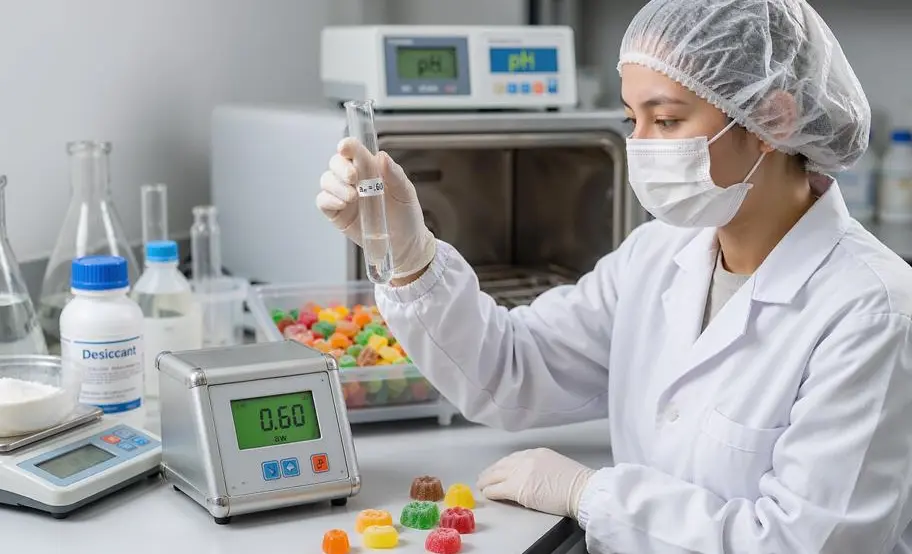
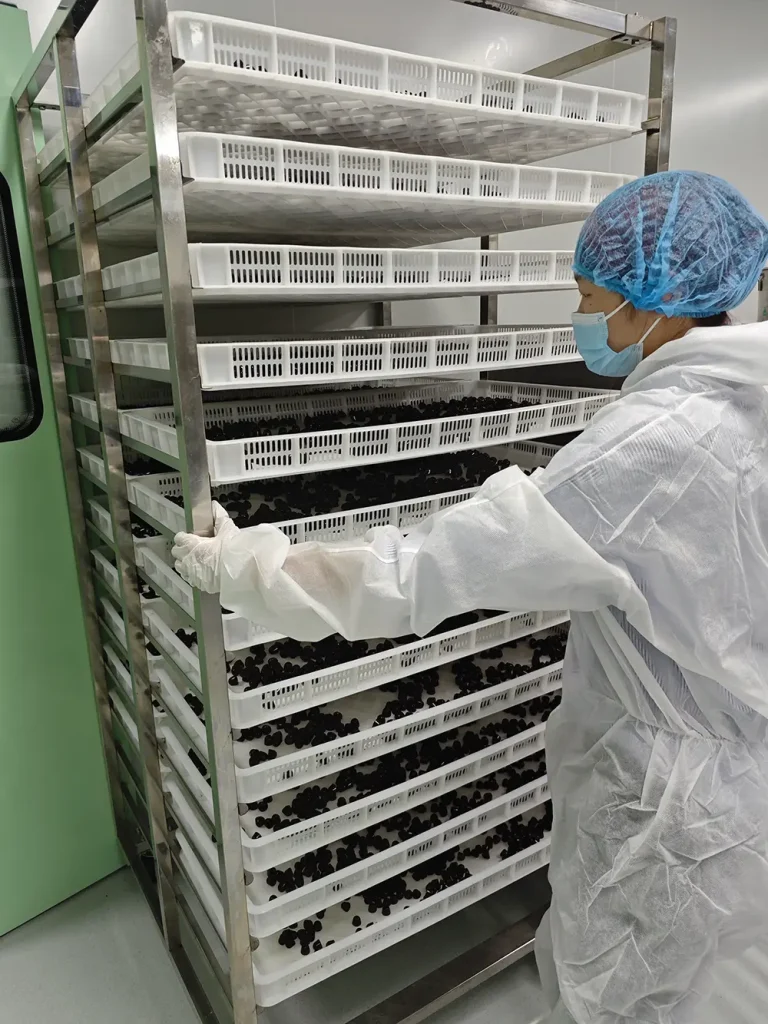
After depositing into starch or silicone molds, gummies must be conditioned to reach target water activity, usually below 0.75 for pectin and 0.65 to 0.75 for gelatin, depending on preservative system and packaging. Conditioning rooms are loaded by trays or trolleys. Running a half trolley wastes energy and creates uneven airflow, leading to inconsistent texture and water activity across the lot.
Hygroscopic ingredients like elderberry extract, beet powder, or creatine monohydrate pull moisture during drying and can raise water activity after packing if drying is insufficient. This directly affects microbiological stability and shelf-life validation. Factories therefore calculate MOQ to fill at least one full drying trolley or chamber zone.
4. Packaging Line Efficiency and Changeover Loss
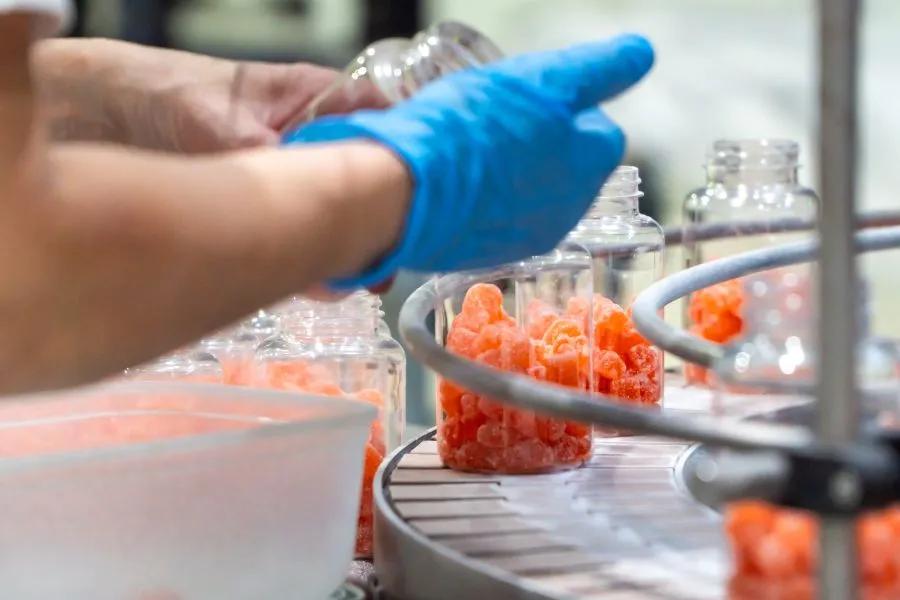
Packaging has its own minimum. Bottle filling, pouch filling, and blister lines have startup loss. The first 50 to 150 bottles are often used to calibrate checkweighers, cap torque, induction sealing, and label placement. If you order 300 bottles, you may lose 30% to setup alone.
Coating also adds MOQ. Sugar sanding, oil coating, or functional coatings like carnauba wax require a minimum coating drum load to achieve even coverage. Packaging compatibility matters too. High-acid gummies in low-barrier pouches may need desiccant and high-barrier film, which suppliers sell by the roll, typically 5,000 to 10,000 pouches minimum per size.
5. QC, Stability, and Documentation Overhead
Each commercial batch requires the same QC work whether it is 500 bottles or 5,000 bottles: incoming raw material testing, in-process pH, Brix, and weight checks, finished product assay, water activity, microbiological testing, and retention samples. The cost of this testing is fixed per batch.
For export, documentation such as Certificate of Analysis, manufacturing batch record, allergen statement, and stability data summary must be issued per batch. When a factory quotes a very low MOQ for a custom formula, they are often absorbing QC cost as a market-entry concession, not as a sustainable commercial model.
Batch Size Breakdown With Real Examples
Below is how most mid-capacity gummy lines translate kettle size into saleable MOQ. Numbers vary by factory, gummy weight, and mold design, but the logic is consistent across the industry.
| Production Stage | Typical Minimum | Why It Drives MOQ | Impact If Below Minimum |
| Cooking / Mixing | 150 kg – 300 kg mass | Mixer coverage, heat uniformity, pH control | Uneven gel hydration, pH drift, active hot spots |
| Depositing | 40,000 – 60,000 pieces | Hopper pressure, nozzle consistency, weight control | Fill weight variation, deformed pieces, higher scrap |
| Drying / Conditioning | 1 full trolley / chamber zone | Airflow, moisture uniformity, water activity target | Sticky texture, high water activity, micro risk |
| QC Sampling | Fixed per batch | Assay, micro, water activity, retention | Per-unit testing cost becomes prohibitive |
| Packaging | 1,000 – 3,000 finished units | Line calibration, sealing validation, label changeover | High startup waste, sealing defects |
Why Pectin vs Gelatin Changes MOQ
Gel structure directly affects process window and scrap rate. Gelatin is more forgiving on pH and allows a wider depositing window, often 75°C to 85°C. Pectin is highly sensitive to pH and soluble solids. The final pH must be 3.2 to 3.6 for high-methoxyl pectin to set correctly. If your active is acidic, like Vitamin C or apple cider vinegar, you need precise buffering with sodium citrate to avoid pre-gelation in the hopper.
Pectin gummies also require starch molds or specialized silicone with controlled drying. Gelatin can be deposited into silicone or starch with shorter conditioning. In practice, many factories set a lower MOQ for gelatin private label gummies using existing molds, and a higher MOQ for pectin vegan formulas with custom actives because the risk of failed gelation and texture drift is higher.
Formulation Factors That Push MOQ Higher
- High-dose minerals: Calcium carbonate and magnesium create chalky mouthfeel, raise pH, and interfere with pectin gel. You may need larger gummy weight, 4.0 g to 5.0 g, which reduces pieces per kettle and raises MOQ in bottles.
- Botanical extracts: Elderberry, ashwagandha, or green tea extract bring color variation, bitter notes, and tannins that bind with gelatin. They often require flavor masking trials and color correction, which factories prefer to run on full pilot batches of 50 kg to 100 kg.
- Oil-based nutrients: DHA, MCT oil, or fat-soluble vitamins need emulsification. Poor emulsion leads to oil separation during depositing. Achieving stable emulsion requires homogenization at scale, not in a benchtop beaker.
- Probiotics and heat-sensitive strains: Most probiotic gummies require low-temperature depositing, specialized low-water-activity pectin systems, and additional stability testing. MOQ is higher because viability loss during process development is material.
- Sugar-free systems: Sugar-free pectin with maltitol or erythritol has different Brix and crystallization behavior. Drying curves change, and water activity control becomes tighter. Factories often require a full batch to validate texture and shelf life.
How Gummy OEM Pricing Ties to Batch Size
Cost per gummy is not linear. It follows a step curve tied to batch yield. When you order exactly one kettle, you pay full setup cost for that batch. When you order two kettles of the same formula in one production run, setup cost is spread, and cost per bottle drops by 8% to 15% depending on packaging and testing.
Three specifications affect cost more than others: gummy weight, active cost per kilogram of mass, and packaging format. A 2.5 g gummy gives you 40% more pieces per kilogram than a 3.5 g gummy, but may not accommodate your dose. Switching from a custom bear mold to a standard dome or heart can save mold cost, typically $500 to $2,500 per mold, and avoid MOQ increase tied to custom tooling. Bottles have lower material MOQ than custom printed pouches, which require plate charges and film MOQ.
Can You Get Lower MOQ for Private Label Gummies?
Yes, but only under certain conditions. For private label gummies where the formula, flavor, and mold already exist in the factory’s catalog, a Gummy OEM can often offer lower MOQ because they can aggregate your order into a larger production campaign.
For example, if the factory runs a standard strawberry pectin Vitamin C 250 mg gummy every week, they can add your 1,000-bottle private label run to that campaign, sharing cooking and QC overhead. The trade-off is limited flexibility. You cannot change pectin type, sweetener system, or gummy weight without breaking the shared batch and reverting to full batch MOQ.
For fully custom ODM formulas, lower MOQ is usually a pilot batch, not a commercial batch. Pilot batches are made for sensory evaluation and initial stability. They are not always packed on high-speed lines and may carry a pilot fee. Clarify whether the quoted low MOQ is a commercial GMP batch with full documentation or a pilot sample batch.
Common Mistakes Buyers Make When Negotiating MOQ
- Asking for 500 bottles of a fully custom high-dose formula. The factory will either decline or quote a high unit price to cover fixed QC and setup. You end up paying more per bottle than a 2,000-bottle commercial run.
- Splitting one batch into many SKUs. Asking to split 50,000 gummies into 5 flavors at 200 bottles each sounds efficient, but each flavor change requires full kettle cleaning, allergen clearance, and new QC. Most factories treat each flavor as a separate batch for traceability.
- Ignoring gummy weight in MOQ math. MOQ in bottles is meaningless without gummy weight and count per bottle. Always convert MOQ to total gummy pieces and total mass.
- Requesting custom molds before formula lock. Mold fabrication takes 15 to 25 days and costs more if texture fails and you need a second mold size. Lock formula and gummy weight first.
What to Provide to a Gummy OEM to Get Accurate MOQ
To get a realistic MOQ and batch-based quote, provide this information in your first RFQ:
- Active ingredients and dose per serving and per gummy
- Preferred gummy weight and gummies per serving
- Gel system preference: pectin, gelatin, or flexible
- Sugar, sugar-free, or reduced sugar, and sweetener restrictions
- Flavor profile, sour coating requirement, and allergen restrictions
- Target market and any regulatory limits, for example sugar content or color additives
- Packaging format: bottle count, pouch size, or blister
- Expected annual volume and first order quantity
The more precise your specification, the more accurate the MOQ. Vague requests force factories to assume worst-case batch size, which inflates MOQ.
How to Evaluate a Gummy OEM’s MOQ Flexibility
MOQ flexibility is not about willingness alone. It reflects capability. When evaluating a supplier, look for verifiable indicators:
- Pilot-to-commercial scale-up: Does the factory have a 10,000-class R&D lab and small pilot kettles at 20 kg to 50 kg for trials, plus commercial kettles at 150 kg+? This allows low-MOQ pilots with clear path to commercial batches.
- Production capacity and scheduling: A facility with approximately 16 tons of daily capacity can schedule shared campaigns for private label gummies more frequently than a small plant that runs gummies twice a month.
- Testing and quality systems: GMP, ISO22000, HACCP, BRC, and FSSC 22000 indicate batch traceability and documented cleaning validation, which are required to legally split or combine batches. Ask how they handle allergen clearance between flavors.
- Mold inventory: Factories with in-stock standard molds can avoid custom mold MOQ. Ask for a mold list with cavity count and estimated gummy weight.
- Documentation support: For export, you need Certificates of Analysis, manufacturing flow, and shelf-life data. Confirm whether low-MOQ runs include full documentation or only basic COA.
- Ingredient sourcing: Factories that stock common gummy actives and pectin systems can offer lower MOQ because they do not need to meet raw material supplier MOQs for your order.
Shenzhen Gothink Biotech Co., Ltd. operates a GMP-certified facility with a 100,000-class cleanroom and a 10,000-class R&D laboratory, supporting both small pilot batches for formula validation and commercial-scale gummy production across pectin and gelatin systems. This type of dual capability is what allows lower private label MOQs while keeping custom ODM projects at a technically safe batch size.
Practical MOQ Checklist Before You Order
- Convert all MOQs to total gummy pieces and total kilograms of mass, not just bottles
- Confirm whether MOQ is per flavor, per mold, or per formula
- Confirm gummy weight range after drying, not just depositing weight
- Ask for water activity specification and shelf-life validation basis
- Ask for content uniformity data from a similar batch size
- Confirm packaging material MOQ separately from gummy MOQ
- Clarify whether price includes QC, retention, and documentation
- Align first order MOQ with 6 to 9 months of forecasted sales to avoid expiry risk
FAQ
Why is gummy MOQ typically higher than capsule or tablet MOQ?
Gummy production is a thermal cooking and depositing process with fixed kettle minimums, controlled drying time, and higher in-process loss. Capsule filling can run efficiently at 50,000 to 100,000 capsules, while a single commercial gummy kettle often yields 40,000 to 90,000 gummies after drying. Packaging line setup loss is also higher for gummies due to weight sorting and sealing validation.
Can I split one batch into multiple flavors or colors to reduce MOQ?
Generally no for GMP traceability. Flavor and color are added to the cooked mass before depositing, and each flavor requires a separate cook and cleaning validation. Some factories allow splitting a neutral base into two flavors by adding flavors late, but only if pH, Brix, and allergen status are identical. Even then, most quality systems treat each flavor as a separate batch.
Does pectin vegan gummy have higher MOQ than gelatin?
Often yes for custom formulas. Pectin requires tighter pH control at 3.2 to 3.6, higher cooking temperature, and longer drying to reach stable water activity. Failed gelation due to acidic actives or high mineral load creates higher scrap risk, so factories prefer a full kettle to maintain texture consistency. For standard stock pectin formulas, private label gummies can share MOQ.
How does gummy weight affect MOQ and cost?
Gummy weight determines pieces per kilogram. At 3.0 g, 150 kg yields about 50,000 pieces before loss. At 4.5 g, the same kettle yields about 33,000 pieces. If your packaging is 60 count, bottle MOQ drops by 30% but cost per bottle rises because you use more mass per bottle. High-dose actives often require larger weight to maintain palatable texture.
What is the typical MOQ for a custom gummy mold?
Custom mold tooling is a one-time cost, but most factories require you to order at least one full commercial batch with that mold to validate cavity release, weight uniformity, and drying. The mold itself may have no piece MOQ, yet the first production MOQ with a new mold is usually 1 to 2 full kettles, or 40,000 to 100,000 pieces depending on cavity count.
Can I start with a lower MOQ for market testing?
You can start with a pilot batch for sensory and initial stability, often 20 kg to 50 kg in an R&D lab, which yields 5,000 to 15,000 gummies. These are not always packed on high-speed commercial lines and may not include full export documentation. For Amazon or retail launch, plan a commercial MOQ that covers at least one full trolley of drying to ensure batch-to-batch consistency.
Does packaging format change MOQ?
Yes. Bottles usually have the lowest packaging material MOQ, often 1,000 to 3,000 units. Custom printed pouches require film roll MOQ of 5,000 to 10,000 pouches per SKU due to printing plate setup. Blister or flow-wrap formats have higher line setup time and may require larger MOQ to achieve acceptable sealing validation.
Next Step: Request a Batch-Based Quotation
Instead of asking for the lowest possible MOQ, ask for a batch-based breakdown. Request kettle size, estimated yield after drying and sorting, packaging setup loss, and QC scope included. This allows you to compare suppliers on engineering logic rather than just on bottle count.
If you have a formula concept or target dose per serving, share gummy weight, count per bottle, gel preference, and packaging format. A qualified Gummy Manufacturer can then calculate whether your project fits a shared private label campaign or requires a full custom batch, and what that means for unit cost, lead time, and stability.
For related sourcing guidance, explore the Knowledge Hub and the MOQ and Sourcing Guide to review formulation and commercial planning resources.
Jack Luo|Senior Technical Advisor, Nutrition Research Center Representing Gothink Biology, a GMP-certified dietary supplement manufacturer based in Shenzhen, China.