
Last updated: Oct 2026 · 11-minute read
Brand owners researching Private Label Gummies are usually trying to answer one practical question: how do I launch a stable, good-tasting gummy quickly without absorbing the full cost and risk of a custom formulation? The answer depends less on marketing claims and more on how a gummy manufacturer structures its stock formulas, process controls, and documentation. Understanding that structure helps you evaluate what you can change, what you cannot, and what will affect your margin and launch timeline.
This guide answers the questions procurement teams and founders actually raise during gummy contract manufacturing discussions — with the manufacturing logic behind each answer, so you can compare suppliers on substance rather than promises.
Quick answers for readers short on time:
- Private label means selecting from a manufacturer’s validated base formulas — gel system, texture, and drying behavior are already proven at production scale — while customizing flavor, color, shape, packaging, and label.
- You can change flavor and color freely, the sweetener base moderately, shape within existing molds, and active dosage only within the base’s qualified loading range.
- MOQ, lead time, and unit cost are driven by depositing batch size, drying capacity, and raw material procurement for your specific active — not by sales tactics.
- Shelf life depends on the packaging barrier as much as on the formula; always ask for the exact conditions behind any stability data you are shown.
- The most reliable suppliers push back on unrealistic requests — that pushback usually signals real process discipline.
What does “private label gummies” actually mean in practice?
In commercial production, private label does not mean white-label commodity in a generic bottle. It means you are selecting from a manufacturer’s validated base formulas, where the gel system, solids balance, pH, water activity, and drying curve have already been qualified at scale.
That distinction matters for three buyer decision points:
- Formulation risk: a validated base reduces texture failure, syneresis, and active degradation risk compared to an untested lab concept.
- Regulatory continuity: the ingredient specifications, allergen profile, and manufacturing method are already documented.
- Speed to market: pilot work focuses on flavor and color tuning and packaging compatibility, not on rebuilding the gummy matrix.
A true custom project starts from your brief and builds a new matrix around your active, dosage, and claim. That gives you maximum differentiation, but requires full R&D, pilot, and stability work before scale-up. The three production models compare as follows.
| Model | What You Get | Best When | Trade-off |
|---|---|---|---|
| Private Label | Proven base formula, adjustable flavor / color / shape, your label | You need faster launch, lower MOQ, controlled risk | Limited active dosage flexibility |
| Custom / ODM | Formula developed to your dosage and positioning | You have a unique dose, blend, or claim strategy | Longer development, higher initial cost |
| White Label Stock | Identical bulk product sold to multiple brands | Speed is the only priority | No differentiation, higher long-term competition |
How much can I change in a private label formula?
You have more room on sensory attributes than on the core gel system. In a pectin-based system — now dominant in private label because of vegan positioning and better stability in warm climates — the pectin grade, sugar solids, pH, and calcium are tightly balanced to set texture. Changing them late forces revalidation of depositing and drying.
Typical flexibility looks like this:
- Flavor and color: high flexibility. Manufacturers maintain flavor-masking libraries matched to pectin and gelatin. Switching from natural to nature-identical flavors, or adjusting sweetness with different sweetener blends, is routine as long as final Brix and water activity are not significantly altered.
- Sweetener base: moderate flexibility. Moving from sucrose-glucose syrup to no-added-sugar or reduced-sugar recipes (e.g., maltitol, allulose blends) changes solids and drying time. It is possible, but it may change MOQ because the drying curve must be reset.
- Shape and size: limited to existing depositing molds. New molds require tooling and depositing trials. Even a change from a 2.5g to a 3.0g piece weight affects dosage per piece, packaging count, and cost per serving.
- Active dosage: low flexibility within private label. The reason is loading. A gummy is roughly 75-82% soluble solids. When you increase an active from 100 mg to 500 mg per piece, you displace sugars and pectin, which changes texture, increases stickiness, and can raise water activity. If your target dose exceeds the base’s qualified loading, the project shifts to custom.
For example, a standard apple cider vinegar private label base may be validated at 500 mg equivalent per gummy. Requesting 750 mg with the same soft chew often produces a sandy mouthfeel and higher moisture migration. A manufacturer with process data will tell you that upfront, rather than simply adding more powder.
What drives MOQ, lead time, and unit cost?
MOQ for private label is not a sales tactic. It reflects depositing batch size, drying tunnel capacity, and coating drum loads. A single pectin depositing batch often produces 300-500 kg of finished gummies after drying. If you order below that threshold, yield loss increases sharply.
Lead time is driven by raw material procurement for your specific active, not just production slots. Pectin, specialty botanical extracts, and methylated vitamins often have longer procurement cycles than gelatin or standard vitamins. As a realistic planning range for private label: expect two to four weeks for flavor and color samples, then six to ten weeks from sample approval to bulk shipment, with extra time for export documentation and release testing.
| Cost / Timeline Driver | Why It Changes the Quote | What to Ask the Manufacturer |
|---|---|---|
| Active specification | Standardized extract vs. high-potency, powder vs. microencapsulated form affects dispersion and dosage loss | What assay form and particle size is your base qualified for? |
| Gel system | Pectin needs precise pH and calcium control; gelatin is cheaper but less heat-stable | Which gel system is this private label SKU built on? |
| Coating and finishing | Oil coating, wax, or sugar sanding adds a step and affects stability | Is coating included in your stability data? |
| Packaging | Barrier requirements depend on water activity and hygroscopic actives | What bottle / pouch barrier did you use for shelf-life testing? |
| Testing and documentation | COA, heavy metals, micro, and additional market-specific documents have cost | What testing is standard vs. billable? |
A low unit price that excludes coating, desiccant, induction sealing, and accelerated stability testing will not remain low once you add the requirements for export. Compare quotes on a delivered, shelf-stable basis — not on bulk gummy price alone.
How should I think about stability, texture, and packaging?
For private label gummies, stability is already partially de-risked because the base has historical data, but your final packaging choice still determines shelf life.
Key technical links buyers should track:
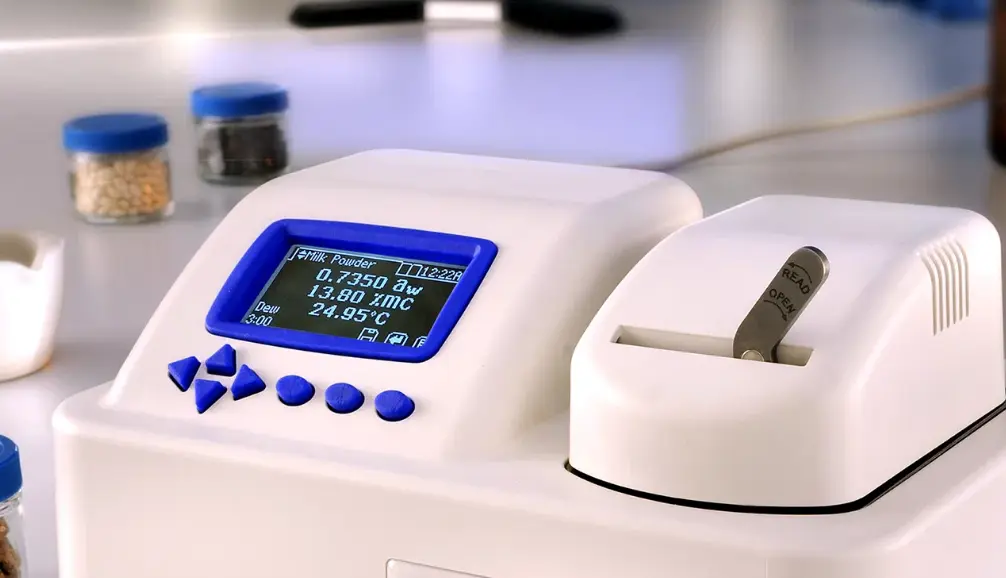
- Water activity (Aw) → texture and micro risk: most commercial pectin gummies target Aw 0.55-0.68. Lower Aw improves microbial control but makes the gummy firmer. If the active is hygroscopic — such as magnesium citrate or some amino acids — Aw can drift upward in a low-barrier pouch.
- Moisture migration → packaging barrier: a bottle with induction seal and desiccant behaves differently from a stand-up pouch. If the manufacturer’s stability data was generated in HDPE bottles, switching to a pouch for cost reasons requires new compatibility data.
- Thermal exposure → active retention: gummy mass is heated to 85-105°C before depositing. Heat-sensitive actives like probiotics or some vitamin C forms require late-stage addition or coated forms. A private label base already defines where the active is added; changing that addition point is a process change, not a minor tweak.
Ask for the exact conditions of existing stability data: temperature, humidity, packaging, and time points. That tells you whether the data is relevant to your target market and climate.
What documentation and support should a gummy manufacturer provide?
For private label, documentation is part of the product. At minimum, expect:
- Product specification sheet with per-piece and per-serving actives, gel system, allergens, and physical parameters
- Certificate of Analysis template and finished product testing flow
- Ingredient specification sheets and allergen statement
- Manufacturing flow chart and critical control points
- Shelf-life justification and storage condition recommendation
- Nutrition facts / supplement facts draft based on your target market
For the US market, the manufacturer should work within FDA cGMP for dietary supplements and support label compliance review, but not provide legal advice. For the EU or UK, the ingredient status under the food supplements directive and novel food considerations must be checked per active. Private label bases containing botanicals with country-specific limits often need dosage adjustment before export.
If you plan to sell in multiple markets, clarify at the quotation stage which certifications the existing line carries: ISO22000, HACCP, FDA registration, HALAL, KOSHER, BRC, FSSC 22000, Vegan. Certification scope affects audit readiness and downstream distributor requirements.
Should you work with a gummy manufacturer in China or closer to home?
Many supplement brands source gummies from China-based manufacturers because mature production clusters offer lower unit costs at scale, integrated packaging supply chains, and established export experience under FDA, EU, HALAL, and KOSHER requirements. A China-based partner usually makes sense when your volumes justify ocean freight and you want access to a broad library of validated bases.
Domestic production makes more sense when you need small trial quantities, very fast restocking, or a specific “made locally” positioning for your brand. You typically trade higher unit cost for shorter logistics and simpler time-zone communication.
In practice, geography matters less than four factors: documented GMP compliance, a technical team that answers specification questions precisely, a transparent change-control process, and reference customers already selling in your target market. Ask about shipping terms (FOB, CIF, DDP) and how stability data was generated for your climate zone before comparing quotes across regions.
How do I evaluate private label gummy suppliers beyond price?
In gummy contract manufacturing, two factories can quote very similar products with very different project outcomes. Price differences usually come from process discipline rather than raw material arbitrage.
| Evaluation Area | What Experienced Buyers Look For | Red Flag |
|---|---|---|
| Technical capability | Depositing accuracy, drying control logs, in-line Brix and pH records | No pilot batch before bulk commitment |
| Quality system | GMP, batch traceability, raw material release criteria, water activity trending | COA without method reference or acceptance criteria |
| Scale-up reality | Same equipment for pilot and commercial, defined yield expectations | Lab sample texture promised identical at 5-ton scale without pilot |
| Communication | Clear change control process when you request flavor or dosage adjustment | Immediate yes to any dosage without technical assessment |
| Commercial terms | Transparent MOQ by SKU and packaging format, lead time tied to material availability | MOQ changes after sample approval |
A competent supplier will sometimes push back. That pushback is valuable: it signals the team is evaluating active compatibility, process window, and packaging interaction rather than just selling bulk kilograms.
What should you prepare before requesting a private label gummy quote?
Complete briefs get accurate quotes days faster than vague inquiries. Before contacting any supplier, have these ready:
- Target market and required certifications (for example, FDA cGMP for the US, EU food supplement compliance, HALAL, KOSHER, Vegan)
- Active ingredient, its form, and exact dosage per gummy, plus any claims you intend to make
- Serving size, count per bottle or pouch, and preferred packaging format
- Flavor direction and color expectations (natural versus nature-identical)
- Sweetener requirements: standard, reduced sugar, or no added sugar
- First-order quantity range and your launch timeline
- Climate and shelf-life requirements for your sales region
With a brief this complete, a technical team can tell you in one exchange whether your project fits an existing qualified base or needs custom development. Send your brief to Gothink Bio and you will get a feasibility read — including where your dosage and packaging requests sit relative to proven bases — before any commitment.
Frequently Asked Questions
What is the difference between private label and white label gummies?
Private label gummies are built on a manufacturer’s validated base formula and customized for your brand: flavor, color, shape, packaging, and label. White label means an identical stock product sold unchanged to multiple brands. Private label gives you controlled differentiation and documented stability; white label prioritizes speed at the cost of exclusivity.
Can private label gummies be made vegan or sugar-free?
Yes. Most modern private label bases are pectin-based, which supports vegan claims without process changes. Sugar-free or reduced-sugar versions use maltitol or allulose; because these change total solids and the drying curve, they require revalidation and may affect MOQ.
Can I start with private label gummies and move to custom later?
Yes, and many brands do. The efficient path is to launch with a private label base close to your final positioning, collect market feedback, then define custom changes with real sales data. Keep your packaging dimensions and count consistent so the second generation does not require a full packaging redesign, and plan the custom phase as a new qualification with its own pilot and stability work.
Why do two gummy manufacturers quote different prices for the same private label gummy?
Common causes are different active forms, testing scope, inclusion of coating and packaging materials, and yield assumptions. A pectin base with a microencapsulated botanical and oil coating costs more than a gelatin base with standard powder and no coating, even if the label claims the same active per serving. Ask each manufacturer to break down active spec, gel system, coating, testing, and packaging barrier used for the quote.
How long does it take from sample approval to bulk production?
For private label, once flavor and color are approved, production is scheduled after packaging materials are confirmed and raw materials are released. Total time depends on active procurement and label design approval — typically six to ten weeks, longer for specialty actives. If you change packaging from bottle to pouch after sample approval, expect an additional packaging compatibility check.
Who owns the formula and label design?
You own your label artwork and brand assets. The base private label formula remains the manufacturer’s know-how. If you fund a custom formulation that materially changes active blend, dosage, or gel system, ownership terms should be defined in writing — including any exclusivity and documentation transfer. Clarify this before pilot production, not after launch.
Private label gummies work best when buyers treat them as a qualified platform, not as a generic commodity. The faster you align on dosage reality, packaging barrier, and documentation needs, the fewer rework cycles you face. For a new project, start with a clear target market, serving size, count per bottle, and two priority sensory attributes — then ask your supplier where their existing base sits relative to that brief.
Get a feasibility read on your gummy project
Tell us your target market, serving size, dosage, and packaging preference, and Gothink Bio’s technical advisors will respond with a clear answer: which qualified base fits your brief, and what — if anything — needs custom development. Start the conversation at gothinkbio.com.
Jack Luo|Senior Technical Advisor, Nutrition Research Center, representing Gothink Biology, a GMP-certified dietary supplement manufacturer based in Shenzhen, China.
[Shenzhen Gothink Biotech Co., Ltd. is a China-based nutrition supplement supplier offering OEM, ODM, CMO, and CDMO services. Our GMP-certified facility features a 100,000-class cleanroom with a daily output of 16 tons and an annual capacity of 5,000 tons. We hold certifications including ISO9001, ISO22000, HACCP, FDA, HALAL, GMP, KOSHER, BRC, FSSC 22000, PJPH, and Vegan. Our R&D team, led by scientists with postdoctoral experience at institutions including Cold Spring Harbor Laboratory and Emory University, supports custom formulation development across gummy, capsule, tablet, powder, liquid, and drop supplement categories.]