
Meta Description: Choosing the right gummy manufacturer for your brand means evaluating raw material controls, process precision, and compliance documentation. This guide outlines the exact manufacturing benchmarks that define a reliable private label gummy partner—and how to verify quality before you commit.
Introduction
For health and wellness brands, gummies have become a preferred supplement format—but not all production lines deliver the same result. A gummy that looks perfect on the first batch can turn sticky, brittle, or under‑potent on the second if the manufacturer lacks disciplined process control.
When you decide to make gummies under your own label, you are not just buying a production service; you are outsourcing your brand’s reputation. The difference between a trustworthy partner and a problematic one lies in specific, verifiable manufacturing standards—not marketing promises.
This article breaks down those standards into actionable criteria, so you can evaluate suppliers with confidence and reduce product, regulatory, and commercial risk.
1. Raw Material Integrity: Where Quality Begins
Every high‑quality private label gummy starts with ingredients that meet documented specifications.
- Gelling agents (pectin, carrageenan, or gelatin) must have purity and viscosity certificates. Inconsistent viscosity leads to gummies that are too soft, too firm, or prone to sweating.
- Active ingredients—vitamins, minerals, botanical extracts—require a certificate of analysis (COA) confirming identity, potency, and absence of heavy metals, pesticides, and microbial contaminants.
- Sweeteners and flavours should also be traceable to approved suppliers, with allergen declarations clearly stated.
What to ask: Request COAs for all key raw materials used in your formula, and verify that the manufacturer re‑tests incoming materials rather than relying solely on supplier papers.
2. Formulation Precision: Consistency in Every Bite
A well‑designed formula is useless if the production process cannot replicate it batch after batch. Formulation precision covers:
- Active ingredient dosing—ensuring each gummy delivers the labelled amount, not a range that fluctuates.
- Sweetener and acid balance—affecting taste, pH, and gelling behaviour.
- Moisture management—too much water promotes mould; too little makes gummies hard.
The best manufacturers use validated mixing protocols and in‑line checks to confirm that the slurry composition matches the master formula before depositing.
What to ask: How do you validate that each batch’s active content falls within the accepted tolerance (e.g., ±5%)? Request batch‑to‑batch assay data from the last three production runs.
3. Process Control: The Spine of Reliable Production
Producing private label gummies involves several critical stages—cooking, mixing, depositing, drying, coating—each with its own control parameters.
| Stage | Critical Parameters |
|---|---|
| Cooking | Temperature curve, holding time |
| Mixing | Homogenisation speed, vacuum level |
| Depositing | Mold fill weight (±1–2% tolerance) |
| Drying | Time, temperature, humidity |
| Coating | Oil/wax application uniformity |
These parameters must be recorded in real time. A manufacturer that cannot produce batch production logs for review is signalling weak process discipline.
What to ask: Can you provide a sample batch record showing how each parameter is monitored and what actions are taken if a deviation occurs?
4. Facility & Equipment Standards
The production environment directly impacts microbiological safety and physical consistency.
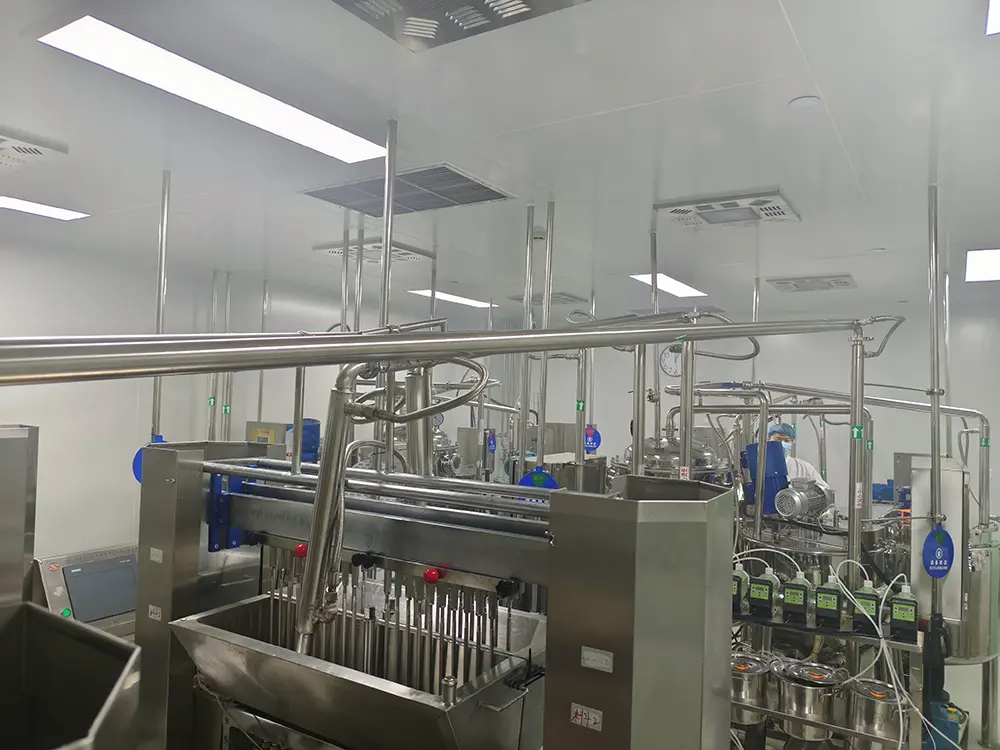
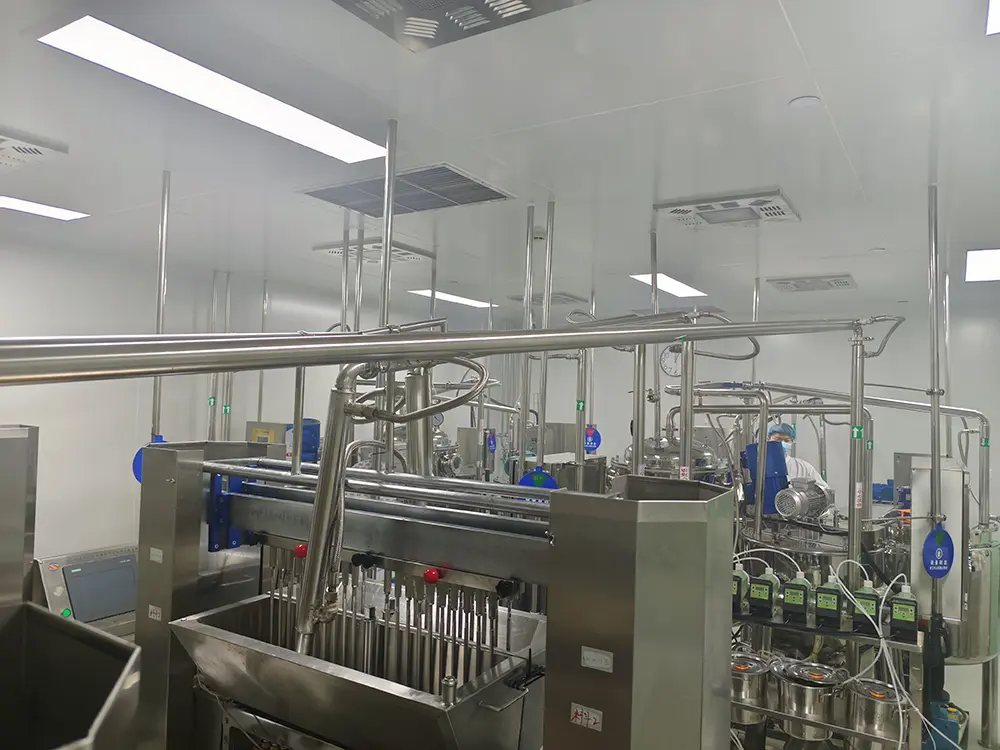
- GMP‑certified facilities with defined cleanroom classifications (e.g., ISO 8 or better) reduce airborne contamination.
- Equipment calibration—scales, thermometers, depositors—must follow scheduled maintenance to ensure dosing accuracy.
- Segregated zones for raw material handling, cooking, and packaging prevent cross‑contamination between different products.
A manufacturer that invests in environmental monitoring (air and surface sampling) demonstrates a proactive quality culture.
What to ask: What is your facility’s cleanroom classification, and how often do you perform environmental monitoring? Request a copy of the latest GMP audit certificate.
5. Testing & Quality Verification at Every Stage
High‑quality production is not about a single final test—it is a system of checks from raw material receipt to finished goods release.
- In‑coming testing – identity, potency, contaminant screens.
- In‑process checks – weight, moisture, pH, texture during production.
- Finished product testing – potency assay, microbial limits (total plate count, yeast/mould, pathogens), disintegration, and physical attributes (hardness, chewiness, colour).
All results are compiled into a certificate of analysis (COA) that accompanies each batch. The COA should be signed off by a qualified quality control officer before the batch is released for shipping.
What to ask: May I see the full test panel for a recent batch of a similar product? Does your lab perform these tests in‑house or use a third‑party accredited lab?
6. Packaging & Shelf‑Life Stability
Even a perfectly made gummy can degrade if packaging fails to protect it.
- Moisture‑barrier materials (foil liners, desiccants) prevent texture changes and active ingredient breakdown.
- Light‑protective packaging for light‑sensitive nutrients (e.g., vitamin C, B vitamins).
- Stability testing under accelerated and real‑time conditions (e.g., 25°C/60% RH and 40°C/75% RH) confirms the stated shelf life—typically 18–24 months.
Stability data should include potency and physical tests at multiple time points. Without this, your labelled expiry date is essentially a guess.
What to ask: Can you share stability study protocols and results for a gummy formulation similar to mine? What is your standard shelf‑life claim and the supporting data?
7. Certifications & Regulatory Readiness
A reliable gummy manufacturer holds internationally recognised certifications that demonstrate a mature quality management system.
- ISO 9001 – Quality management
- ISO 22000 / FSSC 22000 – Food safety
- HACCP – Hazard analysis and critical control points
- GMP – Good manufacturing practices (FDA‑registered or equivalent)
- KOSHER / HALAL / VEGAN – Depending on target markets
- BRC – British Retail Consortium (common for retail chains)
These certifications matter not only for compliance but also for retailer and consumer trust. A manufacturer with multiple active certifications is more likely to have robust documentation and audit trails.
What to ask: Which certifications do you currently hold, and are they site‑specific? Provide copies of the latest audit reports (with confidential data redacted if needed).
Practical Insights for B2B Buyers
Beyond the technical checklist, experienced buyers look for signs of operational maturity:
- Batch‑to‑batch consistency – Request three sample batches from different production dates and test them independently for potency and texture. Variation should be minimal.
- Scalability – A manufacturer that excels at 100‑kg trials may struggle at 5‑ton commercial runs. Ask about their maximum capacity and how they maintain quality when scaling up.
- Transparency – A partner that readily shares documentation (COAs, batch records, audit reports) is usually confident in their systems. Slow responses often indicate gaps.
- Formula confidentiality – If you have a proprietary blend, ensure a non‑disclosure agreement is in place and that the manufacturer has secure data handling protocols.
B2B Decision Panel: Questions to Ask Before Signing
Quality agreement – What acceptance criteria (AQL levels, potency tolerances) are defined for each batch, and how are rejects handled?
Order flexibility – What are the minimum order quantities (MOQs) for custom vs. standard formulas? Can you accommodate smaller pilot runs?
Lead times – What is your typical lead time from formula finalisation to delivery? How do you handle urgent reorders?
Regulatory support – Can you provide technical files for EU/US/other market registrations? Do you assist with label claims substantiation?
IP protection – How do you protect my formula and branding? Is there a non‑compete clause for similar products?
Technical Parameter Table – Quick Reference
| Quality Dimension | Standard / Benchmark |
|---|---|
| Gelling agent purity | Verified viscosity and purity specs (pectin/carrageenan) with COA |
| Active ingredient verification | COA confirming identity, potency, heavy metals, microbial limits |
| Facility classification | GMP‑certified with defined cleanroom class (e.g., ISO 8) |
| In‑process monitoring | Recorded cooking temp, fill weight (±1‑2%), drying time/temp |
| Finished product testing | Potency, microbial, weight variation, texture, disintegration |
| Stability testing | Accelerated (40°C/75% RH) + real‑time data for labelled shelf life |
| Certifications | ISO 9001, ISO 22000, HACCP, GMP, BRC, KOSHER, HALAL, VEGAN (as applicable) |
Conclusion
A high‑quality private label gummy is never accidental. It emerges from a system of verified raw materials, precise formulation, rigorous process control, and comprehensive testing—backed by certifications that prove the system works.
When you choose a partner to make gummies for your brand, treat quality verification as a due‑diligence exercise, not a tick‑box. Request documentation, visit the facility (virtually or in person), and run your own independent tests on sample batches. A manufacturer that meets the benchmarks outlined above will reduce your product recalls, regulatory rejections, and customer complaints—while building the consistent brand experience that drives repeat orders.
The right manufacturing partner does more than produce gummies; they protect your brand integrity with every batch. Choose wisely.
FAQ
What makes a private label gummy high quality?
Consistent raw material quality, precise formulation, controlled production processes, and documented testing at each stage—from incoming ingredients to finished product release.
Why does gummy manufacturing require strict process control?
Because small deviations in cooking temperature, depositing accuracy, or drying time directly affect texture, moisture content, active potency, and shelf stability. Without control, batch‑to‑batch variation becomes unacceptable.
How can a brand verify a manufacturer’s quality standards?
Request certificates of analysis for raw materials and finished batches, facility GMP certifications, stability study data, and sample batches for independent third‑party testing before placing a commercial order.
What certifications indicate a reliable gummy manufacturer?
ISO 9001, ISO 22000, HACCP, GMP, BRC, FSSC 22000, and market‑specific certifications (KOSHER, HALAL, VEGAN) are strong indicators of a controlled and audited production environment.
Does batch size affect quality consistency?
Yes. Some manufacturers maintain excellent quality at pilot scale but struggle with larger volumes due to equipment limitations or insufficient process validation. Always ask for evidence of consistency across commercial‑scale runs.
What should be included in a quality agreement with a manufacturer?
Clear acceptance criteria (potency tolerance, weight limits, microbial specs), testing frequency and methods, rejection procedures, documentation requirements, and a dispute resolution process for non‑conforming batches.
About Gothink Biology
This article is provided by Gothink Biology, a globally recognised dietary supplement manufacturer offering comprehensive contract manufacturing solutions for health and wellness brands.
Shenzhen Gothink Biology Technology Co., Ltd. is a global leading nutrition supplement supplier and dietary supplement manufacturer specialising in OEM, ODM, CMO, and CDMO services for health and wellness brands worldwide. With extensive industry expertise and international certifications including ISO9001, ISO22000, HACCP, FDA, HALAL, GMP, KOSHER, BRC, FSSC 22000, PJPH, and Vegan, we deliver high‑quality custom formulation, contract manufacturing, and wholesale solutions for B2B clients across global markets.
For more information, please visit our official website: https://gothinkbio.com/ or contact our expert team.