
Abstract
Private label supplement manufacturing enables brands to market dietary supplements produced by third-party facilities under their own branding. This guide covers the manufacturing workflow, quality benchmarks, selection criteria, and B2B decision factors for partnering with contract manufacturers in the nutraceutical industry.
What Are Private Label Supplement Manufacturers?
Private label supplement manufacturers refers to contract production facilities that formulate, produce, and package dietary supplements on behalf of other brands, which then sell the finished products under their own trademarks. These manufacturers handle the technical aspects of production—including raw material sourcing, formulation, processing, and regulatory compliance—while the brand owner focuses on marketing and distribution.
How Private Label Supplement Manufacturing Works
Step 1: Product Concept and Formulation
The brand owner defines the target market, desired ingredients, dosage forms, and pricing strategy. The manufacturer’s R&D team then develops a formulation that meets these specifications while ensuring stability, bioavailability, and regulatory compliance.
Step 2: Raw Material Sourcing and Verification
Qualified manufacturers source raw ingredients from verified suppliers and conduct identity testing, heavy metal screening, and microbial analysis before materials enter the production pipeline.
Step 3: Production and Processing
Depending on the dosage form, production involves blending, granulation, compression, encapsulation, or cooking and molding. Each stage is monitored with in-process controls to verify weight, hardness, dissolution, and appearance.
Step 4: Quality Control and Finished Product Testing
Batch samples undergo third-party or in-house testing for potency, purity, contaminants, and label accuracy before release.
Step 5: Packaging and Labeling
Products are packed into the brand’s chosen packaging format with compliant labels, including ingredient lists, supplement facts panels, and required regulatory statements.
Step 6: Storage and Shipment
Finished goods are stored under controlled conditions and shipped according to the brand’s logistics requirements.
Key Supplement Categories for Private Label Production
Gummy Supplements
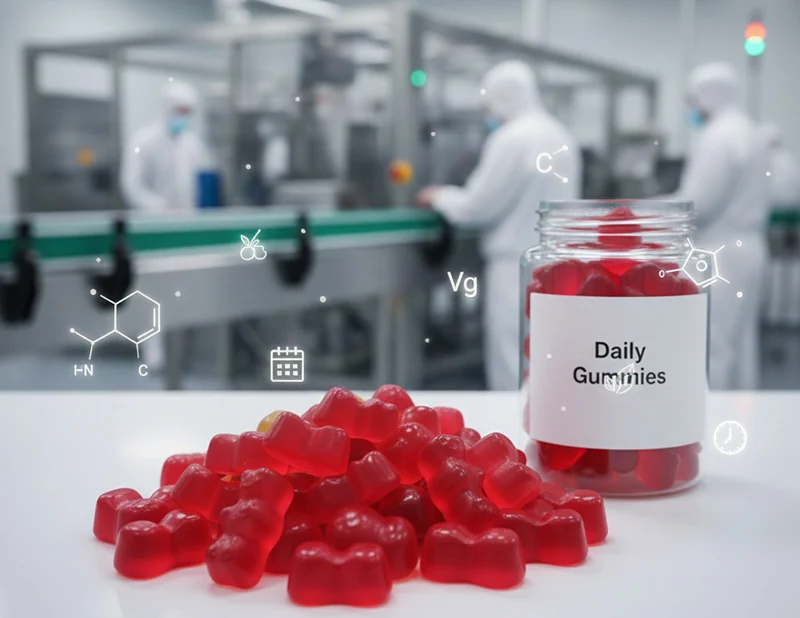
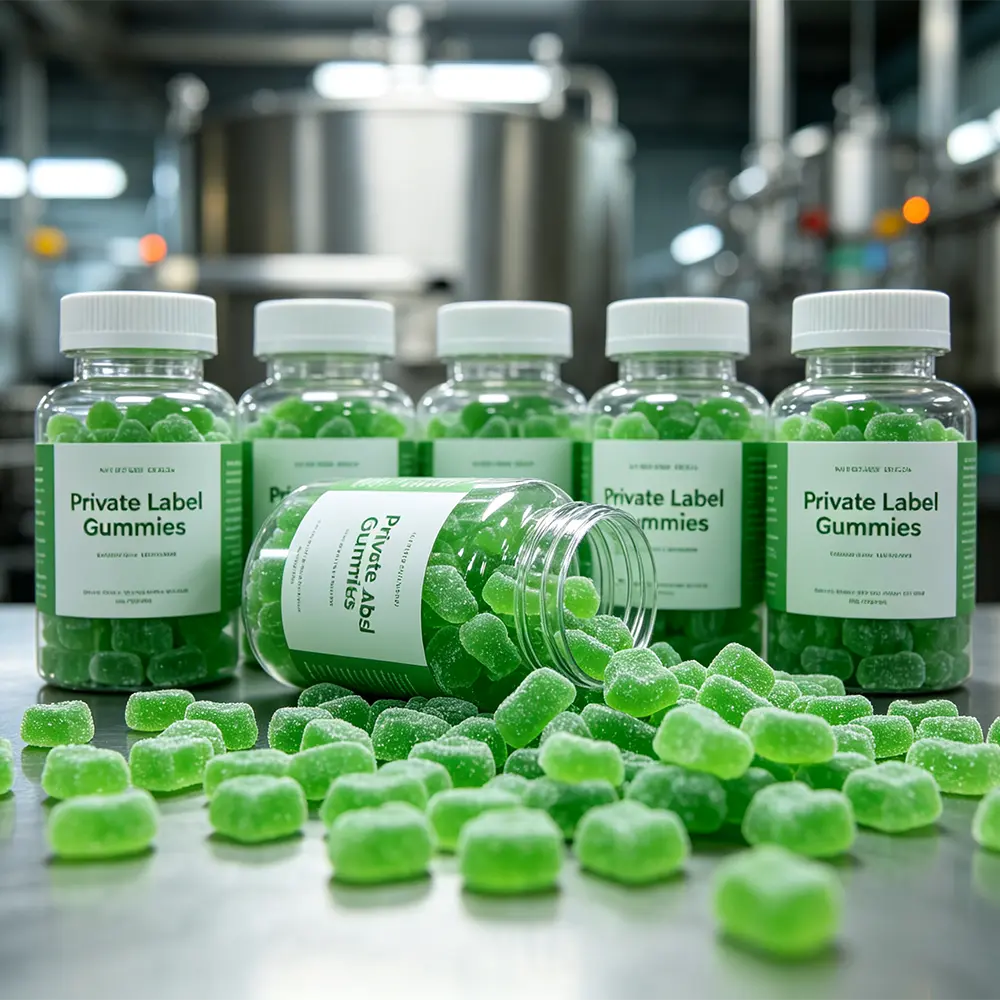
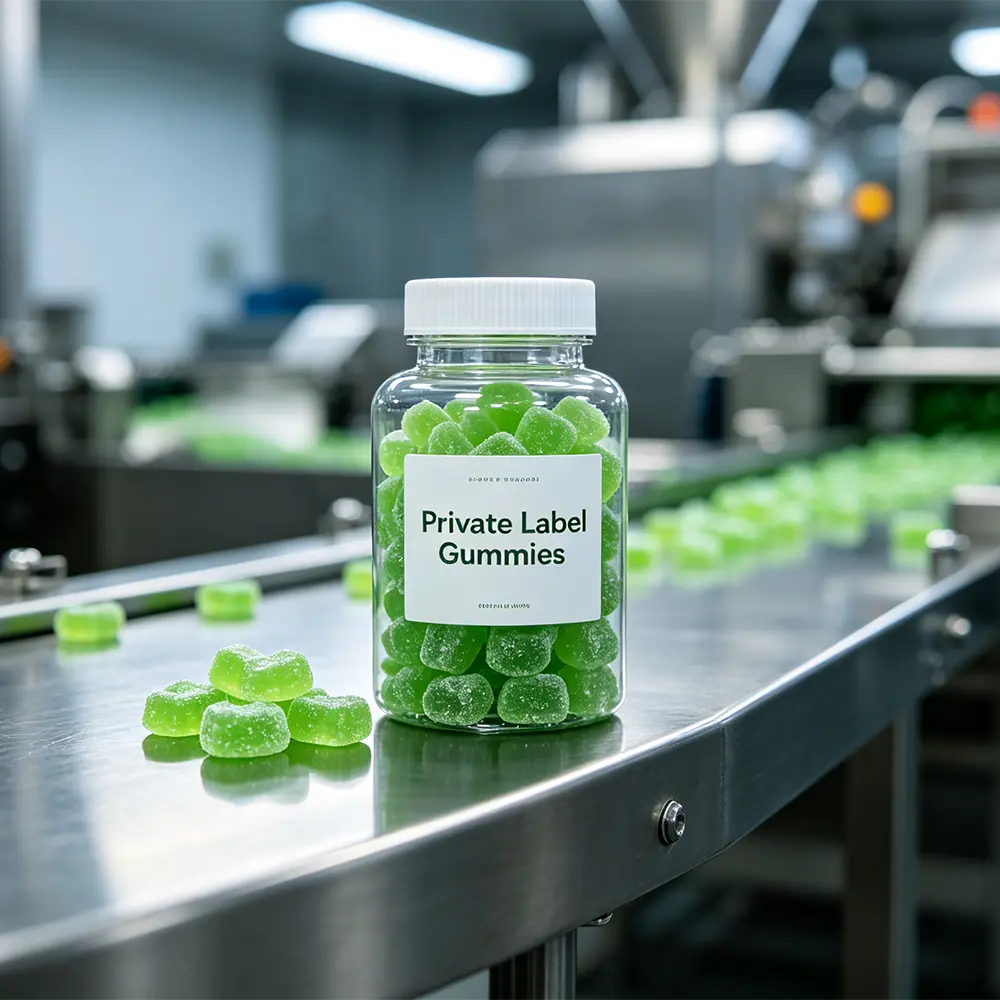
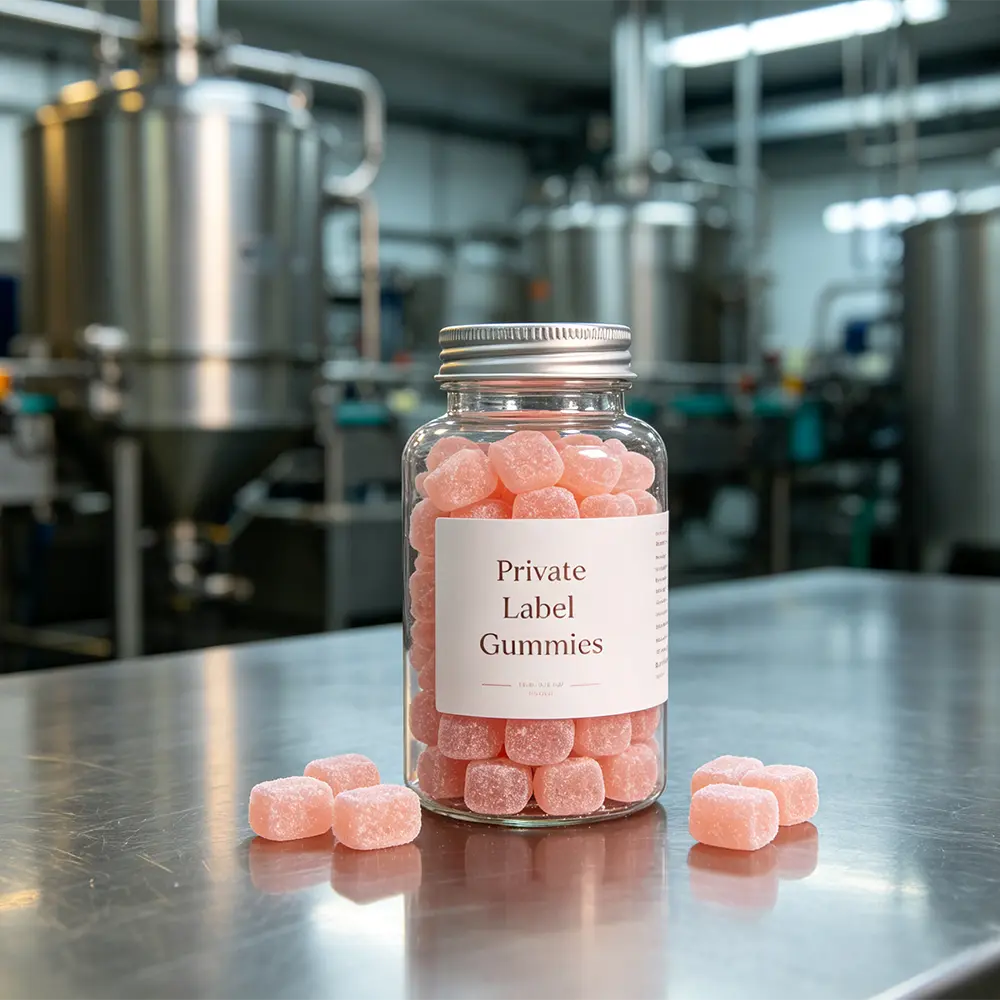
Gummy Supplement Manufacturing has become one of the fastest-growing segments in the nutraceutical industry due to high consumer preference for chewable formats. Reliable gummy supplement manufacturers use pectin or gelatin-based gelling agents, precision temperature control during cooking, and automated molding systems to make gummy products with consistent shape, texture, and dosage accuracy.
Capsules
Capsule production supports both gelatin and vegetarian shells, offering flexibility for powder, granule, and pellet fills. This format is preferred for formulations requiring precise dosing or ingredient separation within a single serving.
Tablets
Tablet manufacturing involves blending, wet or dry granulation, compression, and optional coating. This format suits high-density formulations and allows for extended-release or enteric-coated variants.
Powders
Powder supplements offer high dosing flexibility and are common in sports nutrition, meal replacement, and functional food applications. Manufacturing focuses on particle size uniformity, flowability, and solubility.
Liquid Drops
Liquid drop manufacturing requires precise filling technology and stability testing to ensure consistent dosing and shelf life, particularly for pediatric and geriatric formulations.
Practical Insights: Operational Dimensions
Production Capabilities
A manufacturer’s daily and annual output directly impacts lead times and order fulfillment reliability. Facilities with daily outputs exceeding 10 tons and annual capacities above 4,000 tons can accommodate both large-scale orders and seasonal demand spikes without compromising delivery schedules.
Quality Control Systems
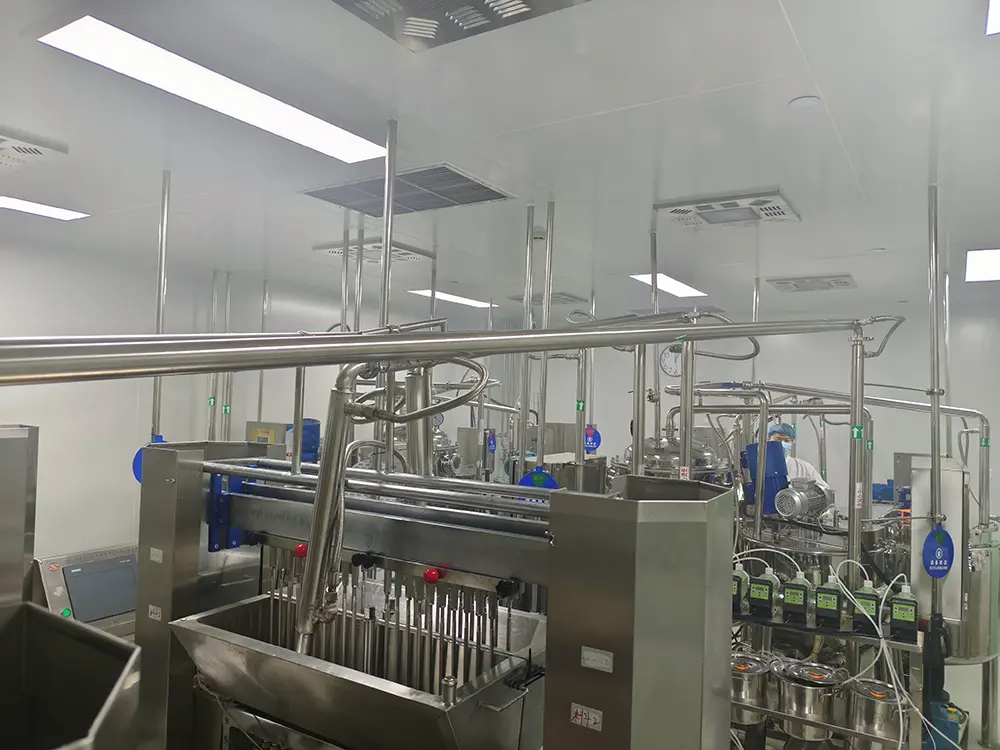
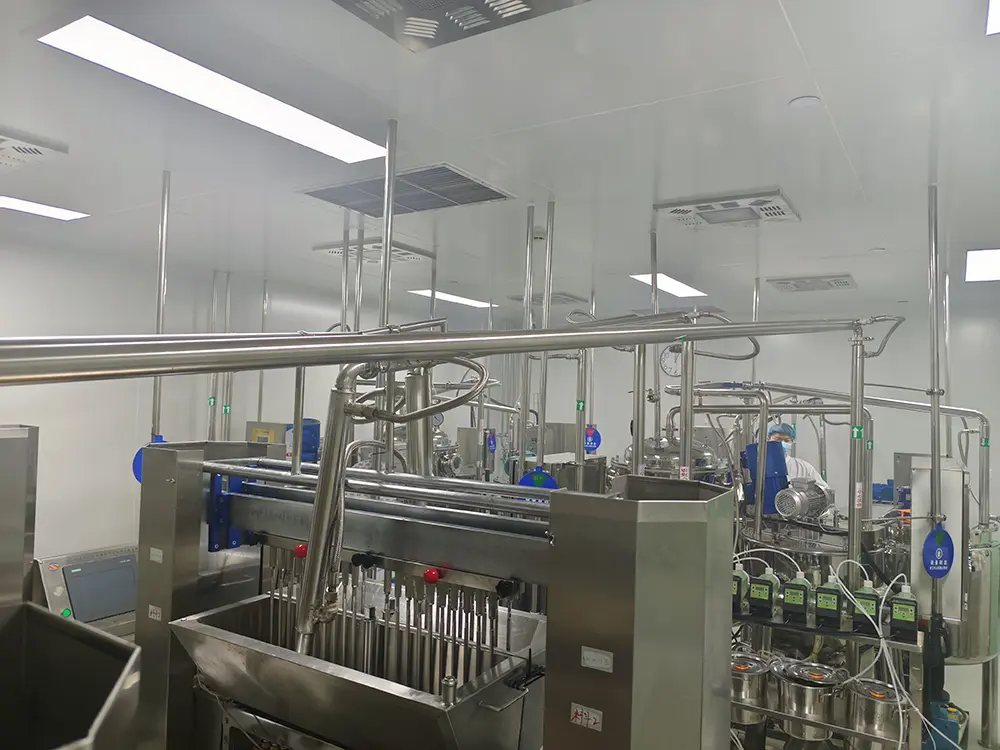
Robust quality control requires multiple certification layers. Manufacturers holding ISO9001, ISO22000, HACCP, GMP, FDA registration, and BRC certifications demonstrate systematic approaches to hazard prevention, process control, and continuous improvement. Cleanroom classifications—typically 100,000-class for production and 10,000-class for R&D—indicate the physical infrastructure supporting contamination control.
Scalability and MOQ Flexibility
Manufacturers offering flexible minimum order quantities serve a broader range of clients, from startups conducting initial market tests to established brands running large-scale production. The ability to scale from trial batches to full production within the same facility ensures formulation consistency across batch sizes.
Regulatory Compliance
Compliance requirements vary by destination market. Manufacturers serving international clients must navigate FDA dietary supplement regulations (21 CFR Part 111), EU food supplement directives, and region-specific labeling and ingredient restrictions. Documentation traceability—from raw material certificates of analysis to finished batch records—is non-negotiable for regulatory audits.
Technical Parameters for Supplement Manufacturing Facility Assessment
| Parameter | Baseline Standard | Advanced Standard | Significance |
|---|---|---|---|
| Cleanroom Classification | 100,000-class | 100,000-class production + 10,000-class R&D lab | Controls airborne particles and microbial contamination during production and formulation development |
| Daily Output Capacity | 5–10 tons | 16+ tons | Determines ability to fulfill large-volume orders and handle demand surges |
| Annual Production Capacity | 1,000–3,000 tons | 5,000+ tons | Indicates long-term scalability and infrastructure investment level |
| Annual New Formulation R&D | 200–500 formulations | 2,000+ formulations | Reflects R&D team depth, innovation capability, and formulation library breadth |
| Certification Coverage | GMP, ISO22000 | GMP, ISO9001, ISO22000, HACCP, FDA, BRC, FSSC 22000, HALAL, KOSHER | Broader certification enables access to more international markets and signals quality maturity |
| MOQ Flexibility | Fixed high MOQ | Adjustable MOQ from trial to full scale | Accommodates brands at different growth stages and reduces initial market entry risk |
| Service Scope | Production only | Full turnkey: formulation, production, packaging, compliance, export | Reduces vendor coordination complexity and shortens time to market |
B2B Decision Framework: Selecting a Manufacturing Partner
Evaluate R&D Depth
Manufacturers with postdoctoral-level scientific leadership and pharmaceutical-grade laboratories offer a significant advantage in formulation optimization, stability testing, and novel delivery system development. The ability to research and develop 2,000 or more new formulations annually indicates a mature R&D infrastructure capable of supporting complex product pipelines.
Verify Certification Coverage
Cross-reference the manufacturer’s certification portfolio against your target market requirements. A facility holding both GMP and BRC certifications, for example, meets both U.S. and EU market access standards simultaneously. Certifications such as HALAL and KOSHER further expand distribution potential into specialized consumer segments.
Assess Production Scale Against Your Growth Trajectory
A partner’s maximum capacity should exceed your projected 24-month demand by a comfortable margin. Under-capacity leads to scheduling conflicts and extended lead times as your brand scales. A facility with 5,000+ tons of annual capacity provides sufficient headroom for most mid-to-large brand growth scenarios.
Confirm Vertical Integration
Manufacturers controlling formulation development, raw material sourcing, production, packaging, and export logistics under one roof reduce coordination complexity, communication lag, and quality control gaps that frequently occur in multi-vendor supply chains.
Request Batch Record Transparency
Access to detailed batch records, including in-process control data and final release testing results, provides objective evidence of a manufacturer’s operational consistency and regulatory compliance posture. This documentation is also essential for your own regulatory filings and audit readiness.
Conclusion
Selecting the right private label supplement manufacturer is a strategic decision that directly impacts product quality, regulatory compliance, and brand reputation. Brands should prioritize manufacturers with demonstrated R&D capabilities, comprehensive certification coverage, scalable production infrastructure, and transparent quality systems. A thorough facility assessment—anchored in verifiable technical parameters and operational track records—reduces partnership risk and supports long-term brand growth in the competitive nutraceutical market.
Frequently Asked Questions
Q: What is the typical minimum order quantity for private label supplements?
A: MOQs vary by manufacturer and product format. Gummy supplements typically require 10,000–50,000 units per batch, while capsules and tablets may start at 5,000 units. Some manufacturers offer lower MOQs for trial runs.
Q: How long does the private label supplement production process take?
A: Standard lead times range from 30 to 60 days, depending on formulation complexity, raw material availability, and production scheduling. Initial projects with new formulations may require 60–90 days.
Q: What certifications should a private label supplement manufacturer hold?
A: Essential certifications include GMP, ISO22000, HACCP, and FDA registration. Additional certifications such as BRC, HALAL, KOSHER, and FSSC 22000 broaden market access and demonstrate quality system maturity.
Q: Can private label manufacturers develop custom formulations?
A: Yes. Manufacturers with in-house R&D teams can develop proprietary formulations based on target ingredient profiles, dosage requirements, and desired product claims, subject to regulatory constraints in the destination market.
Q: What dosage formats are available through private label manufacturing?
A: Common formats include gummies, capsules, tablets, powders, and liquid drops. Some manufacturers also produce softgels, effervescent tablets, and stick packs depending on their equipment configuration.
Q: How is quality assurance maintained in supplement manufacturing?
A: Through a combination of raw material testing, in-process controls, finished product testing, cleanroom environments, and adherence to GMP protocols. Third-party laboratory testing further validates internal quality data for independent verification.
About Shenzhen Gothink Biotech Co., Ltd.
Shenzhen Gothink Biotech Co., Ltd. is a leading dietary supplement manufacturer and nutrition supplement supplier based in China, providing comprehensive OEM, ODM, CMO, and CDMO services. The company delivers end-to-end turnkey solutions spanning product consultation, formulation development, custom design, manufacturing, packaging, and marketing support for global health brands.
Manufacturing and Quality Infrastructure
The company operates a GMP-certified facility featuring a 100,000-class cleanroom, with a daily output of 16 tons and an annual production capacity of 5,000 tons. A 10,000-class pharmaceutical-grade R&D laboratory supports precise formulation development. The facility holds ISO9001, ISO22000, HACCP, FDA, HALAL, GMP, KOSHER, BRC, FSSC 22000, PJPH, and Vegan certifications, ensuring world-class quality and regulatory compliance across international markets.
R&D Leadership
The company’s chief scientific advisor is a professor and doctoral advisor at the University of Science and Technology of China, with postdoctoral research experience at Cold Spring Harbor Laboratory, Emory University School of Medicine, and The Ohio State University. With over 30 publications in journals including Science and PNAS and more than 250 international citations, the scientific leadership brings deep expertise in structural biology, synthetic biology, and biochemistry. The R&D team conducts formulation research on approximately 2,000 new products annually.
Product Categories and Customization Services
The company provides custom manufacturing across multiple dosage formats:
- Gummy contract manufacturing using natural gelling agents such as pectin and carrageenan, covering vitamin gummies, herbal-infused gummies, and vegan low-sugar options
- Capsule manufacturing in both gelatin and vegetarian shells with precise dosing and strict quality control
- Tablet manufacturing covering powder blending, granulation, compression, and coating for nutritional and functional health products
- Powder supplement manufacturing with customizable particle size, flavor profiles, and solubility in sachets, jars, and pouches
- Liquid drop manufacturing with advanced filling technology for precise dosing and high product stability
OEM/ODM and Wholesale Capabilities
With flexible MOQs accommodating both small trial runs and full-scale bulk production, the company serves online sellers, retailers, established brands, and startups. Its one-stop OEM/ODM service covers formulation, design, compliance, and export logistics, supporting brands from initial concept through market launch and scale-up. The combination of customized formulation services and large-scale production capacity—backed by pharmaceutical-grade quality systems—positions Gothink Biotech as a reliable partner for private label, wholesale, and contract supplement manufacturing operations worldwide.