
Direct Answer: Accelerated Stability vs. Real-Time Shelf-Life for New Gummy Formulations
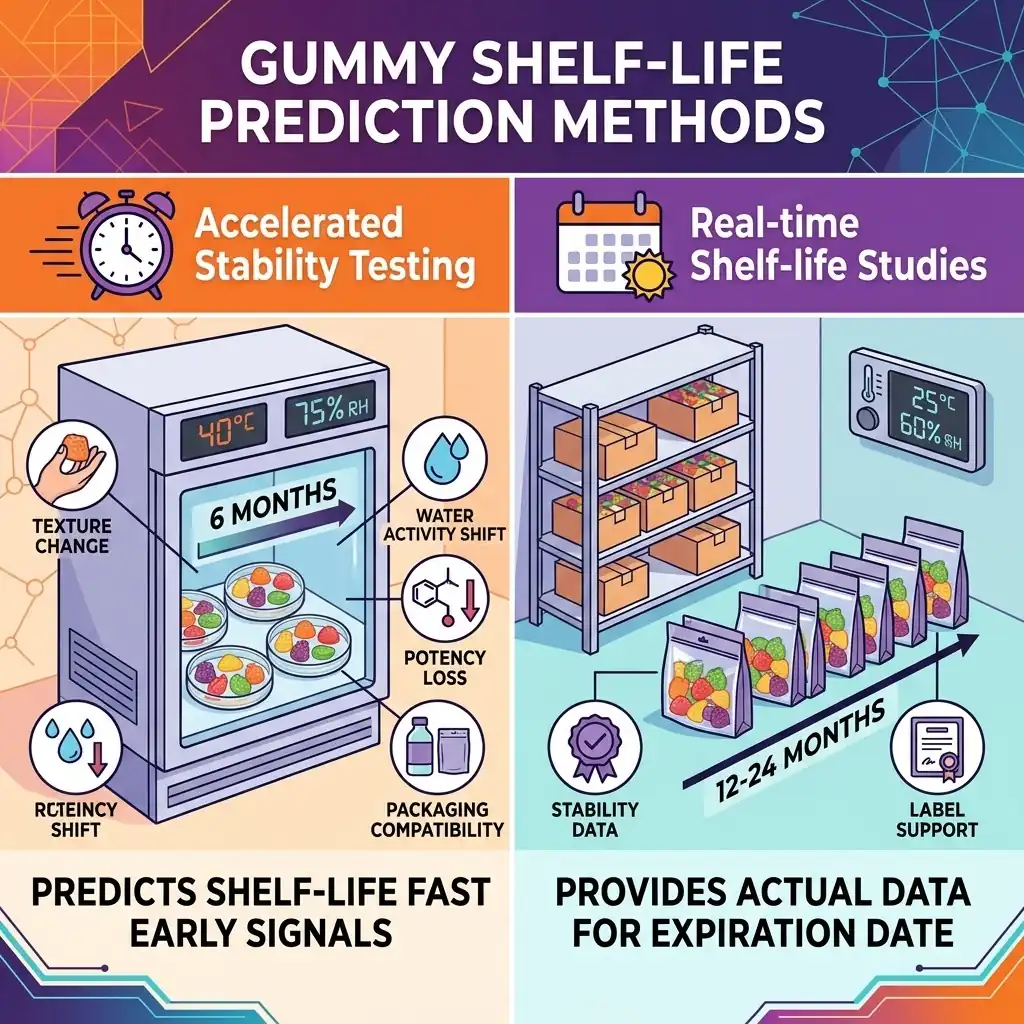
Accelerated stability testing predicts shelf-life by storing samples under stressed conditions, typically 40°C / 75% relative humidity for 6 months, while real-time shelf-life studies store samples under recommended storage conditions, typically 25°C / 60% RH, for the full intended shelf-life period of 12 to 24 months.
For a new gummy formulation, accelerated testing gives fast, early signals about potency loss, water activity shift, texture hardening, and packaging compatibility. Real-time studies provide the actual data required to support an expiration date on the label. Any experienced Gummy Manufacturer will use accelerated data for internal go/no-go decisions and formulation optimization, but will require real-time data for final shelf-life validation, especially for heat-sensitive actives, high-moisture pectin systems, and probiotic gummies.
Why Stability Strategy Matters for Supplement Brands
Brands often search for stability testing when they have a new formula and need to know how quickly they can launch and what risks could cause returns or complaints.
In gummies, stability is not only about active ingredient potency. Texture, chewiness, water activity, pH, and microbial control change together. A gummy that is soft at month zero can become hard, sticky, or weeping by month six if moisture control, gel system selection, or packaging is wrong.
For private label buyers and custom formulation projects, the decision to use accelerated data alone or to invest in parallel real-time studies directly affects launch timing, cost, regulatory documentation, and retailer confidence.
Accelerated Stability Testing: How It Works in Gummy Manufacturing
Typical Conditions and Duration
Industry practice follows ICH Q1A principles adapted for dietary supplements. The most common accelerated condition is 40°C ± 2°C / 75% ± 5% RH. Intermediate condition is 30°C / 65% RH. Testing points are typically 0, 1, 2, 3, and 6 months.
A pilot stability batch should be manufactured using the same process, equipment type, and packaging intended for commercial production. Using lab-scale samples without drying, coating, and final packaging will give misleading results for gummies.
What Accelerated Testing Can Reveal Early
Accelerated conditions speed up chemical and physical changes:
- Potency loss: Vitamin C, B vitamins, methylated folate, and botanical markers can degrade faster under heat. This helps set overage strategy.
- Water activity (Aw) and moisture migration: Gummies with Aw above 0.65 are more prone to microbial growth and texture change. Accelerated storage shows if Aw climbs or if the gummy loses moisture to the environment.
- Gel structure breakdown: Pectin is sensitive to low pH and high heat. Gelatin is sensitive to prolonged high temperature and cross-linking with certain actives. Accelerated storage quickly exposes hardening or syneresis.
- Packaging compatibility: Poor seal integrity or high moisture vapor transmission rate (MVTR) pouches will show stickiness and clumping within weeks at 40°C.
Limitations Specific to Gummies
Accelerated testing does not accurately predict real-time behavior for all gummy systems. The Arrhenius-based Q10 model assumes chemical degradation doubles with every 10°C increase. That assumption fails when physical changes dominate.
For example, gelatin gummies may harden significantly at 40°C due to continued protein cross-linking and moisture loss that would not occur at 25°C. Pectin gummies with high-acid fruit extracts may show softening or weeping under heat that is exaggerated compared to real-time. For this reason, experienced manufacturers never use accelerated data alone to assign a 24-month expiry for a new Private Label Gummy or custom formula.
Real-Time Shelf-Life Studies: The Industry Standard for Label Claims
Typical Conditions and What Is Monitored
Real-time studies store product at 25°C ± 2°C / 60% ± 5% RH for the full intended shelf-life, often 12, 18, or 24 months. Testing intervals are typically 0, 3, 6, 9, 12, 18, and 24 months.
For each time point, a qualified lab tests:
- Active ingredient assay and degradation products
- Water activity, moisture content, and pH
- Texture profile (hardness, springiness) and organoleptic attributes (color, flavor, odor)
- Microbiology: total plate count, yeast and mold, and specific pathogens per market requirements
- Packaging appearance and seal integrity
What Real-Time Confirms That Accelerated Cannot
Real-time data shows how the product actually behaves on a shelf. It captures slow processes that accelerated conditions miss, such as gradual flavor loss from natural flavors, color fading from anthocyanins, slow vitamin-mineral interactions, and sugar crystallization in low-moisture formulas.
For brands selling to retail or export markets, buyers and QA teams expect real-time data to justify shelf-life. Accelerated data is considered supporting, not definitive.
Accelerated vs Real-Time: Side-by-Side Comparison for Brand Owners
| Factor | Accelerated Stability Testing | Real-Time Shelf-Life Study |
| Purpose | Early risk screening, overage calculation, packaging selection | Support expiry date and label claim, retailer documentation |
| Conditions | 40°C / 75% RH, 6 months | 25°C / 60% RH, 12-24 months |
| Gummy Relevance | Detects rapid hardening, stickiness, potency drop, but may overestimate physical change | Shows true texture, Aw, and potency drift under normal storage |
| Regulatory Acceptance | Useful for internal development, not sufficient alone for shelf-life claim | Required by most QA systems and retail partners for final expiry |
| Cost and Timing | Faster, lower cost, informs formulation changes early | Longer, higher cost, but de-risks large commercial batches |
| Best Use for New Formulations | Go/no-go decision, set initial overage, compare pectin vs gelatin systems | Final validation after formula lock, before large PO and market launch |
Manufacturing Stages That Directly Influence Stability Outcomes: What to Expect From a Gummy Manufacturer
Stability is built during manufacturing, not just tested after. A technically capable Gummy Manufacturer controls these stages with stability in mind:
- Formula development and gel system selection: Pectin requires pH 3.2-3.8 and soluble solids control for proper set. Gelatin requires controlled bloom strength and setting time. The choice affects heat tolerance and texture stability. Acidic actives like vitamin C or apple cider vinegar powder must be buffered or added after pH adjustment to avoid breaking the pectin network.
- Raw material testing and active addition timing: Heat-sensitive ingredients such as probiotics, methylcobalamin, and some botanicals cannot be added during cooking at 90-110°C. They are dosed at low-temperature holding, typically 70-80°C for pectin and 60-70°C for gelatin, with short residence time to limit degradation. The manufacturer should document addition temperature and hold time.
- Batch preparation and moisture control: Final brix, cooking vacuum, and depositing temperature determine initial moisture and water activity. Overcooking reduces moisture but can cause browning and active loss. Undercooking raises Aw and microbiological risk.
- Drying or conditioning: After demolding, gummies are conditioned in drying rooms at controlled temperature and humidity to reach target Aw, usually 0.55-0.65 for most non-probiotic gummies. Skipping or shortening drying to save time creates a product that tests well at day zero but fails at month three.
- Coating: Oil-wax or carnauba coating reduces surface stickiness and slows moisture exchange. For high-humidity markets, coating uniformity is a stability factor.
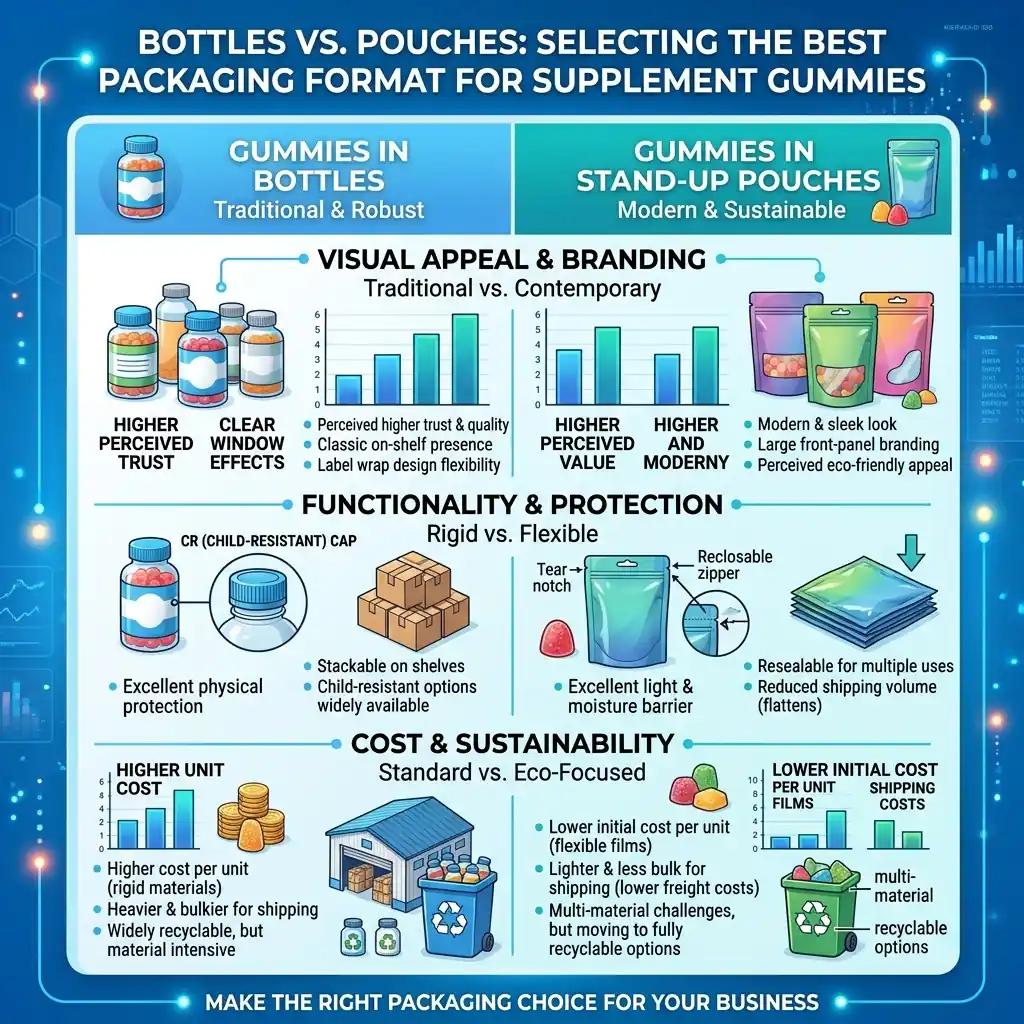
- Packaging: Bottles with desiccant, high-barrier pouches, or blister with low MVTR film behave very differently at 40°C / 75% RH. Stability batches must be packed in final commercial packaging, not zip bags.
Each stage explains why stability protocols require tight process records, not just finished product testing.
Formulation Factors That Make Stability More Difficult
Not all gummy formulas present the same risk. The following factors increase the need for both accelerated and real-time data:
- High-dose actives: Calcium, magnesium, or fiber loadings above 200 mg per gummy increase gummy weight to 3.5-5 g, raise Aw, and weaken gel structure. This affects serving count and chew.
- Hygroscopic ingredients: Choline, creatine, and some mineral chelates pull moisture, leading to sticky surfaces and potency loss during accelerated storage.
- Acidic or low-pH actives: Vitamin C, ACV powder, and many fruit extracts lower pH. In pectin systems, pH below 3.2 can cause pre-gelation and grainy texture. In gelatin, sustained low pH can hydrolyze protein and soften texture over time.
- Heat-sensitive actives: Probiotics, vitamin D3 oil, and some enzymes lose activity if added too early. Process adjustment is required, and real-time viability testing is needed because accelerated heat kills probiotics at a rate that does not reflect room temperature survival.
- Botanical extracts: High-tannin or high-polyphenol extracts create color shift, bitterness, and interaction with pectin. Flavor masking with natural flavors and bitterness blockers adds complexity to stability.
- Mineral salts: Iron, zinc, and calcium can cause off-notes, color spotting, and catalyze oxidation of flavors and vitamins. Chelated forms help but increase cost.
Quality Control and Testing Protocol: What a Qualified Gummy Manufacturer Should Provide
For new formulations, ask the manufacturer to show a written stability protocol before batch manufacture. A credible protocol includes:
- Three pilot batches or at least one representative batch made at pilot-to-commercial scale, with full batch records
- Testing at both accelerated and real-time conditions in final packaging
- Methods: HPLC for vitamins, viable count for probiotics, Aw by water activity meter, texture analyzer for hardness, and USP or customer-specified microbiology methods
- Acceptance criteria for potency (e.g., 90-110% of label claim at expiry with justified overage), Aw (e.g., ≤0.75 for safety, lower target for texture), and organoleptic
- Documentation: raw material CoA, manufacturing batch record, stability data table, and trend analysis
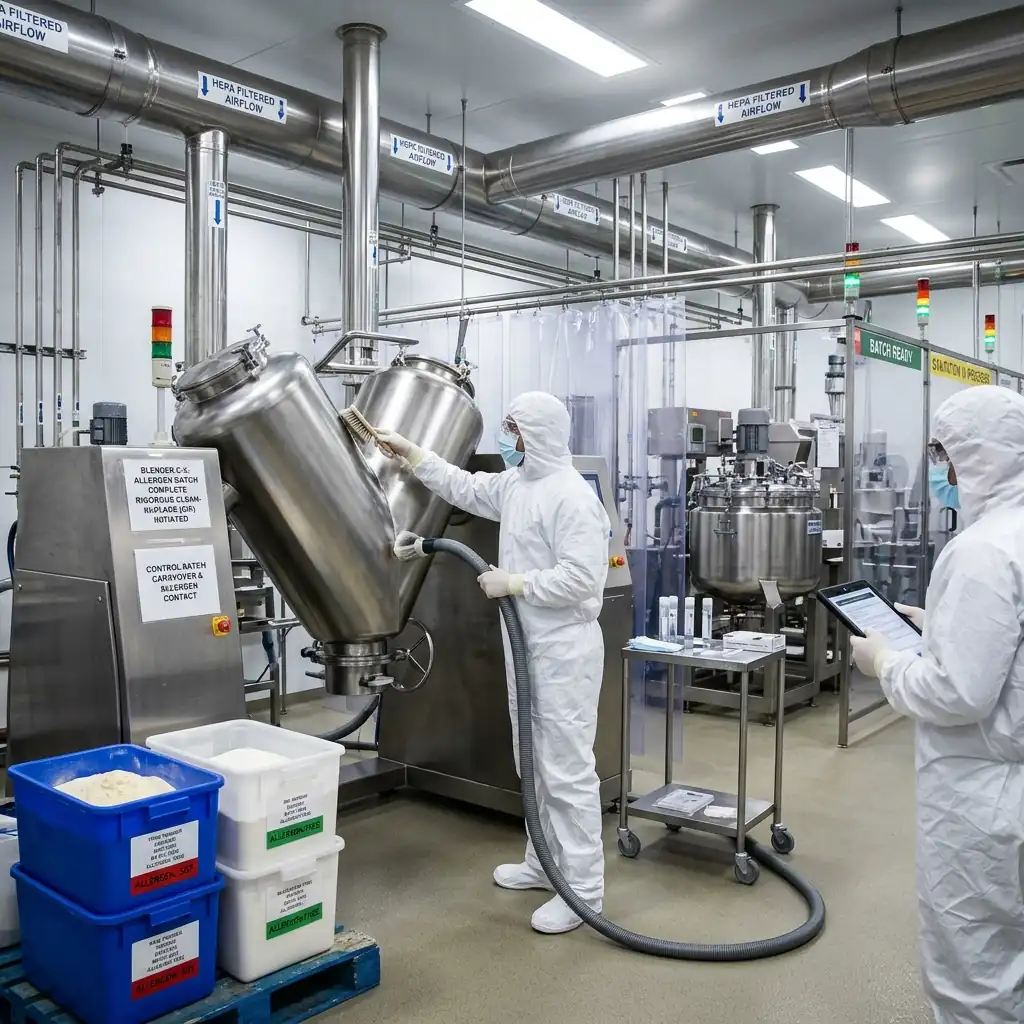
Shenzhen Gothink Biotech Co., Ltd. operates a GMP-certified facility with a 100,000-class cleanroom and a 10,000-class R&D laboratory. For stability projects, its R&D team conducts formula development, pilot-scale trials, and finished-product testing to support shelf-life validation across gummy, capsule, and powder formats. This structure allows parallel accelerated and real-time studies without mixing lab samples with commercial production.
Cost, MOQ, and Lead Time Implications of Stability Testing
Stability testing affects commercial planning in three ways:
- Batch size and MOQ: Stability requires 200-400 gummies per time point per condition, plus retain samples. For a 7-point real-time study in two packaging types, you may need 5,000-8,000 gummies dedicated to stability. If your Private Label Gummy uses an existing validated base, the manufacturer may already have 12-month data and you can avoid a full new study. For a truly new formulation, factor this quantity into pilot MOQ.
- Testing cost: Potency assays, especially for multiple actives and probiotics, dominate cost. Each time point may require $300-$800 in external lab fees depending on actives and markets. Accelerated 6-month studies cost less because there are fewer pulls, but they do not replace real-time budget.
- Lead time: Accelerated results are available in 6 months, but real-time claims need 12-24 months. Many brands launch with 12-month real-time plus 6-month accelerated supporting data, with a commitment to continue real-time to 24 months and extend expiry later. This approach balances cash flow and risk.
Overage strategy also impacts cost. Setting 20-30% overage for vitamin C based only on accelerated loss may be excessive if real-time loss is only 8%. Data-driven overage reduces active cost and avoids super-potent early months.
How to Evaluate a Gummy Manufacturer for Stability Capability
When comparing suppliers, look for verifiable capabilities, not general assurances:
- GMP, ISO22000, HACCP, BRC, and FSSC 22000 quality systems with documented stability SOPs
- In-house R&D with pilot depositing line and controlled drying rooms, not only commercial-scale equipment
- Experience with your specific active category: probiotics, high-dose minerals, or acidic botanicals each require different process controls
- Ability to measure Aw, pH, brix, and texture in-process, and to run metal detection and inspection before packaging
- Packaging compatibility assessment: MVTR data for pouches and bottles, desiccant recommendation logic
- Documentation support: CoA, CoM, allergen statement, batch traceability, and stability report suitable for retailer QA review
- Export experience and understanding that manufacturing certification does not equal market-specific product approval
Common Mistakes Brands Make With Shelf-Life Validation
- Using lab-made samples in zip bags for accelerated testing, then applying results to commercial packaging. Packaging changes water activity outcomes dramatically.
- Locking expiry at 24 months based solely on 3-month accelerated data for a new high-dose or probiotic formula.
- Adding heat-sensitive actives during cooking to simplify process, then compensating with excessive overage that creates taste and cost issues.
- Ignoring water activity and focusing only on potency. A gummy that passes assay but has Aw of 0.72 at month six will have texture and microbiological risk.
- Switching gel system late without restarting stability. Changing from gelatin to pectin to meet vegan claims requires a new stability study because pH, Aw target, and drying are different.
Practical Checklist Before Requesting an OEM/ODM Quotation
Provide this information to shorten development time and get accurate stability planning:
- Target actives, dose per serving, and daily serving count
- Gel system preference: gelatin, pectin, or vegan requirement
- Dietary claims: vegan, halal, kosher, sugar-free, allergen-free
- Flavor, color, and sweetener system preferences and any ingredients to avoid
- Target gummy weight and shape, and any mold constraints
- Intended shelf-life claim and storage conditions for target market
- Packaging format: bottle count, pouch, blister, and whether desiccant is acceptable
- Whether this is a Private Label Gummy from an existing base or a new custom formulation requiring full stability
- Any existing stability data or prior complaints related to texture or potency
Frequently Asked Questions
How long does accelerated stability take for a new gummy formulation?
Standard accelerated testing runs 6 months at 40°C / 75% RH with pulls at 0, 1, 2, 3, and 6 months. Initial trends for texture and potency are often visible by month 2 to 3, but a full 6-month data set is needed to estimate if a formula is viable and what overage may be needed.
Can I launch a new gummy with only accelerated data?
You can make an internal business decision with accelerated data, but most retail partners, importers, and quality systems require at least 12 months of real-time data in final packaging to support an expiry date. For heat-sensitive actives like probiotics and methylated vitamins, accelerated data alone is not reliable for label claims.
Why does my gummy harden or become sticky during accelerated testing?
Hardening in gelatin systems is often caused by continued cross-linking and moisture loss at high temperature. Stickiness or weeping is often caused by high initial water activity, insufficient drying, hygroscopic actives, or high MVTR packaging. Adjusting drying target, coating, and packaging barrier usually corrects it, but the correction must be validated in real-time.
What batch size is needed for stability studies?
Stability batches should be representative of commercial process, typically pilot scale of 10-50 kg depending on equipment. You need enough gummies to cover all time points, conditions, and retain samples. For two conditions and one packaging type, plan for at least 2,000-3,000 gummies. Discuss exact numbers with your manufacturer based on your testing protocol.
Does a Private Label Gummy need a new stability study if the formula already exists?
If you are using an existing validated base without changing actives, dose, gel system, sweetener, or packaging, many manufacturers can provide existing stability data. If you change flavor, color, active dose, add a new extract, or change bottle to pouch, you need at least a bridging stability study, often 6 months accelerated plus ongoing real-time.
What stability testing should I ask a Gummy Manufacturer to include in a quotation?
Ask for: batch record for pilot batch, final packaging, accelerated and real-time conditions, test list (potency, Aw, pH, texture, microbiology, organoleptic), testing intervals, acceptance criteria, overage rationale, and final stability report. Also ask who performs testing, in-house or third-party ISO 17025 lab, and whether CoA and stability data are included in MOQ price.
Next Step: Align Your Formulation With a Validated Stability Plan
Choosing between accelerated and real-time studies is not an either-or decision. Use accelerated testing to move fast, identify formulation weaknesses, and select packaging. Use real-time studies to lock expiry, support retailer QA, and protect brand reputation.
If you are evaluating a new formulation, share your active list, dose, gel system preference, target shelf-life, and packaging format. A capable manufacturing partner will recommend whether your project can start from an existing Private Label Gummy stability package or requires a full custom protocol.
Explore our technical resources in the Knowledge Hub for Supplement Manufacturing and Formulation R&D Insights, or contact our team to review your gummy manufacturing requirements and request an OEM/ODM quotation with a stability plan aligned to your market.
Jack Luo|Senior Technical Advisor, Nutrition Research Center Representing Gothink Biology, a GMP-certified dietary supplement manufacturer based in Shenzhen, China.