
Direct Answer: What Causes Browning in Continuous Gummy Cooking?
Caramelization and Maillard reaction are two distinct heat-induced browning pathways that occur during gummy syrup cooking. Caramelization is the direct thermal decomposition of sugars above ~160°C. Maillard reaction is the reaction between reducing sugars and amino groups from gelatin, proteins, amino acids, or botanical extracts at much lower temperatures, starting around 90-110°C in high-solids systems.
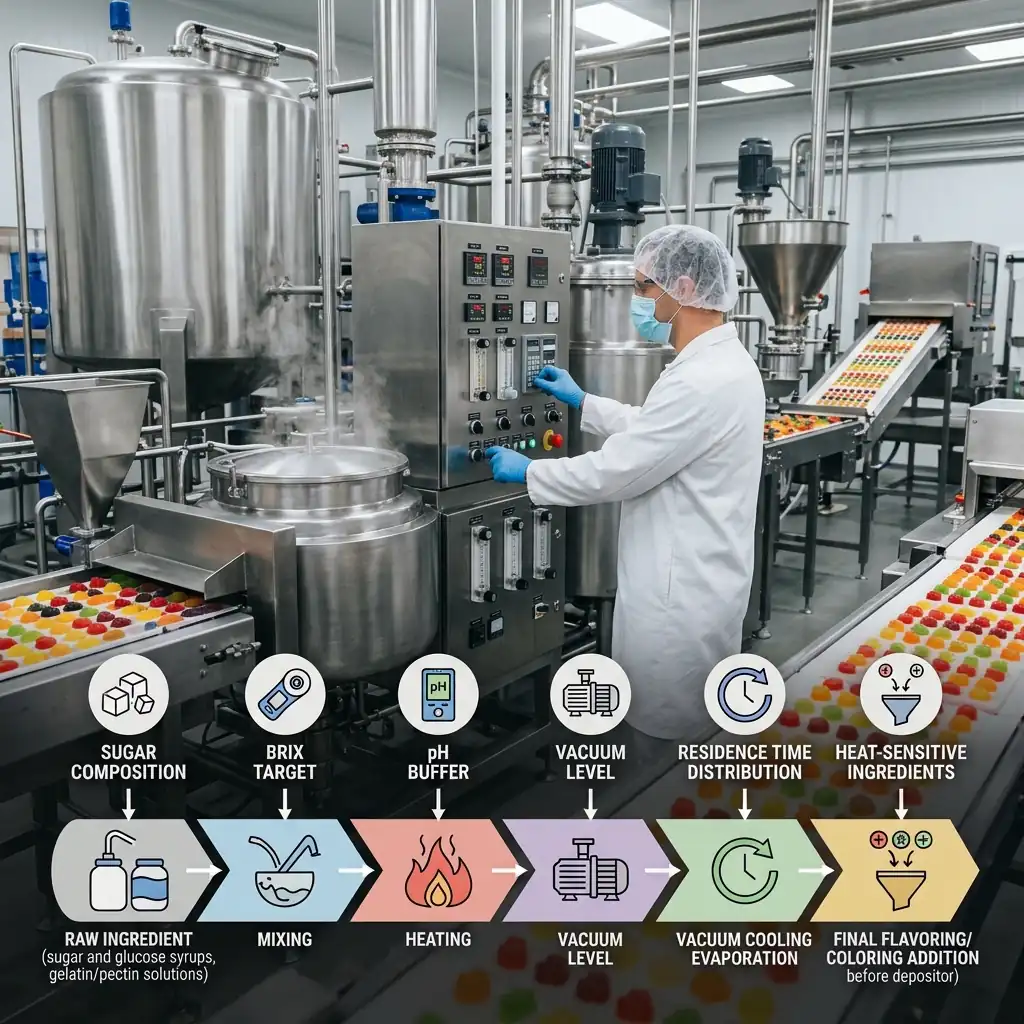
In continuous gummy cooking, both reactions are accelerated by high temperature, long residence time, high solids concentration, and low pH combined with high amino nitrogen load. A qualified Gummy Manufacturer controls them not by simply lowering temperature, but by managing sugar composition, Brix target, pH buffer, vacuum level, residence time distribution, and the point where heat-sensitive ingredients are added.
Why Browning Control Matters for Supplement Brands
Uncontrolled browning is not just a color issue. It directly affects batch consistency, flavor profile, active ingredient stability, and consumer perception of a private label gummy.
For brand owners and procurement teams, browning variability creates three commercial risks. First, color drift batch to batch triggers consumer complaints and retail rejection, especially for light-colored products like apple pectin or collagen gummies. Second, Maillard byproducts can create bitter and burnt notes that flavor systems cannot mask without increasing flavor cost. Third, both reactions indicate thermal stress that can degrade heat-sensitive actives such as vitamin C, B vitamins, and certain botanical extracts.
In Gummy Manufacturing, continuous cooking amplifies these risks because the system runs for hours. A small temperature deviation in a heat exchanger compounds over time. Without tight process control, the first hour of production looks different from the sixth hour.
Caramelization vs. Maillard: Two Different Mechanisms
Buyers often group all browning as caramelization. From a formulation engineering perspective, the distinction determines the control strategy.
| Factor | Caramelization | Maillard Reaction |
| Reactants | Sugars alone, especially sucrose, glucose, fructose | Reducing sugars + amino groups from gelatin, whey, collagen, amino acids, or botanical proteins |
| Temperature Onset in Gummy Systems | Significant above 120-140°C at 78-82 Brix, severe above 150°C | Detectable from 90-110°C in high-solids, low water activity environment |
| pH Sensitivity | Accelerated by acidic conditions below pH 3.5 and alkaline above pH 8 | Strongly accelerated by higher pH, but still occurs at gummy pH 3.2-4.0 when amino load is high |
| Typical Markers | Yellow to amber color, caramel odor, slight drop in sweetness | Brown color, L* value drop, toasted or bitter notes, increase in 5-HMF under severe conditions |
In practical gummy formulation, pectin gummies are often more vulnerable to caramelization because pectin requires high solids and high-temperature cooking for setting. Gelatin gummies are more vulnerable to Maillard because gelatin itself supplies abundant amino groups.
How a Gummy Manufacturer Controls Caramelization and Maillard Reaction at Scale
Control in continuous lines depends on four interacting stages: syrup preparation, continuous cooking, active addition, and depositing. Each stage has different levers.
1. Syrup Preparation and Sugar Composition
The choice of sweetener system sets the baseline risk. Sucrose plus high-DE glucose syrup provides more reducing sugars, especially after inversion under heat and acid. Low-DE maltodextrin or low-reducing-sugar glucose syrups reduce Maillard substrate.
For white or light-colored gummies, many manufacturers limit fructose and invert syrup. Fructose caramelizes at a lower temperature than glucose and sucrose. In high-dose botanical formulas, replacing part of glucose syrup with isomalto-oligosaccharide or allulose alternatives changes the reaction kinetics, but also affects texture and cost. That trade-off must be tested during formulation development.
2. Continuous Cooking: Temperature, Vacuum, and Residence Time
Continuous cooking typically aims for 78-82 Brix before depositing. Reaching that solids level requires removal of water under heat. The key control variables are:
- Cooking temperature: Jet cookers and scraped-surface heat exchangers can reach 105-145°C. Higher temperature reduces residence time but increases localized overheating.
- Vacuum level: Applying vacuum of -0.06 to -0.09 MPa after atmospheric cooking lowers the boiling point and allows water flash-off at 90-105°C. This is the most effective single lever for reducing both reactions without extending cook time.
- Residence time distribution: In continuous systems, product near the heating wall stays hotter longer. A well-designed manufacturer monitors not just outlet temperature, but delta T across the exchanger and product flow rate. Holding tubes should be minimized.
- Solids approach: Stepwise concentration with pre-concentration to 70-75 Brix before final cooking reduces thermal load at final high-solids stage.
3. pH and Buffer Management
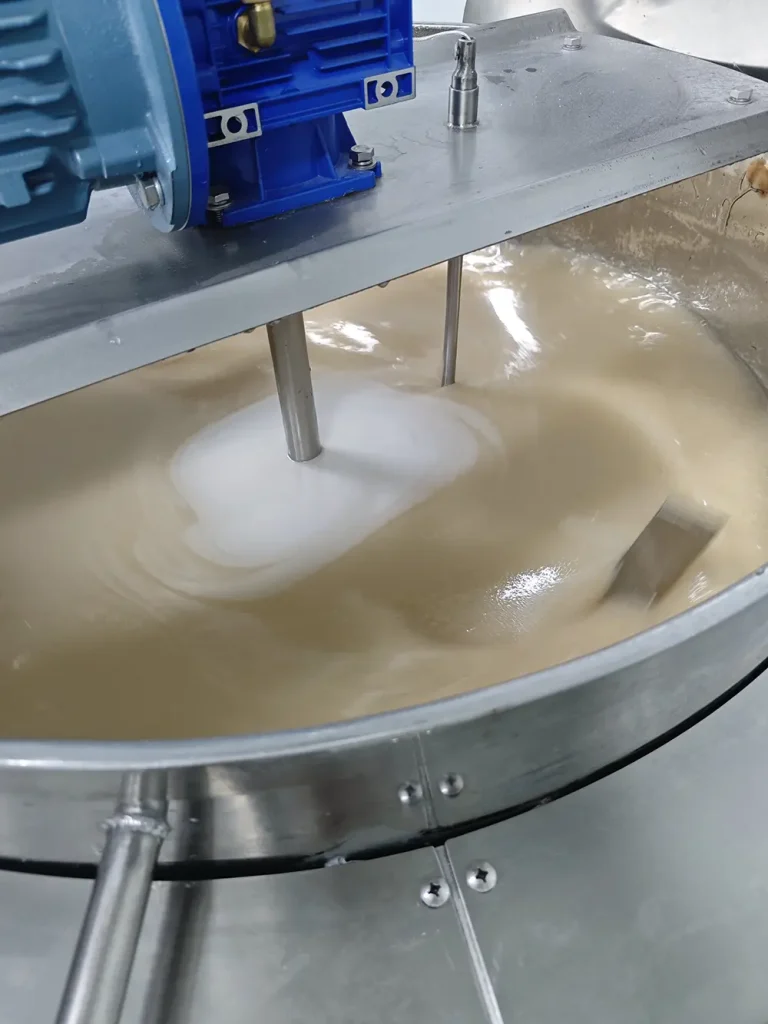
pH influences both gel setting and browning rate. For pectin, setting requires pH 3.2-3.8. Below pH 3.2, sucrose inversion accelerates, increasing reducing sugars and caramelization. Above pH 4.0, Maillard accelerates.
Experienced formulation teams use sodium citrate or citric acid buffer systems added after cooking, not before. Adding acid before cooking increases inversion during cooking. For gelatin, acid and flavor are added at 70-85°C in the flavor tank, after the main cooking step. This sequence separation is critical.
4. Amino Load and Ingredient Compatibility
High-protein actives such as collagen peptides, whey protein, or added amino acids like L-lysine dramatically increase Maillard potential. Botanical extracts with natural amino acids and reducing sugars also contribute.
When active ingredient loading is high, the gummy mass becomes darker even without overheating. In these cases, the manufacturer must evaluate:
- whether to use a gelatin with lower free amino content or switch to pectin or starch-based systems
- whether to pre-treat botanical extracts to reduce protein content
- whether to adjust depositing temperature from 75-85°C down to 65-75°C for gelatin systems
For mineral ingredients such as iron or zinc, the issue is not Maillard but metal-catalyzed oxidation that mimics browning. This requires chelated forms and separate evaluation of color stability.
Equipment and Process Design Differences in Gummy Manufacturing
Not all continuous lines handle thermal stress equally. When evaluating supplier capability, look at these process design points:
- Heat exchanger type: Tubular or plate exchangers with high shear create more uniform heating than direct steam injection for sensitive formulas.
- Vacuum cooking and flash chamber: A two-stage system with atmospheric cook followed by vacuum chamber reduces final cook temperature by 15-25°C.
- Online Brix and temperature monitoring: Continuous refractometer and mass flow meter feedback loops allow real-time adjustment of steam pressure and feed rate.
- Flavor and active addition point: Low-temperature dosing systems after vacuum, with static mixers and short holding time, protect heat-sensitive ingredients from residual heat.
- CIP and fouling control: Caramelized buildup on heat surfaces acts as an insulator and creates hot spots. Lines without frequent CIP show progressive browning during long runs.
Formulation Trade-Offs for Private Label Gummy Products
Product developers often request light color, high active dose, and clean label sugars. Those three goals conflict in continuous cooking.
A 3g gummy with 500mg apple cider vinegar powder plus vitamin B complex will naturally have higher amino and acid load. If the brand also requests 80% sugar content with sucrose and honey, Maillard risk increases sharply. Solutions include increasing gummy weight to 3.5-4.0g to reduce solids concentration stress, switching to pectin with lower amino load, or accepting a naturally darker color and adjusting flavor to complement caramel notes.
For sugar-free systems using maltitol or erythritol, caramelization behavior changes. Sugar alcohols do not caramelize the same way but can still undergo thermal degradation above 160°C and affect texture. Water activity control becomes more important because sugar alcohols are hygroscopic and influence drying requirements.
Quality Control and Shelf-Life Implications
Browning control must be verified through measurable quality systems, not visual inspection alone.
- Color measurement: L*a*b* values on a spectrophotometer, with L* tracking lightness. Set internal release specs such as L* > 55 for light pineapple gelatin gummies.
- Water activity and moisture: High water activity above 0.75 accelerates Maillard during storage. Target aw 0.60-0.72 for gelatin, 0.65-0.75 for pectin, depending on preservative system.
- 5-HMF monitoring: 5-Hydroxymethylfurfural is a thermal marker for severe heat exposure in sugar systems. Some manufacturers include it in stability protocols for light-colored products.
- Texture analysis: Overcooked pectin creates brittle texture. Overcooked gelatin can show reduced bloom strength and sticky surface.
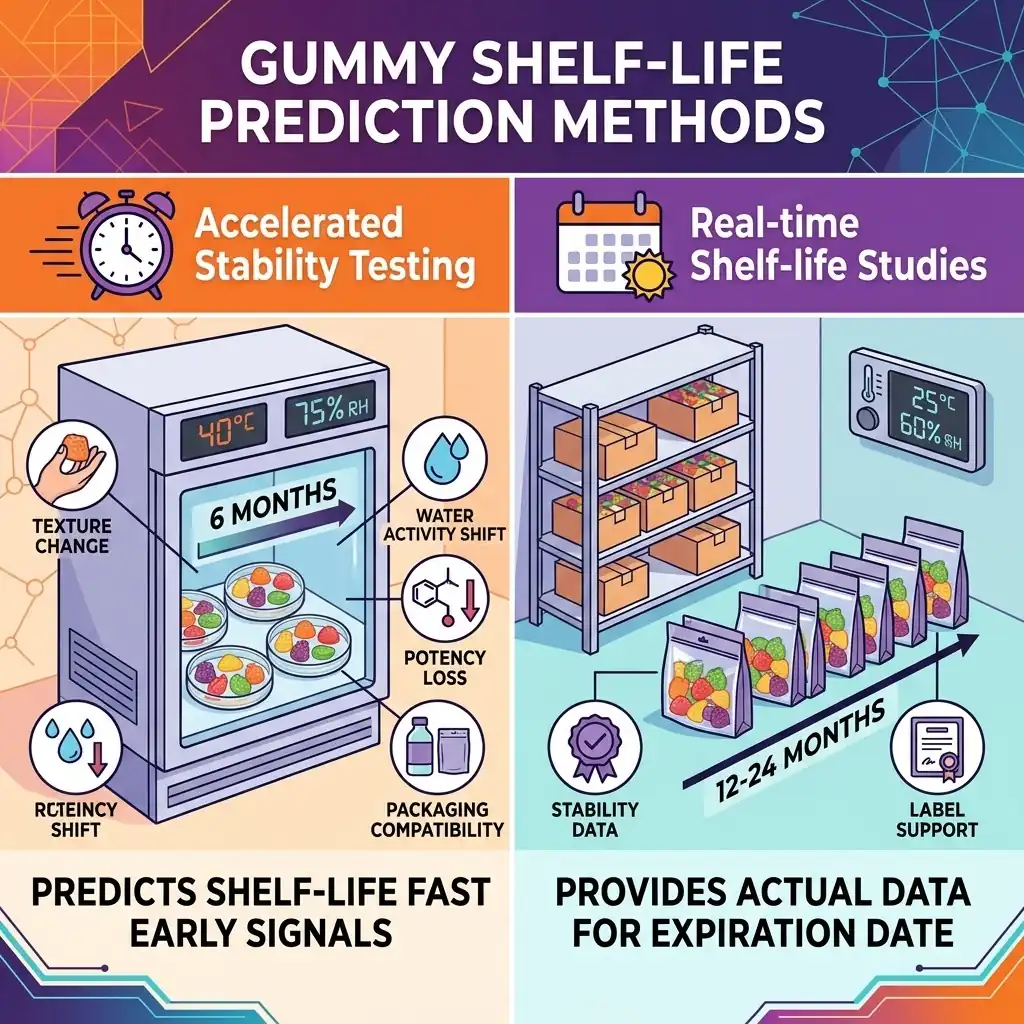
- Stability storage: Accelerated 37°C / 75% RH testing for 3 months reveals whether Maillard continues in-package, especially for formulas with high protein load.
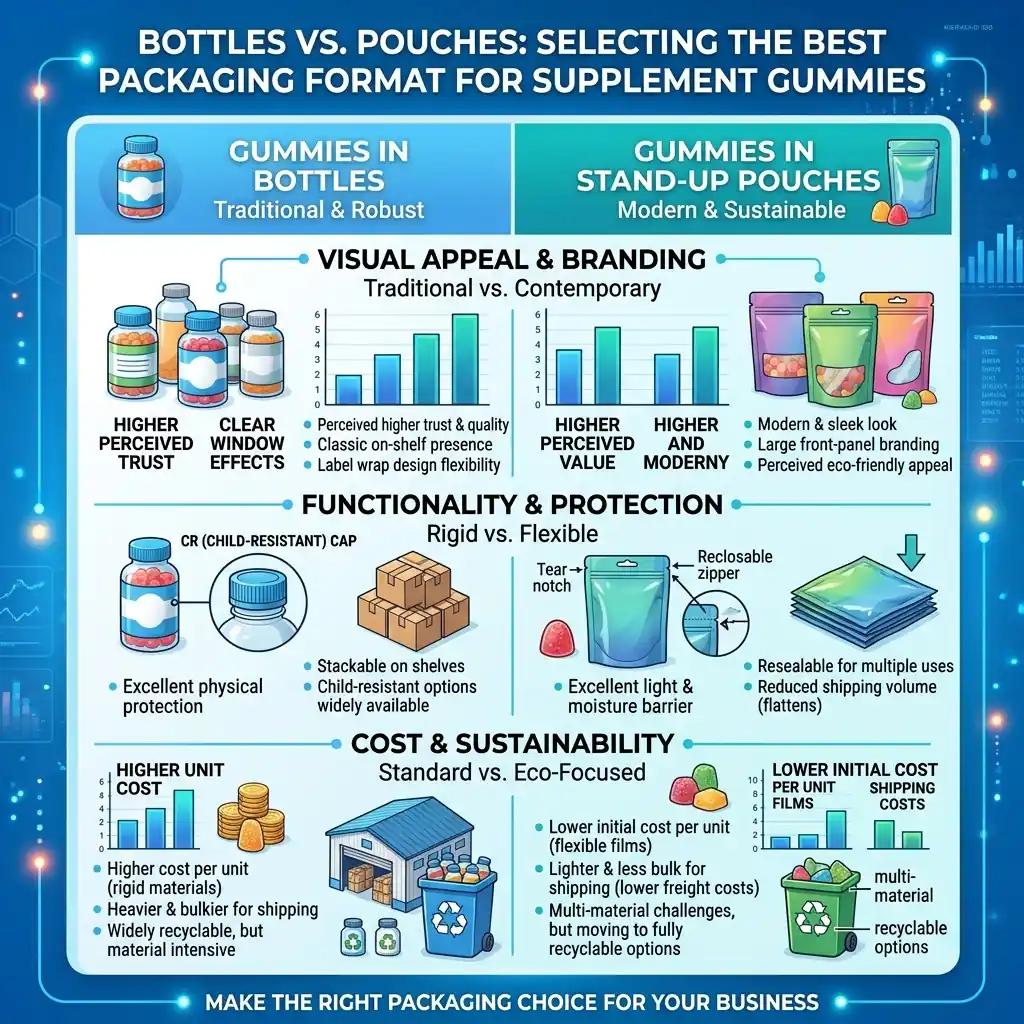
Packaging compatibility also matters. Transparent bottles accelerate light-induced browning in products with riboflavin or botanical pigments. Opaque or amber bottles with oxygen absorbers help maintain color stability.
Cost, MOQ, and Lead Time Considerations
Controlling browning has direct production economics.
Vacuum cooking and lower-temperature profiles reduce throughput. A line that can produce 500kg per hour at 130°C may drop to 380kg per hour at 105°C vacuum to maintain color. That affects unit cost. Flavor and acid added post-cook require additional mixing tanks and precise dosing pumps, which increases setup time.
For startups ordering a private label gummy in light colors, MOQ becomes important. Pilot trials of 50-100kg are essential to establish color and Brix targets before committing to 500kg+ commercial batches. Without a pilot, the manufacturer cannot confirm whether the desired color is achievable at commercial scale with the requested sugar system.
Lead time extends when low-reducing-sugar syrups or special pectin types must be sourced. Procurement teams should provide target color, flavor profile, active list, and gummy weight early to allow raw material selection.
How to Evaluate a Gummy Manufacturer for Thermal Control Capability
When sourcing a manufacturer for light-colored, high-active, or botanical gummies, ask specific technical questions rather than general capability questions.
| Evaluation Area | What to Ask and Verify |
| Cooking System | Do you run atmospheric + vacuum two-stage continuous cooking? What is your typical outlet temperature and Brix range? Can you share residence time data? |
| Process Monitoring | Do you have online Brix refractometer, mass flow, and L*a*b* color tracking during production? How do you control batch-to-batch color consistency? |
| Formulation R&D | Have you developed low-browning formulas with gelatin vs pectin? How do you handle high amino load formulas? |
| Active Addition | At what temperature do you add vitamins, botanicals, and acids? Do you have separate low-temperature dosing for heat-sensitive ingredients? |
| Quality Systems | What certifications do you hold (GMP, ISO22000, HACCP, BRC, FSSC 22000)? Do you test water activity, microbiology, and stability for gummies? |
| Scale-Up | Do you offer pilot trials before commercial batches? What is your daily and annual capacity and cleanroom classification? |
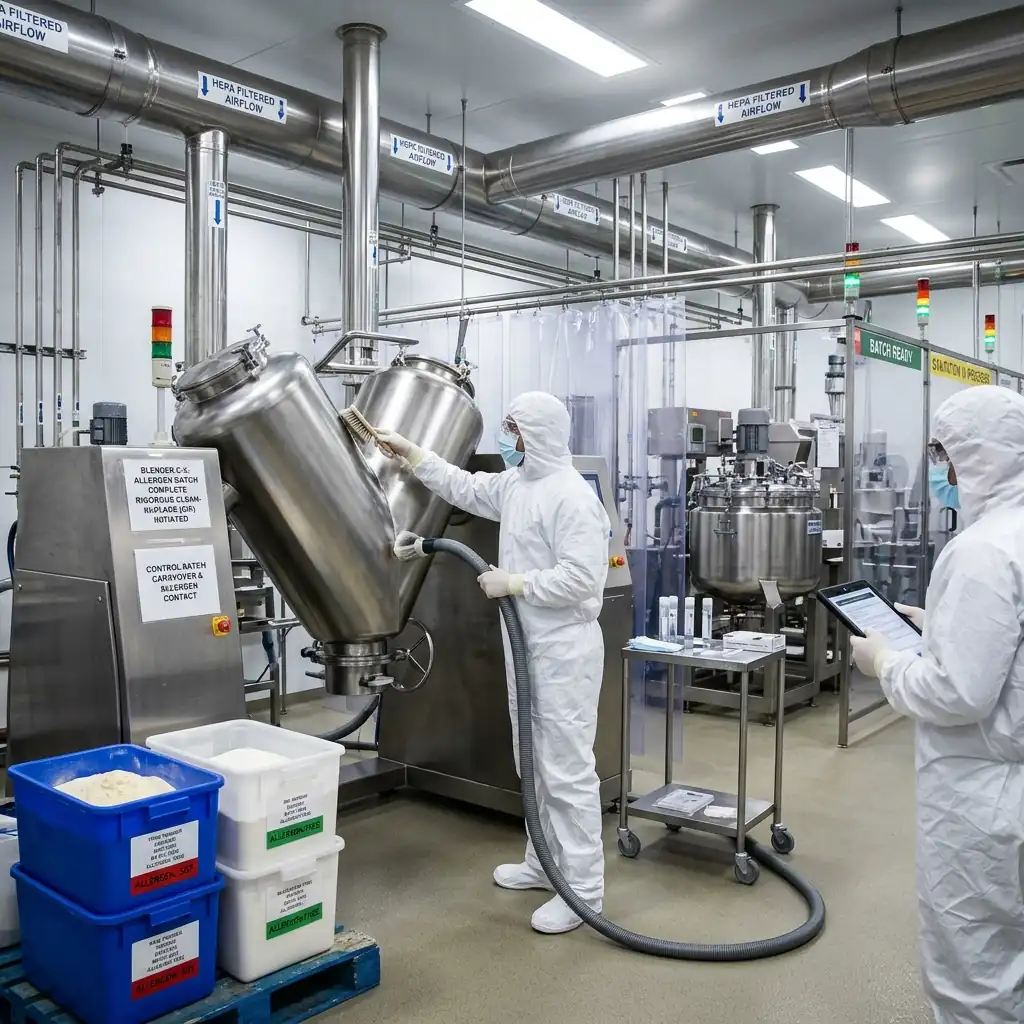
Shenzhen Gothink Biotech Co., Ltd. operates a GMP-certified facility with a 100,000-class cleanroom and 10,000-class R&D laboratory, supporting custom formulation and continuous gummy production across gelatin and pectin systems. Its quality systems include ISO9001, ISO22000, HACCP, FDA, HALAL, GMP, KOSHER, BRC, FSSC 22000, PJPH, and Vegan certifications, with daily capacity of approximately 16 tons and annual capacity of approximately 5,000 tons. Such infrastructure allows control of cooking parameters, raw material testing, and pilot-to-commercial scale-up relevant to browning control.
Common Mistakes That Increase Browning
- Adding citric acid or fruit juice concentrates before cooking, causing sucrose inversion and increased reducing sugars during high-heat phase.
- Using high-fructose syrups or honey at high solids for light-colored gummies without adjusting vacuum and temperature.
- Extending holding time in flavor tanks above 80°C to improve flow, which continues Maillard in gelatin systems.
- Over-concentrating to >82 Brix to compensate for high active loading, which forces higher cooking temperature and longer residence time.
- Skipping CIP between flavor changes, where caramelized residue from previous batch seeds browning in next batch.
- Requesting very small gummy weight with high dose, forcing higher solids and higher thermal stress to achieve target dose per piece.
Buyer Checklist Before Requesting an OEM/ODM Quotation
To receive an accurate technical assessment from a Gummy Manufacturer, provide:
- Target gummy type: gelatin, pectin, or starch-based
- Active ingredients, dosage per serving, and serving size (e.g., 2 gummies per serving)
- Desired color and flavor profile, with reference samples or L*a*b* target if available
- Sugar system preference: regular, sugar-free, low-sugar, vegan
- Gummy weight range and shape
- pH sensitivity or protein content of botanical extracts
- Stability expectations: shelf life, packaging format, storage conditions
- Volume forecast: pilot quantity, initial MOQ, annual projection
FAQ
Why does my gelatin gummy turn brown during continuous production but not in lab samples?
Lab cooking uses small batch kettles with short residence time and lower wall temperature. Continuous lines have longer exposure and higher shear near heating surfaces. Gelatin supplies amino groups, so Maillard continues even at 90-110°C. The difference usually comes from residence time distribution and post-cook holding temperature, not just set temperature.
Can we prevent caramelization by switching from sucrose to glucose syrup?
Not directly. Glucose is a reducing sugar and is more reactive in Maillard than sucrose. Switching to pure sucrose reduces Maillard substrate initially, but sucrose inverts to glucose and fructose under heat and acid. The more effective approach is to control inversion by adding acid after cooking and using low-DE syrups combined with vacuum cooking.
What Brix target minimizes browning in pectin gummies?
Most pectin gummies deposit at 78-80 Brix. Higher than 81-82 Brix requires higher temperature or longer vacuum time, increasing caramelization risk. If active loading forces higher Brix, consider increasing gummy weight or using a different gelling system rather than pushing solids higher.
Does vacuum cooking affect texture?
When controlled properly, vacuum cooking improves texture consistency by removing air bubbles and lowering thermal damage to pectin and gelatin. The key is to balance vacuum level and cooling rate. Excessive vacuum without proper temperature control can lead to excessive moisture loss and harder texture.
How do we handle botanical extracts that darken gummies?
Darkening can be from natural pigment, Maillard, or polyphenol oxidation. Ask your manufacturer to evaluate protein content and reducing sugar content of the extract. Options include using a clarified extract, adjusting addition point to lower temperature, switching to pectin to reduce amino interaction, or reformulating color expectations with natural color masking.
What specifications should we include in our private label gummy brief to control color?
Include target L*a*b* range, maximum allowable water activity, Brix range, pH range, and storage condition. Provide reference color chips. Specify whether natural color variation from botanicals is acceptable. This gives the manufacturer measurable criteria for process control.
Is sugar-free gummy manufacturing less prone to browning?
Sugar-free polyols do not participate in Maillard the same way, so Maillard risk is lower. However, thermal degradation of polyols above 160°C still creates off-notes and color. Sugar-free formulas often have higher water activity challenges and require tighter drying control, which indirectly affects browning during conditioning.
Next Step for Product Development
If you are developing a light-colored, high-dose, or botanical gummy, early discussion of sugar composition, amino load, and cooking profile prevents costly rework. Review your formulation against the control levers above and share target color, active dose, and gummy weight with your manufacturing partner before finalizing flavor.
For teams evaluating suppliers, request details on continuous cooking configuration, vacuum capability, online Brix and color monitoring, pilot trial options, and stability testing protocols. A manufacturer with experience in both gelatin and pectin systems and with pilot-to-commercial scale-up capability can adjust process parameters rather than asking you to change your brand concept.
To discuss your product specifications or request an OEM/ODM quotation for gummy production, contact the technical team with your active list, target gummy weight, desired sugar system, and packaging format. Early technical review shortens development time and improves batch consistency at scale.
Jack Luo|Senior Technical Advisor, Nutrition Research Center Representing Gothink Biology, a GMP-certified dietary supplement manufacturer based in Shenzhen, China.
Learn more in our Knowledge Hub: Knowledge Center | Manufacturing & Processing Insights