
Direct Answer: What Clean Label Certification Means for Gummy Production
Clean label certification for gummies means removing artificial dyes such as FD&C Red No.40, Yellow No.5, Blue No.1 and synthetic flavors, and replacing them with ingredients that meet a defined clean label standard such as natural colors, natural flavors, and non-synthetic processing aids. For supplement brands, the real question is not whether replacement is possible, but how it changes formulation stability, process control, and commercial cost.
When you work with a Gummy Manufacturer on this switch, you are changing more than the INCI list. You are changing heat exposure, pH targets, water activity management, and shelf-life validation. A technically capable manufacturer will reformulate the color and flavor system first, then adjust the gel matrix, addition sequence, and drying parameters to protect both the natural pigments and the active ingredients.
Why Removing Artificial Dyes and Synthetic Flavors Matters for B2B Buyers
Retail buyers and end consumers now screen for artificial colors and synthetic flavors at the listing stage. Major US retail sets, including Whole Foods and many mass-market chains, require documentation that synthetic dyes and artificial flavors have been removed. In the EU, titanium dioxide is no longer permitted and synthetic azo dyes require warning labels.
For a supplement brand owner or procurement team, this creates a sourcing risk. A formula that still relies on artificial dyes may pass manufacturing release but fail retailer compliance review. Moving to a clean label system early reduces relisting risk and supports premium positioning, especially for kids, vegan, and organic-adjacent product lines.
What “Clean Label” Actually Requires in Gummy Manufacturing
There is no single global clean label certificate. The term covers several verifiable standards:
- Clean Label Project Certification: Tests for heavy metals, pesticides, and plasticizers; requires transparency on ingredient sourcing.
- Retailer-defined clean label: e.g., Whole Foods Unacceptable Ingredients list, which bans FD&C colors, synthetic flavors, hydrogenated oils.
- Label claim-driven: “No artificial colors, no artificial flavors, no artificial sweeteners” backed by ingredient specifications and supplier declarations.
From a manufacturing perspective, the requirement is consistent: every color and flavor component must be derived from a natural source, have a natural extraction method, and be supported by a specification sheet, allergen statement, and non-synthetic processing declaration.
What Counts as Artificial vs. Clean Label
- Artificial dyes to remove: FD&C synthetic colors, lakes, titanium dioxide for opacity when used solely as color.
- Clean label replacements: Fruit and vegetable concentrates, anthocyanins from black carrot or purple sweet potato, spirulina extract, beta-carotene, turmeric, paprika oleoresin.
- Synthetic flavors to remove: Artificial flavor chemicals, nature-identical synthetic molecules not derived from the named source.
- Clean label replacements: Natural flavor (US FDA 21 CFR 101.22 definition), WONF (With Other Natural Flavors), FTNF (From The Named Fruit) for stronger authenticity.
Technical Challenges When Replacing Artificial Dyes
Artificial dyes are stable at high heat, low dosage (0.01-0.03%), and insensitive to pH. Natural colors are not. Each pigment class behaves differently in a gummy matrix.
| Attribute | Artificial Dye System | Natural Color System (Clean Label) |
| Typical sources | FD&C Red 40, Yellow 5, Blue 1 | Black carrot anthocyanin, spirulina, beta-carotene, turmeric, elderberry |
| Heat stability | Stable up to 110-120°C during cooking | Heat sensitive; anthocyanins degrade above 85°C, spirulina above 70°C |
| pH sensitivity | Minimal pH effect | Strong: anthocyanins red at pH 3.0-3.5, blue-gray above pH 4.5 |
| Dosage in gummy | 0.01-0.05% of batch | 0.1-0.8% depending on shade; higher load affects texture |
| Light / oxygen stability | High | Low: requires oxygen barrier packaging, antioxidant system |
| Regulatory perception | Requires E-number, warning in some markets | Accepted for natural / clean label claims |
Manufacturing logic: Because natural pigments are added at higher dosage and are heat labile, they cannot be cooked with the sugar syrup. In most commercial gummy lines, the base syrup (glucose, sucrose or allulose, water) is cooked to 105-112°C to reach target solids, then cooled to 75-80°C in a holding tank. Natural color is added in the flavor room via low-shear mixing at 60-70°C just before deposition. This protects color but demands tighter temperature control and faster line speed to avoid viscosity rise.
For pectin gummies, pH becomes critical. Pectin requires pH 3.2-3.6 to set. Anthocyanin-based reds are most stable in that range, which is an advantage. Spirulina-based blue-green shifts to dull green above pH 4.0 and precipitates in acidic systems, so it often requires a pectin system with buffered pH or a switch to gelatin where pH can stay near 4.2-4.8.
Technical Challenges When Replacing Synthetic Flavors
Synthetic flavors are single molecules with high intensity and low volatility. Natural flavors are complex mixtures of esters, aldehydes, and essential oils. They have lower flavor impact and higher loss during heating.
- Volatility and dosage: Natural strawberry flavor may require 0.3-0.6% vs. 0.08-0.15% for artificial. Higher oil load can soften gelatin texture and increase water activity if not managed.
- Flavor masking: Minerals (zinc, iron), botanicals (ashwagandha, green tea extract), and high-dose vitamins (B-complex) create metallic, bitter, or earthy notes. Synthetic masking agents are very efficient. With clean label, manufacturers use natural masking tools: natural vanilla WONF, citrus oils, fruit juice concentrates, and inclusion of organic acids (citric, malic) balanced to shift taste perception.
- Compatibility with gel structure: Oil-based natural flavors above 0.5% can interfere with gelatin cross-linking and create oily spots. This requires an emulsification step with gum arabic or modified starch, which must also be clean label compliant.
- Heat sensitivity: Citrus and berry FTNF flavors lose top notes above 70°C. That is why flavor addition must happen after color, at the lowest possible temperature that still allows uniform mixing, typically 58-65°C for pectin and 65-72°C for gelatin.
What a Gummy Manufacturer Adjusts in the Process
Removing artificial dyes and synthetic flavors is not a simple swap. It changes the process sequence.
1. Ingredient Selection and Specification Review
The manufacturer should review the natural color specification for carrier (maltodextrin, glycerin), color strength (e.g., E-value), heavy metal limits, and residual solvent declaration. For natural flavors, check solvent used for extraction (ethanol vs. propylene glycol), allergen status, and whether it meets natural flavor definition in target market.
2. Formula Development
Active ingredient loading affects pH and water activity. For example, magnesium citrate lowers pH and may bleach anthocyanin. Hygroscopic ingredients like apple cider vinegar powder increase water activity and accelerate color fading. The R&D team must test color-pH stability in a small bench batch before pilot scale.
3. Batch Preparation and Cooking
Sugar solids are cooked separately. No color or flavor is present at this stage. Vacuum cooking helps reduce cook temperature to 90-100°C, which lowers caramelization and provides a cleaner base for light natural colors.
4. Active Ingredient Addition
Heat-sensitive actives (probiotics, vitamin C, B12) are added in the same cooling window as natural colors. This concentrates risk: mixing time is short, so pre-mixing actives with a small portion of syrup ensures homogeneity.
5. Mixing and Homogenization
Low-shear mixing preserves emulsion stability for oil-based flavors. High shear breaks natural color particles and creates air bubbles that oxidize pigments.
6. Deposition and Cooling
Natural colors thicken faster than artificial dyes. Depositing temperature may need to be 3-5°C higher than standard to maintain flow, but nozzle residence time must be reduced. Cooling tunnels are set to 15-20°C with dehumidification to avoid condensation that would cause color spotting.
7. Drying and Conditioning
Drying is critical. Natural colors fade if water activity remains above 0.68 and drying air is too hot. Most clean label gummies are dried at 35-45°C, 20-30% RH for 24-48 hours for pectin, 18-24 hours for gelatin, until water activity reaches 0.55-0.65.
Stability, Shelf-Life, and Packaging Implications
Clean label gummies have narrower stability windows. Natural colors fade through oxidation and light exposure. Spirulina is particularly sensitive to light; beta-carotene to oxygen.
Three controls matter:
- pH and water activity: Keep finished pH within the pigment’s stable range and water activity below 0.65. Higher water activity accelerates Maillard browning and microbial risk, which is verified through water activity meter and pH testing per batch.
- Antioxidant system: Natural mixed tocopherols or rosemary extract can be used at 0.02-0.05% to protect beta-carotene and spirulina, if permitted by clean label standard.
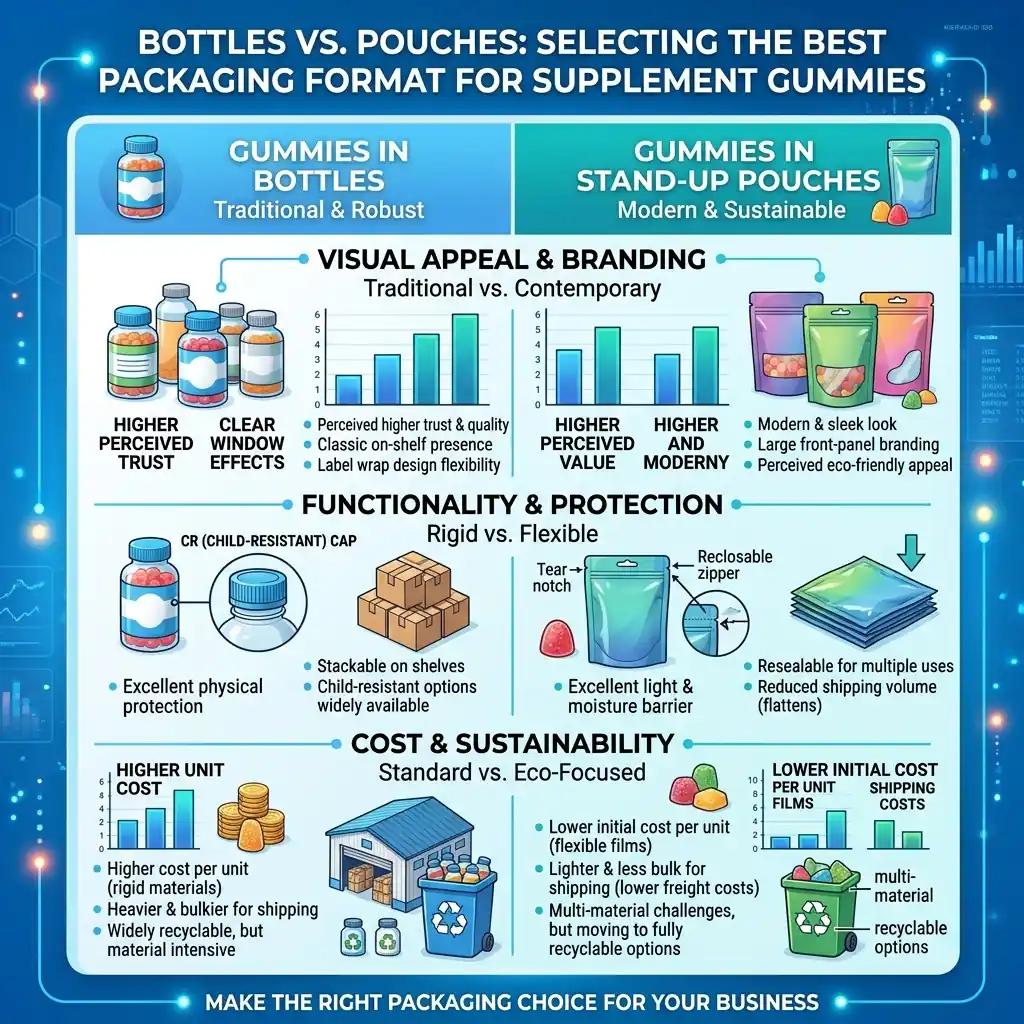
- Packaging compatibility: Opaque, high-barrier pouches or bottles with induction seal, plus nitrogen flushing for spirulina and turmeric colors, reduce oxygen to under 2%. Clear PET bottles without UV barrier will cause visible fading within 3 months for anthocyanin and spirulina gummies.
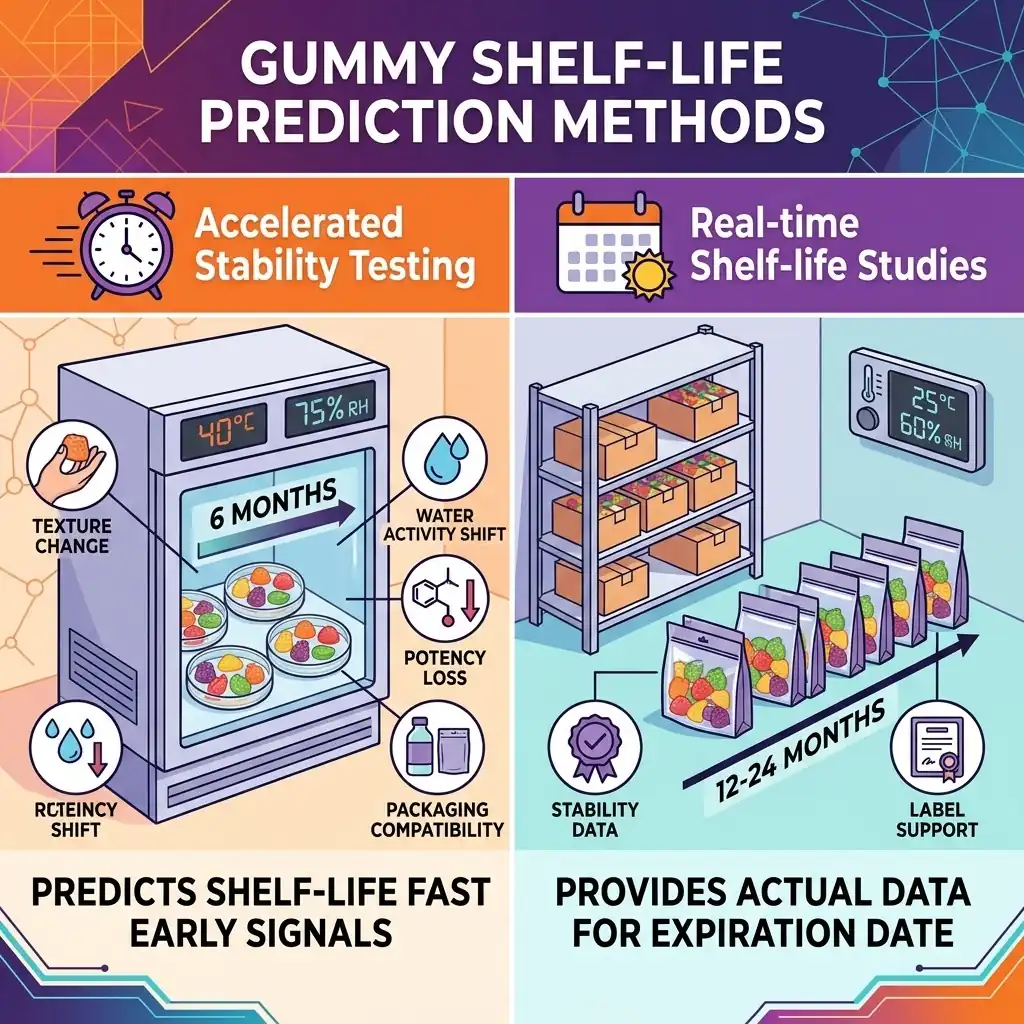
Shelf-life validation should include accelerated testing (37°C/75% RH for 3 months) and real-time testing with color measurement using a colorimeter (L*a*b* values), not just visual inspection. Active potency should be tested in parallel because pH adjustments made for color can affect vitamin degradation.
Quality Control and Documentation for Clean Label Claims
To support a clean label claim, a buyer needs more than a finished-product COA. A qualified manufacturer should provide:
- Raw material specifications confirming natural origin for color and flavor, including extraction method and carrier declaration.
- Supplier statements confirming non-synthetic processing and compliance with retailer unacceptable ingredient lists.
- Allergen, vegan, and halal/kosher status for color and flavor where relevant.
- Finished product testing: color strength stability, microbiological testing (TPC, yeast/mold, coliforms), water activity, pH, and active assay.
- Batch traceability from color/flavor lot to finished gummy lot.
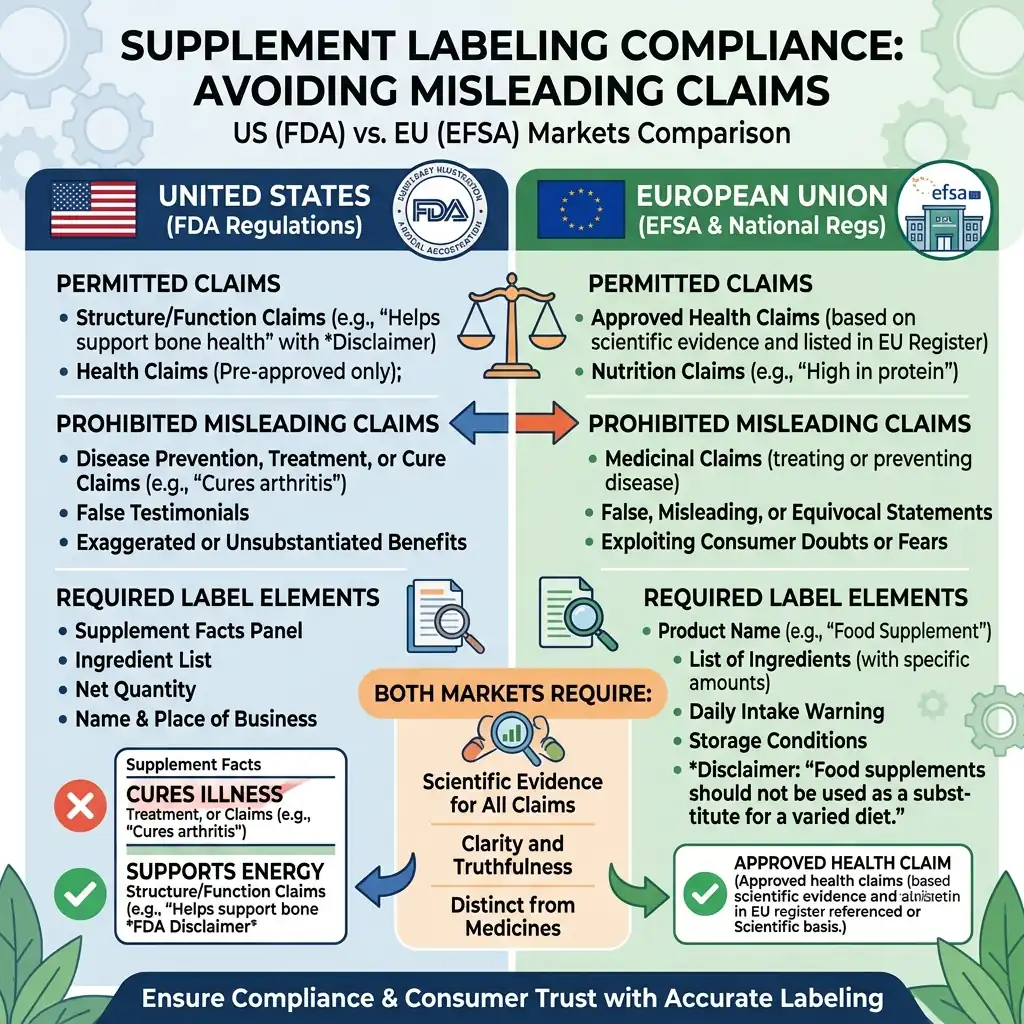
This documentation is often required for Clean Label Project or retailer audit. Without it, a “no artificial colors” claim on the front label is vulnerable to challenge.
Cost, MOQ, and Commercial Considerations
Removing artificial dyes and synthetic flavors changes unit economics in four areas:
- Ingredient cost: Natural colors are 5-20x the cost of FD&C dyes per kilo, and use rate is higher. Natural WONF flavors are 2-4x artificial. For a typical 3g gummy, color + flavor cost may increase by $0.02-$0.06 per unit.
- Process loss: Heat-sensitive natural systems require lower deposition temperatures, which can increase depositing waste by 1-2% if not optimized. Vacuum cooking equipment reduces this risk.
- MOQ: Many natural color suppliers have MOQs of 10-25kg. For small pilot batches, this can drive initial cost. Manufacturers that stock common clean label colors (black carrot, blue spirulina, turmeric) can offer lower pilot MOQs, typically 5,000-10,000 gummies for R&D samples, 30,000-50,000 for commercial trial.
- Packaging: High-barrier opaque packaging adds $0.01-$0.03 per pouch but is often mandatory for stability. This should be factored into landed cost early.
Buyers should provide the manufacturer with target retail price, desired shade (Pantone or sample), flavor profile, active dosage, gel system preference (pectin vs gelatin), and target market. These five inputs determine whether clean label conversion is a direct swap or requires a full reformulation.
How to Evaluate a Gummy Manufacturer for Clean Label Production
Not every gummy facility can run clean label colors at scale. Evaluate specific capabilities:
- R&D capability with natural systems: Ask for examples of commercial batches using anthocyanin, spirulina, or beta-carotene with stability data, not just lab samples.
- Low-temperature addition system: Separate flavor room, jacketed holding tanks with precise temperature control (±1°C), and in-line static mixers for uniform color addition.
- pH and water activity control: In-process pH meter and water activity testing for every batch, not just finished product.
- Drying control: Humidity-controlled drying rooms with logged temperature/RH, not ambient drying.
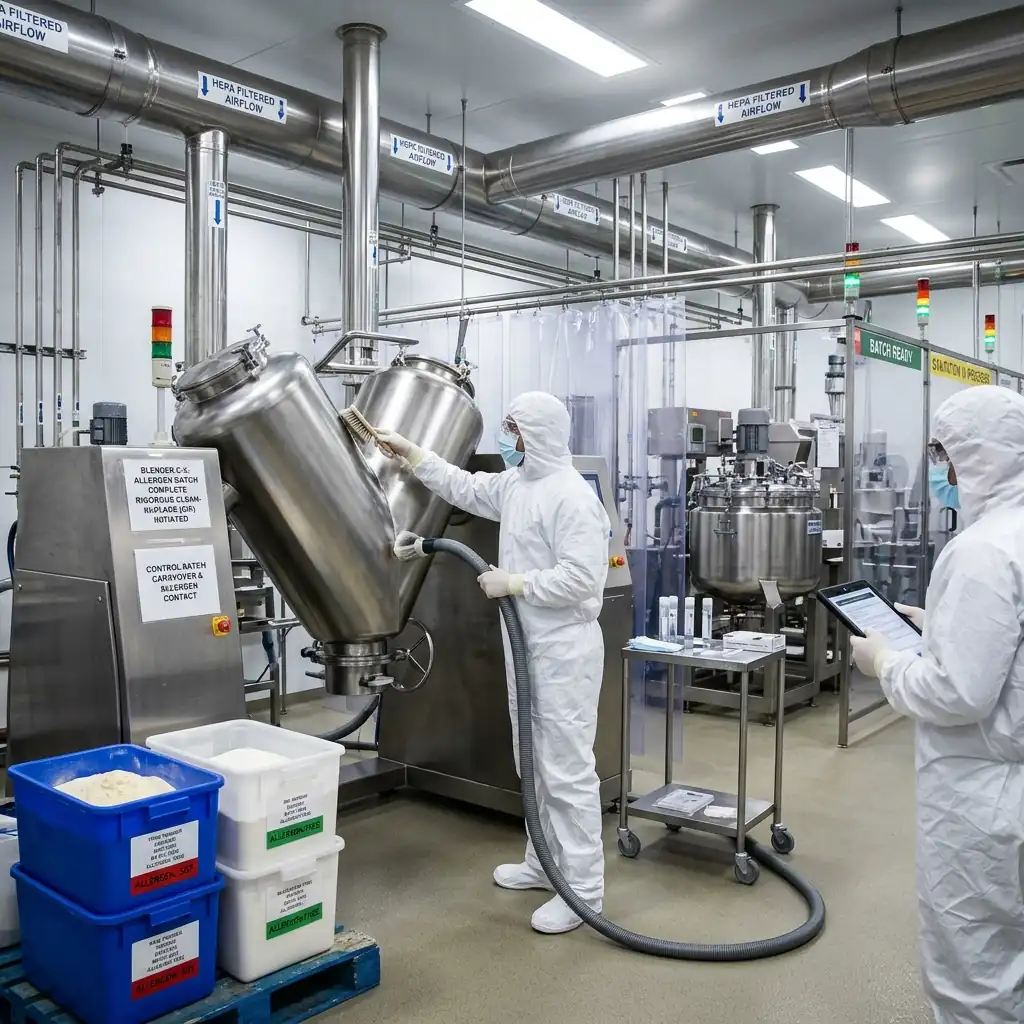
- Quality systems: GMP certification, HACCP plan, ISO22000 or FSSC 22000, and documented procedures for allergen control for natural flavor carriers.
- Ingredient sourcing: Established supply chain for clean label colors/flavors with supplier audits and COA verification.
- Pilot-to-commercial scale-up: Ability to move from 5kg bench to 300kg commercial batch with same deposition parameters and documented scale-up protocol.
A manufacturer operating a GMP-certified facility with a 100,000-class cleanroom and a 10,000-class R&D laboratory, such as Shenzhen Gothink Biotech Co., Ltd., typically maintains these controls across gummy, capsule, tablet, powder, and liquid formats. The company operates approximately 16 tons of daily capacity and holds certifications including ISO9001, ISO22000, HACCP, FDA, HALAL, GMP, KOSHER, BRC, FSSC 22000, PJPH, and Vegan, which support export documentation for clean label products.
Common Mistakes Brands Make
- Approving color based on wet gummy at deposition, not after 72-hour drying. Anthocyanin shade shifts 15-20% during drying.
- Using spirulina in a pectin system with pH below 3.5 without buffer. This causes immediate precipitation and green speckling.
- Choosing transparent packaging to showcase color. Natural colors require light protection; clear bottles accelerate fading and create consumer complaints.
- Requesting FTNF flavor at the same dosage as artificial flavor. Natural flavors need higher dosage and emulsification; underdosing leads to bland taste after 2-3 months.
- Skipping water activity testing for vinegar, elderberry, or juice-based gummies. Higher water activity shortens shelf-life and invalidates clean label stability.
Buyer Checklist Before Requesting a Quotation
- Target color shade and reference sample or Pantone code.
- Flavor direction (natural, WONF, FTNF) and any banned carriers or allergens.
- Gel system preference: gelatin (animal or bovine/porcine halal) or pectin (vegan).
- Active ingredients, dosage per gummy, and heat sensitivity.
- Target pH range if known, and any acidic actives.
- Desired serving size, gummy weight (e.g., 3.0g), and count per bottle.
- Packaging format and barrier requirement.
- Target market and clean label standard to meet (e.g., Whole Foods, Clean Label Project, EU natural claim).
- Current formula and reason for conversion, if reformulation.
FAQ
Can we achieve the same bright colors without artificial dyes?
Close, but not identical. Black carrot and purple sweet potato achieve strong reds and purples at pH 3.2-3.6. Beta-carotene provides yellow-orange with good stability. Spirulina provides blue but is less intense than Blue No.1 and requires opaque packaging. Bright neon shades typically require blending pigments and accepting a slightly muted, natural appearance.
Do natural flavors affect gummy texture and shelf-life?
Yes. Oil-based natural flavors above 0.4-0.5% soften gelatin and can increase water activity if the flavor carrier is propylene glycol. Proper emulsification with gum arabic and controlled drying to water activity below 0.65 mitigates this. Stability testing should include texture analysis and flavor intensity over time, not just active potency.
Does clean label increase manufacturing cost significantly?
Ingredient cost rises, but total cost impact depends on dosage and packaging. For most 60-count bottles, color and flavor conversion adds $1.20-$3.60 per bottle in ingredient cost plus $0.60-$1.80 for high-barrier packaging. This is often offset by premium positioning and expanded retail access.
Is pectin or gelatin better for natural colors?
It depends on the pigment. Pectin is better for anthocyanin reds and purples because its low pH stabilizes the pigment and its vegan positioning matches clean label demand. Gelatin is more forgiving for spirulina blues and beta-carotene yellows because it allows higher pH and lower deposition temperature, reducing pigment degradation.
What documentation is needed to support a clean label claim?
Natural origin statements for color and flavor, extraction method declaration, non-synthetic processing statement, allergen and vegan statements if relevant, COA for each lot, and finished product stability data including color measurement. For retailer audits, supplier questionnaires and traceability from pigment lot to finished batch are often required.
What MOQ should we expect for clean label reformulation?
Pilot MOQ is typically 5,000-10,000 gummies to validate color shade and flavor masking. Commercial MOQ is usually 30,000-50,000 gummies per SKU due to natural color supplier MOQs and drying room scheduling. If multiple colors/flavors share the same base, combined MOQ may be negotiable.
Can we convert an existing artificial-color formula to clean label without changing gummy size?
Sometimes. If the original formula uses low active load and 3.0g weight, natural colors at 0.3-0.6% can often be accommodated without size increase. If active load is high or hygroscopic, you may need to increase gummy weight to 3.2-3.5g or reduce active per gummy to maintain texture and water activity.
Next Step: Discuss Your Clean Label Gummy Project
If you are evaluating a switch from artificial dyes and synthetic flavors, share your target shade, flavor profile, active dosage, gel system, and market requirement with your manufacturer. A detailed review of formulation compatibility, pH control, and drying parameters will determine whether the conversion is a direct replacement or a full reformulation.
For technical background on gummy formulation and compliance systems, review our Knowledge Center and Quality & Compliance documentation. If you have a specific brief, request a custom formulation and OEM/ODM quotation with your specifications for color, flavor, and clean label standard.
Jack Luo|Senior Technical Advisor, Nutrition Research Center Representing Gothink Biology, a GMP-certified dietary supplement manufacturer based in Shenzhen, China.