
Summary
Creating vitamin gummies requires a structured formulation process, precise ingredient handling, and strict quality control to ensure safety, stability, and consumer appeal. This guide explains how vitamin gummies are made, what businesses must evaluate before production, and how to choose the right manufacturing partner.
Definition
Create vitamin gummies refers to the end‑to‑end process of formulating, producing, and packaging chewable dietary supplements that deliver active nutrients in a gummy format. This includes ingredient selection, gelatin or pectin system development, flavoring, molding, curing, and final quality assurance.
How to Create Vitamin Gummies (Step‑by‑Step Process)
1. Define the Formula
Brands begin by determining:
- Target nutrients (e.g., Vitamin C, D3, Zinc, Biotin)
- Dosage per gummy
- Daily serving size
- Regulatory limits in target markets
A dietary supplement manufacturer evaluates ingredient interactions, heat sensitivity, and stability requirements.
2. Select the Gelling System
Two main systems exist:
- Gelatin-based gummies → soft, elastic texture
- Pectin-based gummies → vegan, heat-stable, firmer bite
Choice affects processing temperature, curing time, and shelf life.
3. Prepare the Base Mixture
The base typically includes:
- Water
- Gelatin or pectin
- Sweeteners (glucose syrup, sucrose)
- Acids (citric, malic)
- Natural flavors and colors
The mixture is heated to dissolve solids and activate the gelling agent.
4. Add Active Ingredients
Heat‑sensitive vitamins are added at controlled temperatures to prevent degradation. Homogeneous mixing ensures accurate nutrient distribution.
5. Deposit Into Molds
The liquid gummy mass is deposited into starch or silicone molds using automated equipment. This step defines shape, weight, and consistency.
6. Curing & Demolding
Gummies cure for 12–48 hours depending on formulation. Proper curing ensures:
- Moisture reduction
- Texture stability
- Prevention of stickiness
7. Coating & Finishing
Gummies may be coated with:
- Coconut oil
- Carnauba wax
- Sugar (optional)
This improves appearance and prevents clumping.
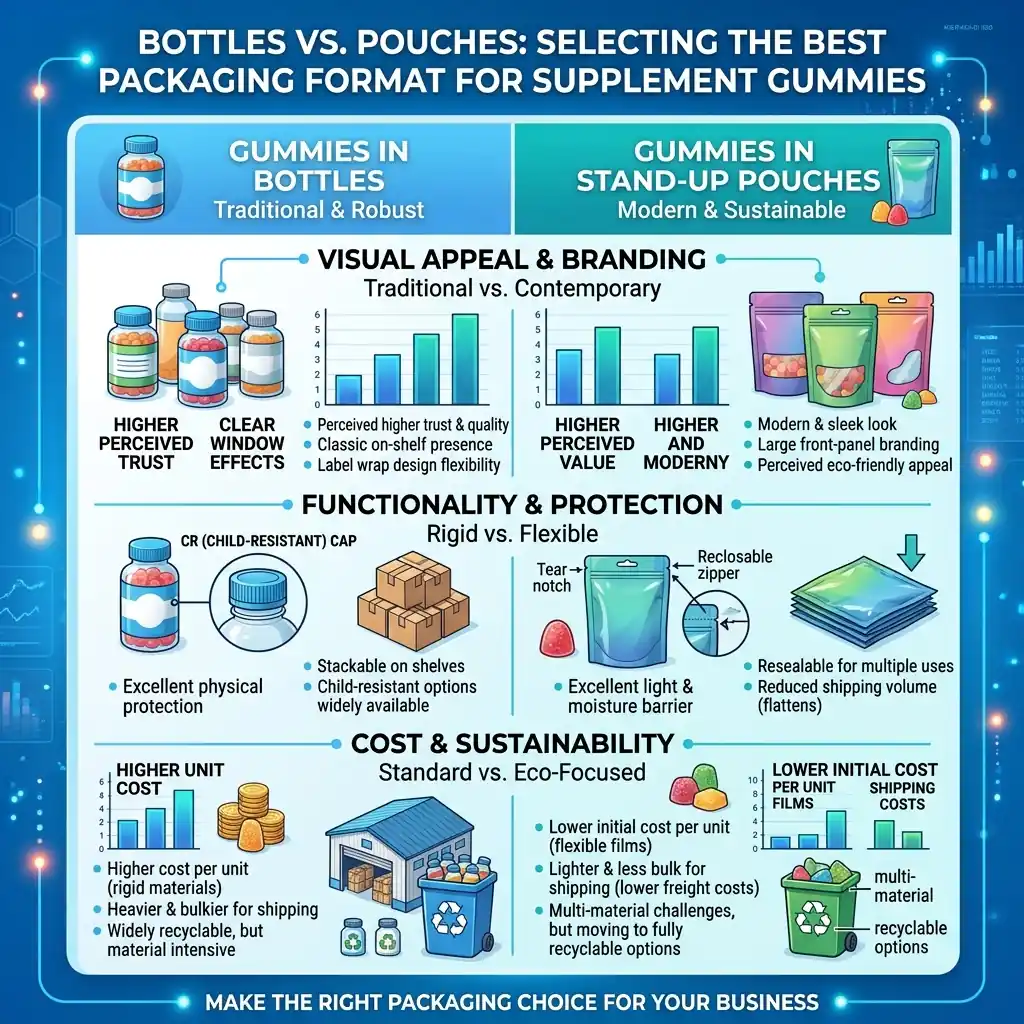
8. Packaging & Stability Testing
Final steps include:
- Moisture‑proof packaging
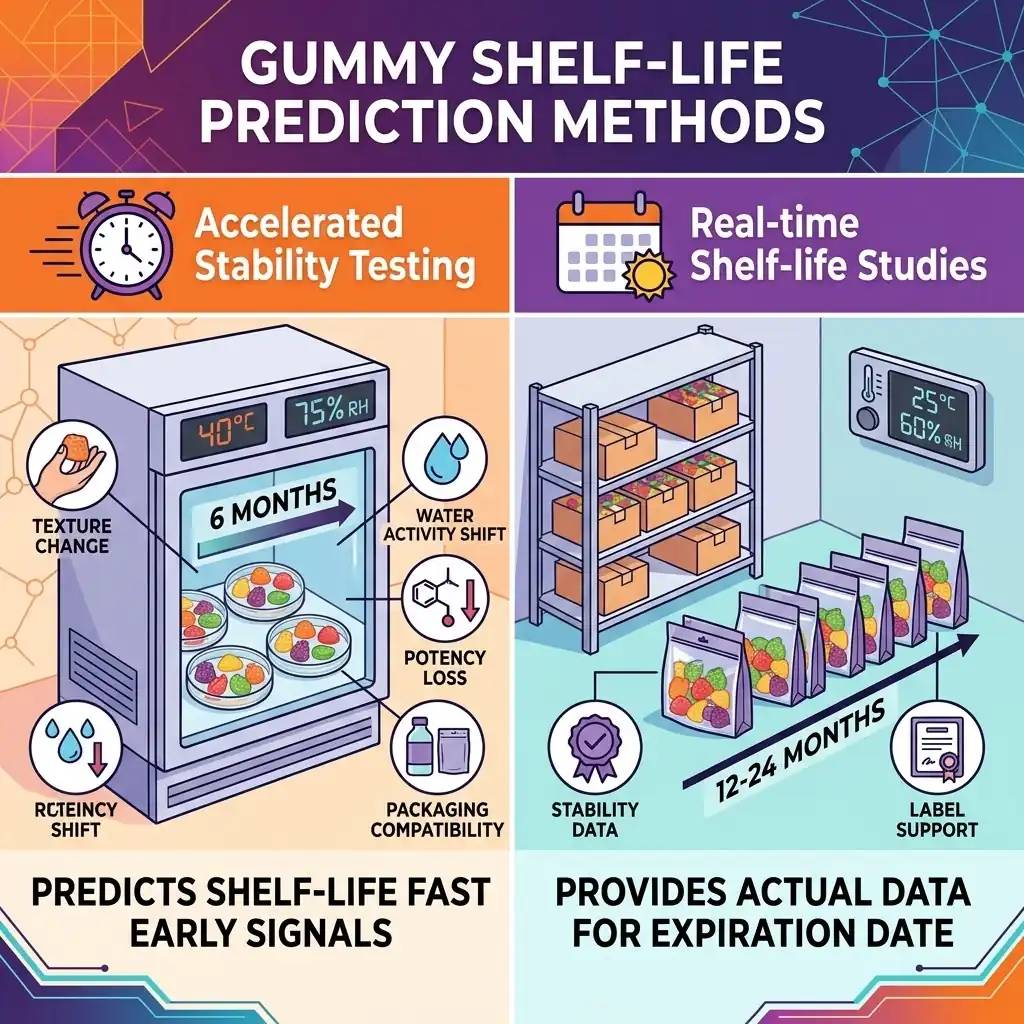
- Shelf‑life testing
- Microbial and heavy metal testing
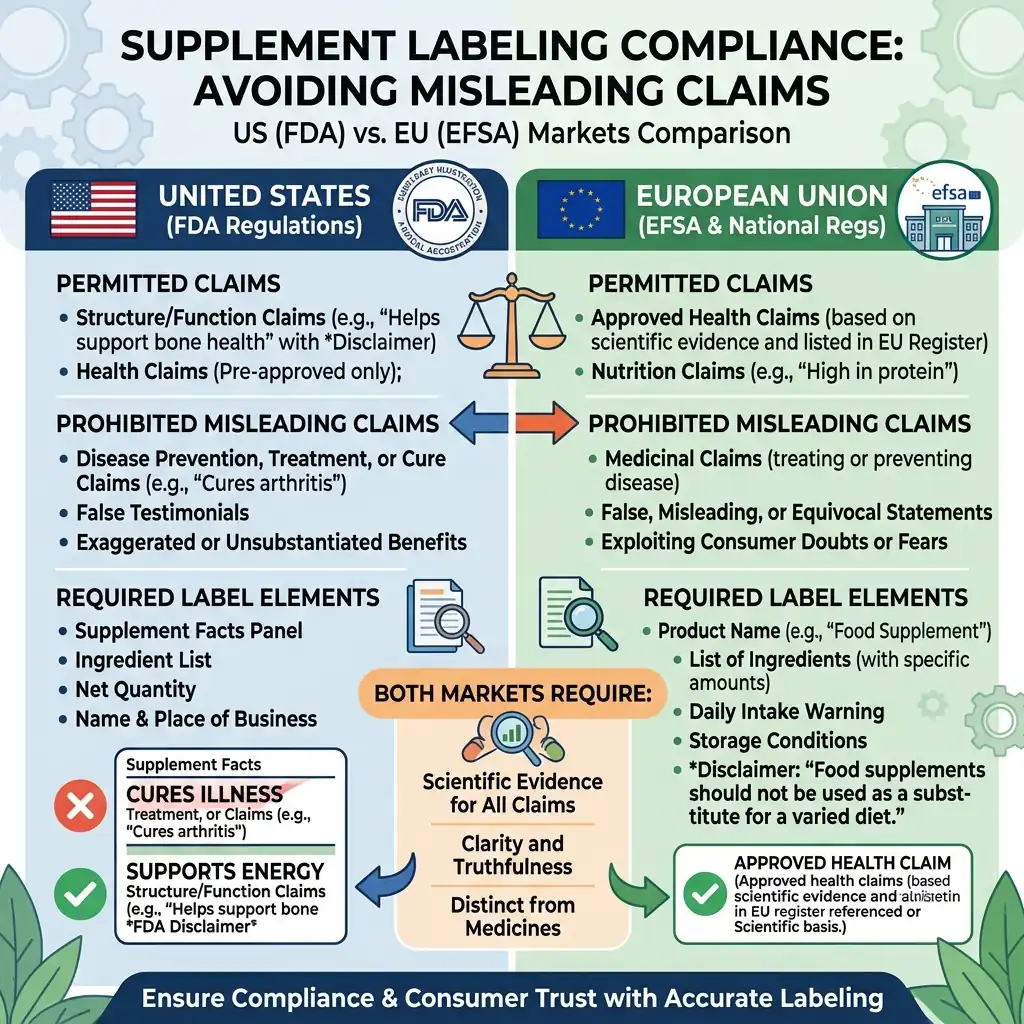
- Label compliance review
Technical Parameter Table
| Parameter | Details |
|---|---|
| Product Form | Vitamin-enriched chewable gummies |
| Gelling System | Gelatin or pectin |
| Key Ingredients | Vitamins, minerals, sweeteners, acids, natural flavors, natural colors |
| Manufacturing Highlights | Heating, blending, depositing, curing, coating, packaging |
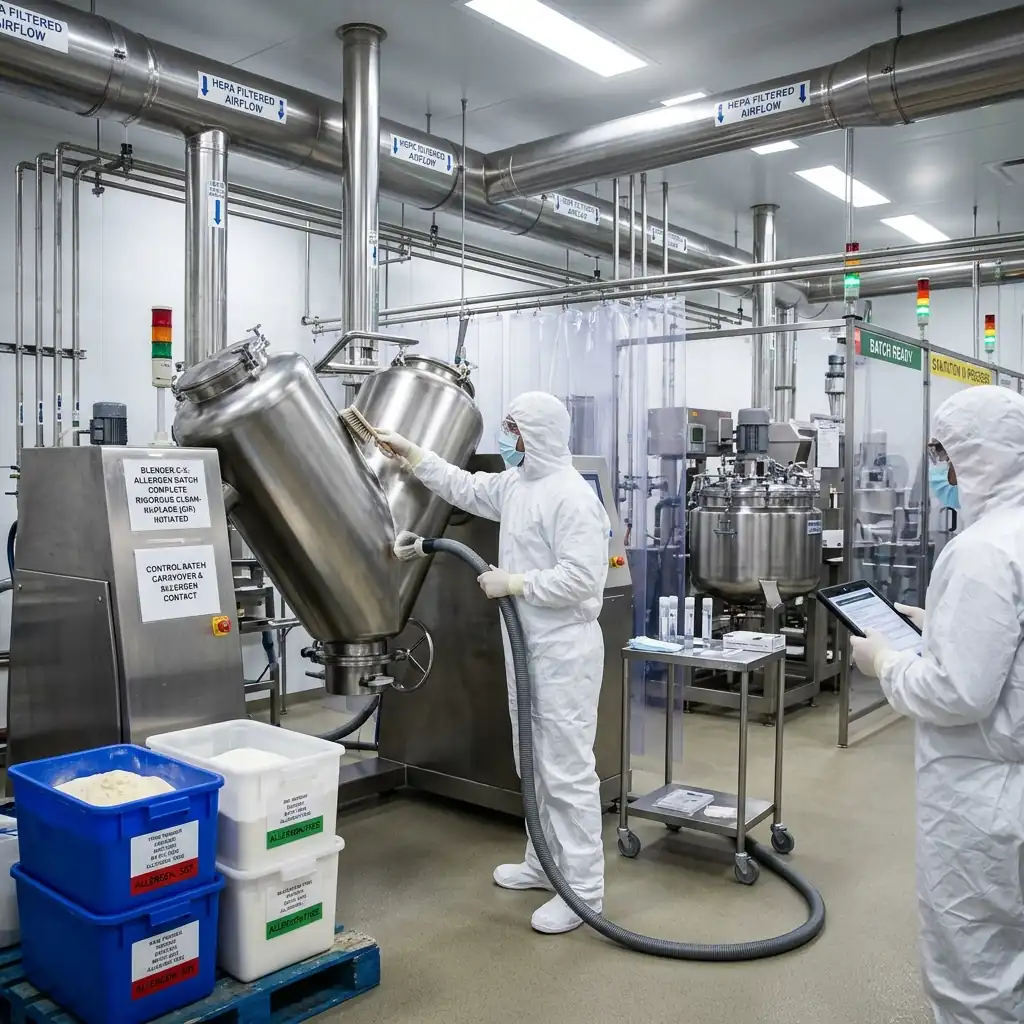
| Quality Standards | GMP, HACCP, ISO 22000, third‑party testing |
| Production Capacity | Scalable from small batches to mass production |
| Packaging Options | Bottles, pouches, jars, bulk cartons |
Practical Insights for Creating Vitamin Gummies
Quality Control
Manufacturers must implement:
- In‑process checks for weight, texture, and pH
- Finished product testing for potency and microbial safety
- Stability studies to confirm nutrient retention
This ensures consistent results across batches.
Scalability
A custom gummy manufacturer with automated depositing lines can scale production without compromising quality. Brands should confirm:
- Daily output capacity
- Lead times
- Ability to handle seasonal demand spikes
Regulatory Compliance
Vitamin gummies must comply with:
- FDA 21 CFR Part 111 (U.S.)
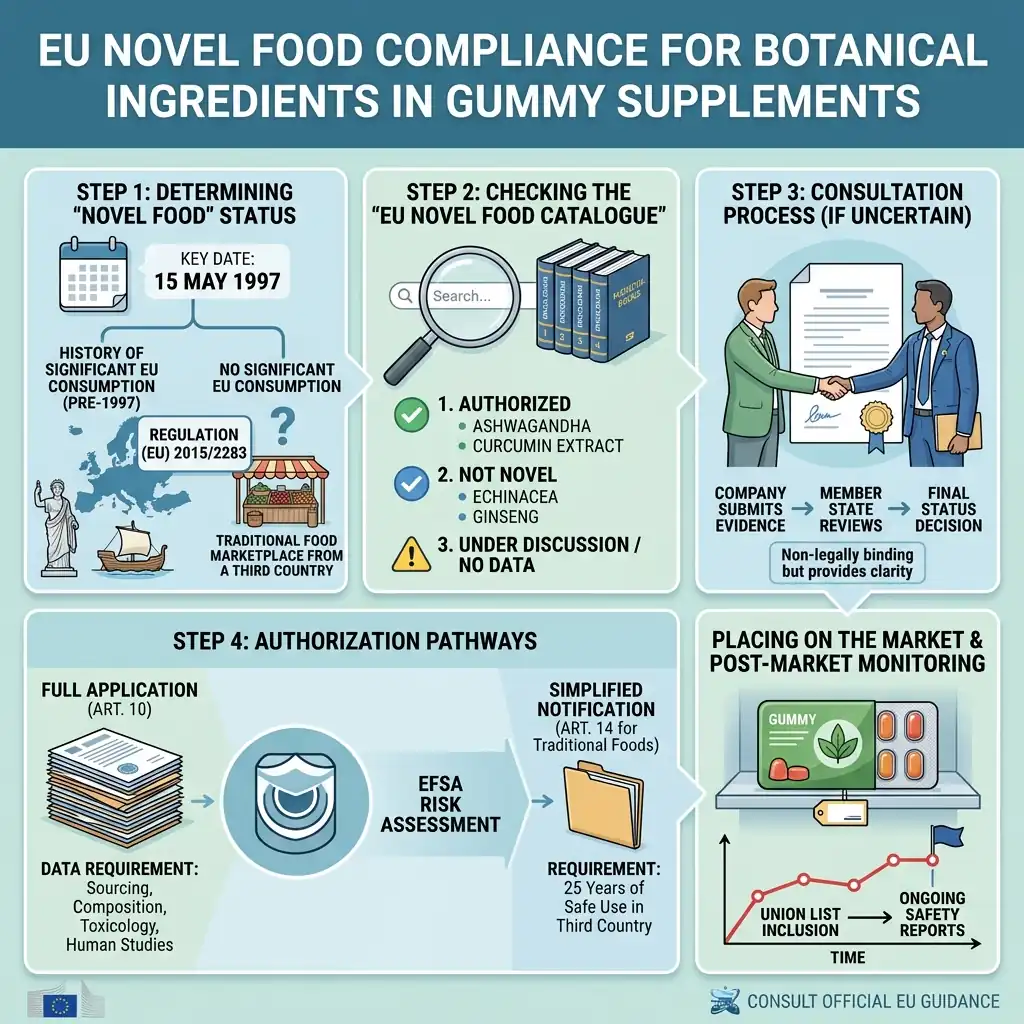
- EFSA guidelines (EU)
- Labeling rules for claims, allergens, and nutrition facts
Documentation must include COAs, batch records, and traceability logs.
Supply Chain Considerations
Key factors include:
- Reliable vitamin suppliers
- Stable sourcing of pectin/gelatin
- Packaging material availability
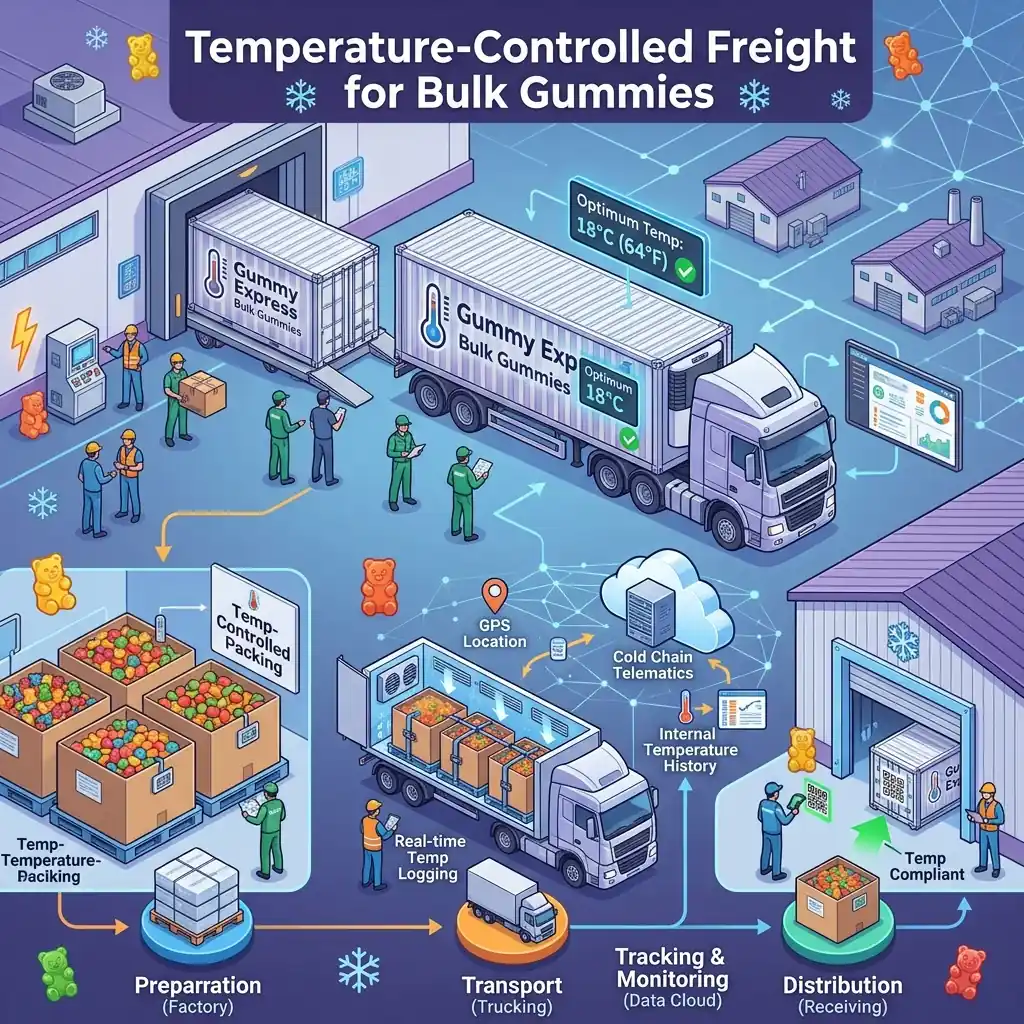
- Cold‑chain requirements for sensitive ingredients
B2B Decision Guide
How to Choose the Right Manufacturer
Brands should evaluate:
- Experience in gummy manufacturing
- Compliance certifications
- R&D capabilities
- Transparency in raw material sourcing
- Ability to support formulation customization
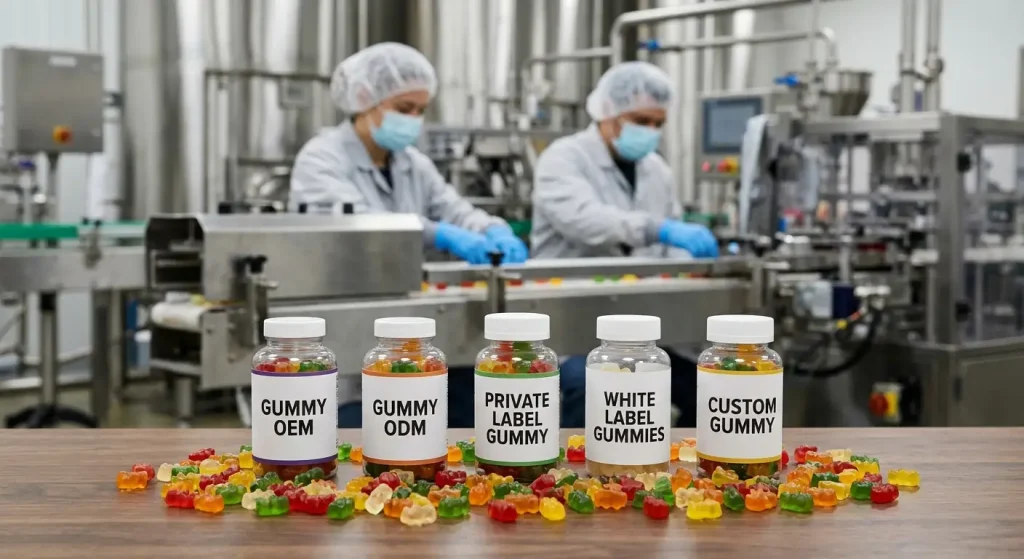
OEM/ODM Considerations
For Gummy Contract Manufacturing, critical factors include:
- Formula development support
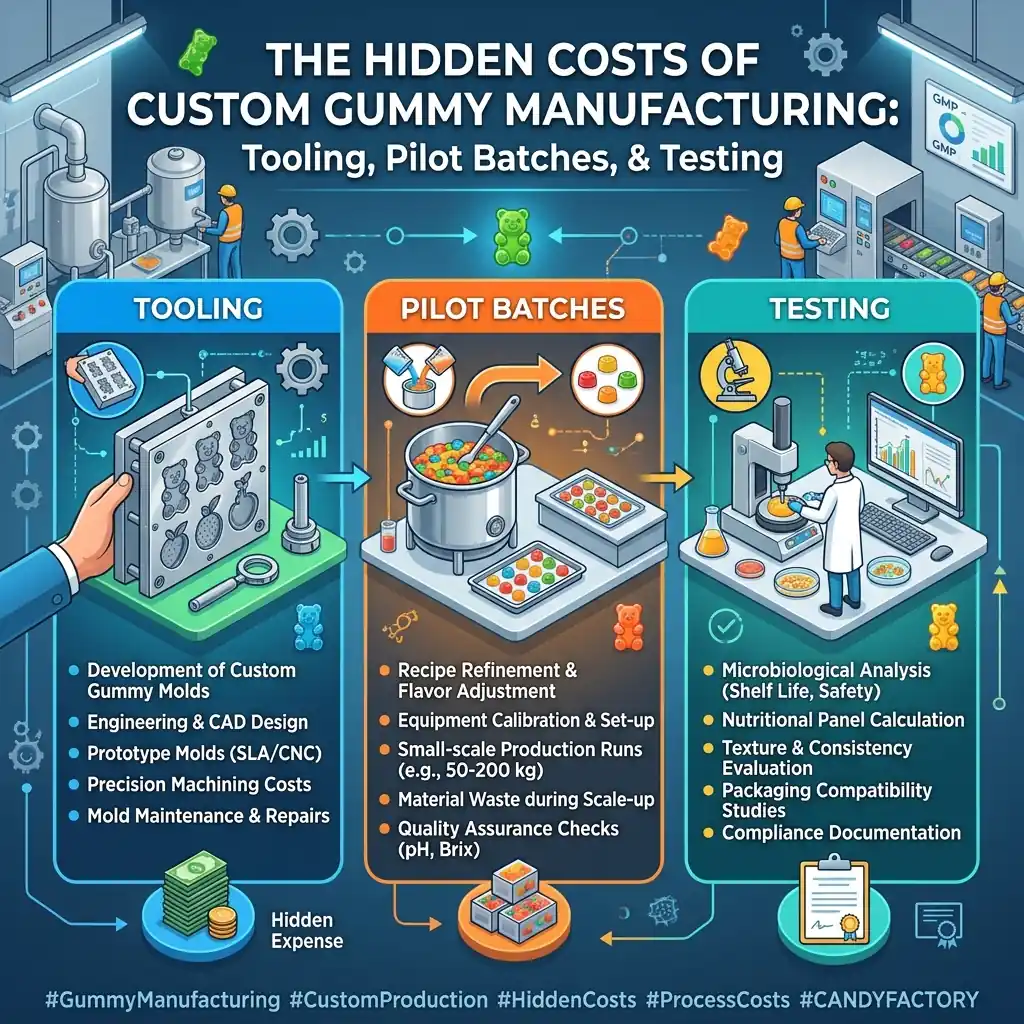
- Pilot batch testing
- Nutrient stability expertise
- Packaging engineering
Bulk & Wholesale Requirements
If sourcing gummy bulk or wholesale gummies, ensure:
- Competitive MOQs
- Consistent batch quality
- Robust logistics and export experience
Long‑Term Partnership Criteria
A strong partner should offer:
- Predictable lead times
- Clear communication
- Continuous improvement programs
- Capacity to scale with your brand
Conclusion
Creating vitamin gummies requires precise formulation, controlled processing, and strict compliance with dietary supplement regulations. Brands should prioritize manufacturers with strong R&D, scalable production, and proven quality systems to ensure safe, effective, and market‑ready products.
FAQ
1. How are vitamin gummies made? They are produced by heating a gelling base, blending vitamins, depositing into molds, curing, and packaging.
2. What ingredients are used in vitamin gummies? Common ingredients include gelatin or pectin, sweeteners, acids, natural flavors, and active nutrients.
3. Are vitamin gummies stable? Yes, when properly formulated and tested through stability studies to ensure nutrient retention.
4. What is the MOQ for private label gummy production? It varies by factory but typically ranges from 100,000–300,000 gummies per flavor.
5. What certifications should a manufacturer have? GMP, HACCP, ISO 22000, and third‑party testing capabilities.
6. Can formulas be customized? Yes, a private label gummy manufacturer can customize nutrients, flavors, shapes, and packaging.
About Our Manufacturing Capabilities
We specialize in full‑service gummy production, offering OEM/ODM, private label solutions, custom formulation, mass production, and global wholesale supply. Our facilities support scalable manufacturing, advanced R&D, and strict compliance to help brands launch high‑quality vitamin gummies with confidence.