
Executive Summary: What B2B Buyers Need to Know
If you are sourcing from a Gummy Manufacturer, heavy metal and microbial limits are not just QC line items. They directly affect export compliance, batch release, and retail acceptance. For supplement gummies, the two highest-risk failure points are trace elements from minerals and botanicals, and microbial growth driven by high moisture and water activity.
Most target markets require four heavy metals to be controlled: lead, arsenic, cadmium, and mercury, with finished-product limits typically in the low ppm range. For microbiology, total aerobic count, yeast and mold, and absence of specific pathogens like Salmonella and E. coli are standard. Testing to ISO 17025 means the lab that generates those results is independently accredited for method validity, equipment calibration, and traceability, which is what buyers and regulators actually audit.
Why Heavy Metal and Microbial Control Matters in Gummy Manufacturing
Buyers search this topic because a failed COA stops a shipment. Retailers, Amazon, and EU distributors now require heavy metal and microbial results from an ISO 17025 accredited lab before listing. This is especially critical for Gummy Manufacturing because gummies combine high-risk ingredients with a high-moisture process.
Gummies contain sugars, fruit pectins or gelatin, organic acids, and often botanical extracts or chelated minerals. Minerals such as zinc, iron, and calcium can carry background metals from their ore source. Botanicals can accumulate metals from soil. At the same time, the gummy matrix has water activity (Aw) between 0.55 and 0.75 after drying. If Aw is not tightly controlled, it can support yeast, mold, and bacterial growth even when the formula contains preservatives.
The technical decision after reading this article is: what limits to specify in your product spec, when to test raw materials versus finished gummies, and what lab capability your manufacturer must have to support your target markets.
Heavy Metal Limits in Supplement Gummies: What Brands Must Meet
Heavy metal limits for supplement gummies are set by finished-product regulations, ingredient monographs, and retailer specifications. The strictest limit usually governs your release decision.
Common Heavy Metal Contaminants in Gummy Ingredients
- Lead (Pb): Often linked to calcium salts, herbal extracts, and natural colors. Prop 65 in California drives the most stringent lead limits for US brands.
- Arsenic (As): Common in certain botanicals, rice-based ingredients, and some marine minerals. Inorganic arsenic is the primary concern.
- Cadmium (Cd): Found in zinc, cocoa, and some plant-based ingredients grown in specific soils.
- Mercury (Hg): Lower risk in gummies than in fish oil, but still required on most COAs for finished products.
Typical Limits Brands Should Design For
Limits vary by market. A Gummy Manufacturer serving global B2B customers should be able to meet the lowest limit among your target markets from day one.
| Metal | Typical US Supplement Limit (Finished Gummy) | EU Food Supplement Practice | California Prop 65 Driven Spec (Per Daily Serving) |
|---|---|---|---|
| Lead (Pb) | NMT 0.5 – 1.0 ppm | NMT 1.0 – 3.0 ppm depending on ingredient category | 0.5 mcg/day MADL often requires < 0.2 ppm in gummy |
| Arsenic (As) | NMT 1.0 – 1.5 ppm (total) | NMT 1.0 ppm, inorganic arsenic often lower | Evaluated per product risk assessment |
| Cadmium (Cd) | NMT 0.5 – 1.0 ppm | NMT 0.5 – 1.0 ppm | 4.1 mcg/day MADL |
| Mercury (Hg) | NMT 0.2 – 0.5 ppm | NMT 0.1 – 0.3 ppm | 0.3 mcg/day for reproductive risk |
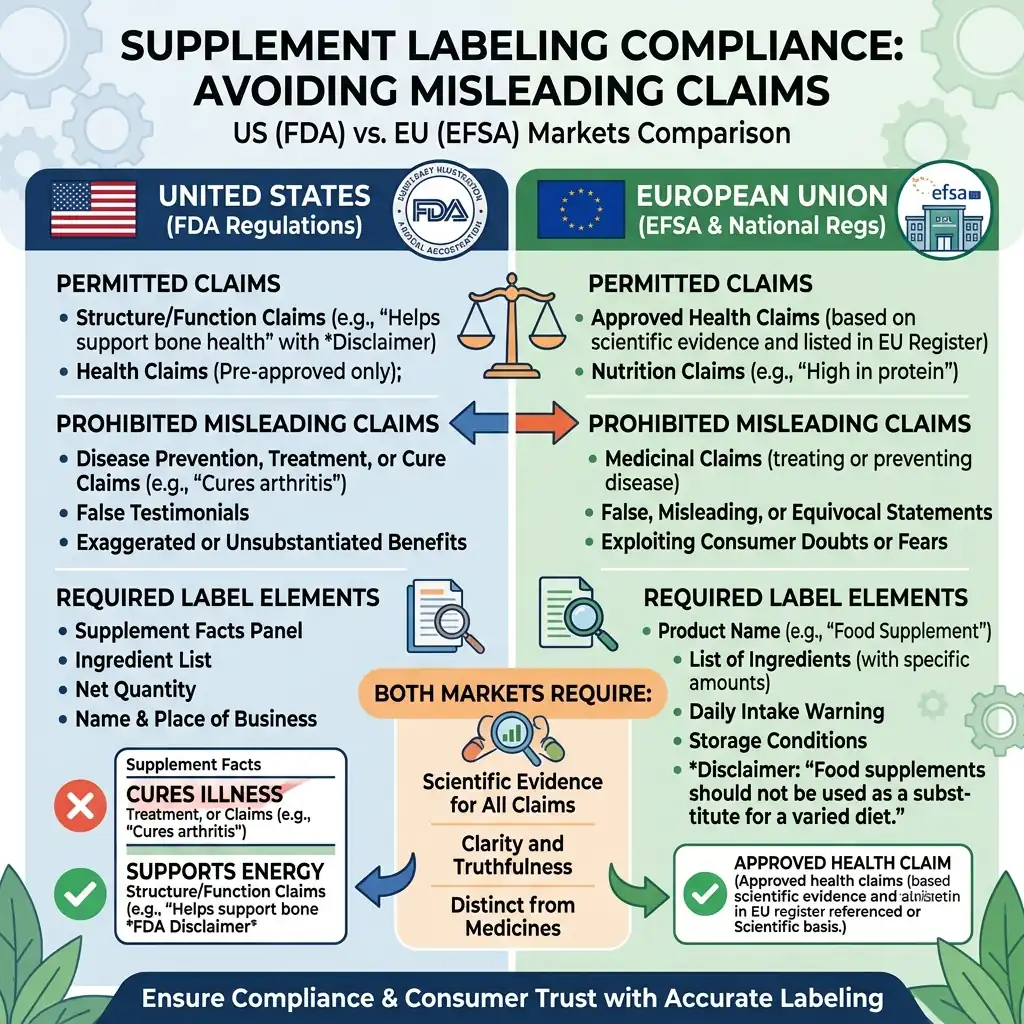
This table is for supplier qualification planning. Your final spec should reference USP <232>/<233>, EU Regulation 2023/915, or your retailer manual. Do not assume one market limit covers all markets.
Where Heavy Metals Enter Gummy Manufacturing
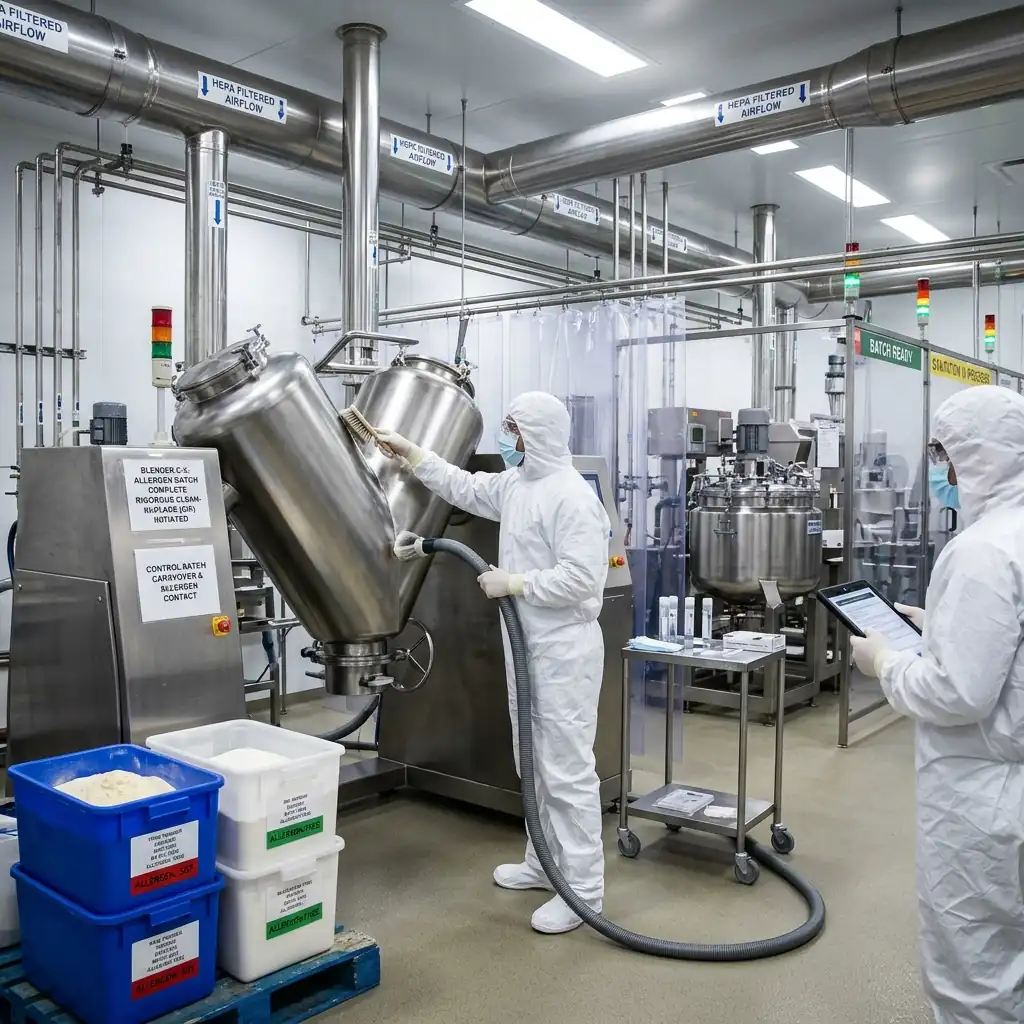
Three entry points dominate. First, raw materials: mineral salts, cocoa powder, turmeric, ashwagandha, and natural colors. Second, processing aids: water quality and equipment wear. Third, cross-contamination from previous batches if cleaning validation is weak.
High-dose mineral gummies are technically difficult because the active itself is the source of metals. A calcium gummy at 200 mg per piece may require a larger gummy weight to dilute background lead and still meet Prop 65. This affects texture, mold size, and cost. Botanical gummies create similar trade-offs because extract suppliers vary widely in metal control.
Microbial Limits in Supplement Gummies: Water Activity and Risk Control
Microbial limits protect shelf life and safety. Gummies are non-sterile products, but they must be manufactured under low water activity to inhibit growth.
Two formulation parameters drive microbial risk:
- Water activity (Aw): Target is typically 0.55-0.65 for pectin gummies and 0.60-0.70 for gelatin gummies after conditioning. Above 0.75, yeast and mold risk increases sharply.
- pH: Pectin gummies are set at pH 3.2-3.8 for gel structure. Low pH helps control bacteria but does not replace Aw control.
| Microbiological Parameter | Common Acceptance for Gummies (Finished Product) | Why It Matters in Gummy Manufacturing |
|---|---|---|
| Total Aerobic Microbial Count (TAMC) | NMT 1,000 – 5,000 CFU/g | Indicator of process hygiene, drying, and packaging control |
| Total Yeast and Mold Count (TYMC) | NMT 100 – 500 CFU/g | Directly linked to Aw, drying time, and coating |
| E. coli | Absent in 10g | Water and raw material sanitation indicator |
| Salmonella spp. | Absent in 25g | Mandatory for export to US and EU |
| Staphylococcus aureus | Absent in 10g or NMT 100 CFU/g per retailer | Personnel and handling hygiene |
Pectin vs gelatin creates different microbial behavior. Pectin systems need higher cooking temperatures (106-112°C) and acid addition after cooling to 90-95°C to protect heat-sensitive actives. Gelatin systems cook lower (80-90°C) but require longer conditioning and dehumidified drying to reach target Aw. Probiotics, hygroscopic ingredients like magnesium citrate, and honey-based gummies need additional Aw and packaging validation.
ISO 17025 Testing Standards: Why It Matters When Choosing a Gummy Manufacturer
ISO 17025 is the international standard for testing competence. It does not certify a product. It accredits a laboratory for specific test methods under specific conditions.
What ISO 17025 Actually Covers
- Method validation: ICP-MS for heavy metals and plate count or PCR for micro must be validated for the gummy matrix, not just for water or powder.
- Traceability and calibration: Balances, incubators, ICP-MS, and reference standards are calibrated to national standards with documented uncertainty.
- Personnel and impartiality: Analyst competency and separation from production pressure.
- Scope of accreditation: A lab may be ISO 17025 accredited for lead but not for mercury, or for TAMC but not Salmonella PCR. Always check the scope certificate, not just the logo.
ISO 17025 vs Non-Accredited Internal Testing
| Capability | Internal QC Lab (Non-Accredited) | ISO 17025 Accredited Lab |
|---|---|---|
| Result acceptance | Useful for in-process control | Accepted by US, EU, and major retailers for COA release |
| Matrix interference | Often not validated for pectin/gelatin + sugars | Matrix-specific validation required and audited |
| Documentation | Internal method | Validated method, uncertainty budget, LOD/LOQ, chain of custody |
| Supplier risk | Higher risk of retesting at customer side | Reduces duplicate testing and batch rejection |
For B2B buyers, the commercial point is simple: a COA from an ISO 17025 lab with explicit method codes (e.g., USP <233> by ICP-MS, USP <61>/<62> for micro) clears customs and retailer QC faster than an internal result.
How a Qualified Gummy Manufacturer Manages Testing Across Production
A reliable testing program is staged, not just finished-product testing. Here is how it works in commercial Gummy Manufacturing:
- Raw material testing: Every mineral, botanical extract, and color is tested for heavy metals on receipt. Botanicals also get TAMC/TYMC. Certificates from suppliers are not accepted as sole evidence unless the supplier lab is also ISO 17025.
- Batch preparation and cooking: Water used for gummy mass is tested per USP Purified Water criteria. pH and Brix are monitored because pH affects both gel strength and microbial stability.
- Active ingredient addition: Heat-sensitive actives like vitamins C, B12, and probiotics are added after mass cooling to 80-85°C. Temperature logs prove the active was not degraded and that the mass stayed above the zone where microbial growth could occur.
- Mixing and deposition: Homogenization prevents localized high Aw pockets. Depositing hoppers are covered to avoid environmental contamination.
- Cooling, setting, drying: Gummies are conditioned in dehumidified rooms (typically <35% RH, 20-25°C) for 24-48 hours. Aw is checked per tray. This is the most important microbial control step.
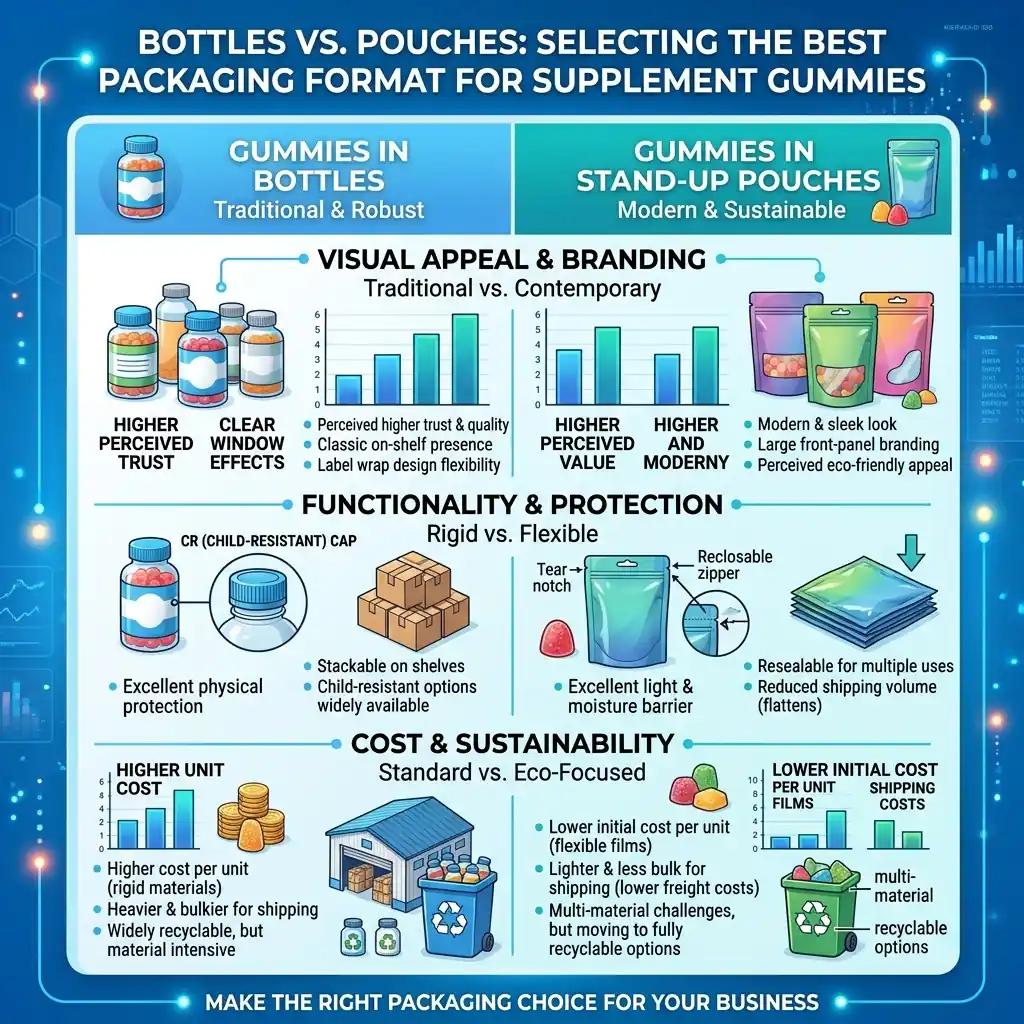
- Coating and packaging: Wax or oil coating reduces surface stickiness and moisture uptake. Packaging films are tested for WVTR (water vapor transmission rate) to maintain Aw during shelf life.
- Finished-product testing: Heavy metals by ICP-MS and microbial testing per USP <61>/<62> or ISO 21149/16212 are performed on composite samples from beginning, middle, and end of depositing run to prove batch consistency.
Shenzhen Gothink Biotech Co., Ltd. operates a GMP-certified facility with a 100,000-class cleanroom and a 10,000-class R&D laboratory, supporting this staged testing model from raw material to finished gummy release. For gummy projects, its R&D team validates pH, Aw, and drying curves at pilot scale before commercial scale-up, which avoids texture failure and micro failures after scale-up.
Cost, MOQ, and Documentation Impact of Testing Requirements
ISO 17025 testing affects commercial terms more than many buyers expect:
- Formulation complexity: Multi-mineral or botanical + mineral gummies need more metal assays per batch. Each additional ingredient source adds incoming tests.
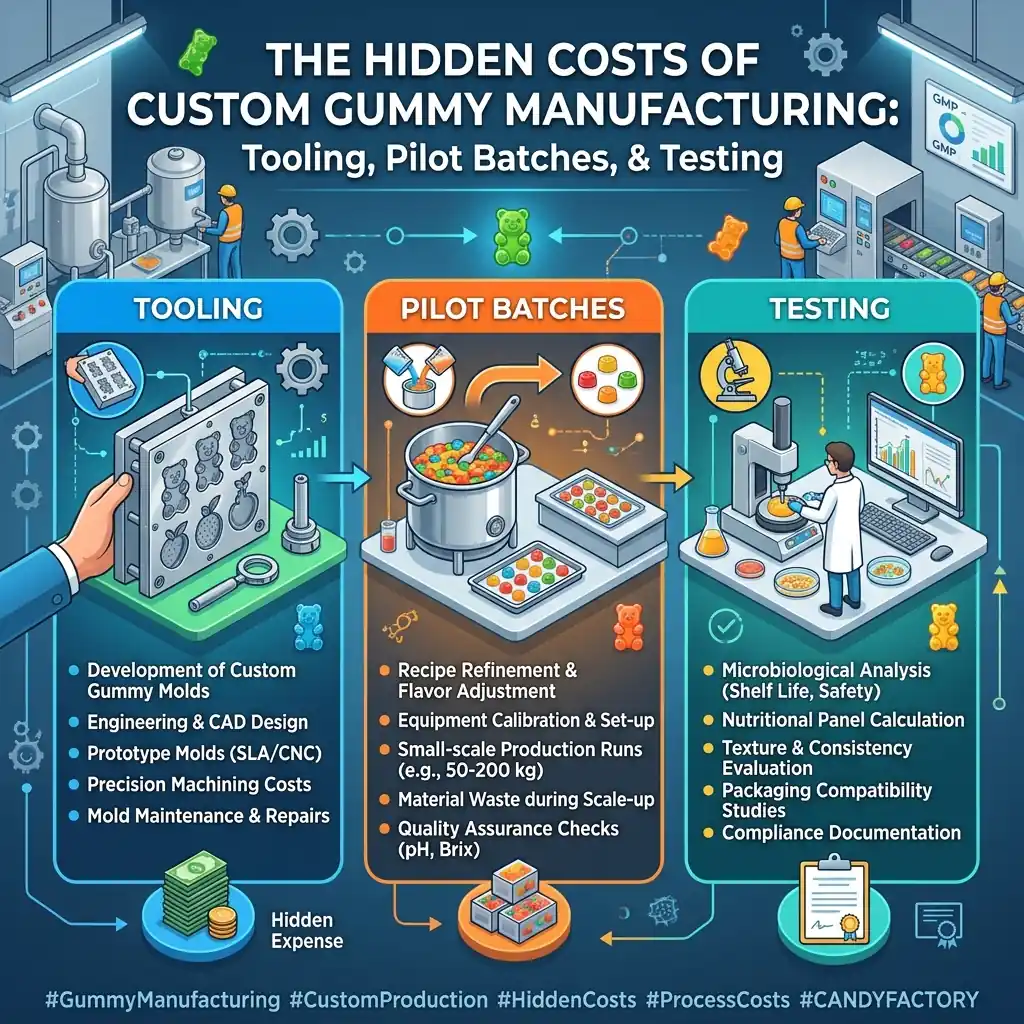
- Gummy weight and dosage: Larger gummy weight (3.0-4.5g) can help dilute background metals but increases ingredient cost and may need new molds. Higher active loading increases texture risk and Aw.
- MOQ: Heavy metal and microbial tests cost $150-$450 per finished batch depending on scope and lab. For small MOQs, testing can be 5-10% of batch cost. Consolidating flavors on one base reduces cost.
- Lead time: ISO 17025 microbial results need 5-7 days for TAMC/TYMC and Salmonella confirmation. Brands should factor this into release timelines, not just production time.
- Documentation: Expect method references, LOD/LOQ, and scope certificate to be included in the Technical Data Package for EU and US filings. Non-accredited COAs often trigger retesting and delay.
How to Evaluate a Gummy Manufacturer for Heavy Metal and Microbial Control
Ask for verifiable capabilities, not marketing statements:
- Is heavy metal testing done by ICP-MS per USP <233> or equivalent, and is that method listed in the lab’s ISO 17025 scope?
- Can the lab provide gummy matrix validation data for both gelatin and pectin systems?
- What is the standard Aw target and how is it monitored during drying? Can they share Aw and moisture trend charts from recent batches?
- How is raw material qualification done for botanicals and minerals? What is the rejection rate?
- Is there in-house metal detection and environmental monitoring in the depositing and drying areas?
- What is the sampling plan for finished-product micro? Composite or single point?
- Can they provide FDA, BRC, FSSC 22000, HACCP documentation and batch traceability from raw lot to finished lot?
- What export experience do they have with US Prop 65 and EU Regulation 2023/915 limits?
A manufacturer that can answer these with SOPs, scope certificates, and recent COAs is operationally ready. A manufacturer that only states “we test heavy metals” without scope or method is a commercial risk.
Common Mistakes Brands Make When Specifying Limits
- Setting a finished-product limit without checking raw material background. A low lead spec cannot be met if the chosen calcium source already carries 2 ppm.
- Using powder limits for gummies. Powders allow higher TAMC than gummies with sugar and moisture. Gummy limits should be tighter on TYMC.
- Assuming pectin is automatically more stable. Pectin needs precise pH and solids control. Poor pH control leads to weak gel and higher Aw.
- Accepting supplier COAs without ISO 17025 scope. This causes failures during third-party verification at the customer warehouse.
- Ignoring packaging WVTR. Even a compliant batch will fail TYMC after 3 months if the pouch allows moisture ingress.
Practical Checklist Before You Place an OEM/ODM Order
- Define target markets (US, EU, UK, Middle East) and attach retailer spec for heavy metals and micro.
- Provide active dosage per gummy, daily serving, and gummy weight preference. Include mineral sources if possible.
- Specify whether you need Prop 65 compliant calculations per serving.
- Ask for pilot batch Aw, pH, and texture data plus ISO 17025 COA from the same pilot lot.
- Confirm testing flow: incoming, in-process Aw, finished heavy metal + micro, with method references.
- Confirm MOQ, mold cost, and whether testing cost is included or billed separately.
- Request stability protocol: accelerated and real-time Aw and micro at 0, 3, 6, 12 months.
FAQ
What are standard heavy metal limits for gummies sold in the US and EU?
Most US brands set finished gummy limits at NMT 1.0 ppm lead, 1.5 ppm arsenic, 1.0 ppm cadmium, 0.5 ppm mercury, with tighter limits if targeting Prop 65. EU practice under Regulation 2023/915 and retailer manuals is similar but evaluated per ingredient category and daily intake. Your spec should state both the limit and the test method, e.g., lead per USP <233> by ICP-MS.
What microbial tests are mandatory for supplement gummies?
At minimum TAMC, TYMC, E. coli, and Salmonella. Many retailers also require Staphylococcus aureus, bile-tolerant Gram-negative bacteria, and absence of E. coli in 10g. All should be performed to USP <61>/<62> or ISO equivalents by an ISO 17025 accredited lab with gummy matrix validation.
Does ISO 17025 accreditation guarantee product passes FDA or EU?
No. ISO 17025 guarantees the testing competence and traceability of the lab result. FDA and EU compliance also depends on your formula, GMP manufacturing, labeling, and whether your finished product meets the regulatory limits. ISO 17025 makes your COA defensible during audits and retailer review.
How does water activity affect microbial limits in pectin vs gelatin gummies?
Water activity is the main control for yeast and mold. Pectin gummies typically reach target Aw faster due to higher solids and lower drying tolerance, but are sensitive to pH deviation. Gelatin gummies need longer, controlled drying at low RH. If Aw stays above 0.70, TYMC can rise during storage even if initial micro was compliant.
Should heavy metal testing be done on raw materials or finished gummies?
Both. Raw material testing identifies the source of contamination and prevents costly batch failure. Finished-product testing proves batch compliance and accounts for concentration effects during cooking and drying. For minerals and botanicals, raw testing is mandatory before depositing.
What documentation should a Gummy Manufacturer provide for heavy metal and microbial testing?
Request: ISO 17025 scope certificate showing accredited methods for heavy metals and micro, COA with method, LOD/LOQ, analyst and date, raw material COAs with lot traceability, and Aw and moisture records for the batch. For export, also include calibration certificates and chain of custody.
Next Step: Validate Your Formula Against Export Requirements
If you already have a formula, send the active list, dosage per gummy, target gummy weight, target markets, and any retailer spec you must meet. A technical review can identify whether your mineral or botanical sources will meet your heavy metal limits, whether pectin or gelatin gives better Aw control for your actives, and what ISO 17025 testing scope is needed for release.
Review related technical topics in our Knowledge Hub and quality systems overview to compare formulation options and documentation support. If you are ready for costing, request an OEM/ODM quotation with your spec so the manufacturer can confirm MOQ, mold requirements, drying time, and testing cost in one proposal.
Jack Luo|Senior Technical Advisor, Nutrition Research Center Representing Gothink Biology, a GMP-certified dietary supplement manufacturer based in Shenzhen, China.
Explore more technical articles: Gummy Manufacturing Knowledge Hub | Quality and compliance systems: Quality Compliance Center