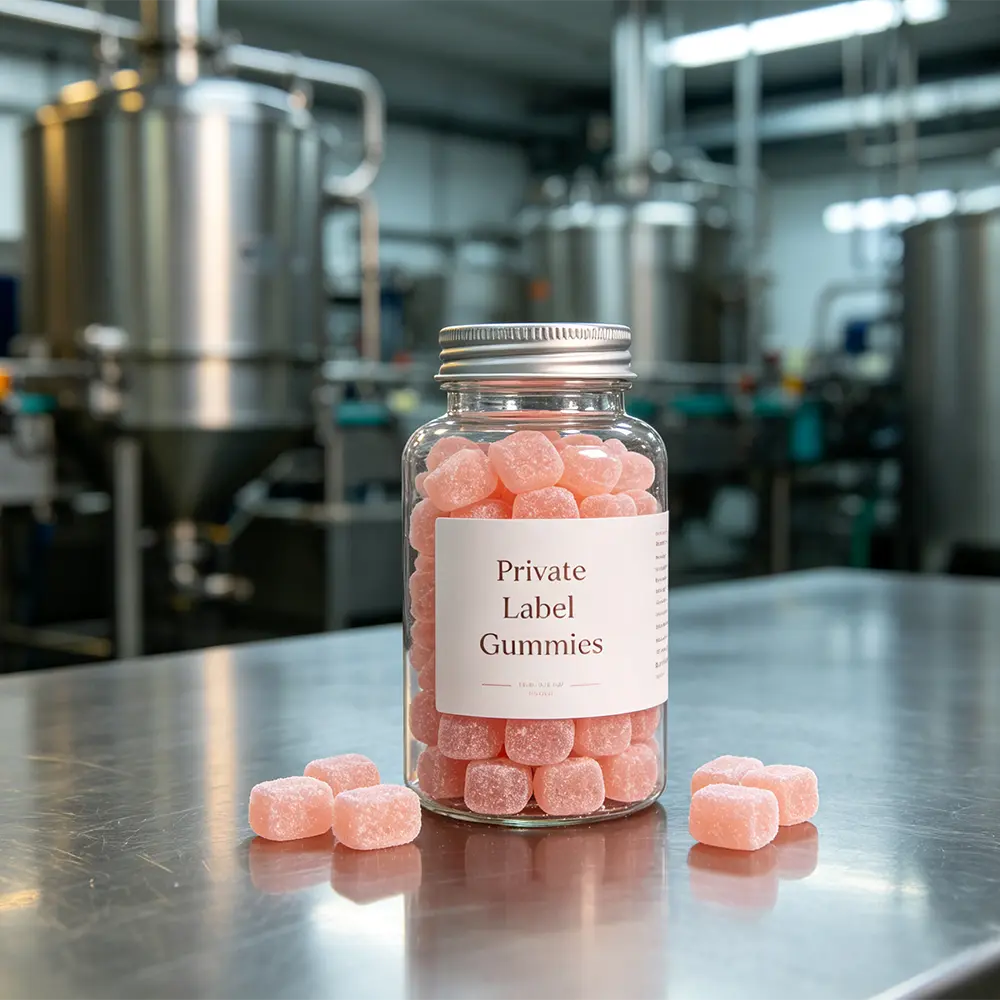

Every successful gummy supplement brand starts with a single question: “What actually happens inside a gummy factory?” If you’re sourcing private label gummies, understanding the manufacturing journey isn’t just useful—it directly affects your product quality, compliance, and time to market. Here’s a practical walk-through of how contract manufacturers turn a formula into a finished, shelf-ready gummy, and what you should look for along the way.
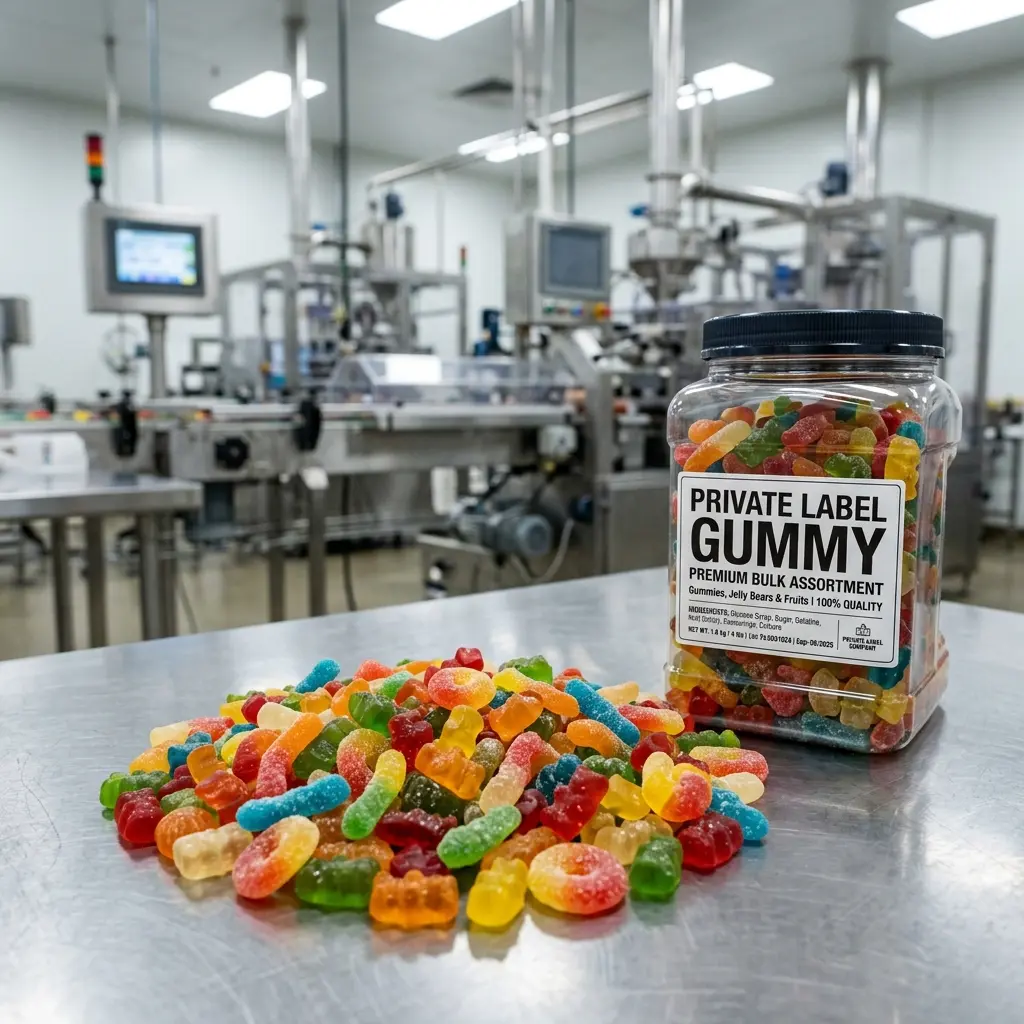
1. Formula Development: Building the Blueprint
Everything starts with the formula. Experienced R&D teams work from your brand’s target nutritionals—whether that’s a multivitamin, a botanical blend, or a probiotic gummy—and select the right gelling system, sweetener profile, and flavor maskers. Pectin and gelatin remain the two major bases, and the choice cascades into processing temperature, texture, and even vegan certification. A good gummy factory will also run accelerated stability tests early, so you know your active ingredients will hold label claim through the end of shelf life.
2. Raw Material Sourcing and Incoming QC
You can’t build premium private label gummies on cheap raw materials. Reputable manufacturers only accept ingredients that come with full certificates of analysis. On arrival, every lot goes through identity, assay, heavy metals, and microbiology checks. Until the QC lab releases a batch, nothing moves to the production floor—this is the gate that separates pharmaceutical-grade output from commodity candy.
3. Cooking and Mixing: Precision Heat Control
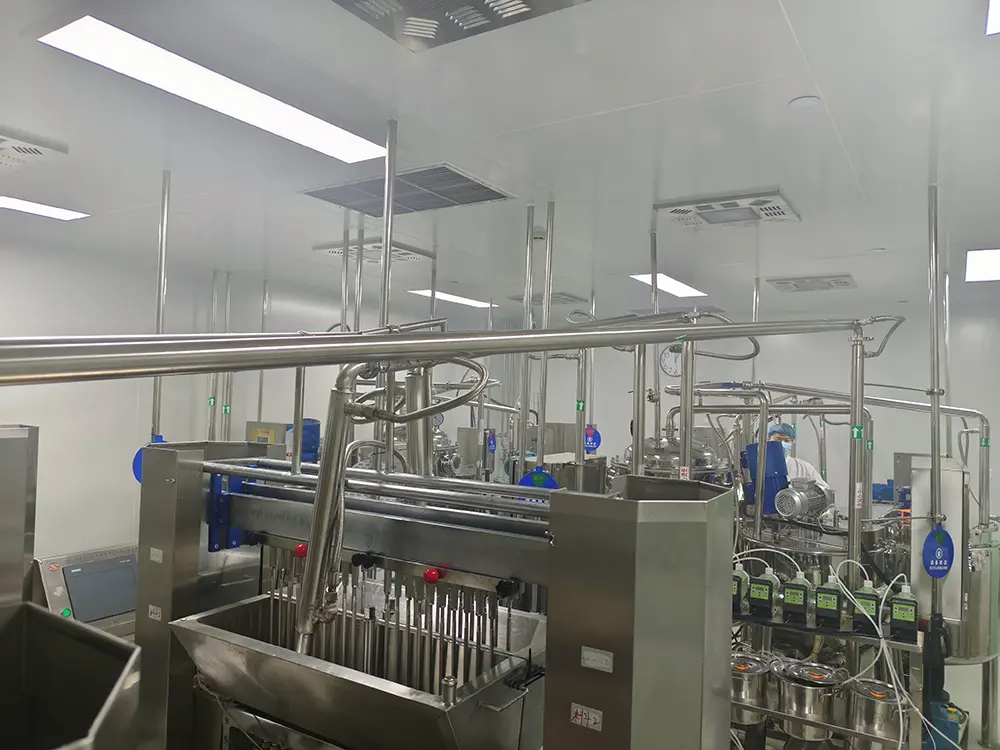
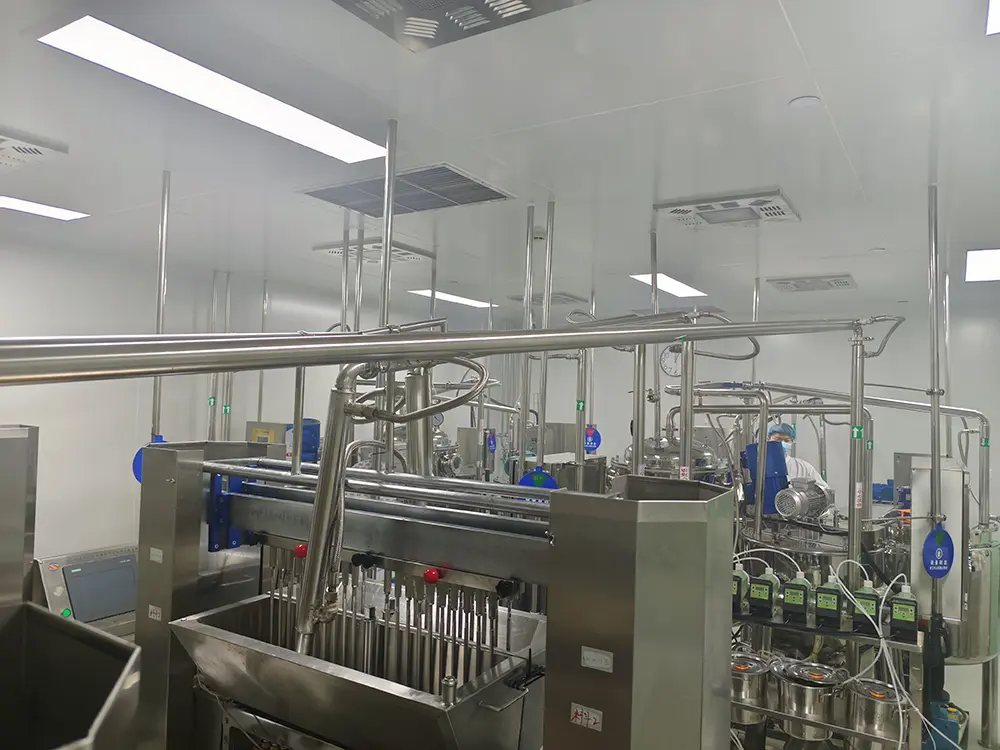
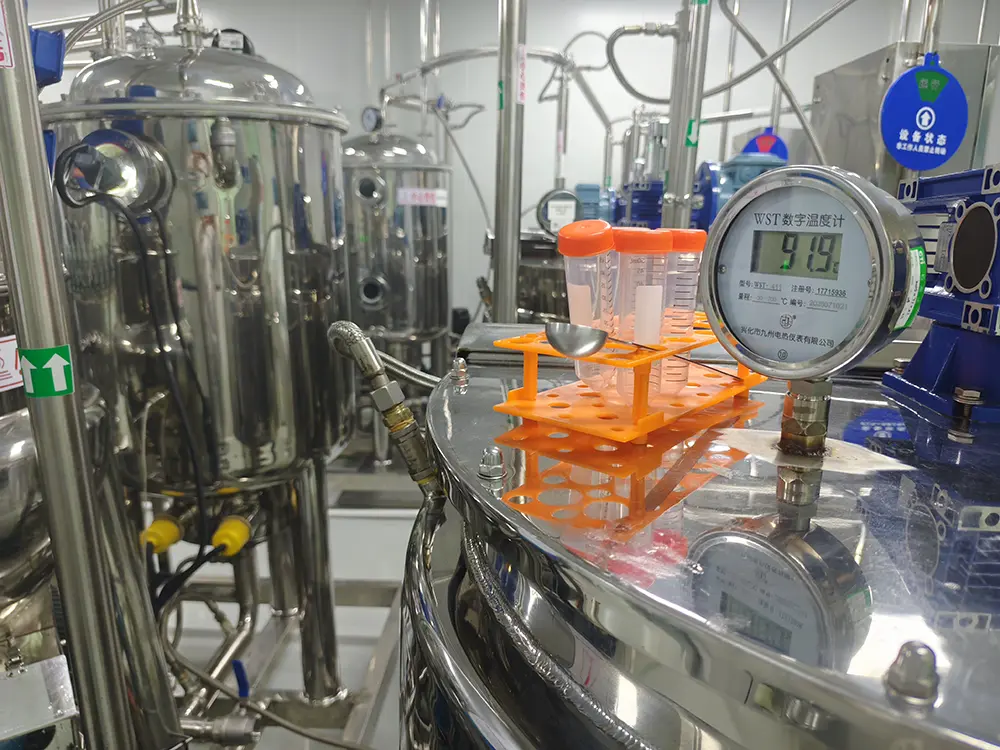
Step inside a well-run gummy factory and you’ll see temperature-controlled stainless steel cookers, not open kettles. The base—water, sweeteners, syrup, and gelling agent—is heated to 75–85 °C. But active compounds like vitamins, omega-3s, and probiotics can’t survive that heat. They’re stirred in after cooling the slurry below 60 °C, sometimes much lower. This stage is where formulation science meets process engineering: if the mixing sequence or cooling ramp is off, potency drops and the whole batch fails assay.
4. Depositing: Where Dosing Accuracy Lives
The liquid mass flows into high-speed depositors that inject precise amounts into starch or silicone molds. Weight variance for private label gummies should stay within ±2% per piece. When a single gummy claims 500 mg of vitamin C, that ±2% tolerance is what makes the label claim true—and what keeps regulators away from your door.
5. Drying and Cooling: Controlling Water Activity
Molded gummies enter climate-controlled drying rooms where humidity and airflow are dialed in to hit a target water activity (usually 0.60–0.65 Aw). This isn’t just about texture. Too much free water, and you invite mold and sticky clumps. Too little, and the gummies turn rubbery or crack. Proper drying stabilizes the product and sets the real-world shelf life—something your buyers will notice when they open the bottle six months later.
6. Coating and Polishing: Function Meets Shelf Appeal
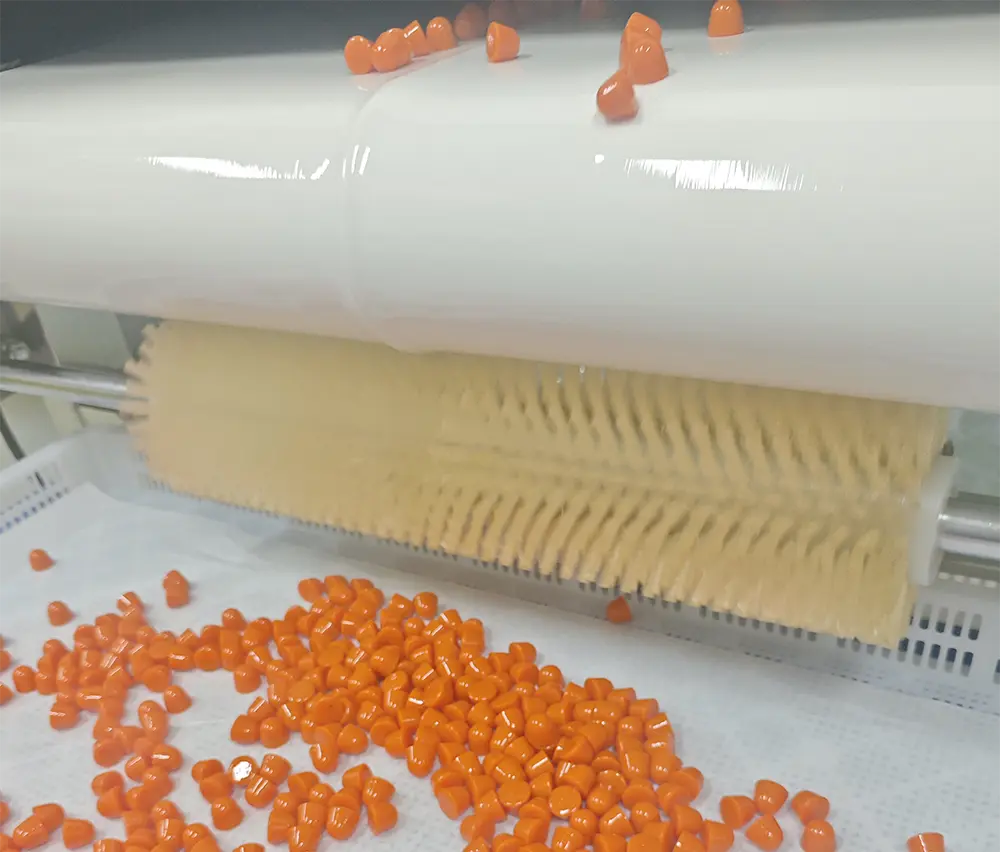
An optional but strategic step. A thin layer of oil, wax, or powder coating (typically 0.1–0.3 mm) stops individual gummies from fusing into a solid block inside the bottle. It also gives a clean, non-sticky mouthfeel and premium gloss. When you’re selling private label gummies on a crowded shelf or an e-commerce product page, that polished look signals quality before the customer even tastes one.
7. Quality Control and Laboratory Testing
Finished gummies face a battery of tests: assay (does each gummy deliver what the label promises?), disintegration, texture profile, microbiology, and heavy metals. Top-tier gummy factory operations run these checks in-house with real-time data, not outsourced days later. If a result drifts out of spec, the batch is held until root cause is determined. This internal transparency is what prevents recalls and protects your brand.
8. Packaging: The Final Barrier
Automated lines fill bottles, pouches, or blister packs, apply induction seals, and label at speed. Packaging is selected not just for branding but for barrier properties—keeping moisture and oxygen out. Seal integrity testing (e.g., vacuum decay over 25 inches Hg) verifies that every container will survive shipping and warehouse storage. If the seal fails, even the best private label gummies turn into a sticky, unsellable mess.
What to Look for in a Gummy Factory Before You Commit
After auditing dozens of facilities, here’s what separates a reliable partner from a transactional supplier:
- Cleanroom classification: At minimum, a 100,000-class production cleanroom. For R&D, 10,000-class shows they take formulation seriously.
- Certificate stack: Look for GMP, HACCP, ISO22000, and FDA registration as a baseline. If you need Halal, Kosher, or vegan claims, verify those certificates directly.
- R&D depth: Ask who’s formulating your product. Postdoctoral-level scientists with experience in plant extraction and biomanufacturing are a strong signal that tricky actives won’t get killed in processing.
- MOQ and scalability: A partner that accepts trial runs of 10,000–30,000 units and can scale to multi-ton daily output without changing production lines gives you room to grow.
- Real-time QC: On-site labs that release batches based on data, not just paperwork, cut failure risk dramatically.
Technical Parameters That Actually Matter
| Production Phase | Key Parameter | Target Specification | Why It Matters for Your Brand |
|---|---|---|---|
| Cooking & Mixing | Temperature windows | 75–85°C (base), <60°C (actives) | Protects heat-sensitive vitamins and botanicals from degradation |
| Depositing | Piece weight variance | ±2% | Guarantees label claim accuracy and dose consistency |
| Drying | Water activity (Aw) | 0.60–0.65 | Prevents mold, sticking, and texture loss across shelf life |
| Coating | Coating layer thickness | 0.1–0.3 mm uniform | Eliminates clumping and improves mouthfeel |
| Packaging | Seal integrity | >25 inches Hg vacuum pass | Ensures moisture and oxygen barrier during distribution |
Frequently Asked Questions from Brand Owners
What’s the typical lead time for private label gummies?
Plan on 30–45 days from formula lock to finished goods. Complex actives, custom molds, or large order volumes can extend that window, so clear communication with your gummy factory upfront saves schedule surprises.
Can one facility produce both gelatin and pectin-based gummies?
Yes, but only if the gummy factory runs segregated production lines and validated cleaning protocols. This is essential for avoiding cross-contamination and securing vegan or halal certification.
Which certifications should I demand from a private label gummy manufacturer?
Start with GMP, ISO22000, HACCP, and FDA registration. If your market requires it, also confirm HALAL, KOSHER, BRC, FSSC 22000, and Vegan certifications. Don’t settle for “we’re applying”—ask for current, unexpired documents.
Can you really add probiotics to gummies without killing them?
Yes. Viable probiotic private label gummies are made by adding live cultures after the cooking phase, often as a post-production coating or during low-temperature mixing. Overages are built into the formula so that the CFU count meets label claim through the expiry date.
What’s a realistic minimum order quantity for custom gummies?
Flexible manufacturers typically offer MOQs between 10,000 and 30,000 units per SKU. This lets emerging brands test the market without overcommitting inventory, then scale up on the same production platform.
Turning Your Private Label Gummy Concept into Reality
When you get the manufacturing process right, private label gummies become one of the highest-repeat-purchase formats in the supplement space. It all comes down to the gummy factory you choose—its processes, its people, and its commitment to holding the line on quality when no one is watching. If you’re ready to move from concept to market, a partner that combines pharmaceutical-grade rigor with commercial flexibility will make the journey faster, safer, and far more profitable.
Gothink Biology operates a certified gummy factory with 100,000-class cleanrooms and a 10,000-class R&D laboratory, delivering private label gummies and full turnkey supplement manufacturing under ISO9001, ISO22000, HACCP, FDA, GMP, HALAL, KOSHER, BRC, FSSC 22000, and Vegan certifications. Our science team is led by postdoctoral researchers from top U.S. institutions, and we support everything from small trial runs to multi-ton daily production. Ready to discuss your project? Visit gothinkbio.com or reach out to our team directly.