
Summary
This guide outlines the complete process of developing, producing, and launching gummy supplements for commercial sale. It covers formulation science, manufacturing workflows, quality control, regulatory compliance, and B2B sourcing strategies that supplement brands need to bring a competitive gummy product to market.
What Is Commercial Gummy Supplement Manufacturing?
How to Make Gummies That Sell refers to the systematic process of developing, producing, and commercializing gummy-based dietary supplements through scientifically validated formulations, scalable manufacturing infrastructure, and regulatory-compliant production practices. Unlike home kitchen preparation, commercial gummy production requires controlled environments, precise dosing, certified raw materials, and third-party testing to meet global market standards.
Step-by-Step Process to Make Gummies for Commercial Sale
Step 1: Market Research and Product Positioning
Before any production begins, brands must define their target demographic, dosage requirements, and competitive differentiation. Key factors include whether the product will target sleep support, immune health, multivitamin delivery, or specific nutraceutical applications. Pricing strategy and retail channel selection (DTC e-commerce, retail shelves, or subscription models) also directly influence formulation decisions and packaging choices.
Step 2: Formulation Development
Formulation is the most critical stage when you make gummies at a commercial scale. A standard gummy base consists of a gelling agent (pectin, gelatin, or carrageenan), a sweetener system (sucrose, glucose syrup, or sugar-free alternatives like maltitol or allulose), active ingredients (vitamins, minerals, herbal extracts), flavors, colors, and acidity regulators. Each active ingredient must be evaluated for heat stability, pH compatibility, and bioavailability within the gummy matrix. Water-soluble vitamins such as vitamin C and B-complex are relatively straightforward, while fat-soluble vitamins like D3 and K2 require emulsification or microencapsulation for even distribution.
Step 3: Prototyping and Sensory Testing
Small-batch prototypes are produced to evaluate texture, flavor, mouthfeel, and appearance. Texture is a primary driver of consumer repurchase behavior in the gummy category. Pectin-based gummies offer a softer, plant-friendly chew, while gelatin-based gummies provide a firmer, more elastic bite. Sugar-free formulations require additional texture modifiers to replicate the body and mouthfeel that sugar provides. Iterative testing rounds refine the product until it meets both sensory and nutritional specifications.
Step 4: Pilot-Scale Production
Before committing to full manufacturing runs, pilot-scale production validates that the formulation behaves consistently at larger volumes. This stage identifies potential issues with deposition accuracy, cooling kinetics, starch mold release, and ingredient settling. Pilot runs typically produce 5,000 to 20,000 units and serve as the basis for stability testing samples.
Step 5: Full-Scale Manufacturing
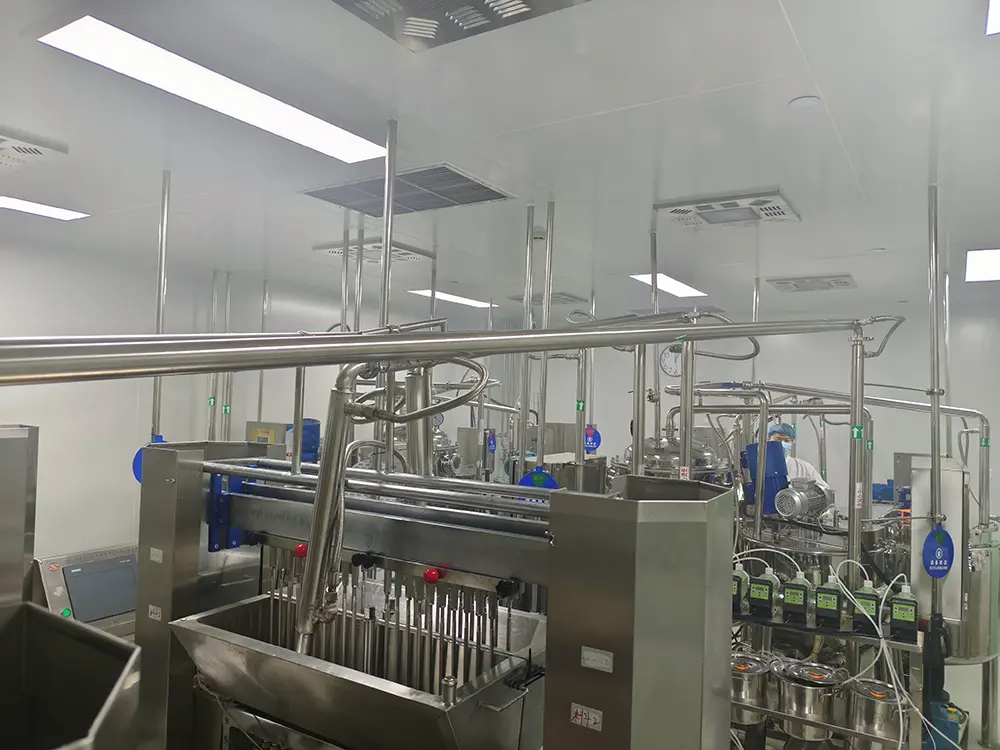
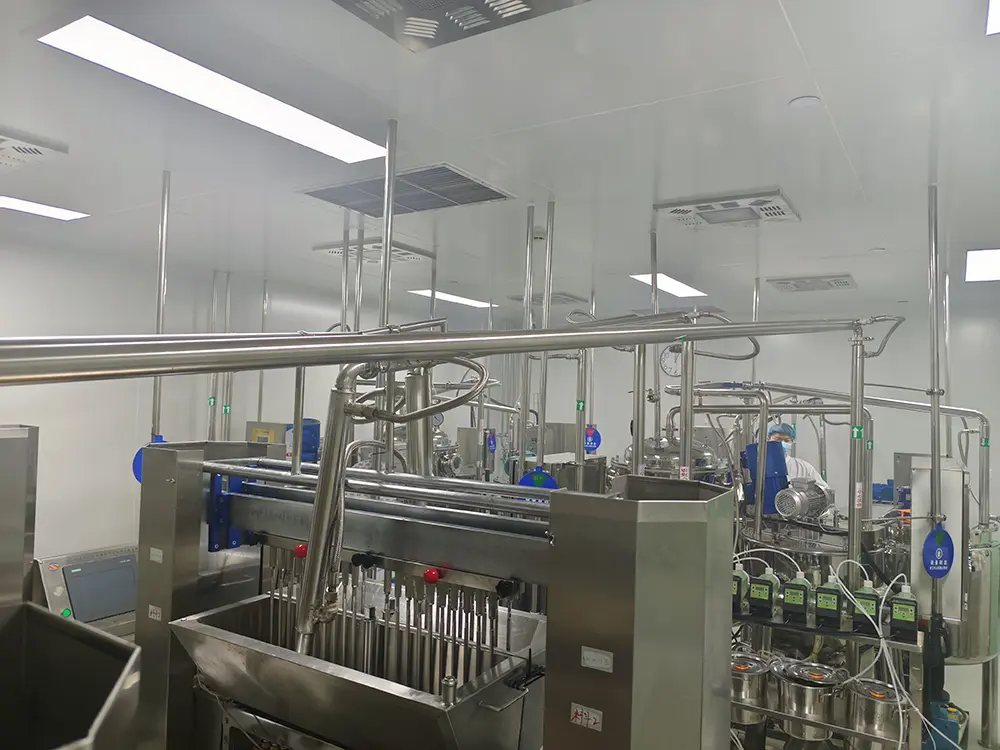
Commercial production takes place in a certified Gummy Factory equipped with temperature-controlled mixing tanks, automated depositing machines, climate-controlled drying tunnels, and automated packaging lines. The production environment must maintain strict temperature and humidity control, as gummy products are highly sensitive to moisture absorption and thermal degradation. A qualified Gummy Factory operating at scale can achieve daily outputs of 16 tons or more, with annual capacities reaching 5,000 tons for high-volume manufacturers.
Step 6: Quality Control and Third-Party Testing
Every production batch undergoes in-process and finished-product testing. Critical quality parameters include weight uniformity, active ingredient potency, microbial limits (total plate count, yeast, mold, E. coli, Salmonella), heavy metal content, and residual solvent levels. Certificates of Analysis (COAs) are generated for each batch, and many brands commission additional testing from independent third-party laboratories to strengthen consumer trust.
Step 7: Packaging and Shelf-Life Validation
Gummies are hygroscopic and require packaging that provides a strong moisture barrier. Common formats include stand-up pouches with desiccant packets, PET bottles with induction-sealed liners, and blister packs for single-dose formats. Shelf-life validation through accelerated stability testing (typically 40°C/75% RH for 3–6 months) confirms that the product maintains potency, texture, and safety throughout its stated shelf life, which for most gummy supplements ranges from 18 to 24 months.
Technical Parameters for Commercial Gummy Production
| Parameter | Specification | Industry Standard |
|---|---|---|
| Gelling Agent | Pectin, Gelatin, Carrageenan | 4–8% of total formulation weight |
| Brix Level (Cooking) | 72–78°Bx | Controls final texture and water activity |
| Depositing Temperature | 65–85°C | Must not exceed active ingredient degradation point |
| Drying Conditions | 20–25°C, 35–45% RH, 24–72 hours | Varies by gummy size and gelling agent type |
| Water Activity (aw) | ≤ 0.65 | Prevents microbial growth during shelf life |
| Weight Variance per Piece | ±5% of target weight | Ensures accurate dosing per serving |
| Cleanroom Standard | 100,000-class (ISO 8) | Minimum for dietary supplement production |
| Potency Verification | 90–120% of label claim | Per FDA 21 CFR 111 and equivalent regulations |
Practical Insights Across Key Operational Dimensions
Production
Successful gummy production requires synchronized workflow across mixing, cooking, depositing, drying, and packaging stages. Bottlenecks commonly occur at the drying stage, where insufficient tunnel capacity can limit overall throughput. Brands seeking to make gummies at volume should verify that their manufacturing partner has adequate drying tunnel length and climate-controlled curing rooms. Automated depositing systems with multi-head configurations can produce 200 to 600 pieces per minute per line, depending on mold complexity and gummy weight.
Quality Control
Quality control in gummy manufacturing extends beyond finished-product testing. In-process checks include Brix monitoring during cooking, viscosity measurement before depositing, visual inspection after demolding, and weight checks post-drying. Brands should require their manufacturing partners to implement HACCP plans with critical control points at cooking temperature, metal detection post-drying, and package seal integrity verification. A facility operating a 10,000-class pharmaceutical-grade R&D laboratory can conduct more sophisticated analytical testing, including HPLC-based potency assays and ICP-MS heavy metal analysis, in-house.
Scalability
Scalability is a fundamental consideration for brands planning to grow. A manufacturing partner’s annual capacity of 5,000 tons provides significant headroom for brand expansion without requiring facility transitions. Formulation scalability must also be validated: a recipe that works in a 50-liter pilot kettle may behave differently in a 2,000-liter production vessel due to differences in heat transfer, mixing shear, and evaporation rates. Experienced manufacturers conduct scale-up trials to adjust process parameters before full production commits.
Compliance
Gummy supplements sold in the United States must comply with FDA dietary supplement regulations under 21 CFR 111, including current Good Manufacturing Practice (cGMP) requirements, facility registration, and adverse event reporting. For international markets, additional compliance frameworks apply: EU Food Supplements Directive, Health Canada NHP regulations, and TGA requirements in Australia. Facility certifications such as ISO9001, ISO22000, HACCP, GMP, BRC, and FSSC 22000 serve as indicators of a manufacturer’s commitment to systematic quality and food safety management. Additional certifications like HALAL, KOSHER, and Vegan expand market access to specific consumer segments.
B2B Decision Guide: Choosing a Gummy Manufacturing Partner
Capability Assessment Criteria
When evaluating contract manufacturers for private label gummies, brands should assess the following dimensions in a structured manner. First, verify the manufacturer’s production capacity against your projected demand, including both minimum order quantities for initial launches and maximum throughput for peak-season scaling. Second, evaluate formulation capabilities: does the manufacturer offer custom R&D, or are they limited to a catalog of stock formulas? Third, review their certification portfolio against your target markets. A manufacturer holding ISO9001, ISO22000, HACCP, FDA, HALAL, GMP, KOSHER, BRC, FSSC 22000, PJPH, and Vegan certifications can serve virtually any global market without additional facility audits.
Cost Structure Analysis
Total cost of goods for private label gummies includes raw materials, manufacturing labor, packaging, quality testing, compliance overhead, and logistics. Raw material costs are influenced by active ingredient grade (standard vs. premium), gelling agent selection (pectin is typically more expensive than gelatin), and sweetener system (sugar-free formulations carry a 15–30% cost premium over conventional sugar-based recipes). Brands should request itemized cost breakdowns and compare at least three manufacturers to identify the optimal balance of price, quality, and service level. Beware of quotes that appear significantly below market average, as they often reflect shortcuts in testing, ingredient quality, or certification maintenance.
Risk Mitigation Through Partner Selection
Supply chain disruptions, regulatory actions, and product recalls represent significant business risks for supplement brands. Mitigation strategies include selecting manufacturers with diversified raw material sourcing, robust supplier qualification programs, and comprehensive insurance coverage. Request documentation of the manufacturer’s recall procedure, corrective action and preventive action (CAPA) system, and history of regulatory non-conformances. Manufacturers that conduct formulation research on 2,000 new products annually typically maintain stronger R&D infrastructure and regulatory awareness, reducing the likelihood of formulation-related compliance failures.
Timeline and Project Management
A typical timeline from initial concept to shelf-ready product spans 12 to 20 weeks: 2–4 weeks for formulation and quote finalization, 2–3 weeks for prototyping and approval, 1–2 weeks for pilot production, 4–6 weeks for stability testing initiation, and 3–5 weeks for full production and packaging. Manufacturers providing one-stop OEM/ODM services that integrate formulation, design, compliance, and export logistics under a single project manager can reduce this timeline by 15–25% compared to multi-vendor approaches.
Conclusion
Developing a commercially successful gummy supplement requires coordinated execution across formulation science, manufacturing engineering, quality assurance, and regulatory compliance. Brands that invest in thorough front-end research, partner with certified and capable manufacturers, and maintain rigorous quality standards throughout production are best positioned to deliver products that meet consumer expectations and sustain long-term market performance. The decision of which manufacturing partner to engage is among the most consequential choices a supplement brand will make, directly impacting product quality, cost structure, speed to market, and regulatory risk exposure.
Frequently Asked Questions
What is the minimum order quantity for commercial gummy production?
Minimum order quantities vary by manufacturer, typically ranging from 30,000 to 100,000 units for the first production run. Some flexible manufacturers accommodate smaller trial orders of 10,000 to 20,000 units to support new brand launches.
What is the difference between pectin and gelatin gummies?
Pectin gummies use plant-derived gelling agents and are suitable for vegan and halal diets, offering a softer, shorter-texture chew. Gelatin gummies use animal-derived collagen and provide a firmer, more elastic texture. Pectin costs approximately 20–40% more than gelatin on a per-kilogram basis.
How long does it take to develop a new gummy supplement from concept to market?
The typical development cycle is 12 to 20 weeks, including formulation, prototyping, pilot production, stability testing, and full-scale manufacturing. Complex formulations or products requiring novel ingredient approvals may extend this timeline.
Can gummy supplements contain probiotics or live cultures?
Probiotic gummies are technically feasible but present significant challenges due to the high cooking temperatures (65–85°C) and low water activity required for gummy production. Most commercial probiotic gummies use heat-stable spore-forming strains or add probiotics post-production via coating or inclusion in a separate inner layer.
What certifications should a gummy manufacturer hold?
At minimum, a gummy manufacturer should hold GMP and HACCP certifications. For broader market access, ISO9001, ISO22000, BRC, FSSC 22000, FDA registration, and dietary-specific certifications (HALAL, KOSHER, Vegan) are strongly recommended.
How do sugar-free gummies differ in formulation from standard gummies?
Sugar-free gummies replace sucrose and glucose syrup with polyol sweeteners such as maltitol, erythritol, or allulose. These alternatives have different hygroscopicity, browning behavior, and texture-contributing properties, requiring adjusted cooking parameters and additional texture modifiers to achieve comparable chew and mouthfeel.
This article is provided by Gothink Biology, a globally recognized dietary supplement manufacturer, offering.
Shenzhen Gothink Biology Technology Co., Ltd. is a global leading nutrition supplement supplier and dietary supplement manufacturer specializing in OEM, ODM, CMO, and CDMO services for health and wellness brands worldwide. With extensive industry expertise and international certifications including ISO9001, ISO22000, HACCP, FDA, HALAL, GMP, KOSHER, BRC, FSSC 22000, PJPH, and Vegan, we deliver high-quality custom formulation, contract manufacturing, and wholesale solutions for B2B clients across global markets.
We provide one-stop OEM/ODM service with full support from formulation and design to compliance and export, making it easy to launch and grow your supplement brand efficiently and reliably.
For more information, please visit our official website: https://gothinkbio.com/ or contact our expert team.