
Summary
Gummy supplements are the fastest-growing delivery format in the nutrition industry, but most brands underestimate how difficult it is to balance taste, texture, and shelf-life stability. This guide explains why water activity drives nearly every gummy stability failure, how gelatin and pectin systems constrain your formulation options, and what decision criteria brand owners and private label buyers should use when selecting a gummy manufacturing partner. The core principle: stability must be engineered into the formula from day one — packaging alone cannot rescue an unstable matrix.
What “Make Gummies” Actually Means: A Formulation Definition
To make gummies that meet commercial standards means producing a chewy, gelatin- or pectin-based confectionery matrix that delivers a labeled dose of active ingredients while maintaining potency, texture, and microbial safety throughout the declared shelf life. Unlike confectionery gummies, supplement gummies routinely carry 5–15% of their formula as functional actives — vitamins, minerals, botanicals, or probiotics — each of which introduces unique degradation, taste-masking, and gelling challenges.
The global gummy supplements market was valued at US$24.1 billion in 2025 and is projected to reach US$57.5 billion by 2032, growing at a CAGR of 13.3%. Brands are entering the category because consumers prefer the format. What rarely gets discussed in product development meetings, however, is how frequently gummies fail stability testing. We have seen brands invest in formulation and launch, only to discover at the 12-month stability pull that vitamin C potency has dropped 35% or probiotics have lost 90% of their labeled CFU count. Both outcomes are preventable — but only when taste and stability are balanced from the first formulation iteration.
This guide is for brand owners, private label buyers, and product developers who want gummies that consumers enjoy without watching potency collapse six months into shelf life. If you are evaluating private label gummy partners or scaling your own production, these are the technical decisions that separate successful products from failed stability studies.
The Real Problem: Water Is Both Your Friend and Your Enemy
Every stability challenge in a gummy traces back to water. Finished gummies typically sit at a water activity (aw) of 0.55 to 0.75 — a range where both microbial growth and chemical degradation can accelerate meaningfully over time.
That moisture is not passive. Over a product’s shelf life, water migrates toward hygroscopic ingredients such as ascorbic acid, certain mineral chelates, and B-complex vitamins, creating localized high-humidity zones inside the gummy itself. The result is uneven degradation that is invisible from the outside but appears clearly in HPLC assays at the 12-month pull.
Gelatin, the most common gummy base, is itself hygroscopic. At elevated ambient humidity, gelatin absorbs moisture, softens, and eventually loses the structural integrity that keeps gummies from sticking together in the bottle. Pectin-based (vegan) gummies behave differently — they tend to be more heat-stable but more moisture-sensitive.
When you set out to produce gummies that taste great and stay stable, you are fundamentally solving a water management problem. Everything else follows from that.
Step 1: Choose Your Gelling System — Then Work Within Its Constraints
Your choice of gelling agent determines what is possible for both texture and stability. There is no universally better option — only trade-offs you need to understand.
Gelatin: The Classic Chew
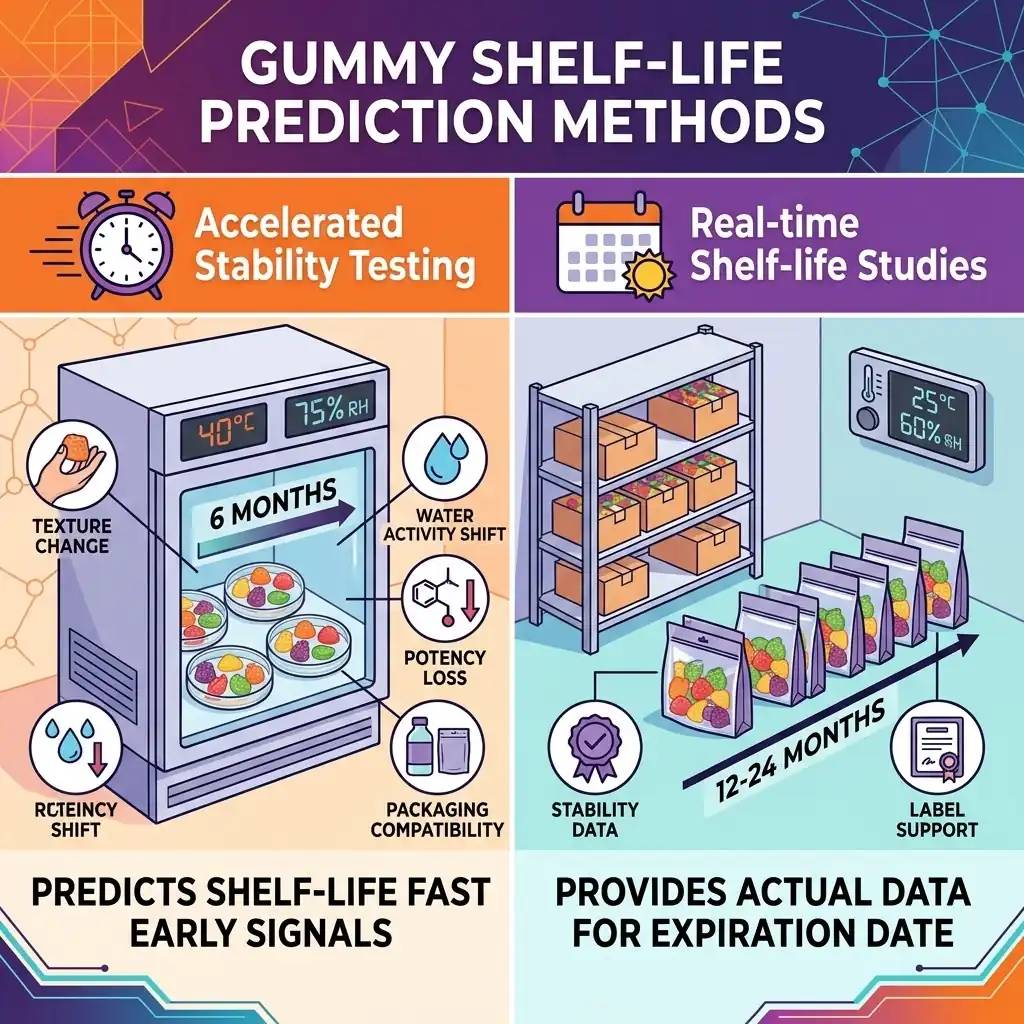
Gelatin delivers a classic chewy, elastic texture and sets through cooling. It offers far greater elasticity compared to pectin and generally easier handling at high speeds due to its viscosity stability. However, gelatin typically melts around 35–40°C. At standard ICH accelerated stability conditions (40°C / 75% RH), you are often simultaneously testing chemical degradation and physical failure — and those two phenomena interact in ways that are hard to interpret cleanly.
For brands targeting mainstream consumers who expect a traditional gummy texture, gelatin remains the workhorse. But if your supply chain involves warm-climate distribution or shipping to regions with high ambient temperatures, you need to plan for that thermal sensitivity.
Pectin: The Vegan Alternative
Pectin creates a softer, gummier texture than gelatin, but requires precise pH levels (typically between 3.4 and 3.6) and exact temperature control (around 180°F / 82°C) to set correctly. Pectin-based gummies offer superior heat resistance, ensuring product stability even in high-temperature environments.
That heat stability comes with a trade-off: pectin gummies are significantly firmer than gelatin gummies in most formulations, and elasticity is far lower. If you are developing a product that needs to compete with mainstream brands on chew experience, pectin requires more development work to achieve a comparable mouthfeel.
Blends and Alternatives
Adding pectin to a gelatin-based gummy can slightly shorten its chew, offering a unique eating experience. Carrageenan can provide a more elastic and resilient texture. Some manufacturers are exploring dual-base systems to combine the benefits of different gelling agents.
The key insight: your gelling system is not just a texture decision. It determines your processing parameters, your stability profile, and your formulation constraints. Choose it with full awareness of what you are committing to.
Step 2: Design Flavor That Works With — Not Against — Your Actives
Flavoring a supplement gummy is fundamentally different from flavoring confectionery. Some functional ingredients can make up 10% or more of the recipe. At such high inclusion levels, these ingredients can disrupt the gelling network, affecting texture, flavor, and appearance.
Some ingredients — like iron, magnesium, and botanicals — have powerful tastes and are hard to mask. You cannot simply coat them or add sugar or flavoring. Flavor-masking in gummies is a science: you choose flavors that complement the ingredient rather than fight it. This ensures the product does not taste artificial, especially since many consumers are becoming sensitive to artificial masking agents.
A common mistake: brands specify a flavor profile early in development without considering how their active ingredients will affect that flavor. A mineral may introduce metallic or bitter notes. A botanical extract may affect color or texture. Those interactions need to be addressed during formulation, not after.
One practical approach: test flavor at multiple stages. A formula may look perfect on a spreadsheet yet taste dull in real life. A prototype may hold together structurally yet appear visually weak under natural light. Iterative sensory evaluation — not just lab assays — is essential for products that consumers actually finish.
Step 3: Manage Acidity — The Hidden Driver of Both Taste and Stability
Another critical aspect of functional gummy formulation is managing acidity levels, which affect both stability and taste. Buffer systems are essential in mitigating acidity challenges. They help preserve the structural integrity of the gummy while maintaining the desired flavor and functionality.
This is particularly important for vitamin C and other acidic ingredients that can weaken the gel structure if not properly balanced. Both pH and solid content affect the stability of active ingredients like folic acid in gummies over the product’s shelf life.
If you are formulating with vitamin C, you need to consider not just how much you are adding, but how that addition changes the pH of your gummy matrix — and whether your gelling system can tolerate that change.
Step 4: Build Stability Into the Formula — Not Just the Packaging
Packaging matters, but it is not a fix for a fundamentally unstable formula. Here is what actually drives stability in production:
Water Activity Control
Gelatin gummies typically require a drying (stoving) period of 24 to 48 hours to remove excess moisture and stabilize the structure. Skipping or rushing this step leads to higher water activity, which accelerates degradation and increases microbial risk.
Ingredient Compatibility
Some ingredients may be sensitive to heat, moisture, oxygen, light, or pH. If you are combining multiple actives in one gummy, you need to test for interactions. A formula that works with one set of ingredients may fail with another.
Encapsulation and Coating Technologies
Encapsulation is particularly useful for preserving the efficacy of heat-sensitive vitamins and botanicals during processing. This technology helps maintain ingredient potency while reducing potential interactions that might destabilize the gummy matrix. For ingredients like probiotics or sensitive vitamins, encapsulation is not optional — it is a requirement for achieving meaningful shelf life.
Step 5: Validate With the Right Stability Protocol
Standard ICH accelerated stability testing calls for 40°C and 75% relative humidity. For hard tablets and capsules, those conditions are aggressive but manageable. For gelatin gummies, 40°C is at or beyond the gel matrix’s softening point.
This does not mean ICH conditions are wrong — it means you need to interpret the results correctly. A gummy that fails under accelerated conditions may still perform adequately at room temperature. But you need real-time data to confirm that.
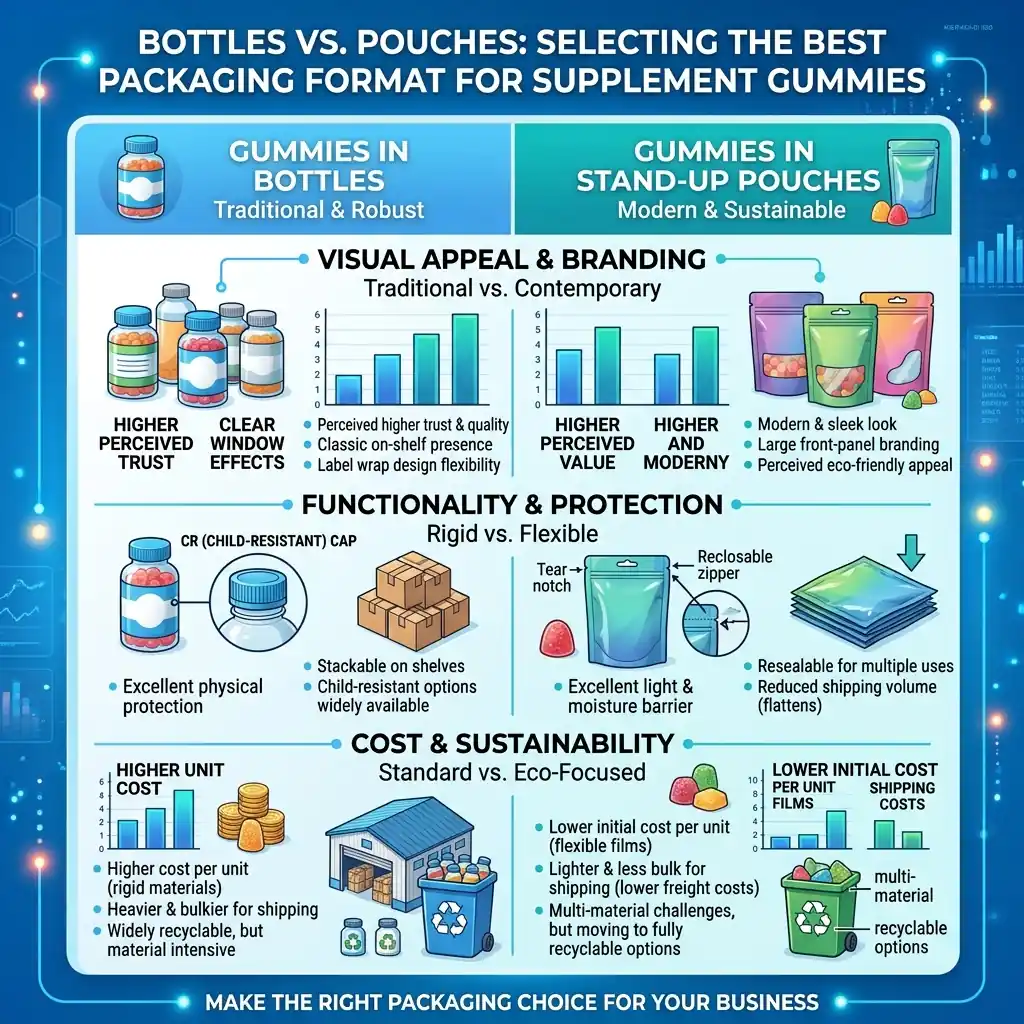
One practical point many brands miss: if the commercial product includes a desiccant, the stability study must be run with that same desiccant configuration — same material, same size, same placement — from day one. Running the study on gummies in a clear PET bottle for convenience, then switching to the retail HDPE container with an induction seal and desiccant before launch, invalidates the data. The container system is part of the formulation.
Decision Framework: Evaluating a Private Label Gummy Partner
If you are evaluating a private label gummy manufacturer, use these four criteria as a minimum qualification checklist before requesting a quote:
- In-house R&D capability. Can the manufacturer run iterative formulation development — lab-scale trials, sensory panels, and pilot runs — or do they only execute formulas you provide? A manufacturer without development capability cannot help you resolve taste-stability trade-offs.
- Stability study methodology. Do they run stability studies with the actual packaging configuration you will use commercially, including desiccant and induction seal? If the study uses a different container, the data is not relevant to your product.
- Gelling-system-specific expertise. Pectin formulation expertise is different from gelatin expertise. Ask for reference products and stability data in the system you intend to use.
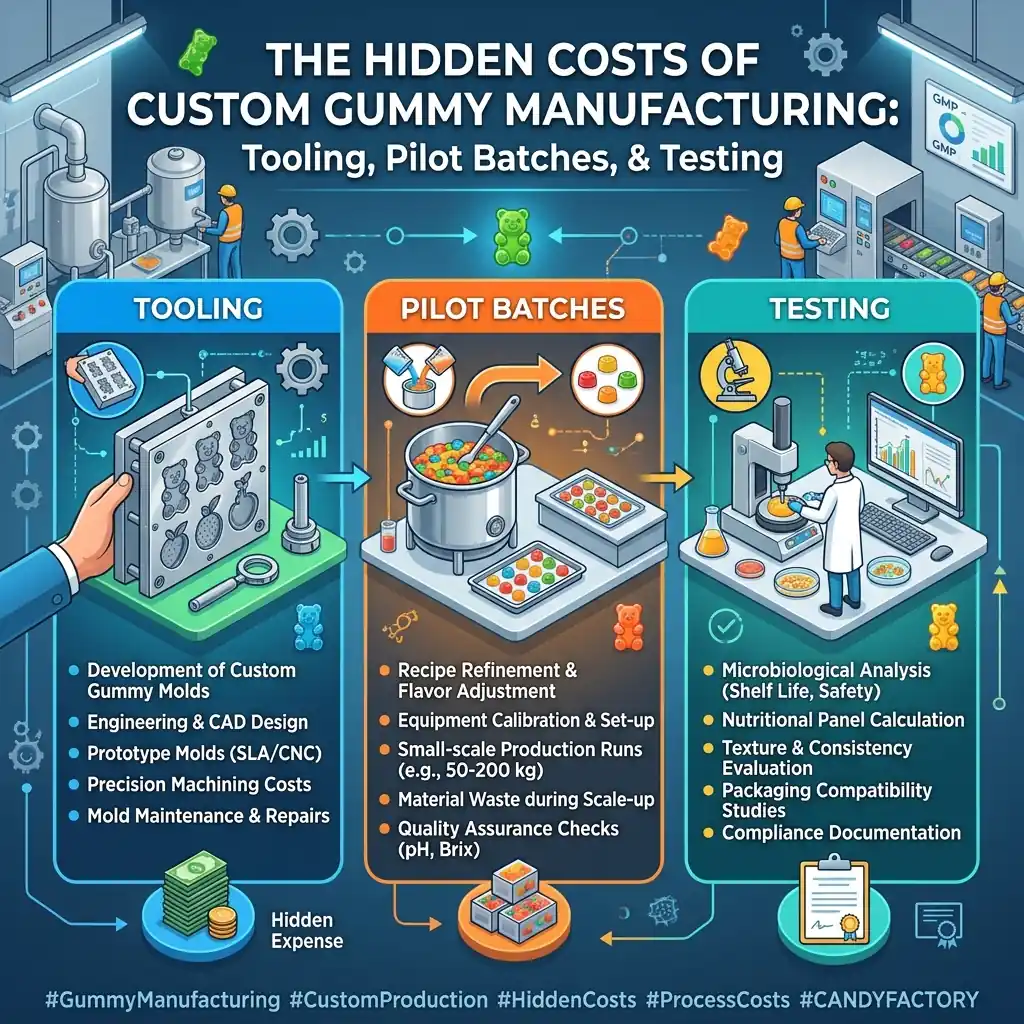
- Full-cycle scale-up capability. Can they handle the transition from lab scale to pilot to commercial production? Cooking curves, drying times, and deposition parameters all shift at scale. A partner that cannot validate scale-up will surprise you at first production run.
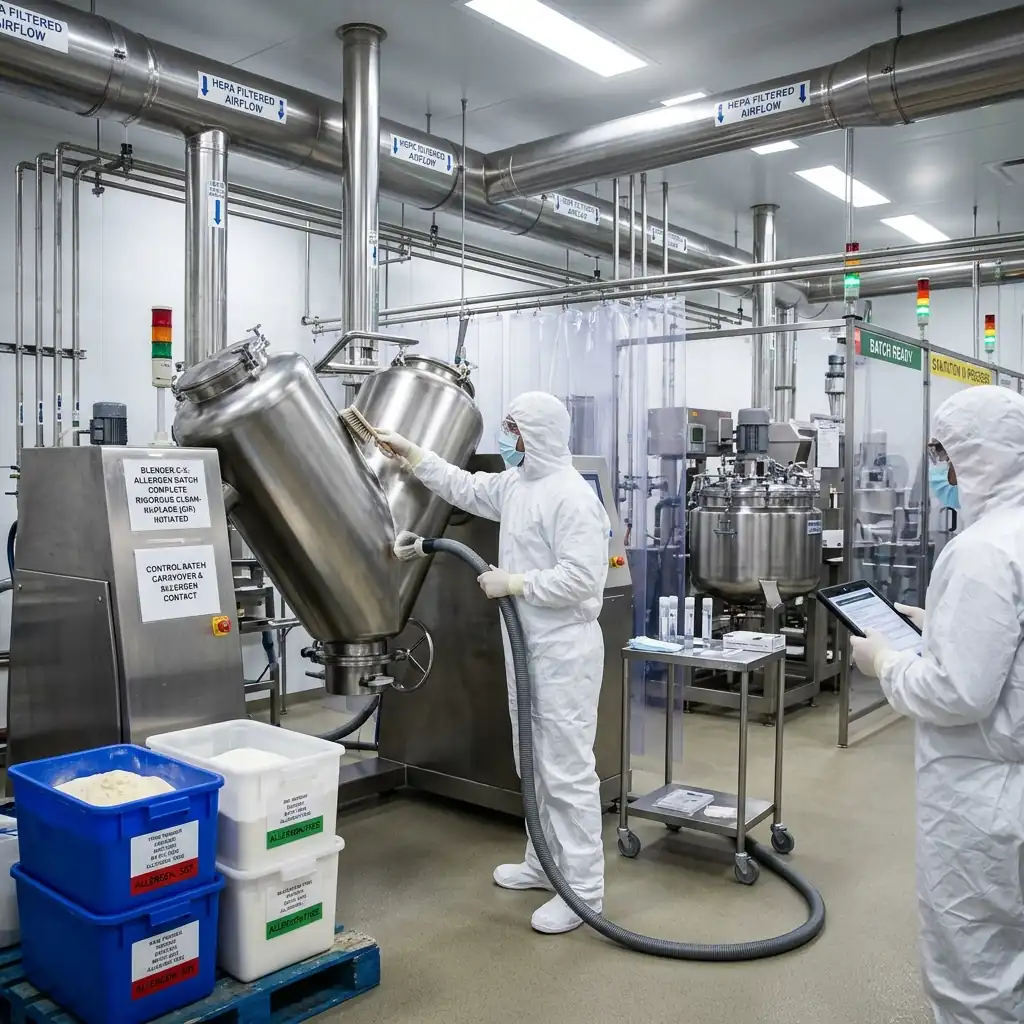
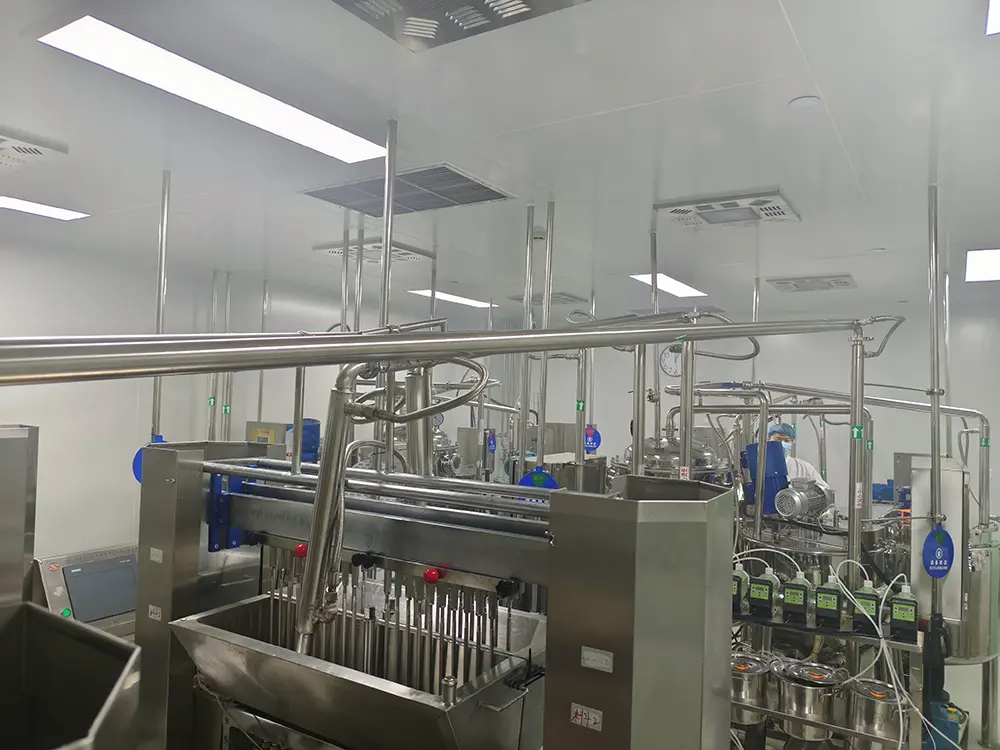
At Gothink Biology, our R&D team develops over 2,000 formulations annually, supported by a 10,000-class pharmaceutical-grade laboratory for precise formulation work. Our facility features a 100,000-class cleanroom with a daily output of 16 tons and an annual capacity of 5,000 tons. That scale means we have encountered — and resolved — most of the taste-stability problems that brands encounter. The real value, however, is not the capacity numbers. It is the experience of working through hundreds of gummy formulations and knowing what works — and what does not — before you commit to a production run.
If you are currently evaluating partners and would like a formulation feasibility review for your target actives and flavor profile, our technical advisory team can provide a structured assessment within five business days.
Common Pitfalls to Avoid
Based on real development experience, here are the most common mistakes brands make when developing gummies that taste great and stay stable:
- Assuming a working formula at lab scale will work at production scale. It will not. Cooking curves, mixing times, and drying conditions all change. You need pilot runs and scale-up validation.
- Choosing flavor before testing active ingredient interactions. A flavor that works in a blank gummy may taste completely different with iron or botanical extracts.
- Ignoring pH until late in development. Acidity affects both gelling and stability. Address it early.
- Running stability studies without the final packaging configuration. If your commercial product includes a desiccant, test with it. If not, test without it. Do not mix conditions.
- Prioritizing taste over stability in early prototypes. A great-tasting prototype that fails stability at six months is a commercial disaster. Build stability into the formula from the start.
Key Takeaways for Decision-Makers
- Water activity is the master variable. Every stability decision — gelling system, drying time, packaging — ultimately traces back to managing aw between 0.55 and 0.75.
- Gelatin and pectin are not interchangeable. Each imposes distinct constraints on pH, processing temperature, and thermal stability. Choose based on your target market’s climate and consumer texture expectations.
- Stability is a formulation decision, not a packaging decision. Desiccants and induction seals extend shelf life, but they cannot compensate for a matrix with inherently high water activity or incompatible actives.
- Validate with your commercial container from day one. Stability data generated in a different packaging system is not transferable.
- Select a manufacturer with R&D depth, not just production capacity. The partner that can iterate on your formula will save you months of failed stability pulls.
Frequently Asked Questions
Can I use the same formula for gelatin and pectin gummies?
No. Gelatin and pectin have fundamentally different gelling mechanisms, pH requirements, and processing conditions. A formula developed for one will not work for the other without significant reformulation. Expect to re-optimize flavor, acidulant levels, and cooking profile when switching systems.
How long should gummy stability testing take?
A minimum of six months of real-time stability data is typical for launch, with 12-month data preferred by most retailers and regulatory bodies. Accelerated studies at 40°C / 75% RH can provide early indications, but real-time data is ultimately what regulators and retailers require. Plan your launch timeline accordingly — stability testing is the longest critical-path activity in gummy product development.
What is the biggest cause of gummy stability failure?
Moisture migration. Water moves toward hygroscopic ingredients over time, creating localized degradation zones. Proper water activity control (target aw below 0.65 for most vitamin formulations) and ingredient compatibility testing are the primary defenses. Encapsulation is required for probiotics and highly sensitive actives.
How do I know if my gummy manufacturer has the right R&D capability?
Ask about their formulation development process in detail. Do they run lab-scale trials before pilot runs? Do they have in-house sensory evaluation? Do they conduct stability studies with your actual packaging configuration? Can they provide reference formulations in your target gelling system and active category? A manufacturer that cannot answer these questions specifically likely lacks the development depth you need.
What water activity range should I target for supplement gummies?
Most commercial supplement gummies target a finished water activity between 0.55 and 0.65. Below 0.55, the gummy may become overly firm or brittle. Above 0.70, microbial risk and chemical degradation accelerate significantly. Your specific target depends on your gelling system, active ingredients, and intended shelf life.
Should I choose gelatin or pectin for a product sold in warm climates?
Pectin-based gummies generally offer superior heat resistance and are less likely to soften or stick at elevated temperatures. However, pectin requires more formulation work to achieve a mainstream chew texture. If your distribution chain includes unrefrigerated warehousing in tropical or subtropical regions, pectin — or a gelatin-pectin blend — is usually the safer choice, provided you invest in the development cycle.
This article is provided by Gothink Biology, By Cheney Chan|Technical Advisory Team, Nutrition Research Center
Focused on nutrition formulation research and quality standards.
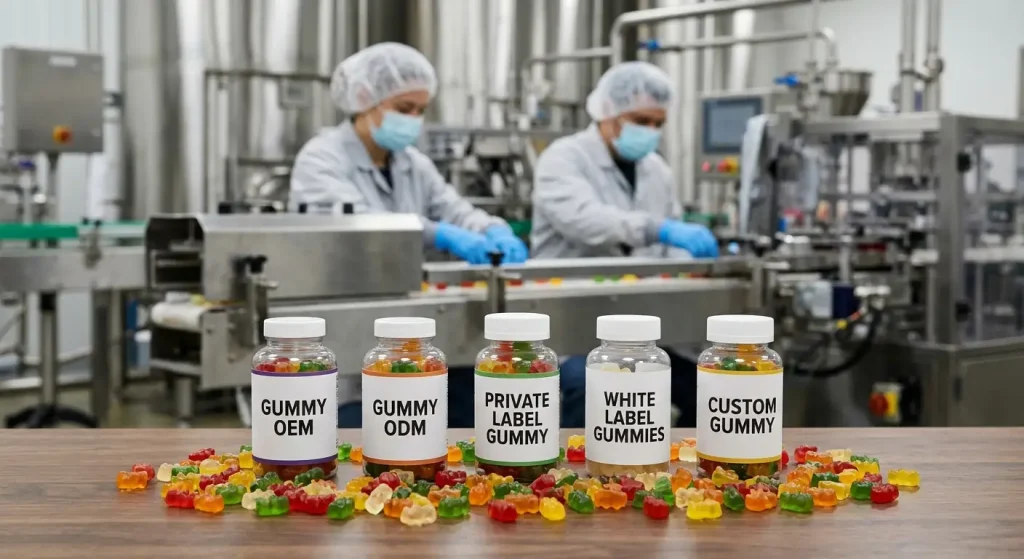
Shenzhen Gothink Biotech Co., Ltd. is a China-based nutrition supplement supplier offering OEM, ODM, CMO, and CDMO services. Our GMP-certified facility features a 100,000-class cleanroom with a daily output of 16 tons and an annual capacity of 5,000 tons. We hold certifications including ISO9001, ISO22000, HACCP, FDA, HALAL, GMP, KOSHER, BRC, FSSC 22000, PJPH, and Vegan. Our R&D team, led by scientists with postdoctoral experience at institutions including Cold Spring Harbor Laboratory and Emory University, supports custom formulation development across gummy, capsule, tablet, powder, liquid, and drop supplement categories.
For more information, visit https://gothinkbio.com/ or contact our expert team for a formulation feasibility review.