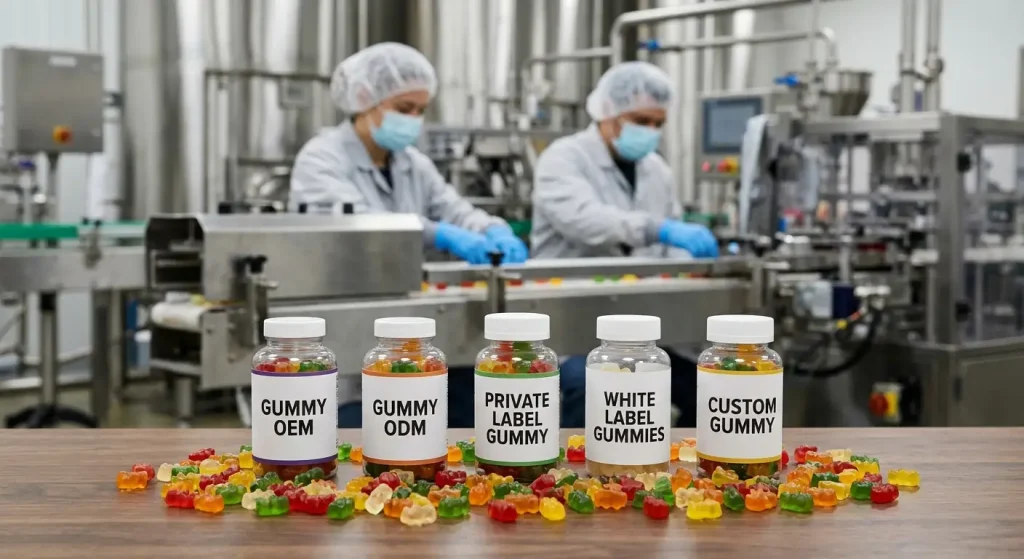

Most brands start with one good-tasting gummy and try to sell it everywhere. That approach fails at scale because Amazon, retail, and DTC place different physical stress on the same unit. Private Label Gummies that survive an FBA summer warehouse need a different spec than those sitting on a lit retail shelf for 18 months.
Many projects run into avoidable challenges when the flavor is validated on a small bench sample before the full formula is finalized. Once the label is fixed, downstream partners must work within tighter constraints, which can increase coating load, adjust actives, or introduce unnecessary cost. A smoother process is to validate flavor, solids, and pH with the actual raw materials and target manufacturing conditions before locking the label.
The correct strategy starts upstream, at formulation and process lock. Your channel mix should dictate pectin type, water activity target, coating system, active addition point, and packaging barrier before you order molds or print pouches. Once those are locked, private label supplement manufacturing becomes predictable across scale-up.
This article breaks down how Amazon, retail, and DTC requirements change manufacturing decisions, what fails most often during scale-up, and how procurement teams evaluate private label supplement manufacturers for each route. It is written for brand owners who need production truth, not marketing copy.
Why Manufacturing Quality Matters for Supplement Brands
On Amazon, quality equals review stability. One heat excursion during inbound or a sticky clumped bottle in July creates a wave of 1-star reviews about melting and bad taste that you cannot delete. Those reviews then suppress Buy Box and ad efficiency for months.
In retail, quality equals compliance and chargeback control. Buyers test water activity, count per bottle, and label claim at receipt, and a single out-of-spec lot can trigger a full pallet rejection. Penalties often exceed the production invoice, plus you lose the reset window.
For DTC, quality equals repeat rate. Your customer holds the gummy, not just the listing image, so texture, chew length, and flavor release in the first 10 seconds drive whether they reorder. A rubbery or overly sour chew kills subscription retention even if assay is perfect.
Factories that run private label supplement manufacturing at 16 tons per day learn this early: texture and active retention are not cosmetic. They determine return rates, retailer acceptance, and lifetime value, which is where margin is actually made or lost. Manufacturing quality is a commercial lever, not just a QA checkbox.
Key Production Considerations
Formulation Behavior
Gelatin gives a fast melt and elastic chew that DTC customers often prefer for premium mouthfeel. It collapses above 32°C and requires cold chain discipline, which makes it risky for Amazon FBA without modified packaging and gel strength above 200 bloom.
Pectin is the default for Amazon and most retail because it holds shape to 55–60°C and supports vegan and halal claims. High-methoxyl pectin needs a tight pH window of 3.2–3.6 and precise soluble solids at 78–82 Brix, so acid dosing timing changes batch to batch and must be logged.
Active load influences formulation behavior more than flavor. Oil‑soluble actives such as vitamin D3 or CoQ10 typically require a pre‑emulsion using gum acacia or modified starch before depositing; otherwise spotting and assay variation can occur. Water‑soluble high‑dose actives like creatine monohydrate or magnesium citrate compete for available water and can weaken the gel structure if added too early in the cook.
Sweetener systems also shift by channel. Retail buyers in EU and US mass now require sugar-free or reduced-sugar pectin, which means replacing 55% of sucrose with allulose or maltitol syrup. That raises water activity and requires a longer curing stage to hit 0.65 or below, or you will fail shelf-life.
Color and flavor systems must match channel light and heat. Natural colors like black carrot and spirulina fade under retail LED exposure in 90 days if pH is not buffered with sodium citrate. Amazon-focused formulas need stronger flavor masking for iron, zinc, or ashwagandha because heat accelerates off-notes during storage.
Sour and coating agents interact with actives. Citric acid coated gummies can cause ascorbic acid degradation in vitamin C formulas, and tartaric acid can invert pectin set. For high-acid actives, we shift to malic acid plus buffered coating to keep pH stable through drying.
Processing Requirements
Deposition temperature and active addition point decide potency. Heat-sensitive actives such as probiotics or methylated B vitamins cannot enter the cooking kettle at 106°C. They must be dosed post-cook below 90°C with in-line static mixing, with documented time-under-temperature for each lot.
Starch-mogul vs starchless silicone molding changes scale economics. Starch mogul gives higher output and lower mold cost, but requires 24–48 hour drying rooms and leaves trace starch that affects vegan labeling and texture. Starchless lines produce cleaner surface and faster release, but require tight temperature control to prevent tails and underweight pieces.
Drying is where most Amazon failures originate. A gummy deposited at 78–80% solids must cure to 82–84% solids to reach target water activity. If you cut drying from 48 hours to 18 hours to meet ship date, you will ship at 0.75 aw and bottles will clump in FBA within two weeks.
Coating choice is a channel decision, not a preference. Sugar sanding looks good on DTC product photos and adds initial burst, but it hygroscopically absorbs moisture in humid fulfillment centers. For Amazon and retail, a thin capol or carnauba oil and wax mix at 0.15–0.25% seals the surface and reduces sticking without affecting label claims.
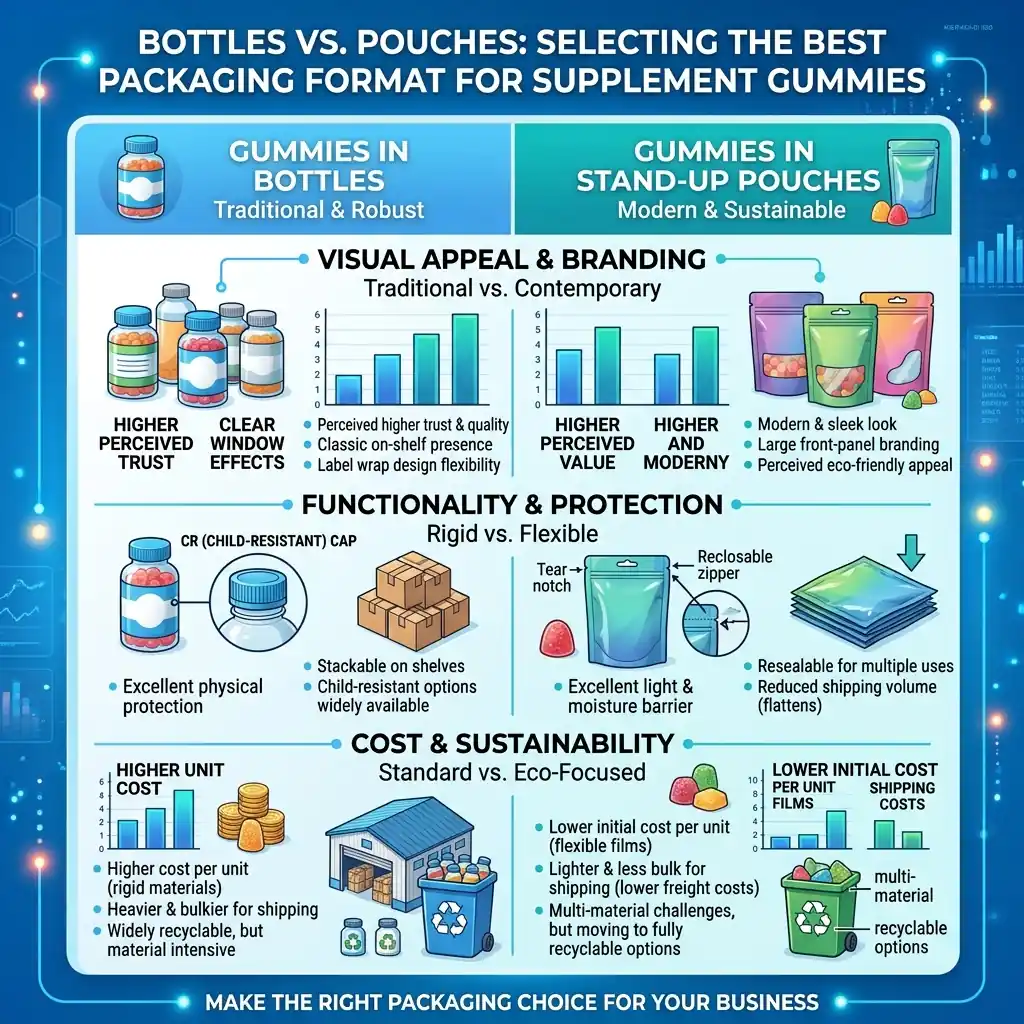
Packaging integration must be specified at pilot. Bottles with induction seals and desiccant inserts behave differently than stand-up pouches with high oxygen transmission rates. At Gothink Biology, we match pouch barrier film OTR to active sensitivity, for example using PET/AL/PE for iron and omega-3 gummies destined for long retail shelf life in a 100,000-class cleanroom.
Process validation must include deposit weight CV, not just final count. A CV above 2% at depositing means even if average assay passes, individual gummy assay will vary. Retail compliance testing often picks 10 units, not a composite, so variance matters.
Texture & Stability Outcomes
Water activity is the single number retail QA cares about most. Amazon FBA spec usually demands aw 0.60–0.68, retail mass requires 0.55–0.65 for 18–24 month best-by dates, while DTC subscription can tolerate 0.68–0.72 if texture is a selling point and turnover is fast.
Texture is not subjective at factory level. We measure with TA.XT hardness, springiness, and chew length at day 1, day 30, and day 90. A pectin gummy that starts at 800g force and climbs to 1500g after 90 days will be described by consumers as rubbery, even if assay is perfect.
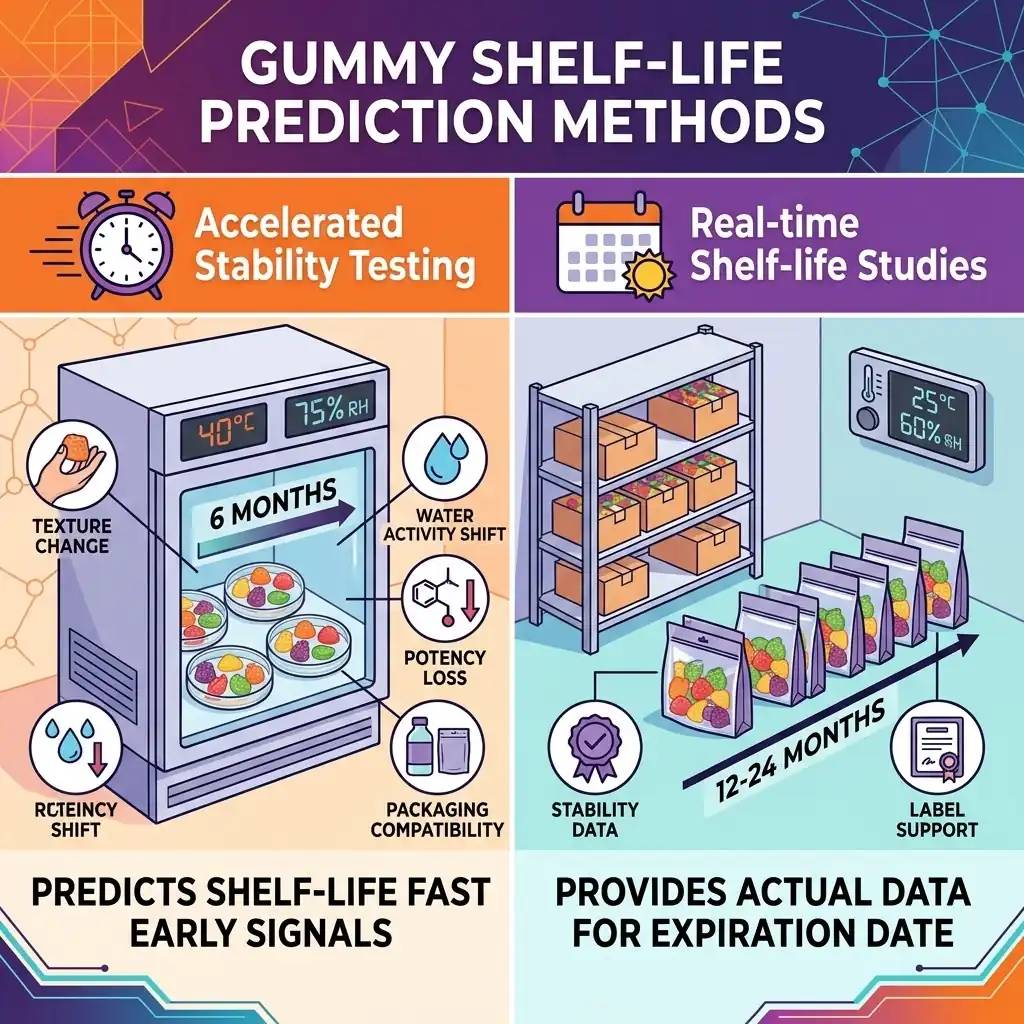
Stability protocols must simulate channel reality, not just ICH. We run 25°C/60% RH for retail, 30°C/65% RH for DTC, and 40°C/75% RH plus 48-hour 50°C excursion for Amazon FBA simulation. Vitamin C pectin gummies can lose 12–18% potency at 40°C in 6 months without protected ethylcellulose coating on ascorbic acid.
Active retention curves decide overage strategy. Vitamin D3 in oil emulsion retains 90–95% at 12 months when pre-emulsified and added below 85°C, while raw powder added at cook loses 20–30%. Probiotic gummies require spore-forming strains or microencapsulation, otherwise counts drop from 2B to below label before 9 months.
Texture stability is tied to packaging OTR and storage. Pectin gummies in high-OTR pouches harden 25–40% faster than in bottles with desiccant. For retail, we test both package types in parallel because a buyer may switch pack after listing.
Production Risks & Common Mistakes
The most common mistake is applying a flat 30% overage to everything. Overage must be strain and form specific, based on retention data. Folate as L-methylfolate needs 25–35% overage in pectin, while vitamin D3 needs 15–20%, and melatonin needs near zero if protected from light and added post-cook.
Oil separation ruins both look and assay. When CoQ10, MCT oil, or hemp extract exceeds 6–8% of mass without a stable emulsion, you see oily caps and dose variation. One Amazon brand moved a CoQ10 pectin from 100mg to 200mg per gummy without adding gum acacia, resulting in 22% assay CV across the batch.
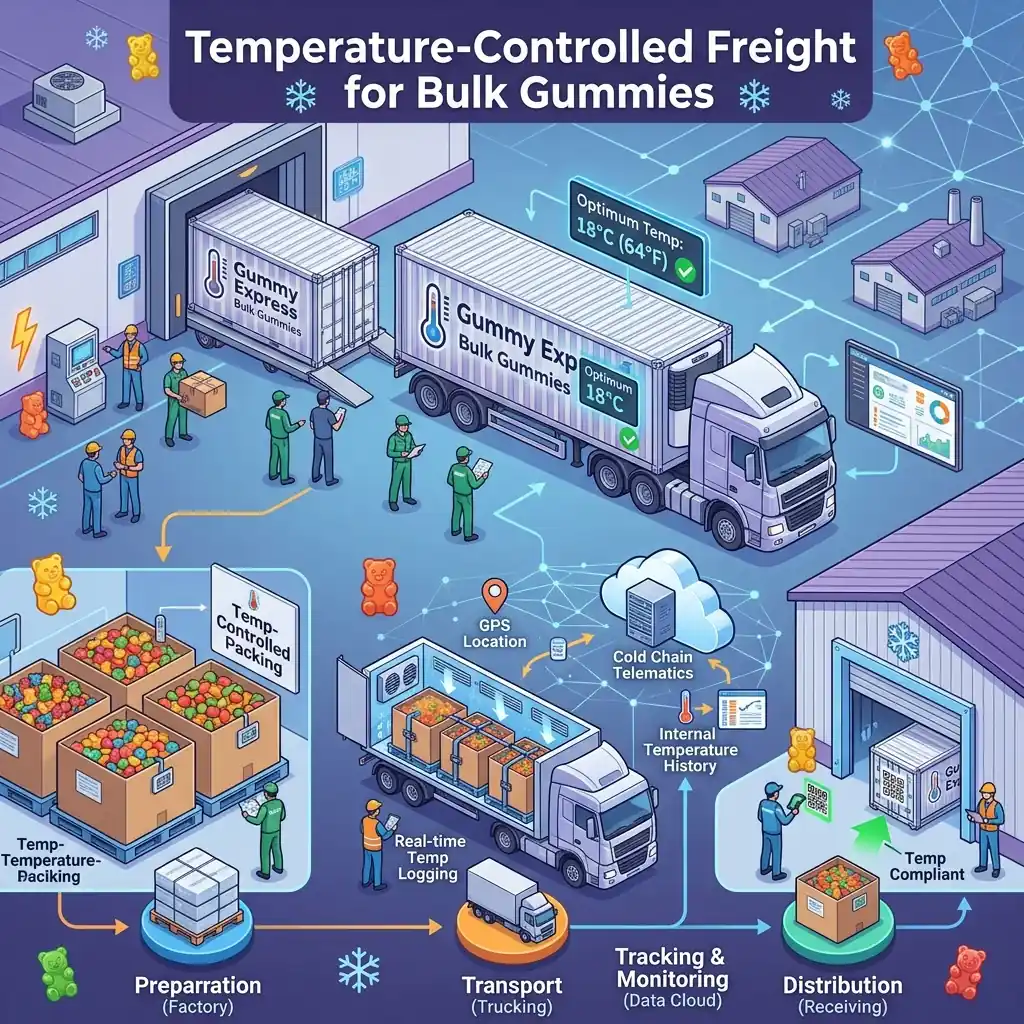
Melting during last-mile is a process gap, not just a weather problem. Brands ship gelatin gummies to Arizona in July in standard poly mailers and expect them to hold. Without insulated liners, gel strength adjustment, or switching to pectin, you will see complaints even if the factory shipped perfect product.
Switching from gelatin to pectin to claim vegan is not a 1:1 swap. Pectin requires higher solids, lower pH, and different flavor balance because acid sharpness increases perceived sourness. If you keep the same citric acid load, your strawberry becomes candy-sour and masks collapse, forcing flavor rework.
Using a consumer flavor house sample for mass production also fails. Lab flavors dosed at 0.3% in small beakers often taste weak at 500kg scale where volatiles flash off in the cooker. Factories with a 10,000-class R&D lab run pilot deposits of 15–25kg to lock flavor under actual vacuum and cook conditions.
Documentation gaps create retail delists. Brands often lack per-tray aw logs, deposit weight charts, and time-under-temperature records for heat-sensitive actives. Retail auditors ask for those, not just a CoA, and missing data triggers corrective actions.
- Skipping water activity logs: relying only on moisture % and missing microbial risk
- No retention data for the exact active form: using generic literature for a specific salt or extract
- Color added pre-cook: heat degrades natural colors and forces overdosing
- Mold release oil overdose: creates rancid notes after 6 months and fails peroxide testing
- No FBA excursion test: passing 25°C stability but failing 50°C truck simulation
How Brands Should Evaluate a Gummy Manufacturer
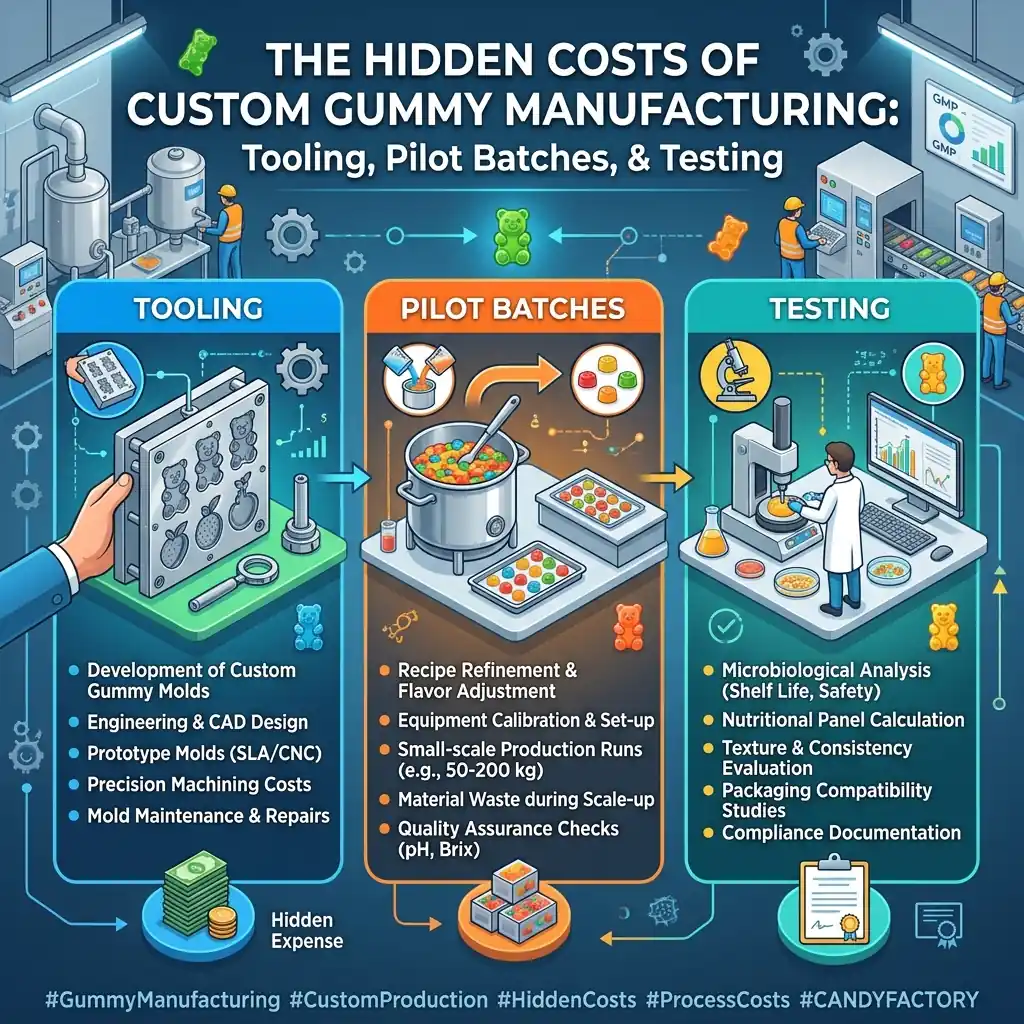
Ask for a pilot batch made on production equipment, not a lab beaker. A 20kg starchless depositing run shows tailing, air bubbles, and dosing accuracy that a 1kg lab sample hides. If a factory cannot provide 2–3 pilot lots with hardness and aw trending, scale-up risk remains unknown.
Request active retention data for your exact active, matrix, and package. A credible partner shows assay at 0, 3, 6, 12 months with method details, not just a certificate. For private label supplement manufacturing, retention curves for your dose form matter more than a generic GMP certificate.
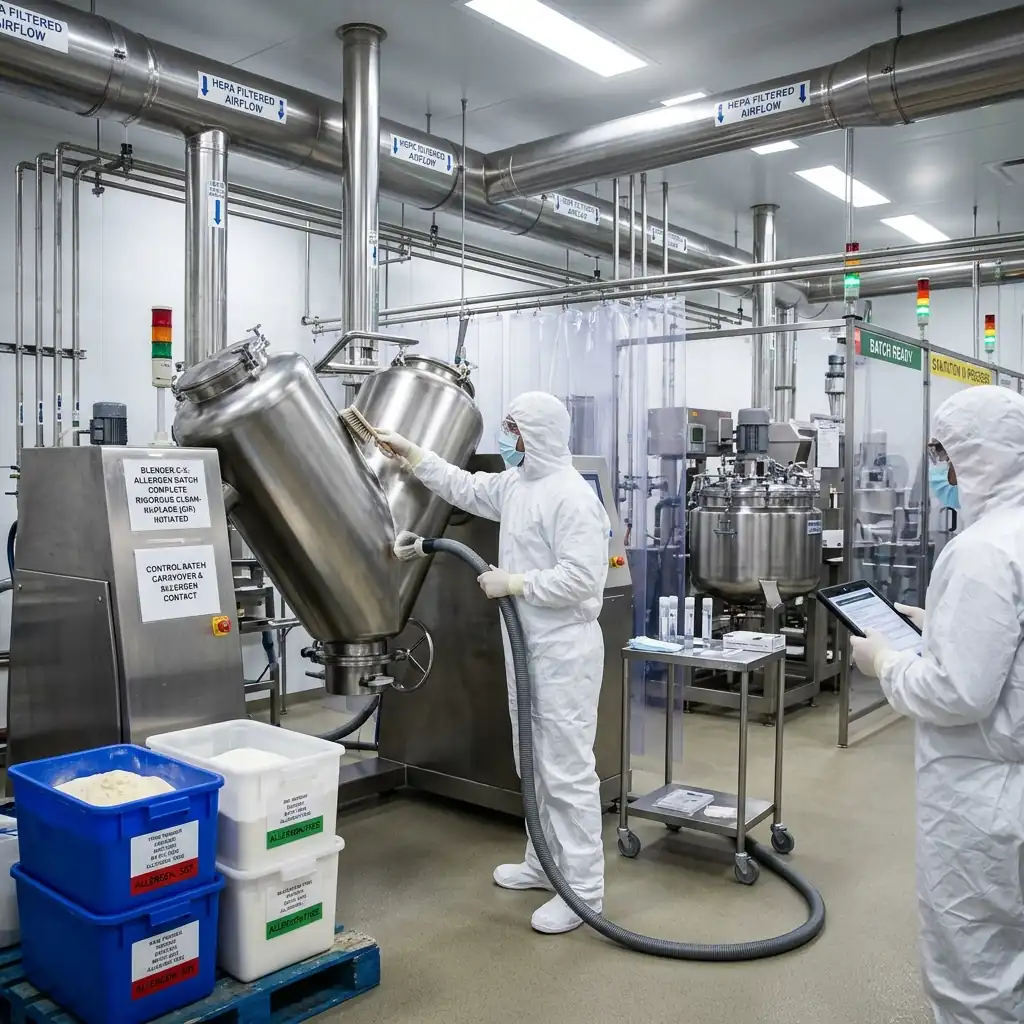
Review process controls, not just certifications. ISO9001, ISO22000, HACCP, BRC, FSSC 22000, FDA, HALAL, KOSHER, and Vegan set the baseline, but look for in-line checks: deposit weight CV under 2%, cooking Brix ±0.5, pH ±0.1, and aw measured per tray. Gothink Biology runs these as batch release gates in a GMP-certified facility with 5,000 tons annual capacity.
Evaluate MOQ flexibility by channel. Amazon testing needs 5,000–10,000 bottles with 2–3 flavors to validate listing before a 50,000-unit retail order. Retail needs pallet-stable packaging and case pack validation. A manufacturer that forces one MOQ for all channels does not understand channel economics.
For private label supplement manufacturers, compare how they handle change control. Ask what happens when you change sweetener, increase dose, or switch from bottle to pouch. A mature ODM will quote impact on drying time, texture, and stability, not just price per kilo.
Finally, audit their response to failure. Ask how they handle out-of-spec aw or assay at 6 months. Do they have a documented rework path, customer notification, and CAPA, or do they just reship? That answer tells you more than any certificate.
| Parameter | Amazon Strategy | Retail Strategy | DTC Strategy |
|---|---|---|---|
| Primary Risk | Heat excursion in FBA, clumping, reviews | Chargeback, label claim audit, pallet rejection | Texture disappointment, churn |
| Gel System | Pectin preferred, high heat tolerance | Pectin, sugar-free options required | Gelatin or pectin for premium chew |
| Water Activity Target | 0.60–0.68 | 0.55–0.65, 18–24 month shelf life | 0.68–0.72 acceptable for soft chew |
| Coating | Oil/wax seal 0.15–0.25% | Oil/wax, anti-stick for high-speed lines | Sanding or oil, focus on mouthfeel |
| Packaging | Bottle + induction seal + desiccant | Bottle or pouch with low OTR, case pack | Pouch or jar, brand storytelling |
| MOQ Approach | Low MOQ 5k–10k for listing test | High MOQ, pallet quantities | Mid MOQ, flavor variants for A/B |
FAQ
Q1: Can I use one formula for Amazon, retail, and DTC?
Technically yes, but you will compromise somewhere. A single aw of 0.65 can work, but you will need pectin, oil/wax coating, and barrier packaging to satisfy retail and Amazon heat needs, which changes DTC texture. Most successful brands lock a base pectin matrix, then adjust coating, aw, and flavor strength by channel.
Q2: Should I choose pectin or gelatin for retail distribution?
Choose pectin for any retail or Amazon strategy unless you have validated cold chain. Gelatin sets softer and melts earlier, and retail distribution centers are not climate-controlled. Pectin also unlocks vegan, HALAL, and KOSHER claims that retail buyers now expect.
Q3: What MOQ makes sense for testing Private Label Gummies on Amazon?
Start with 5,000–10,000 units per SKU across 2 flavors made on production line, not lab samples. That gives you enough to test FBA inbound, review texture complaints, and run a 30-day retention check. Scale to 30,000–50,000 only after aw and assay at 30 days remain in spec.
Q4: How do private label supplement manufacturers prevent label claim failure?
They prevent it with form-specific overage based on retention data, addition point below 90°C for heat-sensitive vitamins, and assay method that matches your label form, not just total. Ask for HPLC data for your exact form, such as D3 as cholecalciferol, not just vitamin D, and confirm OTR of your final package was used in stability.
Q5: What must be locked before scaling from pilot to 1-ton batch?
Lock Brix, pH, solids, deposit weight, aw target, coating percentage, and active addition time/temperature. Lock package OTR and desiccant. Then run 3 consecutive pilots at 20–50kg with hardness and assay at day 1 and day 14. If those hold within ±5%, you are ready for 500kg+ scale.
Jack Luo|Senior Technical Advisor, Nutrition Research Center Representing Gothink Biology, a GMP‑certified dietary supplement manufacturer based in Shenzhen, China.
[Shenzhen Gothink Biotech Co., Ltd. is a China-based nutrition supplement supplier offering OEM, ODM, CMO, and CDMO services. Our GMP-certified facility features a 100,000-class cleanroom with a daily output of 16 tons and an annual capacity of 5,000 tons. We hold certifications including ISO9001, ISO22000, HACCP, FDA, HALAL, GMP, KOSHER, BRC, FSSC 22000, PJPH, and Vegan. Our R&D team, led by scientists with postdoctoral experience at institutions including Cold Spring Harbor Laboratory and Emory University, supports custom formulation development across gummy, capsule, tablet, powder, liquid, and drop supplement categories.] https://gothinkbio.com/