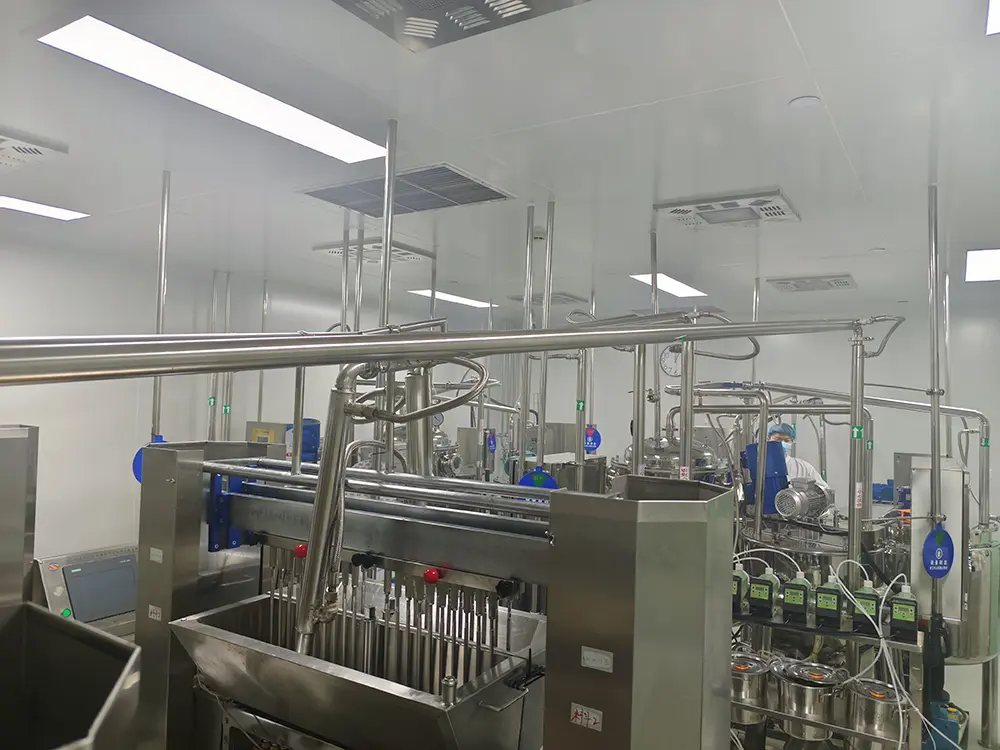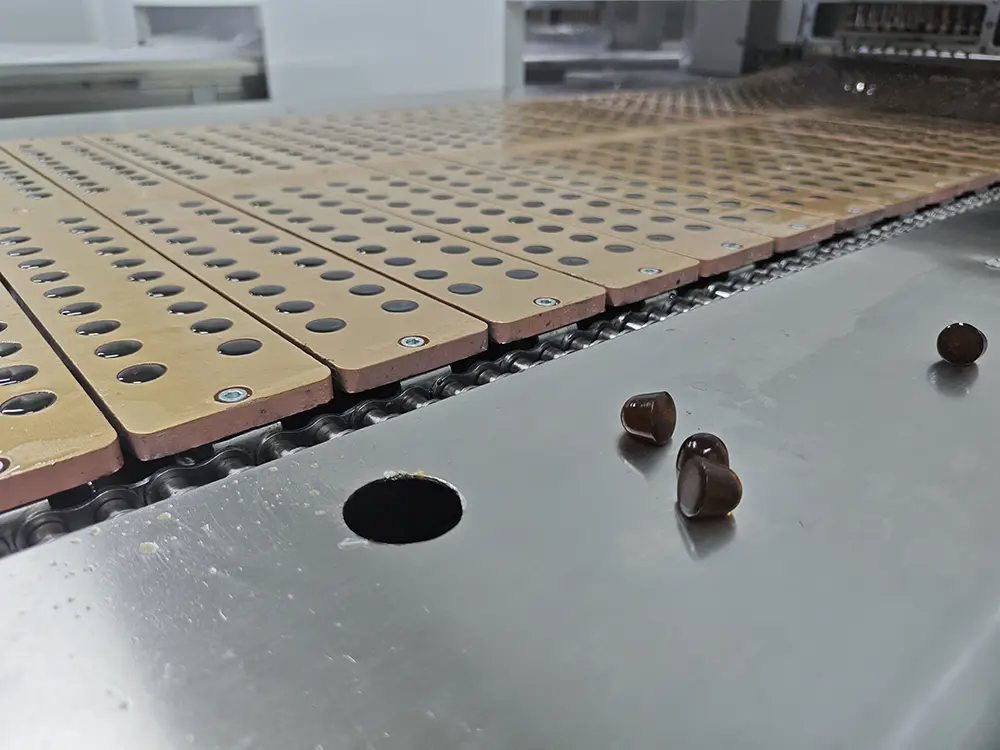

For new brands entering dietary supplements, the biggest risk with gummies is not poor taste, but treating a lab sample as a commercial product. Private Label Gummy is often the lowest-risk and fastest path to market, yet many teams interpret it as simply putting a label on an existing product, overlooking that it is fundamentally a manufacturing decision. What you buy is not a concept, but a set of validated formulas, process parameters, and stability foundations. This article breaks down the real technical and commercial variables new brands need to evaluate when launching a Private Label project, from a manufacturing perspective. If you are sourcing a private label gummy manufacturer, the sections below provide a technical due-diligence framework you can use immediately.
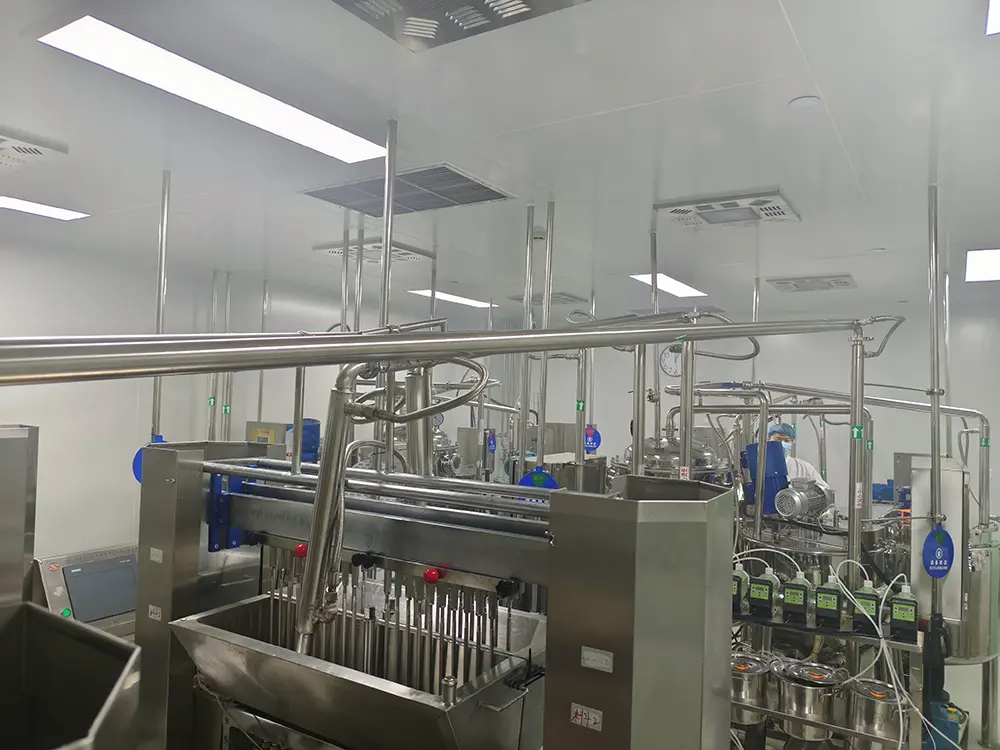
What Private Label Gummy Really Means: You Are Buying Formula Maturity
Private Label Gummy is a manufacturing decision, not a labeling one — you are purchasing a factory’s validated stock formula with locked process parameters, not a custom concept. In gummy manufacturing, Private Label typically refers to a factory’s existing stock formulas. The factory has already completed pectin or gelatin system screening, pH adjustment, solids balancing, flavor masking, drying curves, and basic stability testing. The brand selects dosage form, flavor, active dosage, and packaging, with minor adjustments on top of that base. Typical stock formula libraries include 30–80 base formulas with locked critical process parameters (CPPs), including cooking temperature ranges of 80–105°C, depositing temperatures of 70–90°C, and Brix targets between 72–80°Bx.
The core difference between Private Label and fully custom development lies in validation depth:
| Dimension | Private Label Stock Formula | Fully Custom Development |
|---|---|---|
| Formula Status | Pilot completed, critical process parameters locked | Starts from raw material ratios, requires multiple rounds of prototyping |
| Development Cycle | Fast sample confirmation (typically 5–10 business days), suitable for quick launch | Longer cycle involving compatibility studies (4–12 weeks) |
| Risk Points | Limited adjustable range for dosage and flavor | Texture and retention may deviate after scale-up |
| Best For | First-time gummy brands with limited budget and time | Established brands with validated market demand needing differentiation |
For a new brand, to judge whether a Private Label formula is usable, check whether the factory can provide: clear gelling system, solids content, water activity (aw) control range, relationship between active input and finished product retention (typically 85–95% for encapsulated vitamins), and at least 3 months of accelerated stability trends at 40°C/75% RH. This matters more than sample taste. Request a formula maturity dossier and a COA/TDS package before committing to a private label gummy manufacturer.
Four Technical Points New Brands Most Often Misjudge When Selecting Products
The four most common technical misjudgments in gummy product selection are dosage ceiling, pH/water activity interaction, flavor system compatibility, and color stability — all of which are manufacturing variables, not marketing choices.
1. Higher dosage is more marketable, but gummies have a loading ceiling. A gummy is a high-solids system. Adding 100 mg of active means reducing sugar, gelling agent, or water, or increasing single piece weight. High-dose minerals and botanical extracts directly affect gel strength and demolding. A 500 mg load that forms in the lab may stick to molds or deform on a continuous depositing line. Typical practical loading limits are 50–150 mg for oil-based actives, 100–300 mg for dry extracts, and 200–500 mg for mineral salts with chelation or encapsulation.
2. pH and water activity determine shelf life, not preservatives. Many new brands focus on preservatives but ignore that pectin gummies typically require pH 3.2–3.8 to gel well, while some vitamins and probiotics are acid-sensitive. pH choice affects gelling, then drying time, then water activity, then microbial risk and active retention. Formula adjustments must be evaluated as a linked system. Target aw below 0.65 for ambient-stable gummies; 0.60–0.70 is the typical pectin operating window.
3. Flavor is not just a flavoring issue, it is a system compatibility issue. For example, iron or zinc in a formula, metal ions can interact with pectin, causing astringency or hardening of texture. Adding more sweetener will not solve it. It requires chelated forms or encapsulation technology. Only a factory with real gummy manufacturing experience will flag this in advance and can provide flavor-masking case studies from similar mineral or botanical systems.
4. Color and clarity hide process limits. Natural colors like butterfly pea and black carrot fade quickly in acidic pectin systems. If packaging has insufficient oxygen barrier, shelf appearance will shift significantly after 3 months. When selecting colors, new brands should ask the factory for stability data of that pigment in that gel system at that pH. Request a custom color matching and stability validation report as part of your OEM quotation.
Pectin vs. Gelatin and Sweetener System: Decisions That Define Your Market Position and Supply Chain
Pectin vs. gelatin is not a texture preference — it is a market-access and supply-chain decision that determines vegan/halal/kosher claims, hot-logistics risk, and batch-to-batch texture control.
In Private Label Gummy, pectin vs. gelatin is not simply a texture choice, but a market access and supply chain decision.
Pectin system: Plant-based, meets vegan, HALAL, KOSHER requirements, widely accepted in the US and EU markets. However, it demands tighter production control, it is sensitive to cooking temperature, solids, Brix, and acid addition timing, and batch-to-batch texture variation is harder to control than gelatin. Pectin gummies typically require a pH of 3.2–3.8 and a solids content of 75–80°Bx for proper gelation.
Gelatin system: Better elasticity, simpler cost structure, smooth demolding, suitable for high-volume projects. But it carries higher risk of softening in hot logistics (above 30°C), and does not meet vegan claims. Gelatin gummies typically use 5–8% gelatin with a Bloom strength of 200–250.
The sweetener system is equally critical. Sucrose plus glucose syrup offers round mouthfeel and controllable cost, but does not fit sugar-free claims. Sugar-free systems using maltitol or erythritol have completely different water activity control and crystallization risks, require revalidation of drying conditions, and some sugar alcohols may raise digestive tolerance concerns that require proper label notices. Sugar-free gummy systems often require aw targets of 0.55–0.62 and may need polyol-specific mold release agents.
For new brands, we recommend first defining the target market’s mandatory claims: Must it be vegan? Must it be sugar-free? These two decisions directly narrow the usable gelling and sweetening combinations and prevent late-stage reformulation. If you need help selecting the right matrix for your market, request a free formulation consultation with our R&D team.
How to Read a Quotation: Real Variables Behind Private Label Gummy Cost
Two private label gummy manufacturer quotations for seemingly identical products can differ by 30–50% because quotations are built on different technical assumptions about active form, piece weight, gelling system, packaging barrier, and MOQ batch economics.
Why can two private label gummy manufacturer quotations differ so much for seemingly identical apple cider vinegar gummies? Because quotations are built on different technical assumptions.
| Cost Driver | How It Affects Unit Cost and Feasibility | What New Brands Should Confirm |
|---|---|---|
| Active Form and Spec | Encapsulated or microencapsulated materials cost more but improve retention and taste | Input form, assay method, whether coating rate is counted |
| Single Piece Weight and Count | Increasing from 2.5g to 3.0g per piece changes raw materials, drying time, and packaging | Piece weight tolerance (±0.1g), pieces per bottle and bottle compatibility |
| Gelling Agent and Sweetener | Pectin and sugar-free systems are typically more complex and affect yield | Gelling source, type of sugar alcohol, impact on halal and vegan certifications |
| Packaging Barrier | Packaging is part of stability strategy, low-barrier packaging may cause moisture migration later | Bottle material, cap sealing method, need for desiccant liner |
| MOQ and Batch Size | MOQ is not a purchasing number, but the minimum economic batch to ensure continuous production and quality stability | Production days covered by MOQ, whether pilot loss is included |
New brands should not compare only cost per piece, but total project cost: whether sample fees are deductible, whether stability data is included, whether label review and export documents are included, and how production loss is calculated. A low initial quotation without drying and packaging validation may lead to higher rework costs later. Request a full OEM cost breakdown template from your private label gummy manufacturer to compare quotations on equal technical assumptions.
How to Evaluate a Private Label Gummy Manufacturer: A Technical Checklist for New Brands
A factory’s communication ability is as important as its technical documents — use this six-module checklist to assess whether a private label gummy manufacturer can actually deliver commercial-scale Private Label production.
For first-time collaboration, a factory’s communication ability is as important as its technical documents. The following checklist helps product and procurement teams quickly assess whether a factory can deliver Private Label.
| Module | Evidence to Request | Red Flag |
|---|---|---|
| Formula Maturity | List of existing formulas, adjustable dosage range, sensory and texture standards | Claims all ingredients can be added arbitrarily without mentioning solids limits |
| Process Control | Cooking temperature, Brix, pH, depositing temperature, drying curve, demolding yield records | Cannot explain how water activity is controlled below 0.65 |
| Quality System | GMP, HACCP, ISO22000 system documents, raw material specs and COA templates | Only finished product COA, no raw material and in-process controls |
| Stability | Accelerated and long-term stability protocols, active retention test methods | Replaces accelerated testing with room temperature storage, no data to support shelf life |
| Scale-up Capability | Equipment mapping from pilot to commercial, batch records | Promises ton-scale orders directly from lab kettle with no pilot step |
In discussions, you can ask the factory to illustrate with a formula you care about: when dosage is increased by 20%, which three process parameters need adjustment? An experienced team will immediately mention solids balance, pH buffering, and drying time, rather than just saying no problem. You can also request a 3D custom gummy mold design consultation and a custom flavor sample kit to evaluate the factory’s co-development responsiveness.
Lowest-Risk Path to Mass Production: Five Control Points from Sample to First Order
The safest path for new brands is staged risk-locking: formula lock, sensory/texture confirmation, pilot validation, packaging match, and documentation preparation — in that order, before placing a bulk order.
The safest path for new brands is not to place a large order directly, but to lock risks in stages.
- Formula lock: Select 2–3 existing Private Label formulas closest to target dosage from the factory’s library. Request theoretical input and measured retention per piece for each active, plus flavor and color change records under accelerated conditions.
- Sensory and texture confirmation: Request samples at different drying time points to compare hardness, elasticity, and stickiness. For pectin gummies, ideal water activity is typically controlled at 0.60–0.70. Too high causes sticking, too low causes hardening.
- Pilot validation: Even for Private Label, require at least one pilot-scale run (typically 50–200 kg batch). Pilot can reveal issues invisible in lab, such as mismatch between depositor speed and gel setting time, uneven dispersion of encapsulated materials.
- Packaging match: Pack pilot samples into the final bottle type and run sealing and transport simulation. Packaging is part of the stability strategy. Cost of a high-barrier bottle plus desiccant is far lower than cost of returns due to moisture uptake.
- Documentation preparation: Confirm label claims, nutrition facts calculation basis, allergen statements, and export documents required. Regulations for pectin source, sweeteners, and colors differ across markets. Early confirmation avoids customs delays.
After completing these steps, then finalize first order MOQ and production schedule. Skipping pilot to save one week risks texture or stability deviation for the entire batch. Ask your private label gummy manufacturer for a pilot validation report template and a sample batch protocol before committing.
FAQ
Can Private Label Gummy be fully customized for dosage and flavor?
Private Label Gummy can be adjusted within a defined window — typically ±20% dosage and flavor intensity — but beyond that window requires semi-custom or fully custom development with stability revalidation.
It can be adjusted within a defined window. Existing formulas allow dosage and flavor intensity adjustments within solids and pH limits. Beyond that window, gelling and drying processes need revalidation, which falls under semi-custom or fully custom development and should be evaluated as a custom project for stability. If your target dosage exceeds the stock formula ceiling, request a semi-custom feasibility assessment from your OEM partner.
Pectin vs. gelatin gummy, which is better for a new brand’s first launch?
If your target market requires vegan, halal, or KOSHER claims, pectin is the priority; if you prioritize chewy elasticity and demolding efficiency, gelatin is more robust.
If your target market requires vegan, halal, or KOSHER claims, pectin is the priority. If you prioritize chewy elasticity and demolding efficiency, gelatin is more robust. New brands should define market claims first, then choose the gelling system to avoid reformulation due to claim mismatch. Request a sample kit with both pectin and gelatin prototypes to compare texture and mouthfeel directly.
Why does the factory need detailed packaging information to quote?
Packaging oxygen and water vapor transmission rates directly affect gummy water activity and active retention, making packaging a manufacturing parameter, not a post-production afterthought.
Because packaging oxygen and water vapor transmission rates directly affect gummy water activity and active retention. Bottle type, cap sealing performance, and use of desiccant affect drying endpoint setting and shelf life design, and are part of manufacturing parameters. A high-barrier bottle with an induction seal and desiccant liner may extend shelf life by 3–6 months compared to a standard PET bottle.
Can first order MOQ be reduced?
MOQ corresponds to the minimum economic batch to ensure quality — typically 500–2,000 kg for gummies — and can be reduced by selecting high-frequency stock formulas that share production batches.
MOQ corresponds to the minimum economic batch to ensure quality, covering cooking kettle size, depositing line cleaning, and drying room utilization. Too small a batch increases unit energy and quality fluctuation costs. A more feasible approach is to choose high-frequency dosage forms and flavors the factory already runs and share batches to lower first order pressure. Ask your private label gummy manufacturer for a list of stock formulas with the lowest MOQ and shortest lead times.
Jack Luo|Senior Technical Advisor, Nutrition Research Center Representing Gothink Biology, a GMP-certified dietary supplement manufacturer based in Shenzhen, China.
[Shenzhen Gothink Biology Technology Co., Ltd. is a China-based nutrition supplement supplier offering OEM, ODM, CMO, and CDMO services. Our GMP-certified facility features a 100,000-class cleanroom with a daily output of 16 tons and an annual capacity of 5,000 tons. We hold certifications including ISO9001, ISO22000, HACCP, FDA, HALAL, GMP, KOSHER, BRC, FSSC 22000, PJPH, and Vegan. Our R&D team, led by scientists with postdoctoral experience at institutions including Cold Spring Harbor Laboratory and Emory University, supports custom formulation development across gummy, capsule, tablet, powder, liquid, and drop supplement categories.]
Ready to launch your Private Label Gummy line? Request a custom flavor sample kit, a 3D gummy mold design consultation, or an instant OEM quotation with full COA/TDS documentation. Our technical team responds within 24 hours.