
Abstract
Private label gummy pricing is determined by a combination of ingredient costs, formulation complexity, order volume, and manufacturing overhead. Understanding these cost drivers enables brands to make informed sourcing decisions and optimize their per-unit economics. This article breaks down every major factor that influences what a custom gummy manufacturer charges for production.
What Is Private Label Gummy Pricing?
Private label gummy pricing refers to the total cost a brand pays a contract manufacturer to produce gummy supplements under the brand’s own label, encompassing raw materials, formulation, production, quality testing, and packaging. It is typically quoted as a per-unit or per-bottle cost and varies significantly based on formulation specifications, minimum order quantities, and the capabilities of the chosen production partner.
Core Factors That Affect Manufacturing Costs
1. Raw Material and Ingredient Costs
Ingredient selection is the single largest variable in gummy manufacturing pricing. Standard vitamin gummies using common actives like vitamin C, zinc, or B-complex cost less per kilogram than specialized formulations. Products such as private label creatine gummies require higher-purity active ingredients that command a premium. The cost differential between a basic pectin-based gummy and a functional gummy with patented or branded ingredients can range from 30% to over 200%.
Gelling agents also affect cost. Gelatin remains the most economical option. Pectin and carrageenan, which are plant-based alternatives, typically cost 1.5 to 2.5 times more than gelatin on a per-kilogram basis. Brands targeting vegan or halal markets must account for this premium.
2. Formulation Complexity
Simple single-ingredient gummies are faster to develop and produce. Multi-ingredient formulations that combine vitamins, minerals, botanical extracts, and functional compounds require more extensive stability testing, longer mixing cycles, and tighter process controls. A formulation with five or more active ingredients may increase per-unit production cost by 15% to 40% compared to a two-ingredient equivalent.
Flavor masking is another cost factor. Certain actives, including creatine and some herbal extracts, have bitter or unpleasant taste profiles. Additional flavoring agents, sweeteners, and masking technologies increase both material and processing costs.
3. Minimum Order Quantity (MOQ)
MOQ directly impacts unit pricing. A custom gummy manufacturer typically sets MOQ thresholds at 30,000 to 100,000 units depending on facility capacity. Lower MOQs carry higher per-unit costs because fixed setup expenses—mold creation, batch calibration, line cleaning, and quality validation—are distributed across fewer units. Brands ordering at higher volumes can achieve per-unit cost reductions of 20% to 50% compared to minimum-quantity runs.
4. Production Format and Dosage
Gummy size, weight, and dosage per serving determine material consumption per unit. A standard gummy weighs 2 to 4 grams. Higher-dose products like private label creatine gummies may require larger gummies or multiple-piece servings, directly increasing material costs per bottle. Production format also matters: single-flavor runs are more efficient than multi-flavor or multi-color productions within the same batch, which require additional changeover time and material waste.
5. Packaging and Labeling
Packaging accounts for 10% to 25% of total landed cost. Bottles, blister packs, sachets, and pouches each carry different cost profiles. Custom-molded bottles with unique shapes cost more than standard stock containers. Label complexity—foil stamping, embossing, specialty finishes—adds incremental cost. Secondary packaging such as display boxes or cartons further increases the total.
6. Quality Control and Testing
Third-party lab testing for potency, heavy metals, microbial contamination, and pesticide residues is a non-negotiable cost. Basic panel testing typically costs between $200 and $500 per batch. Comprehensive panels, including allergen verification and stability testing across multiple timepoints, can exceed $1,500 per formulation. Brands selling into regulated markets such as the EU, UK, or Australia face additional compliance testing requirements.
Technical Parameter Reference Table
| Cost Factor | Standard Range | Premium Range | Key Variable |
|---|---|---|---|
| Gelling Agent (per kg) | $3 – $6 (gelatin) | $8 – $18 (pectin/carrageenan) | Plant-based vs. animal-based |
| Active Ingredient (per kg) | $10 – $50 (vitamins) | $80 – $300+ (branded actives) | Purity, patent status, source |
| Per-Unit Production Cost | $0.03 – $0.08 | $0.10 – $0.25+ | Formulation, volume, weight |
| Packaging (per bottle) | $0.15 – $0.40 | $0.50 – $1.50+ | Custom vs. stock, material type |
| Lab Testing (per batch) | $200 – $500 | $800 – $2,000+ | Test panel scope, market |
| MOQ (units) | 30,000 – 50,000 | 100,000 – 500,000 | Factory policy, product type |
Practical Insights Across Operational Dimensions
Production Efficiency
Production line setup and changeover time represent fixed costs that scale with batch frequency. A facility running continuous single-product lines achieves lower per-unit costs than one performing frequent changeovers for different SKUs. When evaluating a custom gummy manufacturer, ask about line scheduling efficiency and whether your product can be grouped with compatible formulations to reduce changeover waste.
Quality Control Integration
In-line quality checks—weight verification, visual inspection, and moisture testing—add minimal per-unit cost but prevent expensive batch failures. Manufacturers that integrate quality control into the production flow rather than relying solely on end-of-batch testing tend to deliver more consistent results and lower defect rates. This is particularly critical for functional gummies where active dosage accuracy directly affects product efficacy and regulatory compliance.
Scalability Considerations
Pricing at pilot scale (5,000–10,000 units) does not reflect production-stage economics. Brands should request tiered pricing at 30,000, 100,000, and 500,000 units to understand the cost curve. Facilities with higher daily throughput—such as those producing 16 tons per day—can offer more aggressive pricing at scale due to better absorption of fixed costs.
Regulatory Compliance
Compliance costs vary by target market. Products destined for the U.S. market must meet FDA dietary supplement regulations (21 CFR 111). EU-bound products require compliance with Food Supplements Directive 2002/46/EC. Additional certifications—HALAL, KOSHER, Vegan, Organic—each add certification fees and ongoing audit costs that are typically reflected in the per-unit price. Non-compliance, however, carries far greater costs in the form of product recalls, import rejections, and brand damage.
B2B Decision Guide: Evaluating a Gummy Manufacturing Partner
When selecting a manufacturing partner for private label gummy production, B2B buyers should evaluate the following criteria systematically:
- Certification portfolio: Verify that the facility holds relevant certifications for your target markets. ISO22000, HACCP, GMP, and FDA registration are baseline requirements for most distribution channels. BRC and FSSC 22000 provide additional assurance for EU-bound products.
- Production capacity and lead time: Confirm daily and annual output capacity. A facility with 5,000+ tons annual capacity can support brand growth without becoming a bottleneck. Standard lead times range from 30 to 60 days from order confirmation to shipment; shorter timelines may incur rush fees.
- R&D capabilities: Assess whether the manufacturer offers in-house formulation development or requires the brand to provide a finalized formula. Facilities with pharmaceutical-grade R&D laboratories and postdoctoral-level scientific staff can develop more stable and bioavailable formulations.
- MOQ flexibility: Emerging brands should prioritize manufacturers offering lower MOQs for initial runs, with clear scaling pathways. Rigid high-MOQ requirements can tie up capital unnecessarily during market testing phases.
- Transparency of pricing structure: Request a detailed cost breakdown separating ingredients, processing, packaging, testing, and logistics. Opaque pricing structures make it difficult to identify where cost optimization is possible.
- Track record with comparable products: Request case studies or references for products with similar formulation complexity. A manufacturer experienced with functional gummies is better positioned to handle the challenges of producing private label creatine gummies than one focused exclusively on simple vitamin products.
Conclusion
Private label gummy pricing is a multi-variable equation driven by ingredient costs, formulation complexity, order volume, packaging specifications, and compliance requirements. There is no universal per-unit price—each product quote reflects a specific combination of these factors. Brands that invest time in understanding these cost drivers, request tiered pricing, and evaluate manufacturing partners against clear operational criteria will achieve better unit economics and more predictable supply chain costs over the product lifecycle.
Frequently Asked Questions
What is the average cost per unit for private label gummies?
Standard vitamin gummies typically cost between $0.03 and $0.08 per unit at production scale (100,000+ units). Premium or functional formulations can range from $0.10 to $0.25+ per unit, excluding packaging.
How does MOQ affect gummy pricing?
Lower MOQs (30,000 units) distribute fixed setup costs across fewer units, resulting in 20% to 50% higher per-unit pricing compared to orders of 100,000 units or more from the same manufacturer.
Are pectin gummies more expensive than gelatin gummies?
Yes. Pectin-based gummies typically cost 1.5 to 2.5 times more per kilogram of gelling agent than gelatin. This translates to a measurable per-unit cost increase, which is why plant-based gummies generally carry higher retail prices.
What certifications should a gummy manufacturer have?
At minimum: GMP, ISO22000, and HACCP. For broader market access: FDA registration, BRC, FSSC 22000, HALAL, KOSHER, and Vegan certifications are recommended depending on target distribution channels.
How long does private label gummy production take?
From order confirmation to finished goods, standard production timelines range from 30 to 60 days. This includes raw material procurement, production, quality testing, and packaging. First-time orders with new formulations may require an additional 2 to 4 weeks for R&D and stability validation.
Can I reduce costs by providing my own formulation?
Providing a finalized, stability-tested formulation can reduce R&D fees but will not significantly affect material or production costs. The primary cost drivers—ingredients, volume, and packaging—remain the same regardless of who developed the formula.
This article is provided by Gothink Biology, a globally recognized dietary supplement manufacturer.
Shenzhen Gothink Biology Technology Co., Ltd.
Shenzhen Gothink Biology Technology Co., Ltd. is a global leading nutrition supplement supplier and dietary supplement manufacturer specializing in OEM, ODM, CMO, and CDMO services for health and wellness brands worldwide. With extensive industry expertise and international certifications including ISO9001, ISO22000, HACCP, FDA, HALAL, GMP, KOSHER, BRC, FSSC 22000, PJPH, and Vegan, we deliver high-quality custom formulation, contract manufacturing, and wholesale solutions for B2B clients across global markets.
Our co-founder and chief scientific advisor have served as postdoctoral fellows and visiting scholars at the California Institute of Technology, Emory University, and Ohio State University. Their deep expertise in plant extraction and biomanufacturing has elevated our R&D and manufacturing capabilities to a leading level in the dietary supplement and raw material industry, excelling in product formulation, manufacturing processes, and quality assurance.
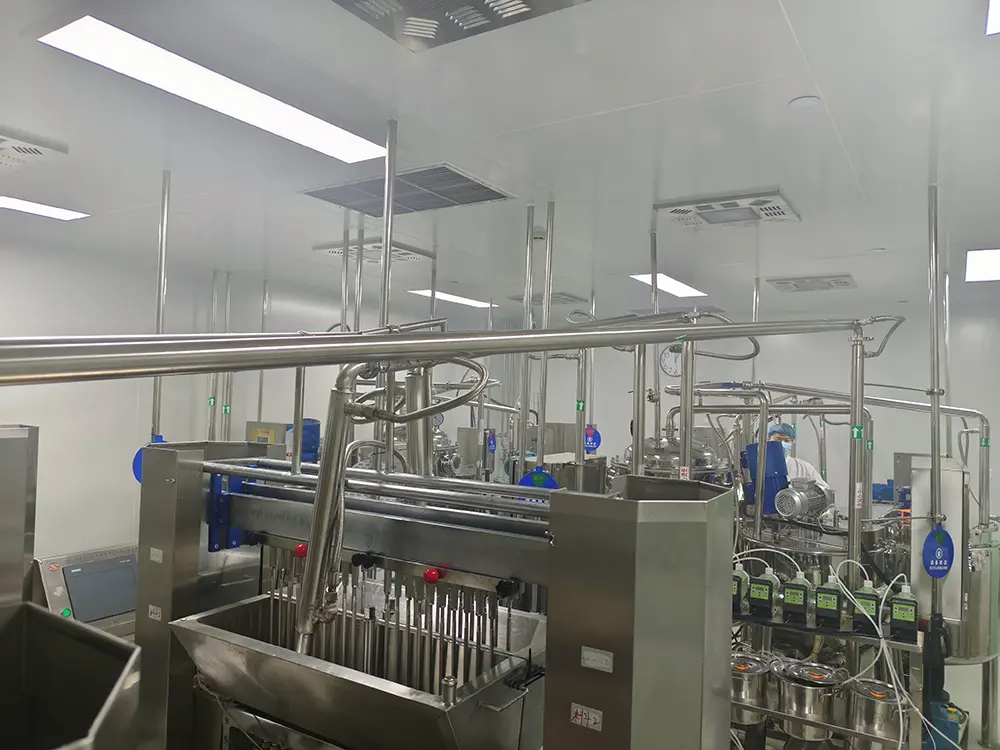
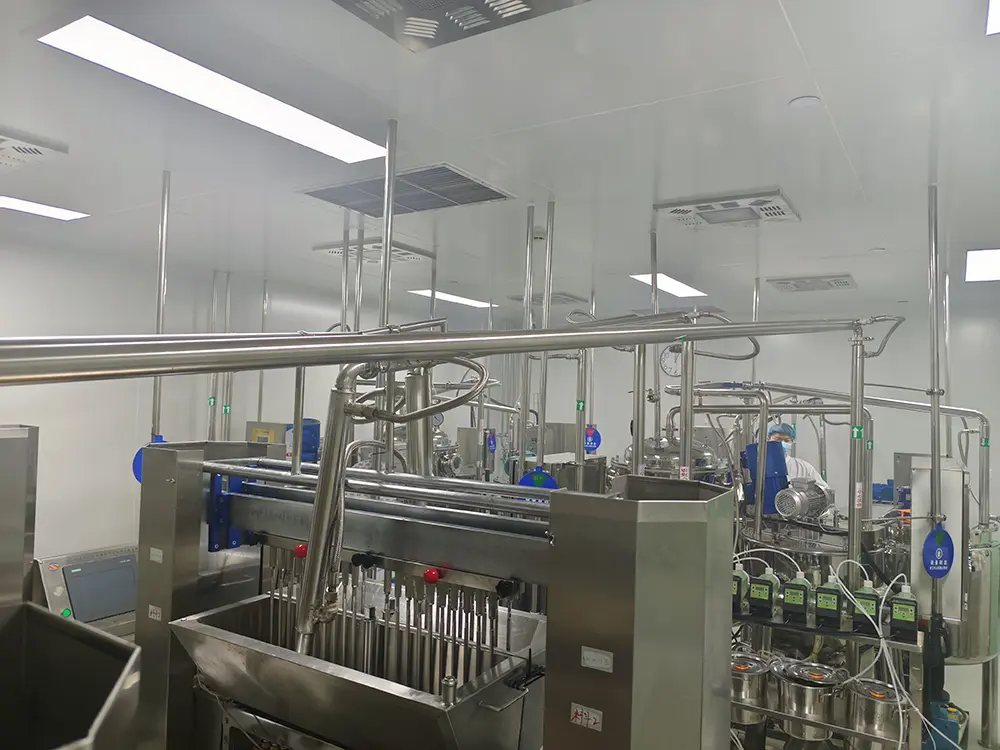
We specialize in a wide range of custom manufacturing services, including gummy, capsule, tablet, powder, liquid, and drop supplement manufacturing. Our GMP-certified facility features a 100,000-class cleanroom, with a daily output of 16 tons and an annual capacity of 5,000 tons. Our team is led by postdoctoral researchers from U.S. universities and is supported by a 10,000-class pharmaceutical-grade laboratory, enabling precise and innovative formulations. We conduct formulation research on 2,000 new products annually.
From small trial runs to full-scale production, we provide adaptable solutions for online sellers, retailers, brands, and startups. We provide full support from formulation and design to compliance and export, making it easy to launch and grow your supplement product line efficiently.
For more information, please visit our official website: https://gothinkbio.com/ or contact our expert team.