
By Adrian Chen, Scientific Affairs & Product Development, Advanced Nutrition Innovation Center
Selecting a private label gummy supplier requires verifying cleanroom classification, gelling agent expertise, stability testing protocols, and regulatory certifications before signing a manufacturing agreement. The wrong partner can delay your launch by 3–6 months, compromise product quality, and expose your brand to regulatory risk. This checklist gives you 15 specific questions to ask every gummy factory you evaluate.
Why Private Label Gummy Manufacturing Demands Extra Due Diligence
The global nutraceutical gummies market is projected to grow from USD 24.39 billion in 2025 to USD 47.80 billion by 2030, registering a CAGR of 14.4%. The gummy vitamins segment alone was valued at USD 9.41 billion in 2025 and is estimated to reach USD 16.39 billion by 2031 at a CAGR of 9.68%. Private-label and value-tier vitamins have attained a 20–25% market share by volume in 2026, accelerated by retailer expansion of store-brand offerings. This rapid growth has attracted a flood of new contract manufacturers, many with inconsistent quality systems. Gummy Manufacturing presents unique challenges not found in tablet or capsule production—high water content, temperature sensitivity, pH-dependent gelling, and difficulty achieving homogeneous active ingredient distribution. A supplier that excels in capsule manufacturing may lack the specialized equipment and expertise required for gummy production.
15 Questions to Evaluate Your Private Label Gummy Supplier
1. What is your cleanroom classification and GMP certification status?
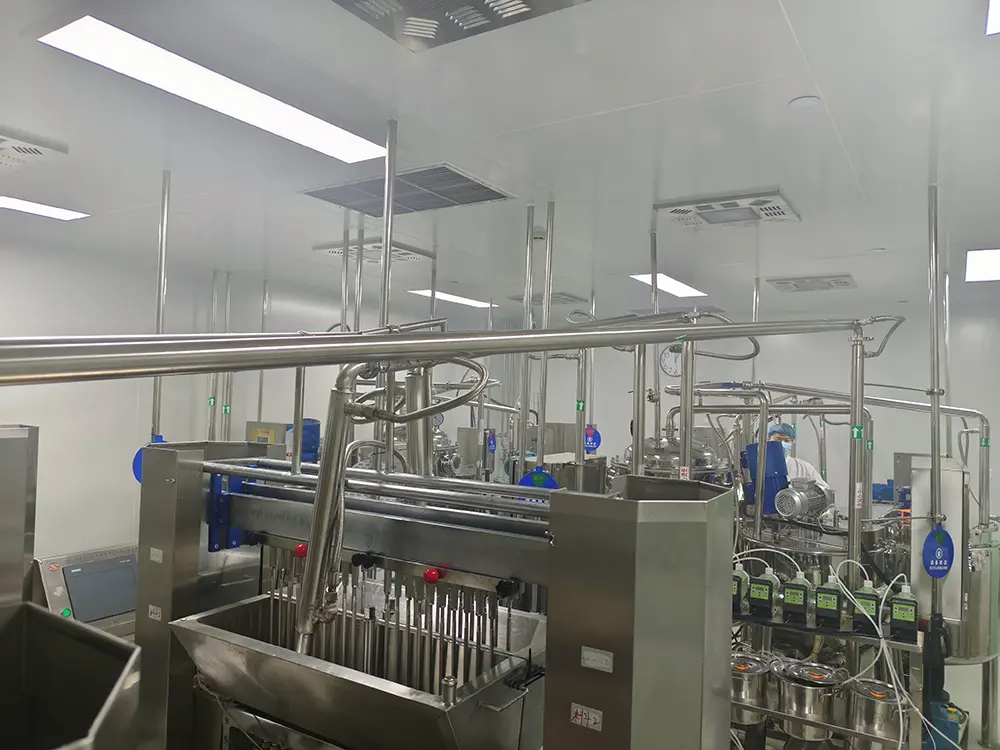
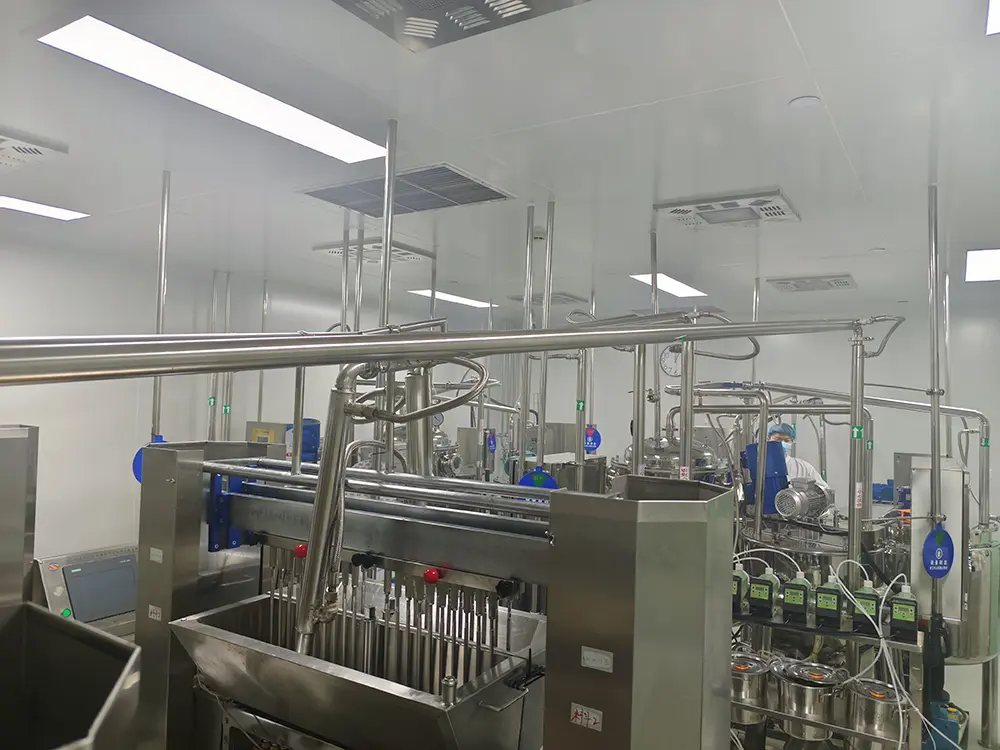
Dietary supplement Gummy Manufacturing must comply with FDA’s 21 CFR Part 111 cGMP regulations, which require a functioning Quality Control unit, specifications system, controlled master and batch records, component identity controls, and defensible recordkeeping. Ask for current GMP, ISO 22000, HACCP, and FDA registration documentation. A 100,000-class cleanroom is the industry standard for supplement production, while a 10,000-class pharmaceutical-grade R&D laboratory indicates higher capability for formulation development.
2. Which gelling agents do you specialize in—gelatin, pectin, or both?
Gelatin and pectin require fundamentally different processing conditions. Gelatin relies on temperature-controlled cooling to set, making it more forgiving during depositing. Pectin requires precise control of pH and temperature, making it more sensitive but essential for vegan and plant-based formulations. A gummy factory that can handle both gives you formulation flexibility. Ask about their experience with starch-free manufacturing, center-filled technology, and pectin-based formulations.
3. What is your daily and annual production capacity?
Capacity directly impacts lead times and your ability to scale. Industry-standard production lines can produce 85,000 gummies per hour. Leading manufacturers operate at 16 tons daily output with 5,000 tons annual capacity. If your projected volumes exceed 20% of a supplier’s total capacity, you may face scheduling conflicts during demand surges.
4. What is your minimum order quantity (MOQ) and how flexible is it?
MOQ varies widely across gummy factories—some require 150,000 gummies per SKU, while others offer flexible MOQs for startups and small-batch trials. Ask for MOQ by packaging format (bottles vs. pouches) and whether they offer tiered pricing that improves with volume. Flexible MOQ is critical for brands testing new markets or launching limited-edition products.
5. What is your standard lead time from formulation approval to delivery?
Industry-standard lead times for private label gummy orders range from 4–6 weeks after label approval. However, new product formulation development can add 4–8 weeks. Ask for separate timelines for: (a) formulation development, (b) pilot batch production, (c) stability testing, (d) full-scale production, and (e) shipping. Gummy shelf life typically ranges from 12–18 months.
6. How do you handle stability testing and ingredient overages?
FDA regulations require dietary supplements to contain at least 100% of the declared dietary ingredient amount throughout the product’s shelf life. Gummy formats present stability challenges due to high water content and processing temperatures, necessitating ingredient overages. Ask whether the supplier conducts stability studies at agreed timepoints, provides an overage statement, and supplies Certificates of Analysis for each batch.
7. What finished product testing do you perform on every batch?
cGMP requirements mandate finished product testing for identity, purity, strength, and composition. Ask for specific test parameters: microbiological testing, heavy metals screening, potency verification, disintegration testing, and weight variation (individual weight should not differ from average by more than 7.5%). Third-party laboratory verification adds an extra layer of quality assurance.
8. Can you formulate with heat-sensitive and challenging ingredients?
Many active ingredients degrade at the 110–120°C temperatures used in gummy slurry cooking. Ask about their experience with probiotics, omega-3 DHA, vitamin C, and other temperature-sensitive compounds. Advances in encapsulation technologies, such as liposomal delivery systems, can protect sensitive ingredients through the manufacturing process.
9. What certifications do you hold for target markets?
Different markets require different certifications. For North America: FDA registration and cGMP compliance (21 CFR Part 111). For Europe: EFSA compliance and Novel Foods awareness. For Muslim-majority markets: HALAL certification. For kosher consumers: KOSHER certification. For clean-label brands: Vegan certification. Ask whether certifications are current and independently audited.
10. How do you ensure raw material traceability and quality?
Ask for Certificates of Analysis for all raw materials, supplier qualification documentation, and their raw material testing protocols. A supplier should screen each ingredient for safety and require GMP compliance from every raw material vendor. Traceability from raw material receipt to finished product shipment is non-negotiable for recalls and regulatory audits.
11. What formulation development support do you provide?
Full-service gummy factories offer custom formula development, flavor design, texture optimization, and packaging design. Ask about their R&D team composition—do they have food scientists, chemists, and regulatory experts? How many new formulations do they develop annually? Leading manufacturers conduct formulation research on 2,000+ new products per year.
12. What packaging options do you offer and what are your packaging lead times?
Packaging significantly impacts gummy shelf life. Ask about bottle, pouch, sachet, and blister packaging options. Child-resistant packaging is required for certain formulations. Packaging lead times often run parallel to production—confirm whether packaging procurement is included in your total lead time.
13. Can you provide client references or case studies?
Request references from brands of similar size and in similar categories. Ask about the supplier’s experience with your specific product type—magnesium gummies, creatine gummies, vitamin D gummies, or herbal formulations. Past product photos and test reports provide evidence of manufacturing capability.
14. Do you offer turnkey services or do we need to manage multiple vendors?
End-to-end turnkey solutions include product consultation, formulation development, custom design, manufacturing, packaging, and marketing support. Single-provider turnkey services reduce coordination risk and accelerate time-to-market. If a supplier only offers manufacturing, you’ll need to separately source formulation, packaging, and regulatory support.
15. What is your deviation and complaint handling process?
cGMP requires documented deviation, out-of-specification, and complaint handling procedures. Ask how they document and investigate quality issues, how they communicate deviations to clients, and what remediation processes they have in place. A supplier without a robust deviation system is a regulatory liability.
Understanding Gummy Manufacturing: Process Walkthrough
The gummy manufacturing process follows a sequence of controlled steps that directly impact product quality and consistency.
Step 1: Raw material weighing and preparation. Ingredients are selected, weighed, and verified against specifications. Temperature-sensitive ingredients are set aside for later addition.
Step 2: Slurry cooking. Gelling agents (gelatin or pectin), sweeteners, and water are combined and heated. Gelatin-based slurries are heated to approximately 110–120°C. Pectin-based formulations require precise pH control during cooking.
Step 3: Active ingredient addition. The slurry is cooled to an optimal temperature—typically below 90°C—for the addition of vitamins, minerals, and other active compounds. Heat-sensitive ingredients are added at the lowest possible temperature to minimize degradation.
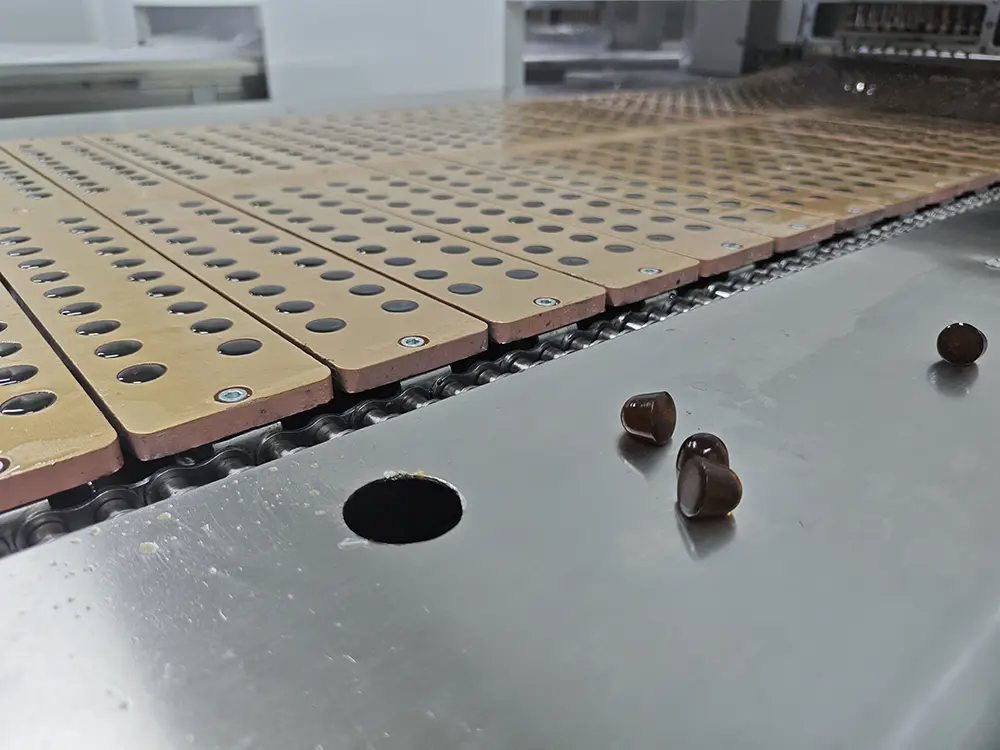
Step 4: Depositing. The slurry is deposited into starch molds or starchless mold systems. Depositing accuracy determines weight consistency—servo-driven depositors achieve higher precision.
Step 5: Cooling and setting. Gummies are cooled in cooling tunnels at 12–14°C with 50% relative humidity for proper setting. Cooling time and temperature must be controlled to achieve the target texture.
Step 6: Drying. Gummies are transferred to drying rooms with controlled temperature and humidity. Drying reduces moisture content to the target level (typically 10–14% water activity) and stabilizes the product.
Step 7: Demolding, coating, and packaging. Dried gummies are removed from molds, optionally coated (sugar, sugar-free, or functional coatings), and packaged into bottles, pouches, or sachets.
Risk & Compliance: What Every Buyer Must Verify
Gummy supplement manufacturers must adhere to cGMP regulations under 21 CFR Part 111 and applicable parts of 21 CFR Part 117. The gummy format presents unique compliance challenges. Regulatory scrutiny of marketing claims under DSHEA and FDA guidance continues to tighten—improper structure-function or disease-prevention language can trigger warning letters and reputational damage. Manufacturing capacity for gummy vitamins, particularly high-speed depositing and drying lines, is constrained, with lead times for new production equipment exceeding 12–18 months. Rising raw-material and packaging costs—especially for organic tapioca syrup, pectin, gelatin, and child-resistant bottles—have compressed gross margins by 2–4 percentage points over the past two years.
Key compliance requirements include: Quality Control unit with authority to approve or reject specifications; scientifically-valid methods for process and quality control; documented master manufacturing records and batch production records; component identity controls and supplier evidence; packaging and labeling controls; and complaint and return handling procedures. USP quality standards for gummy dietary supplements cover raw materials, manufacturing processes, quality parameters, performance testing, and packaging, labeling, shipping, and handling.
FAQs
What is the typical lead time for a private label gummy order?
Standard lead times range from 4–6 weeks after label approval, with formulation development adding 4–8 weeks. Total project timeline from initial consultation to delivery typically spans 10–16 weeks.
What MOQ should I expect from a private label gummy manufacturer?
MOQ varies by manufacturer—some require 150,000 gummies per SKU, while others offer flexible MOQs for startups and small-batch trials. Ask about MOQ by packaging format and whether tiered pricing is available.
What is the difference between gelatin and pectin gummies?
Gelatin is animal-derived, sets via temperature-controlled cooling, and produces a firmer, chewier texture. Pectin is plant-based, requires precise pH and temperature control, and produces a softer, more delicate texture suitable for vegan formulations.
What certifications should a private label gummy supplier have?
Minimum requirements include GMP, ISO 22000, HACCP, and FDA registration. Additional certifications—HALAL, KOSHER, BRC, FSSC 22000, and Vegan—may be required depending on your target markets.
How long do gummy supplements last?
Gummy supplements typically have a shelf life of 12–18 months. Stability testing determines the actual shelf life for each specific formulation. Proper packaging and storage conditions are critical to maintaining potency throughout the shelf life.
This article is provided by Gothink Biology, a dietary supplement manufacturer based in Shenzhen, China.
Shenzhen Gothink Biology Technology Co., Ltd. is a China-based nutrition supplement supplier offering OEM, ODM, CMO, and CDMO services. Our GMP-certified facility features a 100,000-class cleanroom with a daily output of 16 tons and an annual capacity of 5,000 tons. We hold certifications including ISO9001, ISO22000, HACCP, FDA, HALAL, GMP, KOSHER, BRC, FSSC 22000, PJPH, and Vegan. Our R&D team, led by scientists with postdoctoral experience at institutions including Cold Spring Harbor Laboratory and Emory University, supports custom formulation development across gummy, capsule, tablet, powder, liquid, and drop supplement categories.
For more information, visit gothinkbio.com or contact our expert team.