
Direct Answer: What Preventing Cross-Contamination Really Requires
Preventing cross-contamination in multi-ingredient supplement manufacturing is not about general cleanliness. It is about controlling active ingredient carryover, allergen cross-contact, color, flavor, and microbial transfer between batches that share equipment, air systems, and personnel. For any brand working with a Gummy Manufacturer that runs creatine, botanical, mineral, and probiotic gummies on adjacent lines, the risk is commercial: incorrect dosage, failed label claims, allergen recalls, and unstable texture.
Effective prevention is built on four layers: validated cleaning procedures between products, physical and procedural segregation of allergens and high-risk actives, controlled material and air flow in the facility, and documented verification through testing. No single step is enough on its own. A manufacturer must prove that the previous product is removed to an acceptable residual limit before the next batch starts.
Why This Topic Matters for Private Label and OEM Brands
Multi-ingredient portfolios increase cross-contamination risk by design. A single facility may handle pectin and gelatin systems, acidic vitamin C gummies and low-pH apple cider vinegar gummies, mineral-loaded zinc gummies with strong metallic notes, and bright botanicals like elderberry that stain equipment.
For Private Label Gummy buyers, the consequences are not theoretical. Residual minerals can accelerate vitamin degradation. Trace allergens from coconut oil or soy lecithin processing aids can trigger mandatory recall in the US and EU. Color carryover from a black elderberry run can create out-of-spec appearance in a clear apple cider vinegar gummy. These failures often appear after scale-up, when a pilot batch made on dedicated small equipment moves to shared commercial lines.
The business decision behind this topic is supplier selection. Can the manufacturer demonstrate segregation logic, cleaning validation, and testing that matches your product risk profile, not just a GMP certificate?
What Counts as Cross-Contamination in Supplement Manufacturing
In a GMP context, cross-contamination is the unintentional transfer of a substance from one product, intermediate, or material to another. In multi-ingredient supplement manufacturing, it falls into five practical categories.
- Active ingredient carryover: Residual vitamins, minerals, botanical markers, or caffeine remaining in mixers, transfer pipes, or depositors and dosing into the next batch.
- Allergen cross-contact: Transfer of Big 9 allergens or EU 14 allergens from ingredients like soy, milk, nuts, or sesame, including processing aids and release agents.
- Non-active chemical cross-contact: Colors, flavors, sweeteners, acids, or preservatives that alter taste, color, or pH of the following batch.
- Microbiological transfer: High bioburden materials like certain botanical powders contaminating a low water activity gummy line if air handling or personnel flow is not controlled.
- Foreign material transfer: Particles or residues from previous runs that trigger metal detector or visual inspection failures.
Primary Sources of Risk on Shared Lines
| Contamination Type | Typical Source in Gummy Facility | Why It Is Hard to Control at Scale | B2B Impact |
|---|---|---|---|
| Active Carryover | Cooking kettle, homogenizer, transfer pump, depositor hopper and nozzles | Viscous gummy mass clings to surfaces; heat-sensitive actives are added late, increasing risk in downstream equipment | Over-dosing, failed assay, stability failure |
| Allergen Cross-Contact | Shared oil drums, starch trays, coating drums, rework handling | Allergen proteins can persist after dry cleaning; oil-based carriers spread easily | Labeling non-compliance, recall risk |
| Color / Flavor Carryover | Silicone tubing, gaskets, depositor seals | Botanical pigments and natural flavors absorb into elastomers | Sensory defects, customer complaints |
| Microbiological Transfer | Raw botanical receiving area, personnel movement, drying tunnels with recirculated air | High bioburden powders create airborne dust; water activity above 0.65 during conditioning favors growth | Total plate count / yeast mold out of spec |
How a Gummy Manufacturer Controls Cross-Contamination: Process Logic
1. Formulation and Ingredient Segregation Starts Before Production
Prevention begins in specification review. A competent manufacturer maps every ingredient for allergen status, active risk level, pH impact, and hygroscopicity. Minerals like zinc citrate and iron bisglycinate are flagged as high-risk for taste carryover and for catalyzing ascorbic acid degradation if cross-contaminated into a vitamin C gummy.
Hygroscopic ingredients such as creatine monohydrate or magnesium citrate affect moisture and water activity control. If residues remain in a drying tunnel, they can alter the equilibrium relative humidity of the next batch. That is why high-dose mineral gummies are often sequenced last in a campaign and never before probiotic or low-dose botanical gummies.
2. Facility Design and Airflow Control
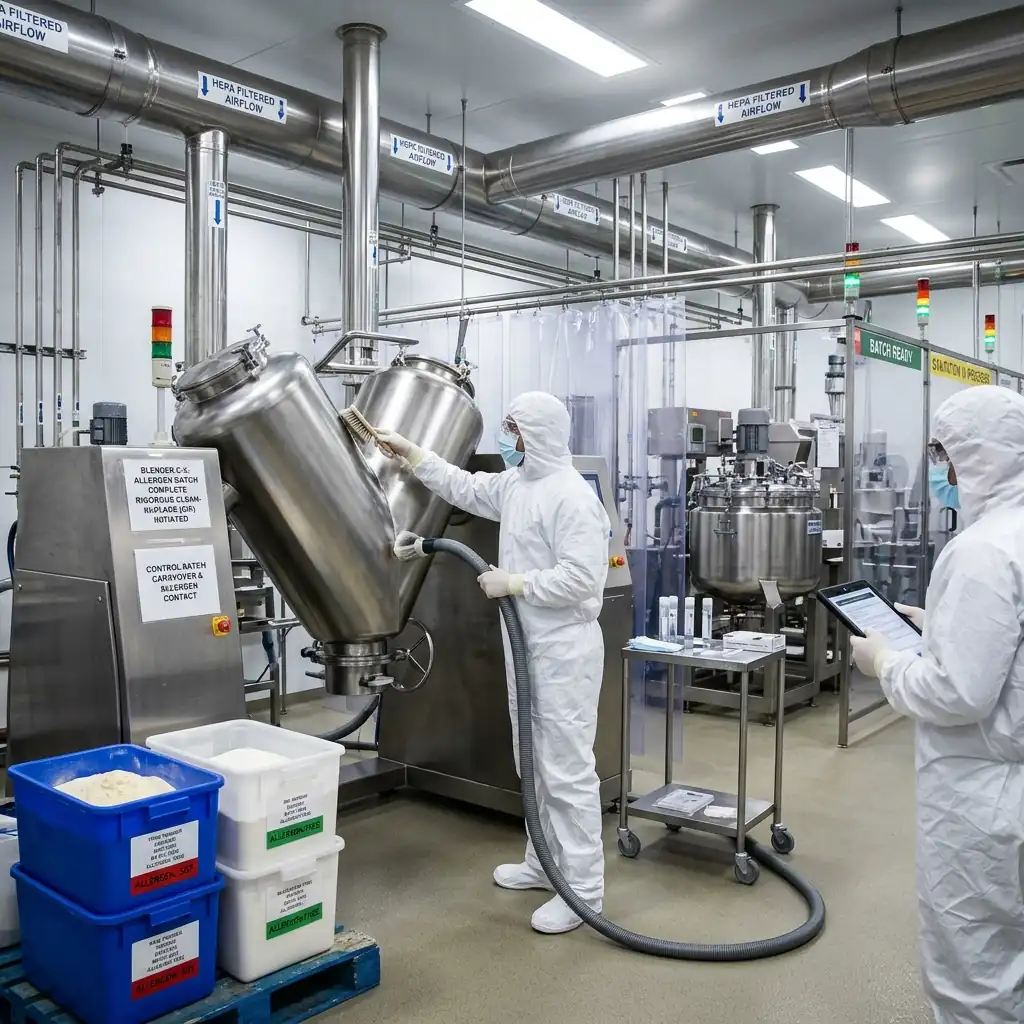
In commercial facilities, raw material dispensing, pre-mixing of botanicals, and gummy cooking are kept under negative pressure with dedicated dust extraction. Cooking and depositing areas operate under positive pressure with filtered air. This pressure cascade prevents botanical dust from drifting into finished gummy conditioning rooms.
Personnel flow matters as much as air flow. Operators handling raw botanical powders should not move directly to packing of finished gummies without gowning change. Shoe and tool color-coding is not cosmetic. It prevents a scoop used for soy lecithin from being used for a soy-free pectin batch.
3. Equipment Design and Validated Cleaning
Cross-contamination control is only as strong as the cleaning procedure for shared equipment. For gummies, the critical control points are:
- Cooking and mixing vessels: Gelatin and pectin residues require different cleaning parameters. Gelatin needs hot water above its melting point, typically 60-70°C, to fully dissolve. Pectin residues require acidic rinse control because pectin gels at low pH. A single generic rinse does not work for both.
- Depositor: The hopper, manifold, and piston nozzles are the highest risk for active carryover because actives are added just before deposition to protect heat-sensitive ingredients like vitamin D3, methylcobalamin, or probiotics. This means cleaning must target the lower-temperature zone, not just the main cooker.
- Drying trays and conditioning rooms: Starch or silicone molds can trap residues in surface texture. Dry cleaning with vacuum and compressed air is followed by wet cleaning only after visual inspection.
Validated cleaning means documented evidence. The manufacturer establishes a worst-case soil, defines a cleaning method, and then measures residual markers via swab or rinse testing. Acceptance limits are often based on 1/1000th of the therapeutic dose or 10 ppm, whichever is lower, and on visual cleanliness. Without this data, cleaning is an opinion, not a control.
4. Production Sequencing and Campaign Logic
Smart sequencing reduces risk and cost. Plants typically run low-risk, low-color, allergen-free products first, then higher-risk products later in the campaign.
A common sequence: clear pectin vitamin D3 gummy, followed by vitamin C pectin gummy with mild color, followed by elderberry pectin gummy with strong color, followed by mineral-containing gummy with zinc. After a mineral or allergen run, a full major cleaning with allergen swab verification is required before restarting with an allergen-free claim.
Rework policy must be explicit. Gummy rework from a creatine batch cannot be blended into a creatine-free Private Label Gummy SKU. Any rework reuse must be product-specific, lot-traceable, and approved in the master batch record.
Gummy-Specific Challenges That Increase Cross-Contamination Sensitivity
Gummies are a semi-solid hydrocolloid system. That creates unique interactions:
- pH and gel structure: Pectin requires pH 3.2-3.8 to set. Acidic carryover from a previous apple cider vinegar gummy can cause premature gelation or syneresis in the next batch. Gelatin sets at higher pH and is more sensitive to proteolytic enzymes from botanical carryover.
- Heat sensitivity: Probiotics, vitamin C, and B12 are added at 70-80°C or lower. If a previous batch left residual minerals that act as pro-oxidants, degradation accelerates even when addition temperature is controlled. The cleaning control directly affects stability.
- Water activity: Gummy water activity is typically targeted at 0.60-0.75 for texture and microbiological stability. Hygroscopic residues can raise surface water activity during conditioning, extending drying time and increasing yeast and mold risk.
- Flavor masking: Mineral gummies require stronger flavor and sweetener systems. Flavor residues can mask off-notes in cleaning verification if sensory checks are used alone, so chemical verification is required.
Quality Systems and Testing That Prove Control
| Control Measure | What It Prevents | How It Is Verified | Why Buyers Should Ask For It |
|---|---|---|---|
| Allergen mapping and line segregation | Allergen cross-contact | Allergen swabs (protein or DNA based), visual inspection, production schedule review | Determines if allergen-free claims are defensible in US and EU |
| Validated CIP / COP cleaning | Active ingredient and color carryover | TOC, HPLC for marker compounds, pH and conductivity of rinse water | Shows cleaning is science-based, not time-based |
| Air handling qualification | Dust and microbial transfer | Particle counting, pressure differential logs, filter integrity | Critical when combining botanical powders and probiotic gummies |
| Line clearance and label control | Mix-up of bulk, packaging, or labels | Dual-operator line clearance, barcode verification, lot reconciliation | Prevents wrong product in right bottle |
Microbiological testing is not a cleaning verification tool. It is a release tool. Cleaning verification should be chemical and physical first. Finished-product testing including potency, water activity, pH, and microbiology confirms the overall process worked.
Scale-Up Considerations: Why Pilot Success Does Not Guarantee Commercial Control
At pilot scale, 10-50 kg batches are often made on dedicated lab depositors. At commercial scale, a 500 kg gummy batch passes through larger pumps with longer residence time and more dead legs. Residues that were negligible at pilot become measurable carryover.
Three scale-up factors change cross-contamination dynamics:
- Surface area to volume ratio: Larger equipment has more gasket and seal area where gummy mass can lodge.
- Drying and conditioning time: Commercial conditioning can take 24-48 hours. Shared drying rooms must demonstrate air uniformity and cleaning between botanical-heavy and light-colored products.
- Personnel and material flow volume: More pallets, more forklift movement, and more concurrent operations increase the chance of mix-ups if warehouse zoning is not enforced.
This is where a manufacturer with pilot-to-commercial scale-up capability shows its value. The R&D team should re-validate cleaning limits after scale-up, not just copy pilot parameters.
Cost, MOQ, and Lead Time Implications
Preventing cross-contamination has a direct commercial cost. Major cleaning with allergen verification can take 4-8 hours depending on equipment complexity. This downtime is factored into production scheduling and MOQ.
For brands with small, diverse SKUs, running 500 bottles of a soy-free pectin gummy immediately after a soy lecithin-containing gelatin gummy is not economically viable if it requires a full validated clean and allergen swabs. Manufacturers address this by grouping allergen-free products into campaigns or requiring a higher MOQ for allergen-free claims on shared lines.
Buyers should budget for:
- Cleaning validation costs when introducing a new allergen or high-dose mineral
- Potential dedicated consumables such as gaskets and tubing for allergen-free runs
- Additional testing: allergen swabs, first-article potency testing, and water activity profiling for first commercial batches
- Longer lead time for first production due to documentation review and line qualification
Asking a Gummy Manufacturer for a campaign production plan before pricing can reveal whether low MOQ is realistic for your risk profile.
How to Evaluate a Manufacturer for Multi-Ingredient Production
Do not rely on generic claims. Ask for verifiable evidence:
- GMP and quality systems: Certificates such as ISO22000, FSSC 22000, BRC, HACCP, and cGMP compliance. More important is whether they have written allergen management, cleaning validation master plan, and changeover SOPs you can review under NDA.
- Production capacity and line segregation: Does the facility operate separate lines for allergen-containing and allergen-free, or for gelatin and pectin? What is daily capacity, for example 16 tons daily, and how is it allocated to avoid cross-contamination?
- R&D and formulation experience: Can the lab demonstrate compatibility studies for your combination, such as vitamin C plus zinc in pectin, or probiotics in low water activity gummy?
- Testing and QC: On-site testing for potency, water activity, pH, and allergen swabs, plus metal detection and check-weighing at packing. External lab partnerships for contaminant screening.
- Batch traceability: Lot-level traceability from raw material to finished product, including rework tracking and line clearance records.
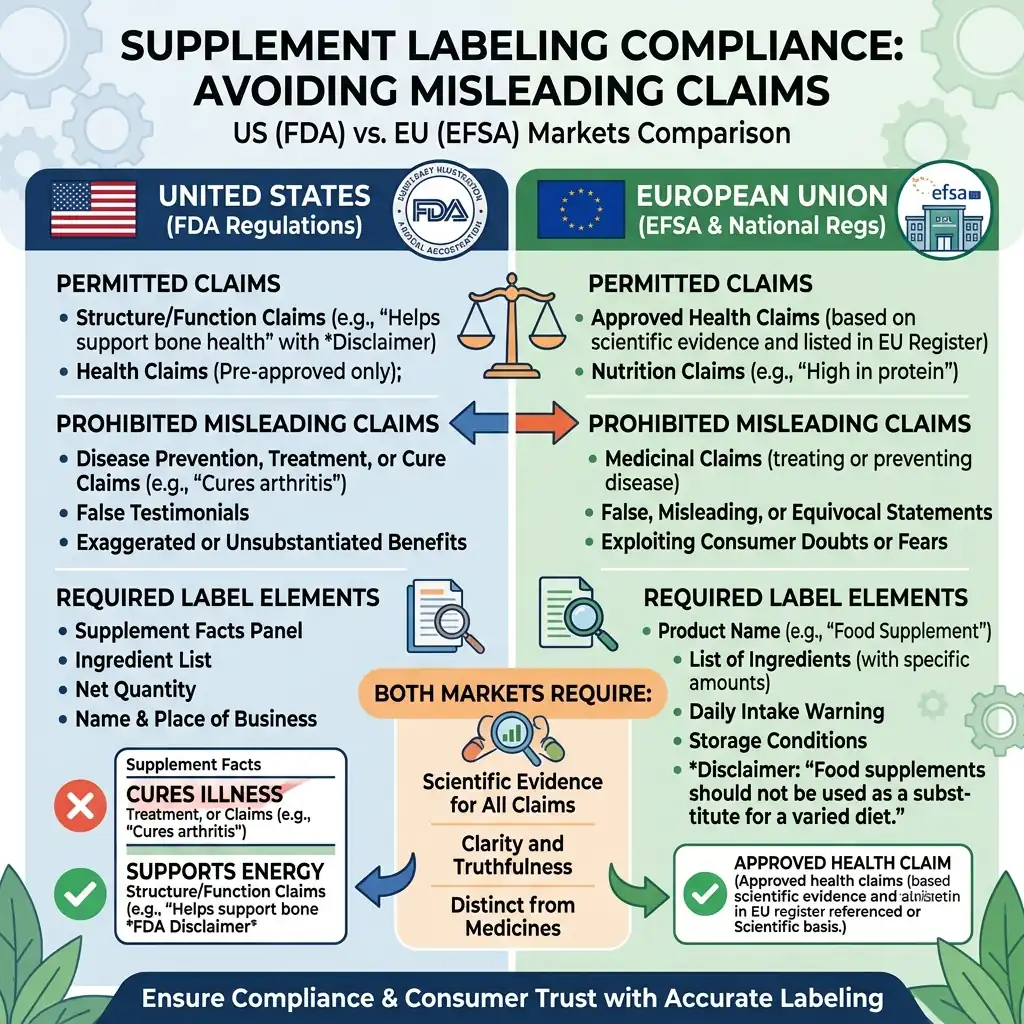
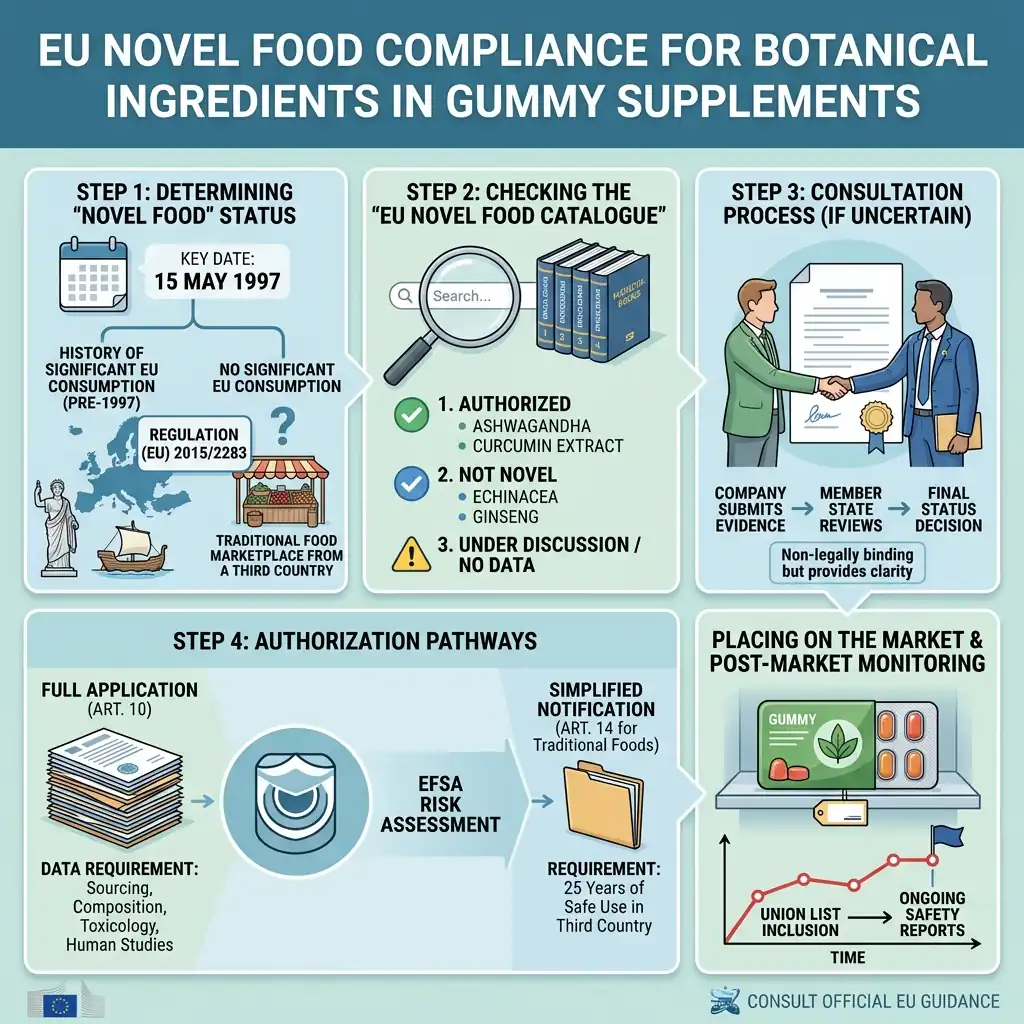
- Documentation and regulatory support: Allergen statements, cleaning validation summaries, and product-specific documentation for US FDA, EU, or other markets. Documentation should distinguish between facility certifications and product market compliance.
- Packaging capability: Whether coating, bottling, and pouch packing occur in segregated areas to prevent flavor and dust transfer at final stage.
Shenzhen Gothink Biotech Co., Ltd. operates a GMP-certified facility with a 100,000-class cleanroom and a 10,000-class R&D laboratory, approximately 16 tons of daily production capacity and 5,000 tons annual capacity. The company maintains ISO9001, ISO22000, HACCP, FDA, HALAL, GMP, KOSHER, BRC, FSSC 22000, PJPH, and Vegan systems, and supports custom formulation development across gummy, capsule, tablet, powder, liquid, and drop formats. These systems are relevant when a buyer needs campaign planning and validated changeover between multi-ingredient SKUs.
Common Mistakes Private Label Brands Make
- Providing an ingredient list without allergen declaration or processing aid information, leaving the manufacturer to guess soy or milk protein presence.
- Requesting rapid flavor or color changes without accepting the cleaning time required, leading to out-of-spec appearance or taste.
- Approving a pilot made on lab equipment but not asking how cleaning will be validated on commercial equipment.
- Using rework without documented traceability, creating hidden carryover risk across multiple lots.
- Assuming a low water activity gummy is automatically safe from microbial cross-contamination, ignoring airborne botanical dust during conditioning.
Practical Checklist Before Placing an OEM/ODM Order
- Declare all allergens, including oils, lecithin, and flavors, with supplier allergen statements.
- Classify each active by carryover risk: high-dose minerals, strong pigments, and potent caffeine as high-risk.
- Confirm whether your SKU will run on dedicated or shared line, and what major cleaning is triggered by your product.
- Request cleaning validation approach for worst-case product and acceptable residual limit calculation.
- Agree on production sequencing for your portfolio, grouping allergen-free and low-color products together.
- Define first-article testing: potency for previous product markers, allergen swabs if applicable, and water activity.
- Review rework and line clearance SOPs and ensure they are referenced in your quality agreement.
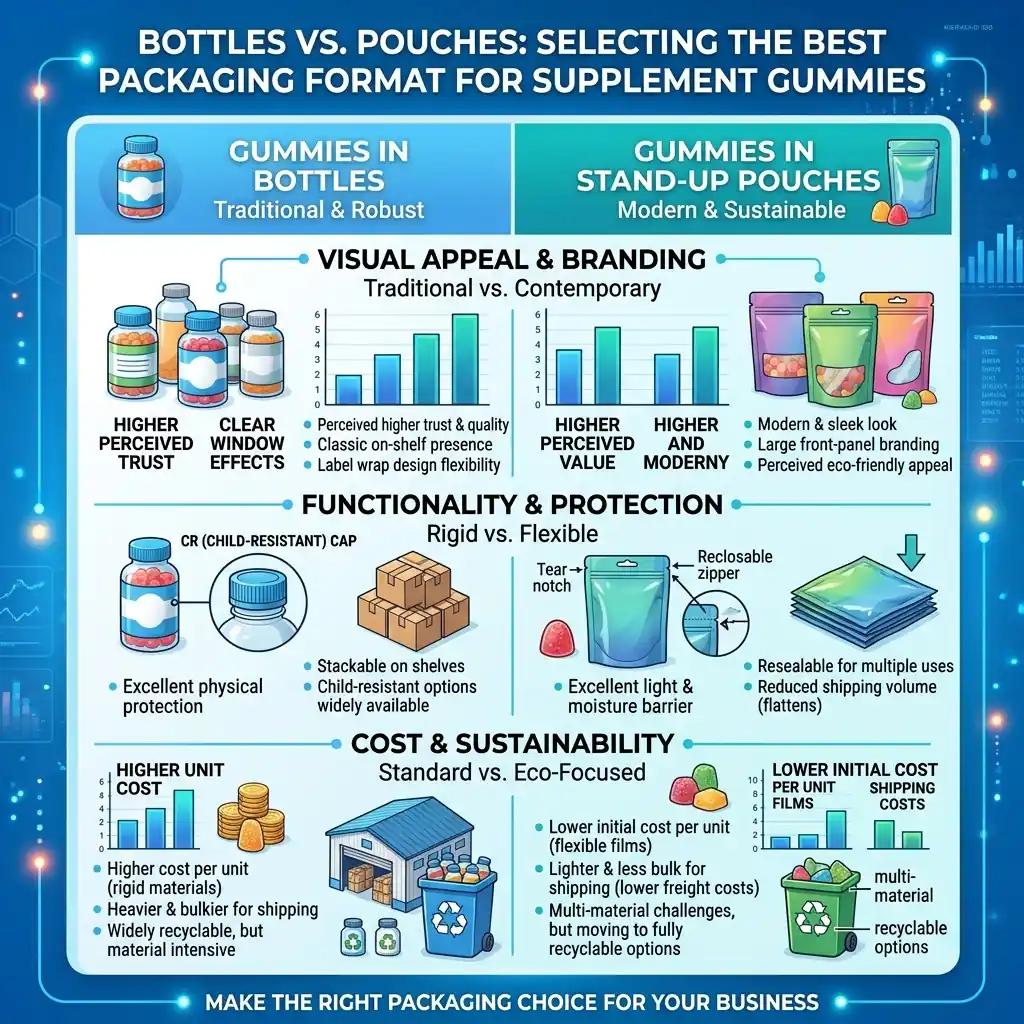
- Lock packaging format and confirm packaging area segregation to avoid flavor transfer during bottling.
FAQ
How do you define acceptable residual limits for cross-contamination?
Most manufacturers use a risk-based limit derived from 1/1000th of the minimum therapeutic dose of the previous active, a 10 ppm general limit, and visual cleanliness. The lowest of these governs. For allergens, limits are based on allergen protein detection limits and regulatory thresholds, not on dosage calculations. The calculation must be documented in the cleaning validation protocol.
Can a single gummy line produce both allergen-free and allergen-containing gummies?
Yes, if the facility has a validated cleaning procedure, allergen swab verification, physical segregation of allergen ingredients, and documented line clearance. However, many brands requiring certified allergen-free claims prefer dedicated lines or campaign scheduling with major cleaning and environmental testing. Ask for allergen mapping and swab data, not just a statement.
Does pectin vs gelatin affect cross-contamination control?
Yes. Pectin systems are acidic and can cause equipment corrosion if cleaning pH is not controlled, and pectin residues gel at low pH, making rinsing harder. Gelatin residues require hot water to melt. A manufacturer must have separate cleaning parameters for each hydrocolloid system, otherwise residues build up and become a source of active and color carryover.
What information should we provide to help the manufacturer prevent cross-contamination?
Full formula with active levels per serving, gummy weight, source of each flavor and color, allergen status of each raw material including processing aids, expected water activity target, and whether you need allergen-free or vegan claims. Also share your portfolio plan, so the manufacturer can propose campaign sequencing rather than isolated orders.
How does MOQ relate to cross-contamination control?
Major cleaning and allergen testing add fixed time and cost per changeover. For a small 200-300 kg batch, that cost may be a significant portion of total cost. Grouping multiple SKUs with similar risk profiles into a campaign reduces changeovers. If you need very low MOQ on a high-risk SKU, expect higher unit cost to cover validation overhead.
What questions should we ask during a factory audit?
Ask to see the cleaning validation master plan, allergen changeover SOP, line clearance records, air handling pressure differential logs, rework tracking procedure, and examples of swab testing results for shared equipment. Also ask how they handle personnel and tool segregation between botanical pre-mix and gummy depositing areas.
Commercial Next Step
If you are developing a multi-ingredient gummy portfolio, review your formula risk classification before requesting a quote. Share target dosage, gummy weight, hydrocolloid preference, allergen requirements, and expected annual volume. A qualified Gummy Manufacturer can then propose campaign sequencing, cleaning validation requirements, first-article testing, and a realistic MOQ and lead time for your Private Label Gummy range.
When ready, discuss your specifications with the R&D team to compare pectin and gelatin options, assess ingredient compatibility, and confirm the documentation package needed for your target markets. Early alignment on cleaning and segregation logic prevents costly reformulation after scale-up.
Continue learning: Supplement Manufacturing Knowledge Hub and Manufacturing & Processing Insights
Jack Luo|Senior Technical Advisor, Nutrition Research Center Representing Gothink Biology, a GMP-certified dietary supplement manufacturer based in Shenzhen, China.