
Executive Summary: Direct Answer to Sugar-Free Gummy Crystallization
Crystallization in sugar-free gummies is almost always driven by erythritol, not allulose. Erythritol has low solubility at room temperature and a strong tendency to recrystallize once a supersaturated syrup cools. Allulose behaves in the opposite way: high solubility, low crystallization tendency, and humectant properties that keep solids in solution.
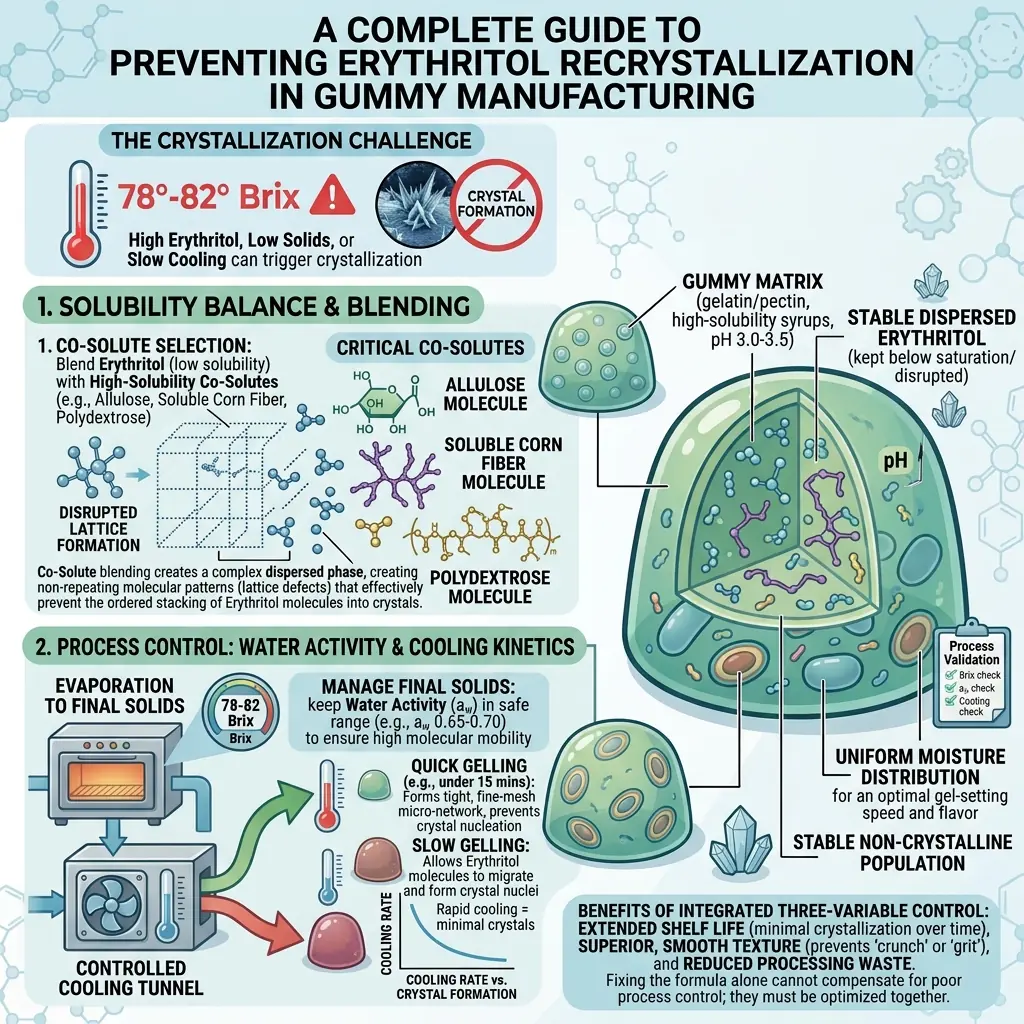
Any experienced Gummy Manufacturer prevents crystallization by controlling three variables together: solubility balance, water activity, and cooling kinetics. In practice, this means blending erythritol with high-solubility co-solutes like allulose, soluble corn fiber, or polydextrose, keeping final solids at 78-82 Brix, managing pH and gel setting speed, and avoiding slow cooling that allows crystal nucleation. Fixing only the formula without fixing process control will not solve shelf-life recrystallization.
Why Crystallization Matters for Supplement Brands
For a private label gummy brand, crystallization is not a cosmetic defect. It changes texture, mouthfeel, active release, and consumer perception of quality. Gritty crystals create a sandy, crunchy bite and accelerate moisture loss from the surrounding gel.
From a commercial standpoint, recrystallization leads to returns, negative reviews, and batch rejections. For distributors and retailers, gummies that develop white spots or a crust in 2-3 months create inventory risk. For product developers, it signals an unstable system that will fail water activity and texture specifications during stability testing.
The Science Behind Erythritol and Allulose in Gummy Systems
Sugar alcohols and rare sugars do not behave like sucrose in a gummy. Their solubility, hygroscopicity, and interaction with hydrocolloids define whether the finished piece stays clear and chewy.
Erythritol: Low Solubility, High Recrystallization Risk
Erythritol has a solubility of about 37 g per 100 g water at 20°C. This is far lower than sucrose, allulose, or sorbitol. In gummy production, syrup is cooked to high solids and then deposited at 80-90°C where everything is in solution. As the mass cools to 20-25°C in molds, erythritol becomes supersaturated and seeks to crystallize.
Erythritol also has a negative heat of solution, which creates a cooling sensation. In high concentrations above 15-20% of total formula, it forms sharp, fast-growing crystals. Without inhibitors, these crystals grow during curing and storage, especially when water activity rises above 0.65 or when temperature fluctuates.
Allulose: High Solubility, Crystallization Inhibitor
Allulose (D-psicose) has solubility above 80% at room temperature. It does not readily crystallize in high-solids systems and acts as a crystallization inhibitor for erythritol by increasing overall solubility and interfering with crystal lattice formation.
Allulose is also a reducing sugar. At cooking temperatures above 110°C it participates in Maillard browning, which can darken gummies and affect flavor. It contributes to lower water activity and better moisture retention than erythritol alone, which helps maintain chewiness in pectin-based systems.
| Property | Erythritol | Allulose | Impact on Gummy Manufacturing |
| Solubility at 20°C | ~37 g/100 g water | ~83 g/100 g water | Erythritol supersaturates and crystallizes on cooling |
| Crystallization Tendency | Very high | Very low | Allulose suppresses erythritol nucleation |
| Hygroscopicity | Low | Moderate-high | Allulose retains moisture, affects drying target |
| Water Activity Contribution | Raises Aw slightly | Lowers Aw | Blend controls Aw for stability and microbial risk |
| Heat Stability | Stable, non-browning | Browns above 110°C | Cooking profile must be adjusted for allulose |
What a Gummy Manufacturer Controls to Prevent Crystallization
Preventing crystallization in sugar-free reformulation is not about removing erythritol completely. It is about building a system where erythritol never reaches critical supersaturation.
1. Solubility Balancing with Co-solutes
Replace part of the bulking system with high-solubility, non-crystallizing materials. Common approaches in commercial Gummy Manufacturing include:
- Blending erythritol and allulose at 1:1 to 1:2 ratio instead of using erythritol as sole bulk sweetener
- Adding 10-25% soluble corn fiber, polydextrose, or isomalto-oligosaccharide to raise total soluble solids without raising crystallization load
- Using 2-5% glycerin or propylene glycol as plasticizer to keep water in the gel phase and reduce molecular mobility for crystal growth
These co-solutes increase viscosity and create steric hindrance that slows diffusion of erythritol molecules to crystal nuclei.
2. Solids and Brix Management
Sugar-free gummy syrup should target 78-82 Brix before depositing. Higher solids mean less free water for recrystallization, but also higher viscosity. Lower solids mean more drying required, which can trigger surface crystallization. The trade-off is resolved during formula development by measuring Brix with a refractometer and correlating it with final water activity of 0.60-0.68.
3. pH and Gel System Compatibility
In high-methoxyl pectin gummies, pH must stay in the 3.2-3.6 range for proper gelation. Erythritol does not buffer pH, while acidic actives like vitamin C, apple cider vinegar, or citric acid can depress pH below 3.0. Low pH accelerates pectin hydrolysis and syneresis, which releases water that promotes erythritol recrystallization. A buffered acid addition in two steps, with pH checked after active addition, prevents this.
In gelatin systems, low pH is less critical for gelation but affects gelatin bloom strength and melting point. Erythritol crystallization is more visible in gelatin gummies because gelatin forms a transparent gel.
4. Texture and Active Loading Effects
High-dose minerals, fiber, or botanical extracts increase total dry matter and reduce space for soluble sugars. When active loading exceeds 20% of gummy weight, the risk of grittiness rises. Erythritol crystals can be mistaken for undissolved active. For private label gummy products with 500 mg+ of actives per 3 g piece, a manufacturer often recommends reducing erythritol to below 10% and relying on allulose plus soluble fiber for bulk.
Manufacturing Process Control for Sugar-Free Gummies
Formula alone does not prevent crystallization. Process conditions determine whether nuclei form in the mold.
- Batch preparation and cooking: Hydrate pectin or gelatin separately. Cook the bulk sweetener syrup to 106-112°C, then cool to 90-95°C before adding heat-sensitive components. Allulose should not be cooked at aggressive temperatures for long periods to avoid excessive browning.
- Active addition: Add erythritol in solution, not as dry powder at the end. Add allulose as part of the main syrup so it is fully dissolved. Add acids, flavors, and actives below 85°C with controlled mixing to avoid air incorporation.
- Depositing: Maintain hopper temperature at 75-85°C. Viscosity rises quickly in sugar-free systems. Low depositing temperature causes premature gelling and traps undissolved erythritol.
- Cooling and setting: Fast, uniform cooling at 15-20°C for 30-45 minutes reduces crystal growth compared to slow ambient cooling. Avoid prolonged exposure to cold dry air that dehydrates the surface and concentrates erythritol at the skin.
- Drying and conditioning: Sugar-free pectin gummies often require 24-48 hours at 20-25°C and 30-40% RH. Target moisture loss of 8-12%. Over-drying raises supersaturation. Under-drying keeps water activity too high for microbial stability.
- Coating: Oil-based or wax-based barrier coating, or a pectin-based sanding alternative with allulose powder, reduces surface nucleation. Traditional sugar sanding cannot be used for sugar-free claims and also provides seed crystals.
On scale-up, mixing time, shear, and depositing speed must be locked. In a 500 kg batch, uneven cooling between center and edge of holding tanks can create 5-10°C gradients, which changes crystallization behavior from start to end of depositing run.
Pectin vs Gelatin: Impact on Sugar Alcohol Stability
The choice of gelling agent changes how crystallization appears and how it can be controlled.
| Factor | Pectin (High-Methoxyl) | Gelatin (200-250 Bloom) |
| Setting Mechanism | pH and solids driven, thermo-irreversible | Temperature driven, thermo-reversible |
| Crystallization Visibility | Less transparent, crystals hidden until advanced | High transparency, early crystal detection |
| Process Window | Narrow, requires precise pH 3.2-3.6 and Brix control | Wider, but low melting point limits tropical shipping |
| Best Sugar-Free Strategy | Allulose + soluble fiber to keep Aw low, glycerin for plasticity | Lower erythritol, higher allulose, avoid acidic actives below pH 3.5 |
For most sugar-free supplement gummies with clean-label positioning, pectin is preferred because it supports vegan claims and better heat stability during shipping. This makes proper allulose-erythritol balancing more important.
Quality Control and Shelf-Life Validation
A robust quality system tracks crystallization before it becomes visible.
- Water activity: Measure Aw with a chilled-mirror dew point meter. Target 0.60-0.68 for pectin sugar-free gummies. Values above 0.70 increase molecular mobility and recrystallization rate.
- Texture analysis: Use texture analyzer for hardness, springiness, and chewiness at day 0, day 30, and day 90. A sharp rise in hardness indicates crystallization.
- Microscopy: Polarized light microscopy on thin slices can detect micro-crystals before they are visible to the naked eye.
- Accelerated stability: Store at 25°C/60% RH and 30°C/65% RH for 3-6 months. Check for white spots, surface frosting, and grittiness. Cycle testing at 20-30°C reveals temperature-induced recrystallization.
- Microbiological testing: Sugar-free systems with higher Aw are more prone to yeast and mold. Total plate count, yeast/mold, and challenge testing are part of release.
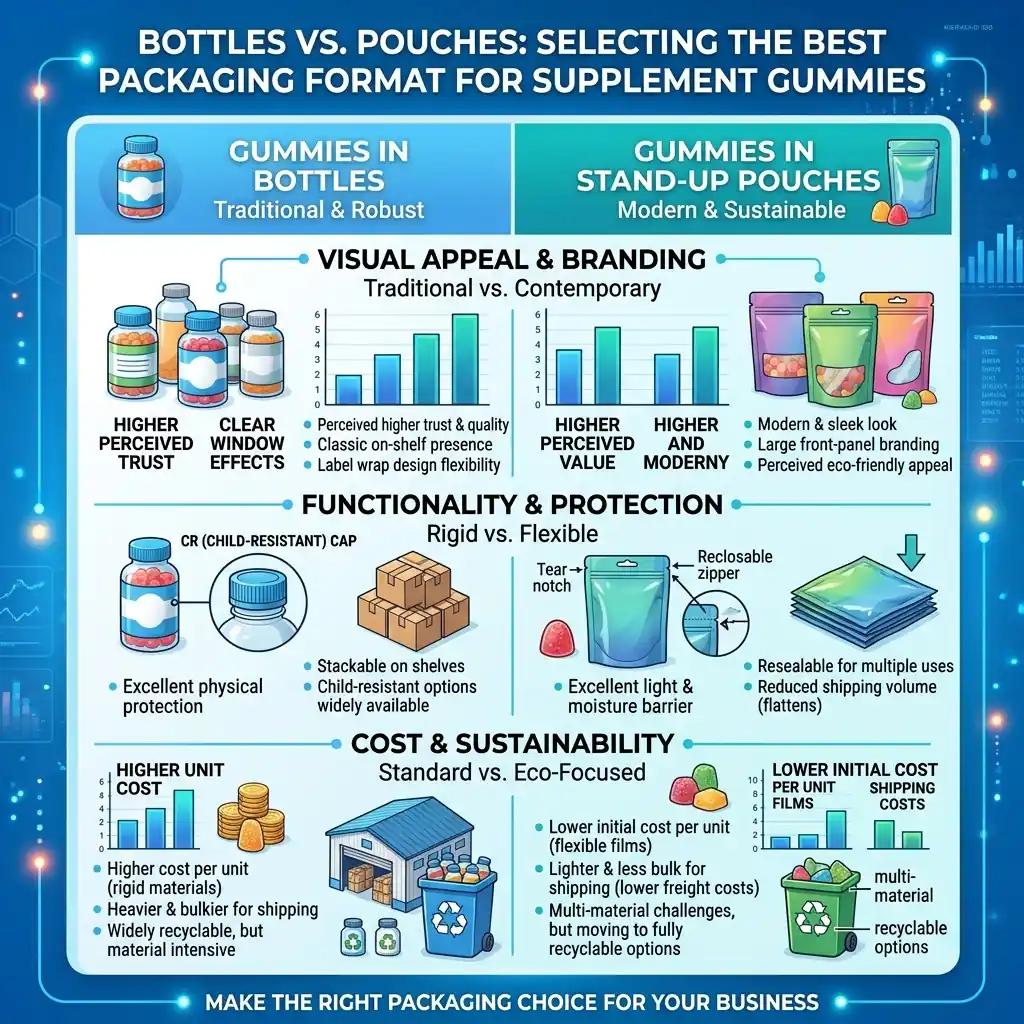
Packaging compatibility matters. High-barrier pouches or bottles with induction seals and desiccants reduce moisture fluctuations that trigger surface crystallization. For allulose-heavy formulas, oxygen and light barrier helps control browning.
Cost, MOQ, and Commercial Considerations
Reformulating with allulose and erythritol changes production economics.
- Ingredient cost: Allulose costs more than erythritol and polydextrose. A blend that cuts erythritol from 30% to 12% and adds 15% allulose plus 15% soluble fiber will raise material cost but sharply reduce failure rate and rework.
- Gummy weight and dosage: Higher active loading forces larger gummy size or lower bulk sweetener. Both affect crystallization risk and cost per serving. Define mg per gummy and target gummy weight early.
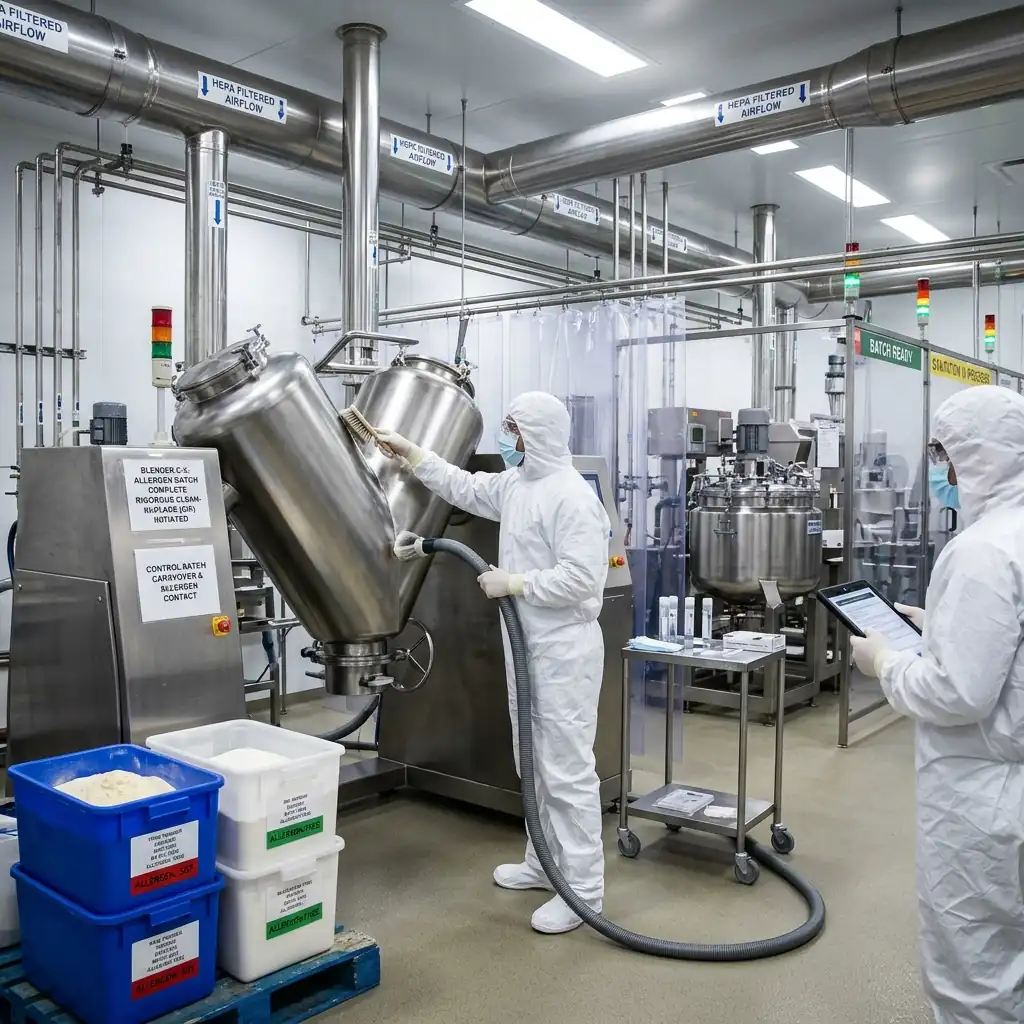
- MOQ implications: Sugar-free pectin gummies require longer curing and separate allergen cleaning if gelatin lines are also used. Most manufacturers set higher MOQ for sugar-free formulas than for standard sucrose gummies due to longer line occupancy.
- Lead time: Custom allulose-erythritol blends may require pre-testing of solubility and viscosity. Expect an additional 2-3 weeks for lab trials and pilot deposits before commercial batch.
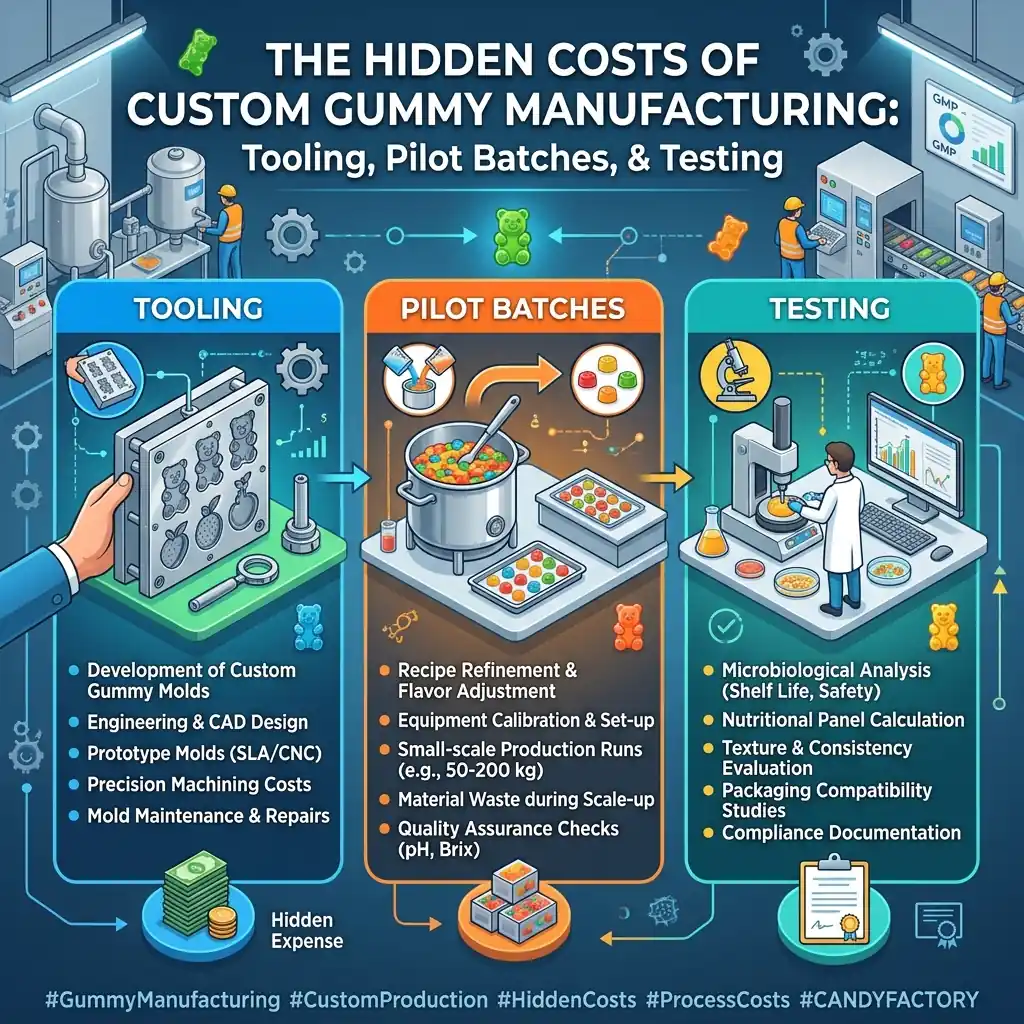
- Testing cost: Stability, Aw, and texture testing are required for each reformulation. Budget for 1-2 pilot runs.
Buyers should provide to a manufacturer: target sugar-free claim, desired sweetener list, active ingredients and dosage, gummy weight, gel preference, flavor profile, Aw and texture targets, packaging format, and target shelf life.
How to Evaluate a Gummy Manufacturer for Sugar-Free Reformulation
Not every facility can handle low-crystallization sugar-free gummies at scale. When evaluating a supplier, verify specific capabilities:
- Formulation experience: Proven experience with erythritol, allulose, soluble fiber systems, and pH control in high-solids gummies.
- R&D capability: In-house lab with Brix, Aw, pH, viscometer, texture analyzer, and ability to run pilot deposits of 10-50 kg.
- Process equipment: Jacketed cooking kettles with precise temperature control, tempering tanks, depositor with heated hopper, controlled cooling tunnel, and conditioning room with humidity control.
- Quality systems: GMP, ISO22000, HACCP, FSSC 22000 or BRC, with documented batch traceability and water activity release specs.
- Pilot-to-commercial scale-up: Ability to transfer lab trials to 300-1000 kg commercial batches without changing crystallization behavior.
- Packaging capability: Compatibility testing for bottles, pouches, and blister, with seal integrity and moisture barrier evaluation.
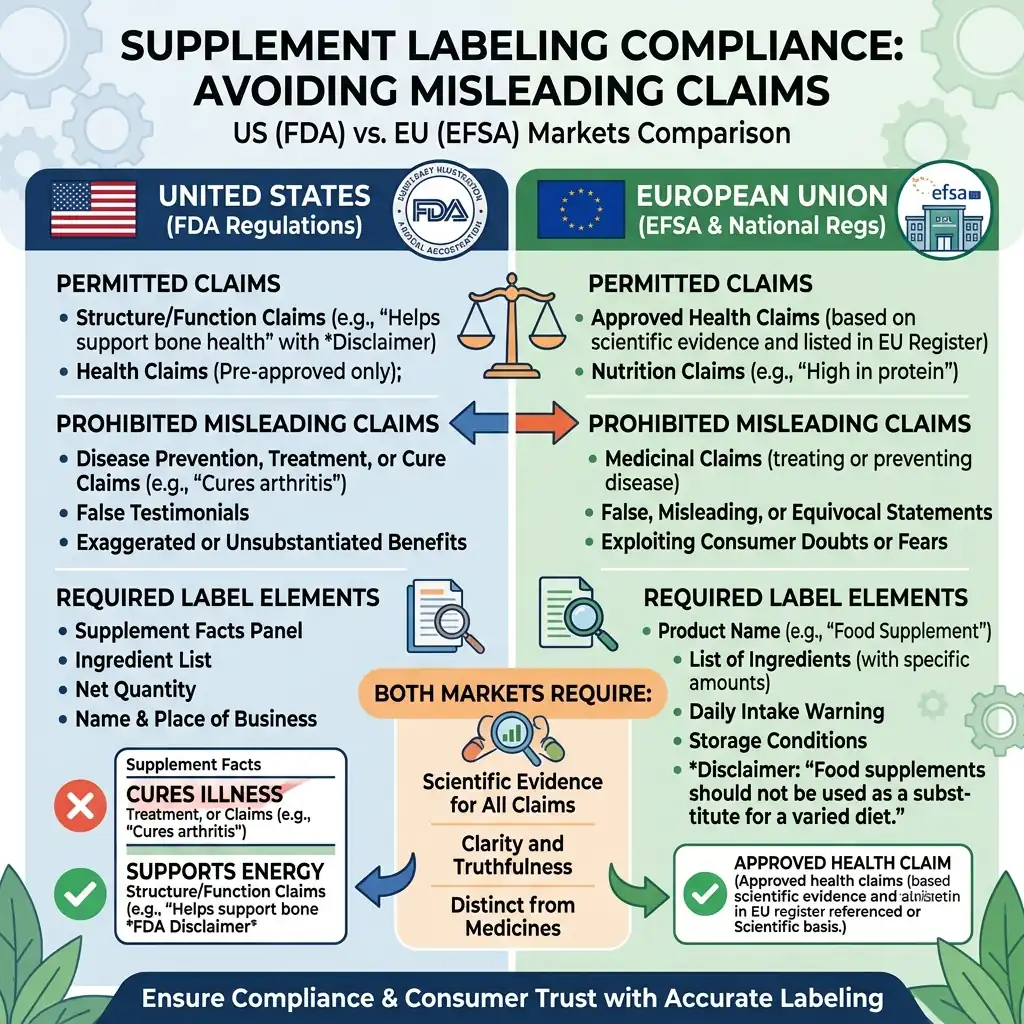
- Documentation: COA, allergen statements, nutrition fact support, and regulatory documentation for target markets.
Shenzhen Gothink Biotech Co., Ltd. operates a GMP-certified manufacturing facility with a 100,000-class cleanroom, a 10,000-class R&D laboratory, and approximately 16 tons of daily production capacity. The R&D team supports custom formulation development for sugar-free gummy systems, including soluble fiber and rare sugar blending, pH and Brix optimization, and scale-up from pilot to commercial production across gummy, capsule, tablet, powder, and liquid formats. Certifications include ISO9001, ISO22000, HACCP, FDA, HALAL, GMP, KOSHER, BRC, FSSC 22000, and Vegan where relevant to formulation.
Common Mistakes in Allulose and Erythritol Reformulation
- Using erythritol as a 1:1 replacement for sucrose or glucose syrup without adjusting solids and co-solutes.
- Adding erythritol as dry powder late in the process, creating undissolved seed crystals.
- Cooking allulose at high temperature for too long, causing dark color and bitter notes.
- Setting final Brix too low and relying on aggressive drying, which concentrates erythritol at the surface.
- Ignoring pH shift from acidic actives, leading to syneresis and water release that drives recrystallization.
- Skipping accelerated stability and releasing product based only on day 0 texture.
Practical Checklist for Buyers
- Define sugar-free claim and allowed sweeteners for target market.
- Specify erythritol maximum percentage, preferably below 12-15% in final formula.
- Request allulose plus soluble fiber blend to raise solubility and lower Aw.
- Confirm final Brix 78-82, Aw 0.60-0.68, pH 3.2-3.6 for pectin or 3.8-4.5 for gelatin.
- Ask for polarized light microscopy and texture data at 0, 30, 90 days.
- Validate coating and packaging for moisture barrier.
- Run pilot batch of 20-50 kg and deposit through commercial depositor before committing to full MOQ.
- Agree on specifications for hardness, chewiness, moisture, Aw, and visual defects.
FAQ
Why does erythritol crystallize faster than other sugar alcohols in gummies?
Erythritol has lower solubility and higher crystallization kinetics than sorbitol or maltitol. In a cooled high-solids gel, it quickly becomes supersaturated. Without high-solubility co-solutes to interfere with lattice formation, it nucleates and grows into gritty crystals.
Can I use 100% allulose to avoid crystallization?
Technically yes, allulose alone does not crystallize easily. Commercially, 100% allulose creates high cost, sticky texture, and browning during cooking. Most manufacturers use allulose as part of a blend with soluble fiber and small amounts of glycerin to control cost, texture, and color.
What is the safe upper limit for erythritol in a non-crystallizing gummy?
There is no universal limit because it depends on total solids, water activity, gel type, and other solutes. In pectin systems with allulose and soluble fiber, most stable formulas keep erythritol below 12-15% of finished weight. Above 20% without strong inhibitors, recrystallization during 3-month stability is common.
Does pectin or gelatin work better for sugar-free erythritol gummies?
Pectin is generally more forgiving for sugar-free positioning and vegan claims. Its thermo-irreversible gel tolerates higher shipping temperatures. Gelatin provides better clarity but shows crystals earlier and can melt in warm climates. Both can work if solubility is balanced and process control is tight.
How does water activity affect crystallization?
Higher water activity means more molecular mobility, which accelerates crystal growth. Lower water activity reduces mobility but if achieved by over-drying, it concentrates erythritol. The target range of 0.60-0.68 for pectin sugar-free gummies balances microbial stability with physical stability.
What should I provide to a Gummy Manufacturer for a sugar-free reformulation quote?
Provide active ingredients and dosage per serving, target gummy weight and shape, preferred gel system, sweetener restrictions, flavor profile, target Brix or texture, packaging format, shelf-life target, regulatory market, and expected annual volume and MOQ per SKU. This allows accurate assessment of formulation difficulty, line time, and testing needs.
Can private label gummy products switch from sugar to sugar-free without changing mold size?
Often no. Sugar-free systems have different density and solids. To maintain same active dose, gummy weight or mold cavity may need adjustment. Texture also changes, so sensory evaluation is needed. A pilot trial with current molds is recommended before committing to tooling changes.
Commercial Next Step
If you are evaluating an allulose and erythritol reformulation, start with a solubility and texture feasibility check rather than a full production run. Review your target formula with a manufacturing team that can test Brix, water activity, pH, and cooling profile at pilot scale.
For technical discussion, you can review gummy manufacturing capabilities, compare formulation options for sugar-free systems, and request a custom formulation or OEM/ODM quotation based on your active loading, gummy weight, and packaging requirements. Share your specification sheet and stability target so the R&D team can recommend a low-crystallization blend and process window.
Jack Luo|Senior Technical Advisor, Nutrition Research Center Representing Gothink Biology, a GMP-certified dietary supplement manufacturer based in Shenzhen, China.
Learn more: Knowledge Hub | Formulation R&D