
Direct Answer: How to Avoid Logistics Failures for Bulk Gummies
Bulk gummies are not standard dry freight. They are low-moisture, semi-solid hydrocolloid systems carrying heat-sensitive actives, controlled water activity, and a defined texture that can be irreversibly damaged by temperature abuse, condensation, and customs delays. Avoiding logistics traps requires two coordinated controls: temperature-controlled freight with continuous monitoring, and customs clearance prepared for food supplement classification.
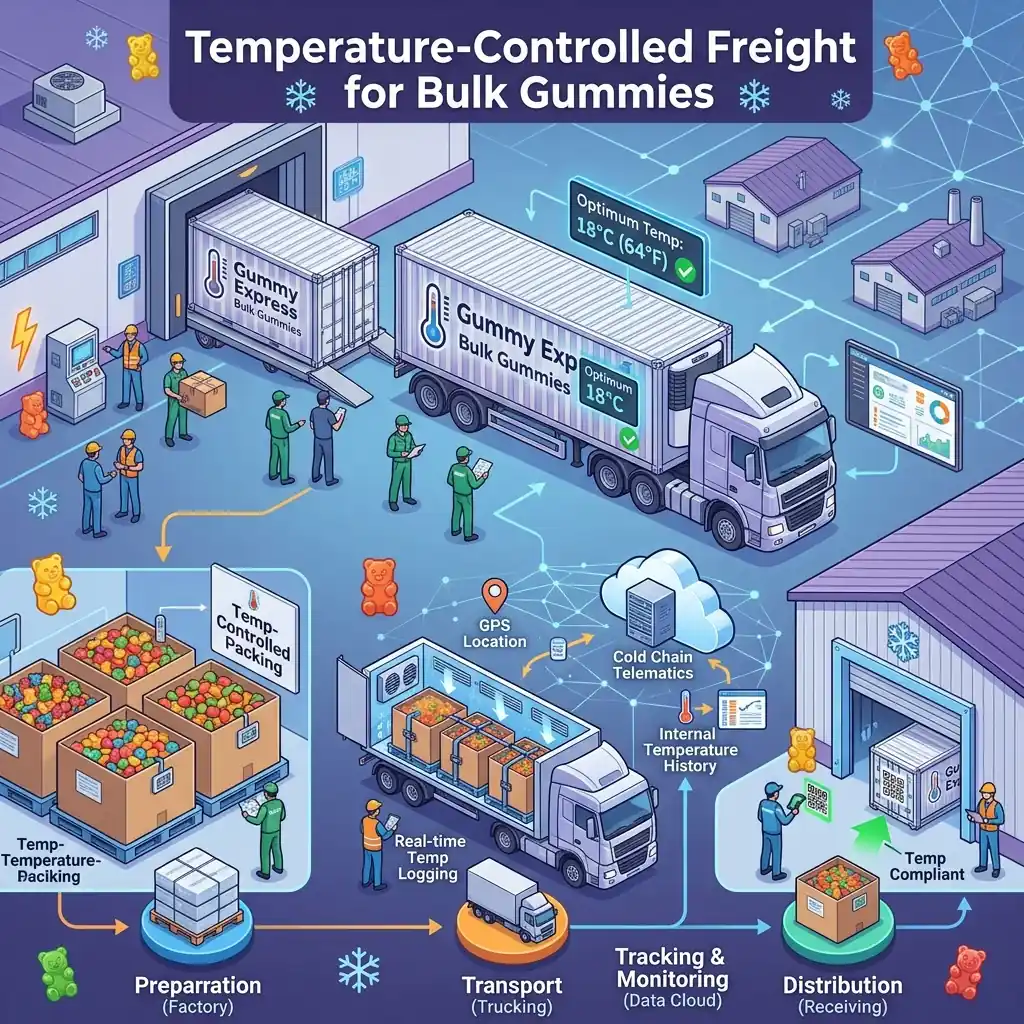
For any brand working with a Gummy Manufacturer, logistics should be specified at the quotation stage, not after production. That means defining gel system, water activity range, active ingredient heat sensitivity, bulk packaging barrier, required transport temperature (typically 15-25°C with data logger), and full export documentation before the batch is scheduled. This prevents melting, deformation, active degradation, and weeks stuck at destination customs.
Why Bulk Gummy Shipments Fail More Often Than Capsules or Tablets
Tablets and capsules are relatively inert in transit. Gummies are thermoreversible gels with 15-22% moisture and a water activity (Aw) target of 0.60-0.75. This structure creates three commercial risks that procurement teams often underestimate.
First, texture failure. Gelatin-based gummies begin to soften at 30-35°C and lose shape above 37-40°C. Pectin systems tolerate higher heat, up to 70-80°C short-term, but will still sweat, stick, and form sugar bloom when exposed to cyclic heat and cold.
Second, active loss. Vitamins such as Vitamin C, Vitamin D3, probiotics, and botanical extracts degrade faster when bulk bags sit in an uncontrolled container at 50-60°C internal temperature, which is common in summer ocean freight.
Third, microbiological risk. If warm gummies are packed and then cooled too quickly in transit, condensation forms inside the liner. Local Aw on the surface can rise from 0.68 to above 0.80, creating a risk for yeast and mold during a 30-45 day ocean transit, even when the initial finished-product test passed.
A shipment that arrives deformed or sticky is not a packaging issue. It is a formulation and logistics specification failure that should have been addressed at the manufacturing stage.
How Gummy Composition Determines Logistics Risk
A professional manufacturer designs the formula with transport in mind. Three parameters drive freight decisions.
1. Gel System and Melting Point
Gelatin provides elastic chew and low production cost, but it is the least heat-stable. Pectin provides better heat stability and vegan positioning but is sensitive to pH and soluble solids. Starch / modified starch blends can increase heat tolerance but affect clarity and release. The choice directly dictates whether ambient freight is acceptable or whether 15-25°C controlled freight is mandatory.
| Gel System | Softening Range | Primary Transit Risk | Logistics Control Required |
| Gelatin | 30-40°C | Deformation, blocking, melting | Reefer or climate-controlled, avoid summer LCL without temp control |
| Pectin (high methoxyl) | 65-80°C | Sweating, stickiness, sugar recrystallization | 15-25°C controlled, dehumidified liner |
| Pectin + Modified Starch | 55-75°C | Moisture migration, texture hardening | Controlled temp, barrier packaging, avoid temperature cycling |
2. Water Activity, pH, and Moisture Control
Water activity is more critical than total moisture for gummy stability. A gummy conditioned to Aw 0.66 will resist microbial growth and maintain texture. If drying and conditioning are incomplete, or if bulk packaging has insufficient barrier, transit condensation pushes surface Aw higher. Low pH formulas (2.8-3.5) common for pectin gummies and Vitamin C also increase inversion of sucrose during heat exposure, leading to sticky surfaces.
From a manufacturing perspective, this is why cooling and conditioning time matters. A batch that is packed too warm (core > 25°C) will generate internal humidity in the bulk bag. Shenzhen Gothink Biotech Co., Ltd. controls this through staged cooling, Aw verification before bulk packing, and use of food-grade PE liners plus aluminum barrier bags inside corrugated export cartons.
3. Active Ingredient Heat Sensitivity and Loading
High-dose actives change logistics requirements:
- Probiotics: Require strict 15-25°C and often 20-25°C max. Viability loss above 30°C is rapid. Bulk probiotic gummies should never ship as ambient ocean freight in summer.
- Vitamins A, D3, C, B12: Oxidative and heat degradation accelerates above 30°C. Requires antioxidant system in formulation and temperature control in freight.
- Omega-3 / MCT oil: Risk of oil leakage and oxidation at elevated temperature, causing off-flavors and packaging stains.
- Minerals (zinc, iron): Less heat sensitive but hygroscopic forms can draw moisture if condensation occurs.
When active loading increases gummy weight from 3.0g to 4.5g to accommodate dosage, thermal mass increases. Larger gummies retain heat longer in the center of a pallet, making data loggers at pallet core more important than air temperature alone.
Temperature-Controlled Freight: What a Professional Gummy Manufacturer Should Manage
Temperature control is not simply booking a reefer. It is a chain of custody from conditioning room to destination warehouse.
Freight Mode Selection
| Freight Mode | Temperature Control | Risk for Bulk Gummies | When to Use |
| Air Freight (15-25°C) | Climate-controlled ULD or thermal blanket + logger | Low | Probiotic, high-value launch, urgent samples |
| Ocean FCL Reefer | Set point 15°C or 20°C, continuous | Low-Medium | Large bulk orders, summer season, gelatin gummies |
| Ocean LCL with Climate Option | Often only 15-25°C at port, ambient in CFS | Medium-High | Only for pectin gummies with strong barrier and short transit |
| Ocean Standard Dry | None, container interior 50-65°C in summer | High | Not recommended for bulk gummies unless winter route and pectin-based |
Packaging Compatibility for Transit
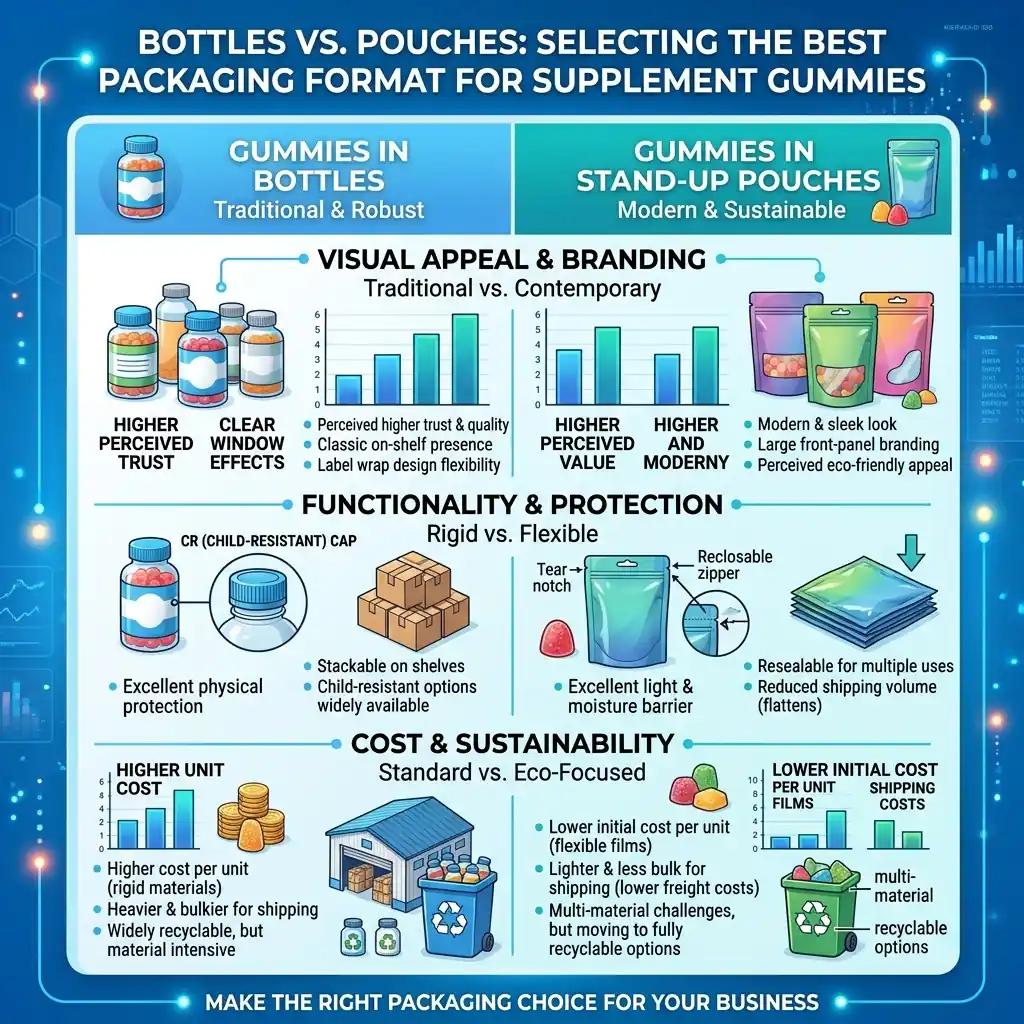
Bulk gummy packaging must serve two functions: food protection and climate buffer. Common OEM structure is: inner food-grade PE bag with twist tie, secondary aluminum foil barrier bag heat-sealed, tertiary 5-ply export carton with palletization and stretch wrap. For temperature-sensitive orders, add:
- Desiccant and oxygen absorber placement validated against Aw and active type
- Thermal insulating liner inside carton for air freight or LCL
- Data logger per pallet (not per container) with alert threshold at 30°C and 75% RH
- Pallet configuration that allows air circulation in reefer FCL, not block-stacked tight to walls
Coating also affects transit stability. Wax or oil-based anti-sticking coating reduces blocking during heat exposure, but excessive oil can migrate at high temperature and cause rancidity.
Scale-Up and Batch Release Logic
At commercial scale, mixing, depositing, cooling, and drying must be tightly controlled to produce uniform Aw across 500kg to 2000kg batches. If center trays dry slower than edge trays, some cartons will have higher Aw and will be the first to fail in transit. A qualified Gummy Manufacturer tests Aw per tray location, not just a composite sample, and holds bulk for 24-48 hours for equilibrium before final packaging and release.
Customs Clearance for Bulk Gummies: Documentation That Prevents Delays
Customs delay is a temperature control failure in disguise. A bulk shipment that sits at destination port for 10 days awaiting documents loses its thermal protection.
HS Code Classification
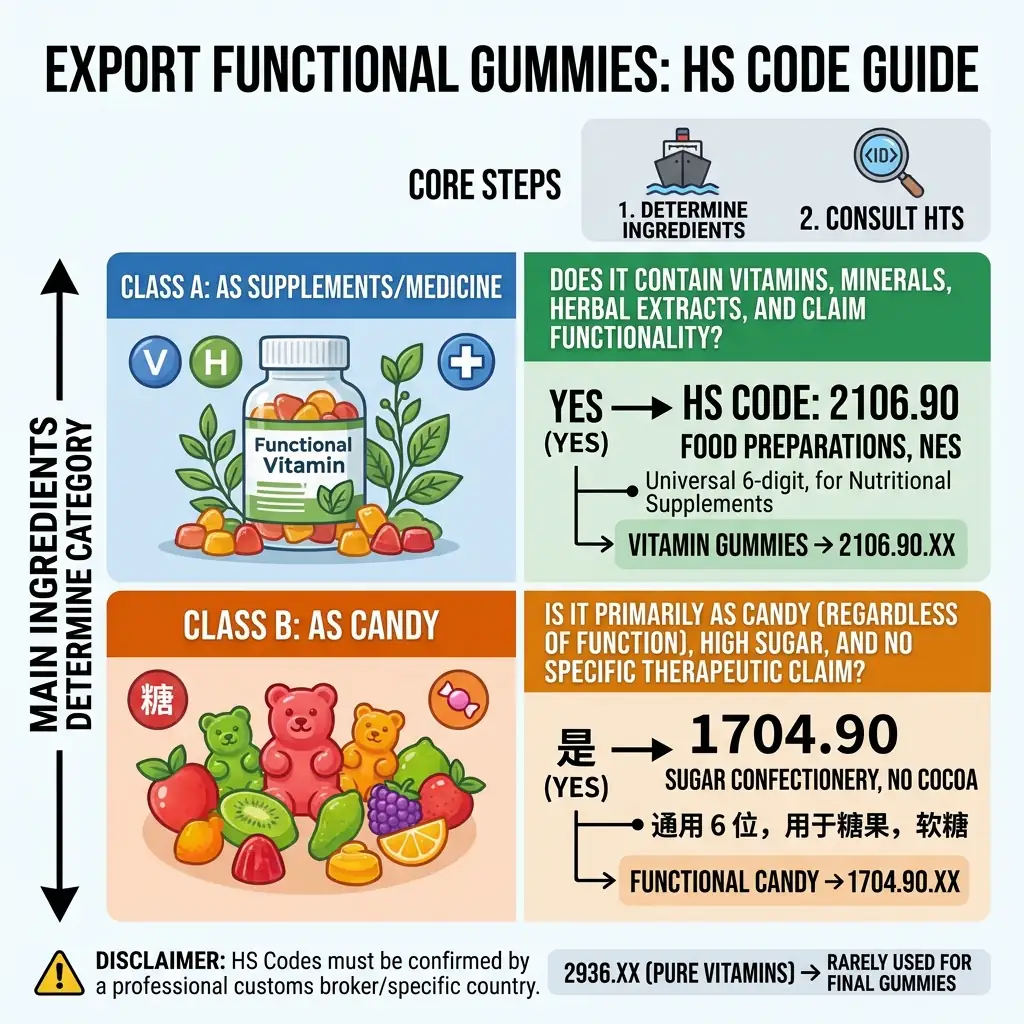
Most destination countries classify dietary supplement gummies under 2106.90 (food preparations not elsewhere specified) as food supplements, or 1704.90 (sugar confectionery) if positioned as confectionery. The classification depends on dosage claims, labeling, and active ingredients. For bulk, unlabelled gummies, 2106.90.99 is common in US and EU. The manufacturer should confirm with the buyer’s customs broker before shipment, as duty rates and import requirements differ significantly.
Incorrect HS code leads to inspection, reclassification, and storage fees, all of which expose gummies to uncontrolled ambient conditions.
Core Export Documents Required
Prepare these before production is complete:
- Commercial Invoice and Packing List: With exact ingredient list, gummy weight, total bulk weight, batch numbers, and HS code
- Certificate of Origin (COO): Issued by Chamber of Commerce, required for preferential duty and for FDA / EU traceability
- Certificate of Analysis (COA): Per batch, including active assay, Aw, moisture, pH, microbiology (TPC, yeast/mold, E. coli, Salmonella), heavy metals
- Health Certificate / Free Sale Certificate: Often required for food supplements entering EU, Middle East, Southeast Asia
- Ingredient Breakdown with %: Many customs authorities require quantitative formula for supplement classification, especially for Vitamin D, melatonin, CBD alternatives
- Allergen Statement, BSE/TSE, Non-GMO, Vegan Affidavit: Depending on destination and certifications claimed (HALAL, KOSHER, Vegan)
- MSDS for actives and manufacturing flow chart: Sometimes requested for high-dose botanicals or mineral premixes
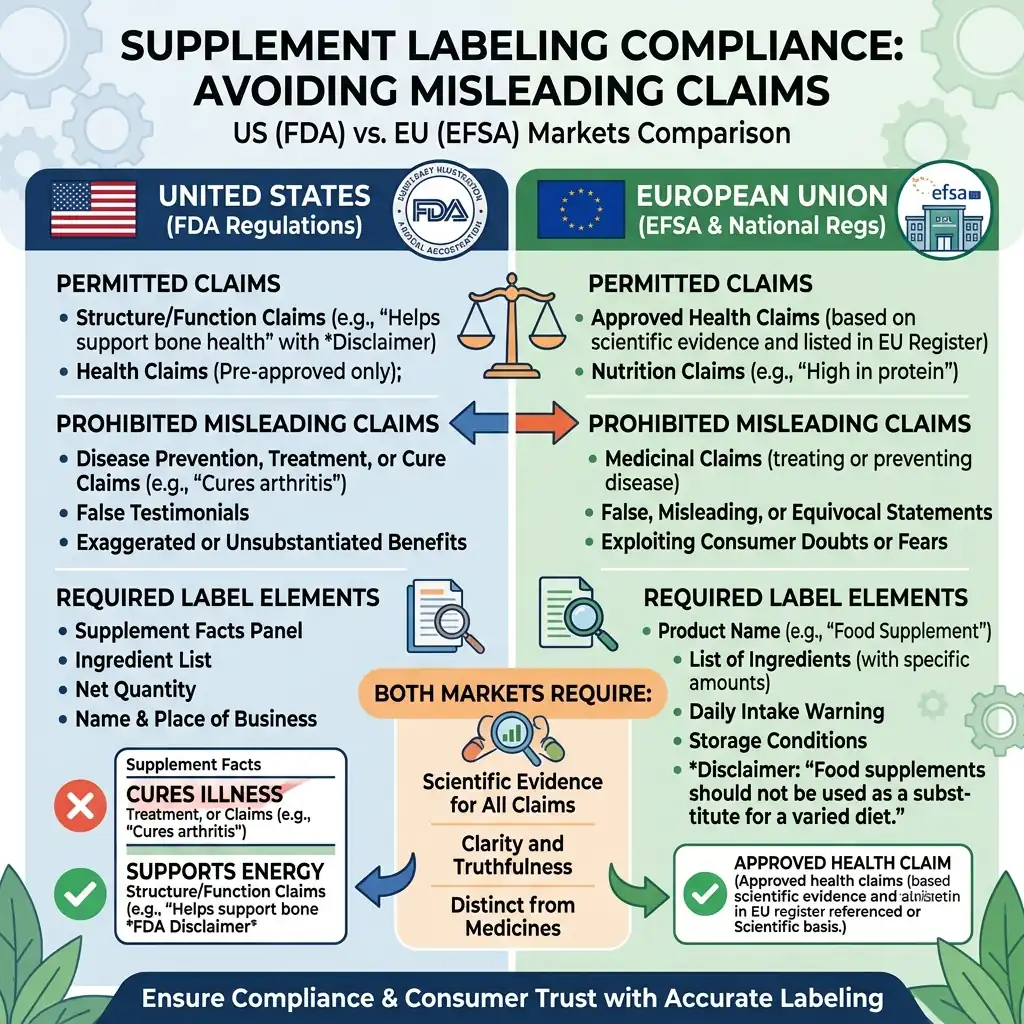
For US FDA: Bulk gummies are subject to FDA facility registration verification and prior notice. Labeling for bulk for repackaging should clearly state “Not for direct retail sale – for further processing and packaging” to avoid misbranding detention.
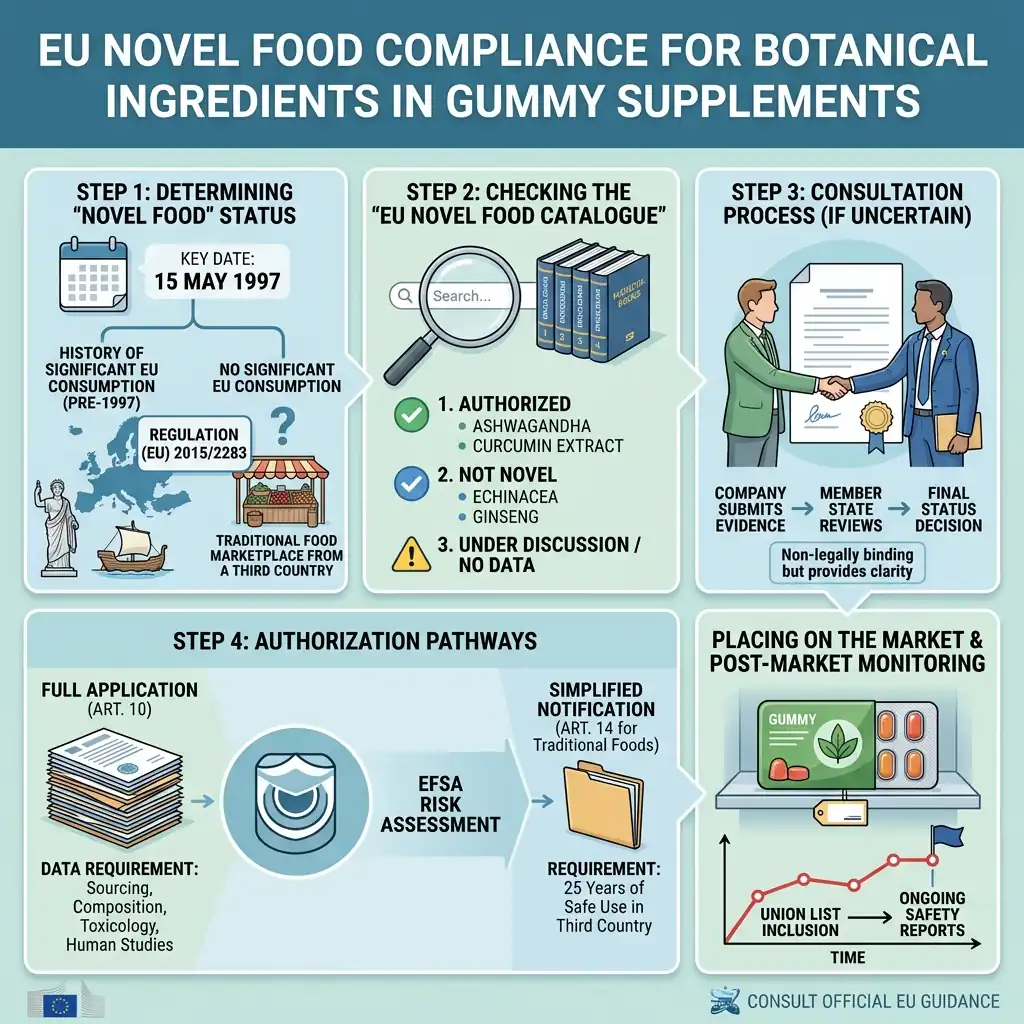
For EU: Ensure the facility is listed with relevant food safety certifications (FSSC 22000, BRC, ISO22000) and that Novel Food status is checked for ingredients like certain mushroom extracts or high-dose botanicals.
Labeling and Regulatory Traps in Bulk Shipments
Even bulk bags need compliant bulk labeling: product name, batch/lot, manufacture date, net weight, ingredient list, storage condition (e.g., Store at 15-25°C, keep dry), manufacturer name and address, and best-before date based on shelf-life validation. Missing storage condition on bulk cartons is a common reason for customs to question temperature handling.
Cost and MOQ Considerations Linked to Logistics
Logistics cost should be calculated into landed cost per gummy, not treated as afterthought freight.
Factors that increase freight cost but reduce failure risk:
- Reefer FCL vs dry container: Adds cost but prevents a full-batch write-off. For gelatin gummies in summer, reefer is economically justified above 2,000kg.
- Higher barrier packaging: Aluminum barrier bag costs more than PE only, but reduces moisture-related returns.
- Smaller bulk pack size: 10kg per carton instead of 20kg reduces thermal mass and improves handling, at higher packaging labor cost.
- Split shipment: Air freight for first market launch quantity plus ocean reefer for balance can reduce time-to-market risk.
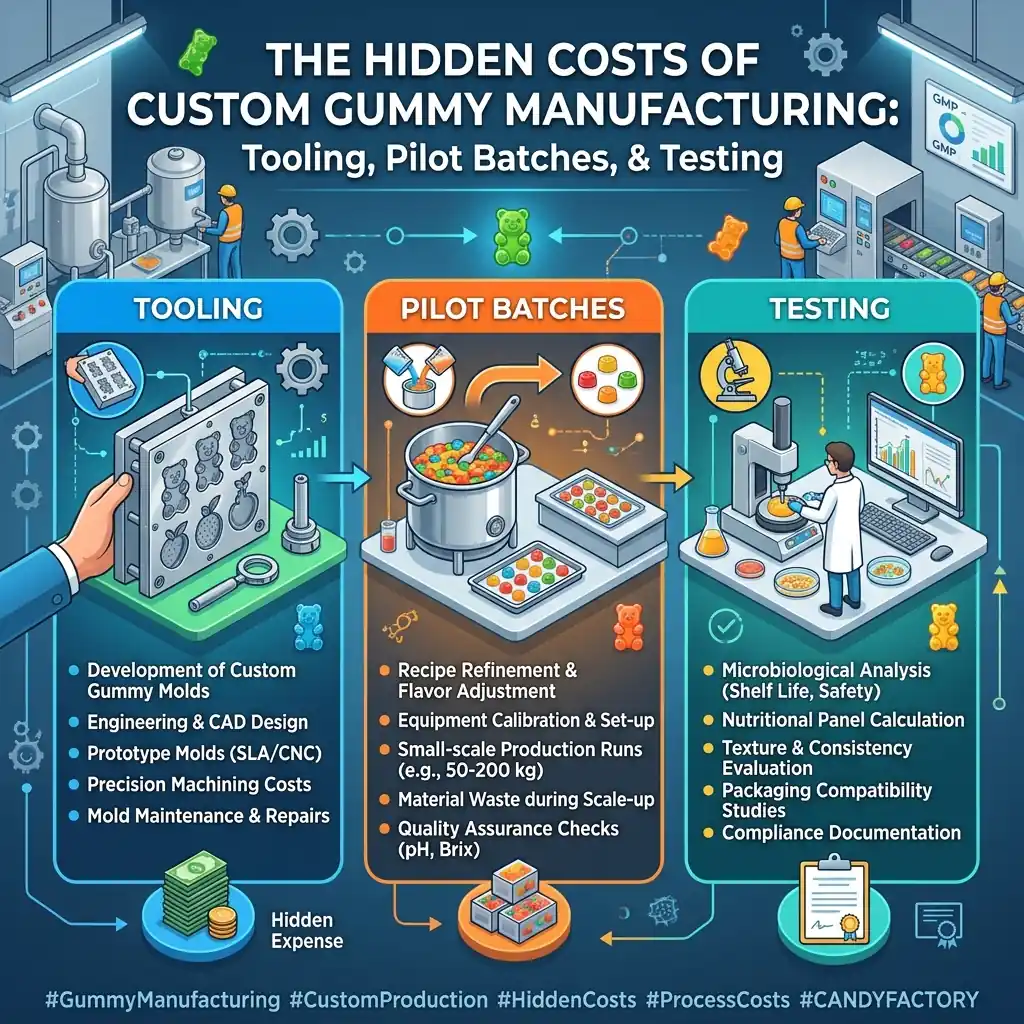
MOQ flexibility matters here. A manufacturer with 16 tons daily capacity and 5,000 tons annual capacity can produce pilot batches of 300-500kg for stability and freight validation before committing to full MOQ. This pilot shipment should use the same temperature-controlled route as future commercial shipments to validate actual transit performance.
How to Evaluate a Gummy Manufacturer on Logistics Capability
When sourcing bulk gummies internationally, procurement teams should audit more than formulation. Ask for measurable capabilities:
- GMP and food safety systems: ISO22000, HACCP, FSSC 22000, BRC, FDA registration, batch traceability from raw material lot to finished pallet
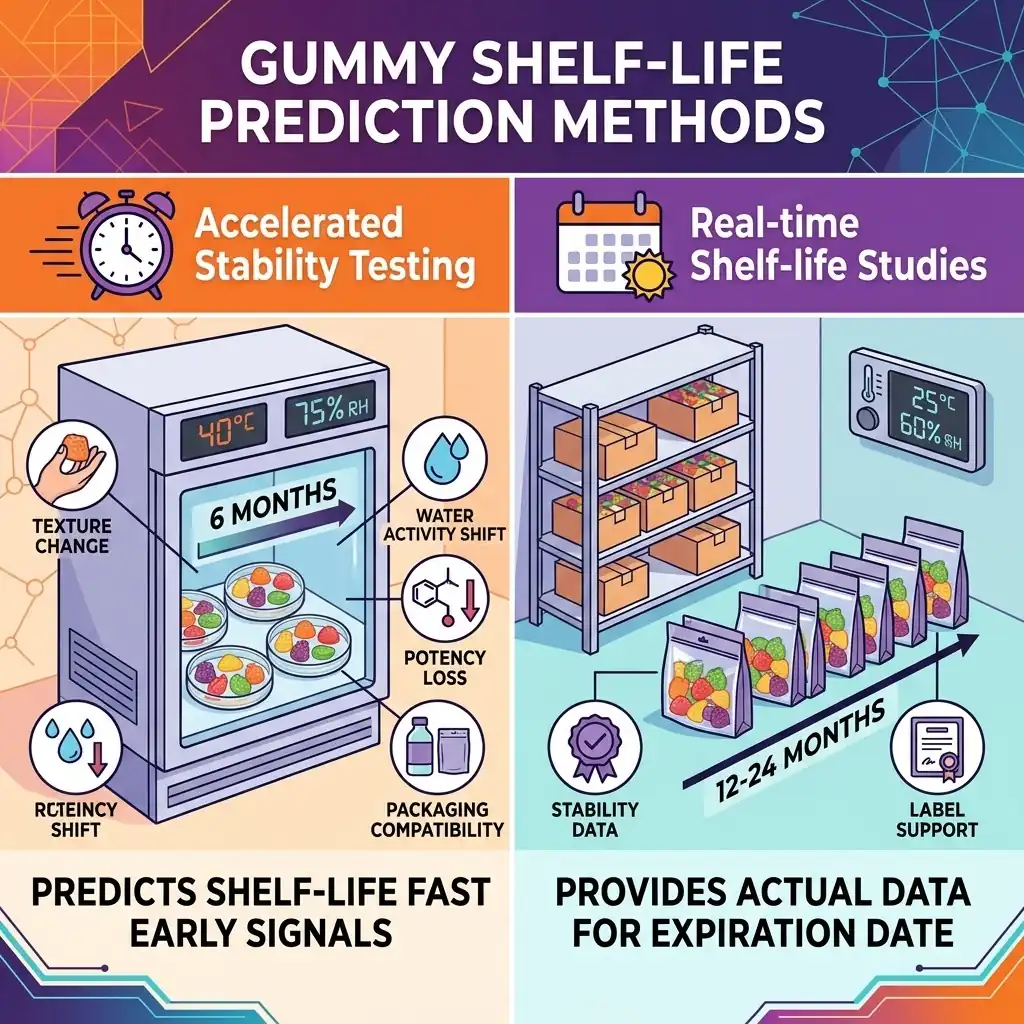
- R&D capability for transit stability: Can the lab demonstrate Aw stability under accelerated 30°C/65% RH and 40°C/75% RH? Does the team have data on active degradation vs temperature for probiotics or Vitamin C in gummy matrix?
- Packaging validation: Has the supplier validated bulk packaging with vibration, drop, and temperature cycling tests? Can they provide data logger reports from previous shipments on the same lane?
- Export documentation team: Experience with COO, health certificate, COA format accepted by destination country, and ingredient % disclosure without exposing proprietary flavor system details
- Freight coordination: Does the manufacturer work with forwarders who offer climate-controlled LCL and reefer FCL, and can they place loggers at pallet level with PDF report on arrival?
- Pilot-to-commercial scale-up discipline: Documented mixing time, depositing temperature, cooling tunnel parameters, and drying time that remain consistent from 50kg pilot to 1000kg commercial batch
- Quality release process: Finished-product testing includes metal detection, visual inspection for deformed units, and hold-release based on Aw and assay, not just appearance
Common Logistics Mistakes to Avoid
- Booking ambient LCL for gelatin gummies in June-August: Container roof temperatures exceed 60°C on the equator route. Melting is almost certain.
- Packing gummies before core temperature reaches 25°C: Creates condensation inside barrier bag, leading to sticky blocks on arrival.
- Using only PE liner without aluminum barrier: Insufficient moisture and oxygen barrier for 45-day ocean transit, especially for hygroscopic mineral or botanical extract formulas.
- Omitting data logger to save cost: Without time-stamped temperature data, you cannot prove carrier liability or diagnose failure mode.
- Providing incomplete ingredient % for customs: Triggers lab analysis at destination and 7-15 days delay at port, exposing shipment to ambient storage.
- Assuming COA alone clears customs: Many markets require COO and health certificate in original hard copy, not scanned PDF. Missing originals cause holds.
Practical Checklist for Bulk Gummy Freight and Customs
Provide this information to your manufacturer at RFQ stage:
- Gel system preference (gelatin / pectin / starch) and vegan requirement
- Active ingredients, dosage per gummy, heat sensitivity, and target shelf life
- Target Aw, pH, and gummy weight
- Destination country, season of shipment, and preferred freight mode
- Required export documents: COO, health certificate, halal/kosher/vegan affidavits, allergen statements
- Bulk packaging requirement: barrier type, pack size, pallet height, logger requirement
- HS code confirmed with your broker
- Storage condition to be printed on bulk carton
- Whether shipment is for repackaging or direct distribution (affects labeling and import category)
FAQ
What transport temperature should we specify for bulk gummies?
For most formulas, specify 15-25°C with no excursion above 30°C for more than 24 cumulative hours. For probiotic or high Vitamin C formulas, tighten to 15-25°C with max 25°C. Always require a calibrated data logger per pallet reporting temperature and humidity at 15-30 minute intervals.
Is gelatin or pectin better for ocean freight?
Pectin is more heat-stable and preferred for summer ocean freight, especially LCL where temperature control is partial. Gelatin has better chew and lower cost but requires reefer FCL or climate-controlled air freight when ambient route temperature exceeds 30°C. The decision also depends on vegan positioning and active compatibility, as high-acid actives can affect pectin set.
Why did our bulk gummies arrive as a solid block?
Blocking usually results from three combined factors: high packing temperature, insufficient anti-stick coating, and temperature cycling in transit causing surface sugar to dissolve and recrystallize. Corrective actions include verifying Aw below 0.70 before packing, ensuring gummy core below 25°C, using validated oil/wax coating, and using barrier bags with thermal liners plus temperature control.
What HS code is used for bulk dietary gummies?
Bulk supplement gummies are commonly classified under 2106.90 as food supplement preparations. If the formula is high in sugar and low in actives, some customs may argue 1704.90 confectionery. Confirm with your customs broker using full formula % and intended use. Providing an ingredient breakdown and manufacturing flow chart early prevents reclassification delays.
What documents does a China-based Gummy Manufacturer need to provide for customs clearance?
Standard set includes commercial invoice, packing list, COA per batch, COO, health certificate or free sale certificate, allergen/BSE/TSE statements, and certification copies (HALAL, KOSHER, Vegan, ISO22000, FSSC 22000, BRC) if claimed. US shipments also require FDA facility registration and prior notice filing. Original hard copies are often required for Middle East and Southeast Asia.
Should we request air freight or reefer ocean for bulk gummies?
Air freight is lower risk and faster but higher cost per kg, suitable for probiotics, first production runs, and launches under 1,000kg. Reefer ocean FCL is the most cost-effective controlled option for 3,000kg+ and maintains 15°C or 20°C set point continuously. Avoid standard dry ocean for gelatin gummies in summer months.
How can we validate logistics before placing a large MOQ?
Request a pilot batch of 300-500kg packed in final bulk packaging with data loggers and ship it via the intended freight mode and route. Test Aw, assay, texture, and microbiology on arrival vs dispatch values. This pilot validates both manufacturing consistency and freight performance before full-scale production.
Next Step: Specify Logistics at Quotation
Logistics failures are preventable when formulation, packaging, and freight are specified together. Before placing an OEM/ODM order, share your destination, season, freight preference, and documentation requirements with your manufacturer and request a logistics plan that includes gel system justification, Aw target, bulk packaging barrier, temperature set point, and logger placement.
If you are evaluating suppliers for bulk gummies, review the manufacturer’s gummy production capabilities and request a custom formulation assessment that includes transit stability considerations. Early alignment on temperature-controlled freight and customs documentation reduces landed cost and prevents avoidable product loss.
Explore more technical articles in our formulation Knowledge Hub and review our Quality & Compliance systems.
Jack Luo|Senior Technical Advisor, Nutrition Research Center Representing Gothink Biology, a GMP-certified dietary supplement manufacturer based in Shenzhen, China.