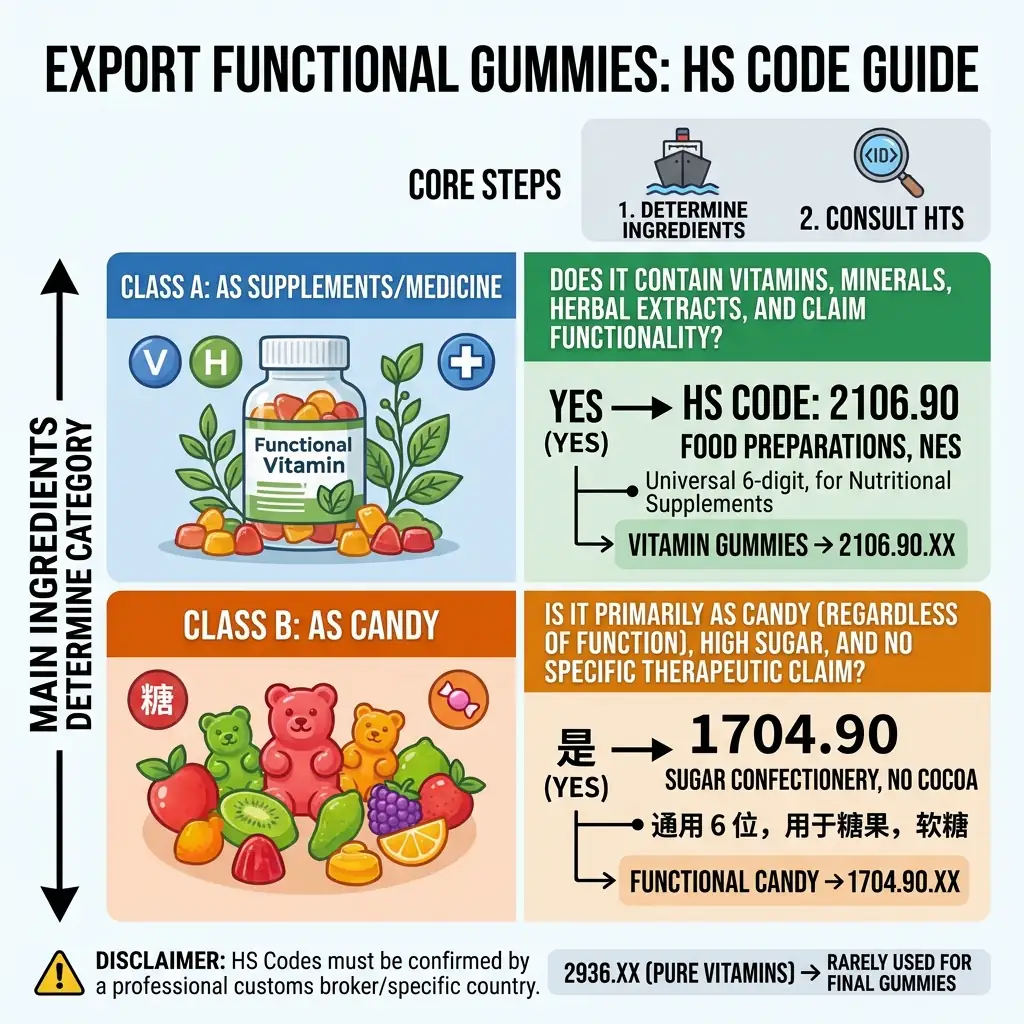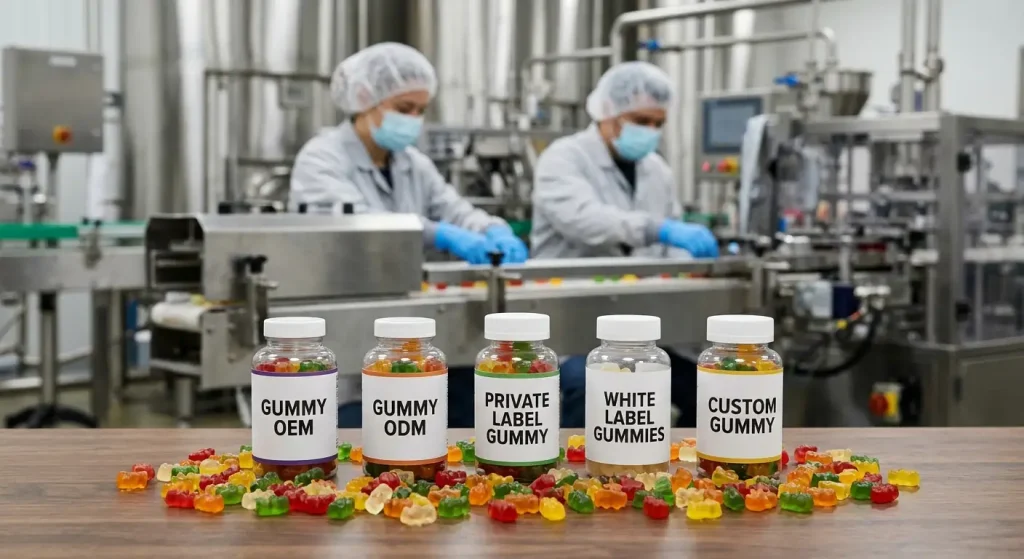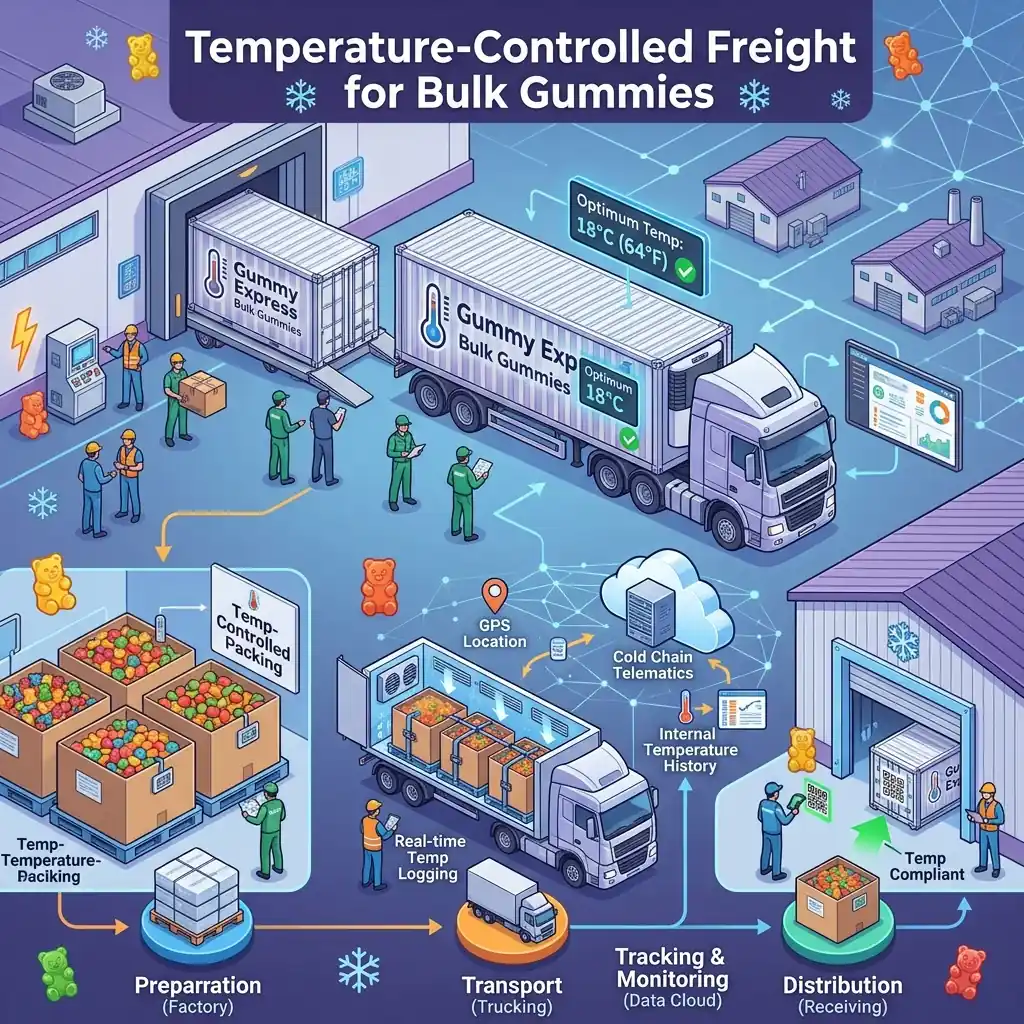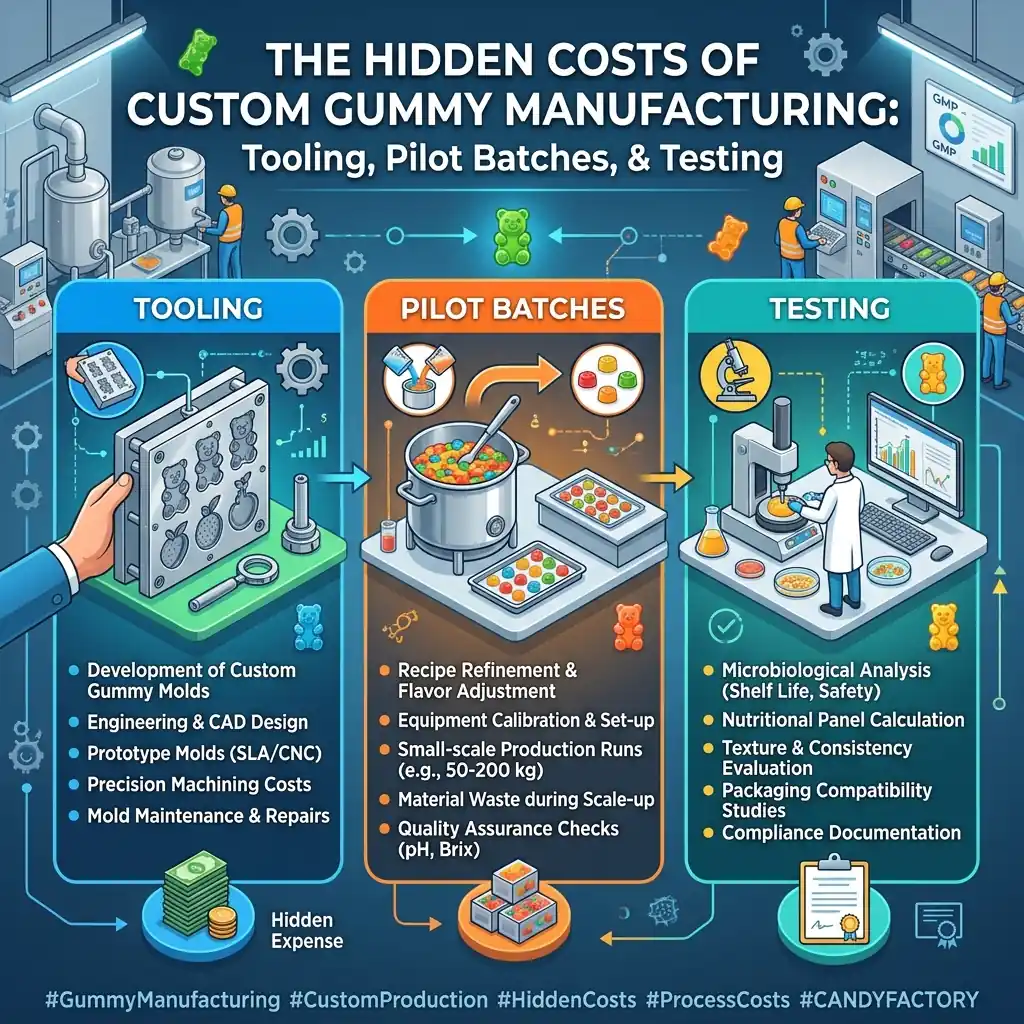

Gummy Contract Manufacturing is the end-to-end technical process of turning an active ingredient, gel matrix, flavor system, and packaging specification into a reproducible, shelf-stable, commercially scalable gummy supplement. A qualified gummy manufacturer does not simply pour hot slurry into molds—it controls solids loading, water activity, pH, depositing viscosity, drying curves, active retention, and final package barrier so the product performs the same in batch 1 and batch 50.
This guide is written for private label brand owners, Amazon and DTC founders, distributors, retail buyers, and product managers who need to move from a product brief to a launch-ready SKU without losing margin, texture, or regulatory documents along the way.
What You Actually Buy When You Source Gummy Contract Manufacturing
Contract manufacturing is not a unit-price transaction; it is a controlled production system where formulation, processing, stability, documentation, and scale-up either protect your launch or quietly add risk. Experienced OEM/ODM buyers evaluate the technical system first and the per-piece quote second.
A professional gummy manufacturing partner should integrate five connected capabilities:
- Formulation feasibility: Can the active dose, flavor mask, sweetness system, and texture be manufactured at commercial line speed without grittiness, sticking, or active degradation?
- Process validation: Is cooking temperature, Brix, pH, depositing viscosity, and conditioning time locked for your formula—not copied from a generic base?
- Stability engineering: Are water activity, package barrier, headspace, and oxygen exposure designed together to protect chew, flavor, color, and assay over the claimed shelf life?
- Quality documentation: Are COA, TDS, batch records, in-process checks, and export certificates generated per lot for FDA, EU, Halal, Kosher, or APAC market entry?
- Scale-up discipline: Is there a defined path from lab bench to pilot batch to 500 kg, 2,000 kg, or multi-ton commercial production with measurable control points?
If any of these are missing, you can still get beautiful lab samples—then watch the texture collapse, the active assay drift, or the piece weight variation exceed specification at scale.
Want to pressure-test your concept before tooling? Request a custom formulation review with target dose, piece weight, flavor direction, sweetener claim, and target market so the R&D team can return a feasibility verdict instead of a generic quote.
From Brief to Commercial Formula: How Custom Gummy Formulation Is Engineered
Custom formulation succeeds when the product profile is defined before the lab work begins; every variable—active load, gel system, acidity, sweetener, and package—changes the others downstream.
Define the Target Product Profile Before the First Cook
A manufacturing-ready brief is not an ingredient wish list. It is a set of interdependent specifications. A capable manufacturer will typically ask for:
- Active compound, standardization, and target milligrams per gummy
- Preferred gel system: pectin, gelatin, agar, or hybrid matrix
- Target texture: soft chew, firm bite, short texture, elastic, or low cold-flow
- Flavor direction and masking difficulty, especially for minerals, botanicals, and amino acids
- Sweetener system: sucrose, glucose syrup, polyol blend, allulose, or sugar-free claim
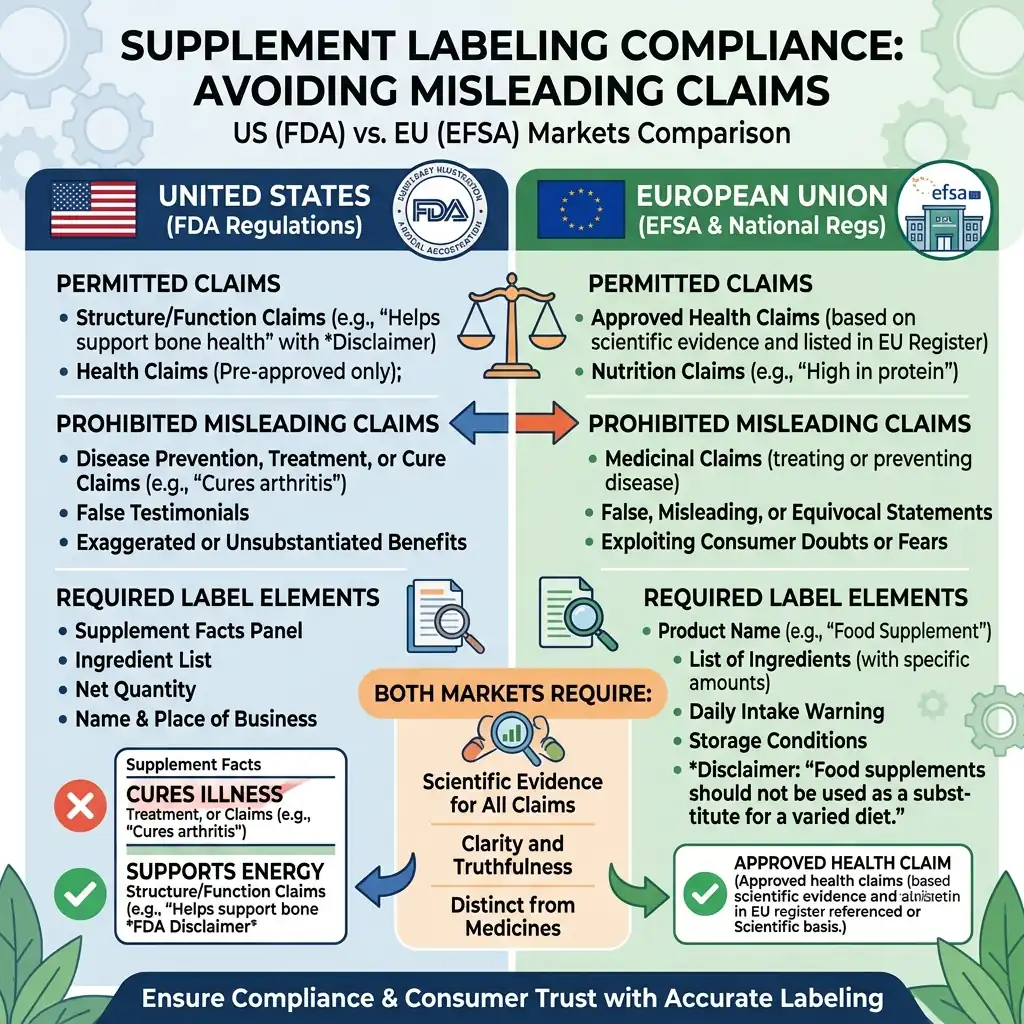
- Target markets, regulatory claims, allergen restrictions, and labeling constraints
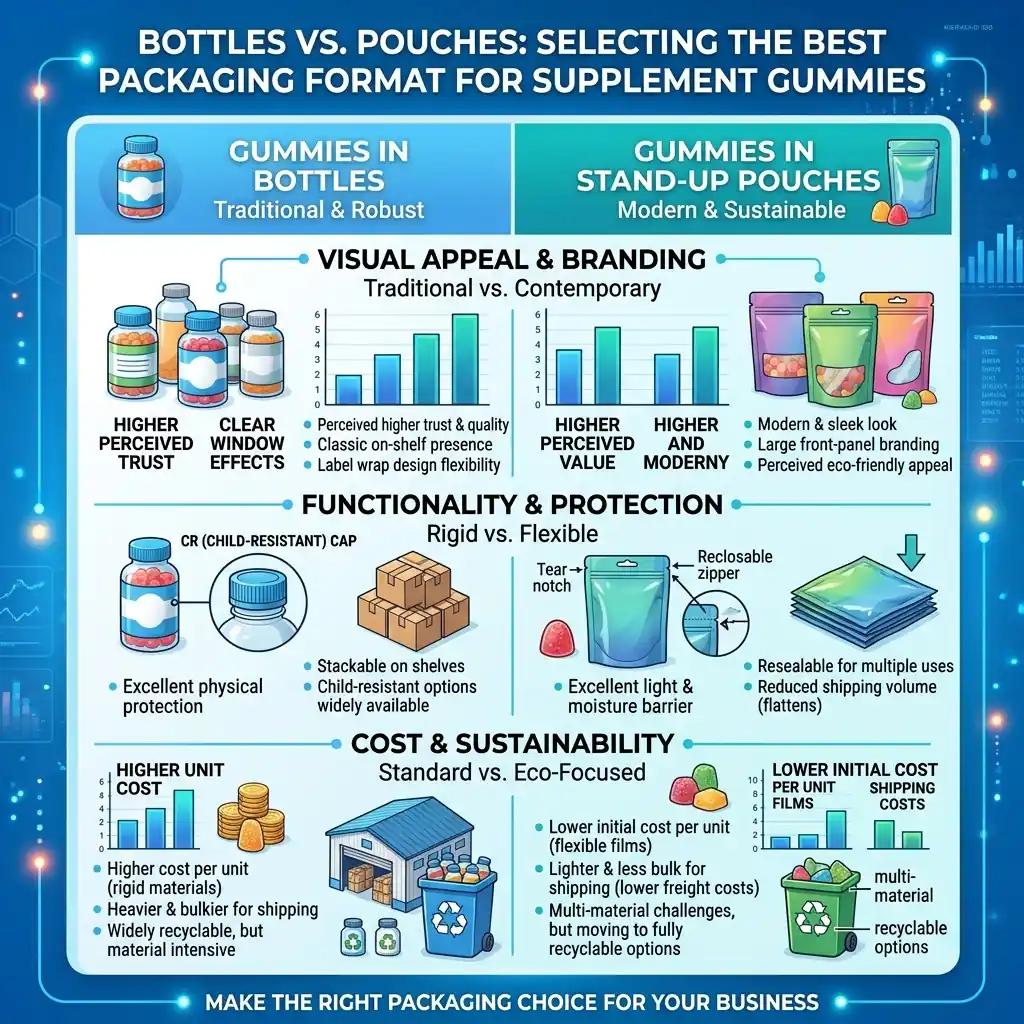
- Primary packaging: HDPE/PET bottle, stick pack, sachet, or stand-up pouch
Example conflict: a 300 mg mineral salt inside a low-sugar gummy. The mineral increases solids loading and metallic taste; the low-sugar system removes some of the bulk solids that normally help masking and structure. Solve that trade-off on paper first, not after the mold is cut.
Active Dosage, Solids Loading, and Texture Are One Equation
Every gummy has a finite dry-matter budget. Adding 50 mg, 150 mg, or 300+ mg of active per piece displaces gelling agent, sweetener, acid, and flavor carriers. High loading can cause soft set, dewetting, grit, surface tack, or slower demolding if the active is poorly soluble or strongly ionic.
During feasibility, the formulator evaluates:
- Active solubility, particle size, and dispersion method
- Impact on final Brix, total solids, and piece weight
- Thermal sensitivity at cook temperature—typically evaluated before actives are introduced post-cook
- pH tolerance of the active versus the pH window required for pectin or agar gelation
- Color stability and flavor-volatile interaction during heating and conditioning
- Target water activity range and its effect on microbial safety, texture, and sugaring
That is why lab feasibility is not manufacturing feasibility. A formula that sets in a 200 g beaker may not deposit cleanly through a high-speed depositor or release consistently from starch or silicone molds at commercial throughput.
Choose the Right Gel System for Process, Claim, and Market
The gel system determines cook profile, depositing behavior, drying time, texture, melt resistance, and which claims you can make. The recommendation should be formula-specific, not line-convenient.
| Gel System | Manufacturing Implications | Typical B2B Use Case |
|---|---|---|
| Gelatin | Elastic chew,较快 set, lower drying temperature, heat- and low-pH-sensitive; requires careful active-addition timing | Vitamin, mineral, and botanical gummies where classic chew is desired and vegan claim is not required |
| Pectin — HM / LM | Requires precise pH, soluble solids, and calcium control; firmer bite; better heat and acid stability; supports plant-based positioning | Vegan, sugar-reduced, acidic fruit flavors, and export markets requiring cleaner label matrices |
| Agar | High gel strength at low concentration, firmer short texture, higher melting point, different mouthfeel from pectin/gelatin | Vegan formulas needing stronger thermal resistance, jelly-style textures, or tropical-climate distribution |
| Hybrid — gelatin + starch / pectin + starch / agar blend | Modified chew, reduced stickiness, improved cold-flow resistance; adds starch conditioning and drying-curve variables | High-active loads, warm-region logistics, or custom textures that single gels cannot hit |
Changing the gel system after pilot validation usually triggers rework: cook temperature, depositing viscosity, drying time, flavor masking, and stability targets all move. The right time to choose the matrix is during feasibility—not after the first commercial lot sticks together in the bottle.
Considering pectin, agar, or a hybrid base for your next SKU? Ask for a 3-gel sample comparison with the same active load so you can evaluate chew, aftertaste, melt behavior, and packaging compatibility side by side.
Manufacturing Control Points That Determine Consistency, Compliance, and Cost
Commercial gummy production looks similar on every factory tour. The difference is control: how tightly cook, deposit, condition, coat, inspect, and document each stage.
Cooking, Solids Control, and Active Addition Point
Cooking fixes final Brix, pH, and moisture before depositing. Small deviations change gel strength, piece weight, and release behavior. The active addition point is one of the highest-leverage decisions in the whole process.
- Heat-stable actives may be incorporated earlier, depending on pH and solubility.
- Heat-sensitive actives—certain vitamins, probiotics, botanical actives, and some enzymes—are typically dosed downstream after the mass cools to a controlled temperature window.
- Dumping everything into the cooker for convenience can reduce assay retention, darken color, and force over-flavor correction later.
The manufacturing verdict: active retention is designed at the addition point, not fixed with a higher overage after the fact.
Depositing Accuracy, Mold Release, and Conditioning
Depositing accuracy equals dosage accuracy. In contract manufacturing, piece-weight variation directly maps to active-dose variation. After depositing, gummies enter conditioning and drying to reach target water activity.
Water activity—not moisture percentage alone—drives microbial risk, sugaring, stickiness, hardening, and shelf-life texture. A gummy dried too fast skins on the outside while internal moisture migrates later, causing bottle sticking or surface crystallization. A controlled drying curve monitors temperature, relative humidity, and time to land inside the approved a_w range.
Oiling, Film Coating, and In-Line Quality Control
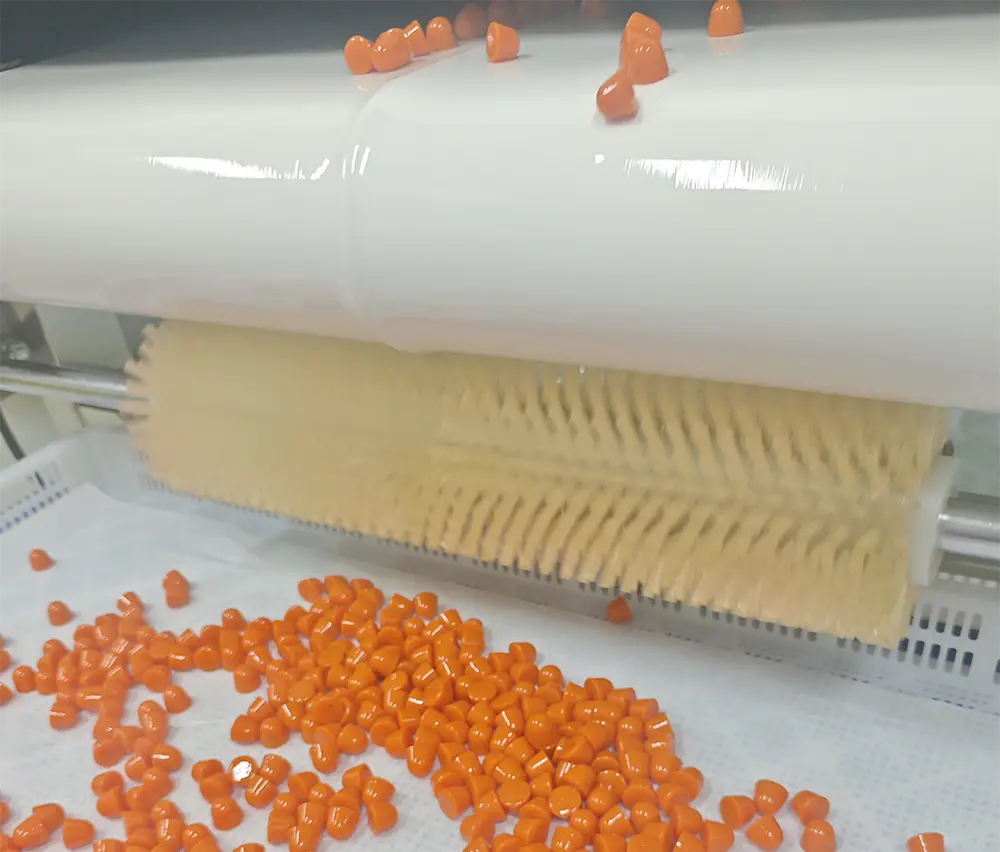
Surface oiling or waxing reduces agglomeration and improves release through bottling or pouching equipment. Functional film coating can add moisture barrier or gloss, but must be compatible with the base formula and re-validated for texture.
In-line QC should include:
- Piece-weight check and coefficient of variation
- Visual inspection for tails, air pockets, uneven color, and demold defects
- Metal detection or sieving per line configuration
- Finished-product assay, pH, water activity, and texture profiling against spec
- COA generation and batch-record traceability
If a botanical extract darkens during cook, the fix is not simply more titanium dioxide or dye. The real fix is adjusting cook temperature, hold time, pH, and addition point—then confirming stability again.
Stability and Packaging Must Be Designed as One System
In gummy manufacturing, packaging is not a finishing touch. It is part of the preservation system. A formula stable in a high-barrier jar can fail in a low-barrier pouch within weeks.
Evaluate these interactions with your manufacturer before locking primary packaging:
- Water activity vs. moisture barrier: Over-drying firms the texture and raises breakage risk; under-drying drives sticking and microbial exposure. Package barrier must match the target a_w window.
- pH vs. flavor and active stability: Pectin systems often need lower pH to set, which can accelerate degradation of sensitive actives or volatile flavors. Buffering and headspace control become relevant.
- Oxygen sensitivity: Natural colors, certain vitamins, and oxidized oils may need oxygen-barrier film, opaque laminate, or nitrogen flushing—each with cost and lead-time impact.
- Market and compliance requirements: Child-resistant closures, supplement facts layout, allergen statements, and import documentation differ by region. Lock packaging early because it changes fill count, bottle diameter, carton size, and export paperwork.
A credible gummy manufacturer proposes packaging after reviewing pilot stability data—texture, assay, color, and moisture trend—not from a stock catalog.
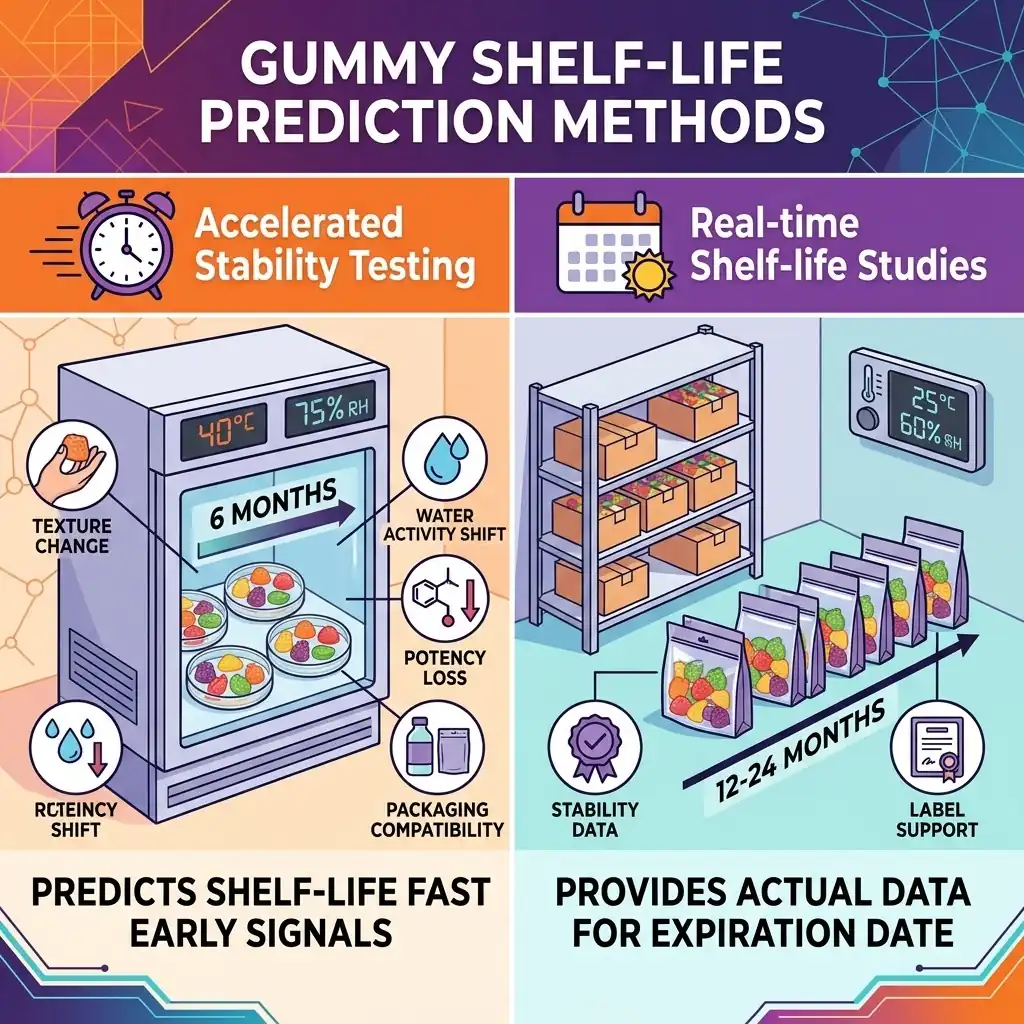
Need to compare bottle vs. pouch for a warm-climate launch? Request pilot stability data at 25°C/60% RH and 40°C/75% RH so the packaging decision is evidence-based, not guesswork.
Unit Economics and MOQ: Why Two Quotes for the Same Gummy Can Look Nothing Alike
A low quote is only cheap if the specification is identical. In gummy OEM/ODM, price differences usually hide material grade, yield loss, testing depth, tooling, and packaging barrier differences.
| Cost Component | What Drives It | Buyer Risk If Not Clarified |
|---|---|---|
| Active specification | Standardization %, active form, supplier grade, overage policy, assay method | Lower quote may use weaker standardization or a different salt form than your label claims |
| Gel matrix grade | Pectin methoxylation, gelatin bloom, agar grade, starch type | Texture and melt resistance change even if the word “pectin” appears on both quotes |
| Process yield and retention | Cook loss, depositing scrap, drying shrinkage, active retention | Poor retention is masked with higher overages, raising true material cost |
| Tooling and changeover | Custom mold shape, piece weight, color, flavor, cleaning time | Low MOQ with many changeovers raises labor and cleaning cost per unit |
| QC and documentation | Batch COA, assay, microbials, heavy metals, stability protocol, export certs | Reduced testing lowers quote but increases recall and customs-clearance risk |
| Packaging barrier | Bottle vs. pouch, desiccant, induction seal, closure type, laminate structure | Late packaging swap can invalidate stability data and force rework |
MOQ is not an arbitrary sales threshold. It reflects minimum cook size, depositing line efficiency, drying-room capacity, packaging machine setup, and the volume at which QC becomes economically stable. A 100 kg pilot may confirm process feasibility; commercial MOQ is where yield, sampling, and documentation stop costing more than the product.
Ask the supplier to explain MOQ by your piece weight and active load—and what happens to unit price at 2×, 5×, and 10× volume.
How to Qualify a Gummy Manufacturer Before Signing
Use a technical audit, not a brochure review. The questions below separate a trading intermediary from a factory that actually develops and scales gummies in-house.
| Evaluation Area | What to Ask For | Why It Matters |
|---|---|---|
| Matrix capability | Pectin, gelatin, agar, hybrid experience; post-cook active dosing; depositing accuracy; drying-curve control | Determines whether custom formulation is really developed in-house |
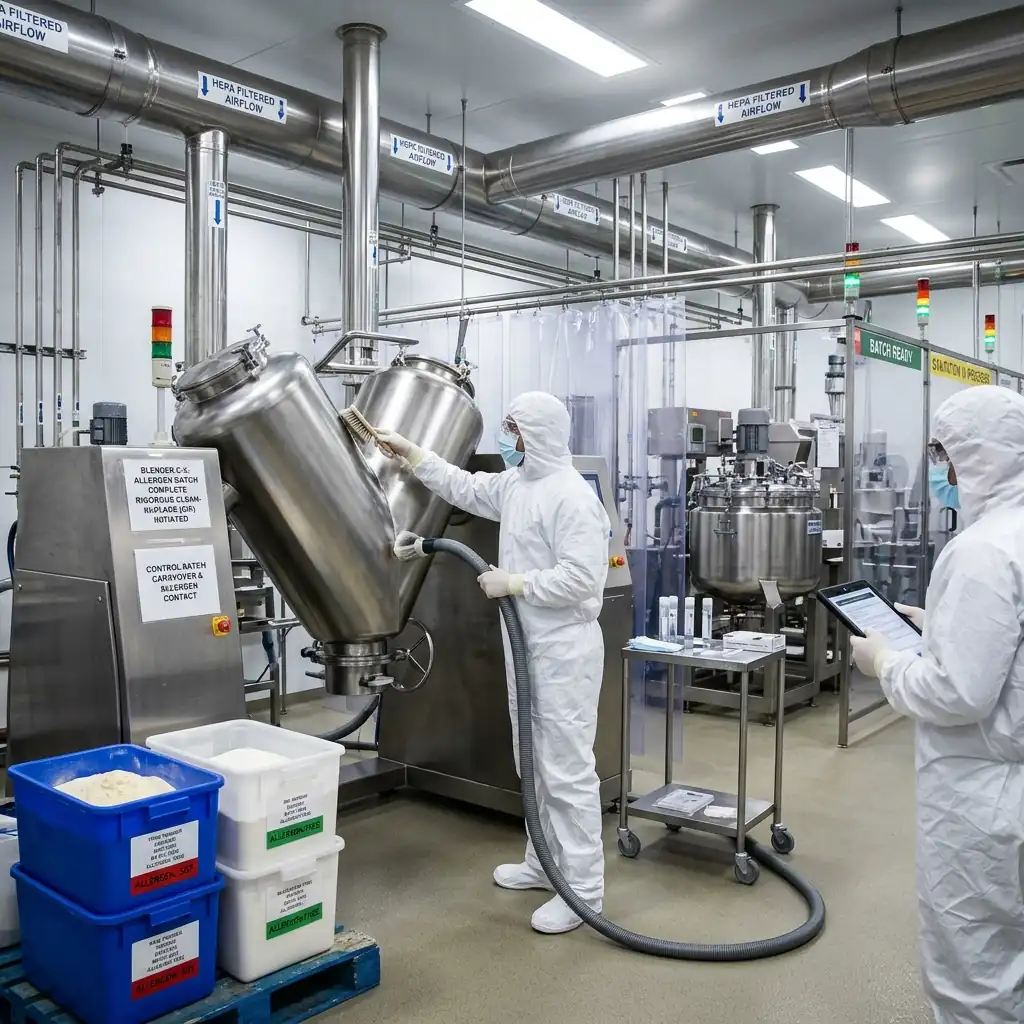
| Quality system | GMP, HACCP, ISO 22000 / ISO 9001, cleanroom class, batch records, water-activity and assay testing | Directly affects batch-to-batch consistency and audit readiness |
| Scale-up evidence | Pilot batch report, piece-weight CV, a_w after drying, stability protocol, change-control records | Prevents lab-sample-to-commercial-lot surprises |
| Supply chain control | Qualified raw-material suppliers, Certificates of Analysis, allergen control, pectin/gelatin traceability | Ingredient variability is a major source of texture and assay drift |
| Commercial transparency | Material, tooling, QC, packaging, and logistics breakdown; staged lead times; reorder policy | Protects you from low-quote projects that become highest total cost |
Red flag: a supplier cannot describe the cook-temperature window for pectin versus gelatin, the target water activity for your formula, or how they verify active retention after drying. A GMP-certified facility with classified cleanroom manufacturing, in-house R&D, and certifications such as ISO 9001, ISO 22000, HACCP, FDA, Halal, Kosher, BRC, and FSSC 22000 exists specifically to control those variables across formulation, deposition, conditioning, and export packaging.
Before requesting a formal quote, collect your target dosage, piece weight, preferred claim, target market, and pack format. A technical manufacturer can return a feasibility screen, sample plan, and staged lead-time estimate instead of a blind price per kilogram.
Turn-Key OEM/ODM Services That Reduce Time-to-Market
The strongest B2B partnerships compress the handoffs that normally slow supplement launches: concept, formulation, mold, flavor, pilot, stability, packaging, documentation, and logistics.
- Custom shape and 3D mold design: brand-differentiated geometry, embossed logo, piece-weight-optimized cavity, and depositing compatibility check.
- Custom flavor sample kits: multiple flavor-mask builds for high-impact actives, with sweetness and acidity balanced to the gel system.
- Sugar-free and polyol options: allulose, maltitol, erythritol, or blended systems with texture and aftertaste validated against the active load.
- Color matching and clean-label positioning: fruit-juice-based, natural color, or titanium-dioxide-free options with stability verification.
- Bottle and pouch packaging: HDPE/PET bottles, induction seals, CR closures, stick packs, sachets, and stand-up pouches matched to barrier requirements.
- Regulatory documentation package: COA, TDS, specification sheet, stability summary, and market-entry support for FDA, EU, Halal, Kosher, and APAC frameworks.
Low-MOQ pilot runs are useful for market validation; commercial volume is where per-unit economics and supply reliability matter. The ideal partner supports both without re-developing the formula between stages.
Ready to move faster? Request a custom flavor sample kit, a 3D mold concept, and a COA/TDS package for your top SKU so procurement, R&D, and marketing can evaluate the same physical evidence.
FAQ: Technical Decisions Buyers Ask Before Signing
Why does my gummy formula work in the lab but stick or lose shape at scale?
Lab batches often use static molds and ambient drying. Commercial lines run high-speed depositors with tight viscosity windows and conditioned drying rooms. If pH, Brix, or depositing temperature is not locked, set time shifts and pieces deform during demold or post-dry. Ask for pilot data on depositing viscosity, piece-weight CV, and water activity after conditioning—not just a photo of finished gummies.
How do I know if my target dosage is feasible in a gummy?
Feasibility depends on active form, solubility, solids loading per piece, flavor impact, and gel matrix—not milligrams alone. A manufacturer should calculate the dry-matter budget for your target piece weight and adjust sweetener, acid, masking flavor, and piece size together. For minerals, botanicals, or amino acids, adding more flavor rarely fixes a structural problem.
What should be included in a gummy contract manufacturing quotation?
Request a line-by-line breakdown: active standardization and overage, gel system and grade, piece weight, count per bottle or pouch, mold/tooling fee, QC tests per batch, stability support, packaging barrier and closure, MOQ logic, staged lead times, and export documents for your target market. Compare specifications first, price second.
When should packaging be finalized?
Before commercial batch commitment. Package barrier changes the acceptable water-activity target. Switching from a high-barrier bottle to a stand-up pouch late often requires resetting drying targets and repeating stability checks. Lock primary packaging after pilot stability confirms texture, assay retention, and moisture trend.
Can a gummy be vegan, sugar-reduced, and high-dose at the same time?
Often yes—but not automatically. Pectin or agar supports vegan claims; sugar-reduced systems need polyol or alternative sweeteners; high dosing needs solids budgeting and flavor masking. The matrix, piece size, and packaging are adjusted together so the gummy stays manufacturable, palatable, and stable across the claimed shelf life.
Final Buyer Takeaway
The cheapest gummy quote is the most expensive one when texture fails in month three, assay comes back low at customs, or the formula cannot be reproduced at commercial volume. Choose a manufacturing partner by process control: gel-system rationale, active-addition point, water-activity target, drying curve, depositing accuracy, documentation depth, and proven scale-up data.
If you are launching a new gummy line or respecifying an existing one, start with a technical brief—active, dose, piece weight, claim, market, and pack format—and request a feasibility screen plus sample plan before committing to tooling.
Article by Jack Luo, Senior Technical Advisor, Nutrition Research Center
Representing Shenzhen Gothink Biotech Co., Ltd., a GMP-certified dietary supplement manufacturer based in Shenzhen, China.
Shenzhen Gothink Biotech Co., Ltd. provides OEM, ODM, CMO, and CDMO services across gummy, capsule, tablet, powder, liquid, and drop formats. The facility operates a classified cleanroom production environment with commercial daily and annual gummy output, supported by ISO 9001, ISO 22000, HACCP, FDA, Halal, Kosher, BRC, FSSC 22000, and Vegan-aligned processes. R&D is led by scientists with postdoctoral research backgrounds and focuses on formulation feasibility, stability validation, and export-ready supplement manufacturing.