
Summary
Gummy supplement manufacturing costs typically range from $0.05 to $0.25 per unit depending on formulation complexity, order volume, and packaging specifications. Minimum Order Quantities (MOQs) for gummy production generally fall between 10,000 and 50,000 units, though some manufacturers offer lower thresholds for trial runs. Understanding the relationship between MOQ, per-unit cost, and production logistics is essential for new brands entering the dietary supplement market.
Definition
Gummy Supplement Manufacturing Costs and MOQ refers to the total expenditure required to produce gummy-based dietary supplements at scale, encompassing raw materials, formulation, processing, quality testing, and packaging, along with the minimum production quantity a manufacturer mandates per production run. These two factors are directly correlated: higher MOQs generally lower the per-unit cost, while lower MOQs increase the cost per gummy due to fixed setup expenses distributed across fewer units.
Understanding the Cost Structure of Gummy Production
Raw Material Costs
The base ingredients in any gummy formulation include gelling agents (pectin, gelatin, or carrageenan), sweeteners, flavors, colors, and active nutritional compounds. Pectin-based and vegan formulations typically cost 15% to 30% more than gelatin-based alternatives due to higher raw material prices and more complex processing requirements. Premium active ingredients such as CoQ10, melatonin, or proprietary probiotic blends can further increase per-unit costs by $0.02 to $0.08.
Production and Processing Costs
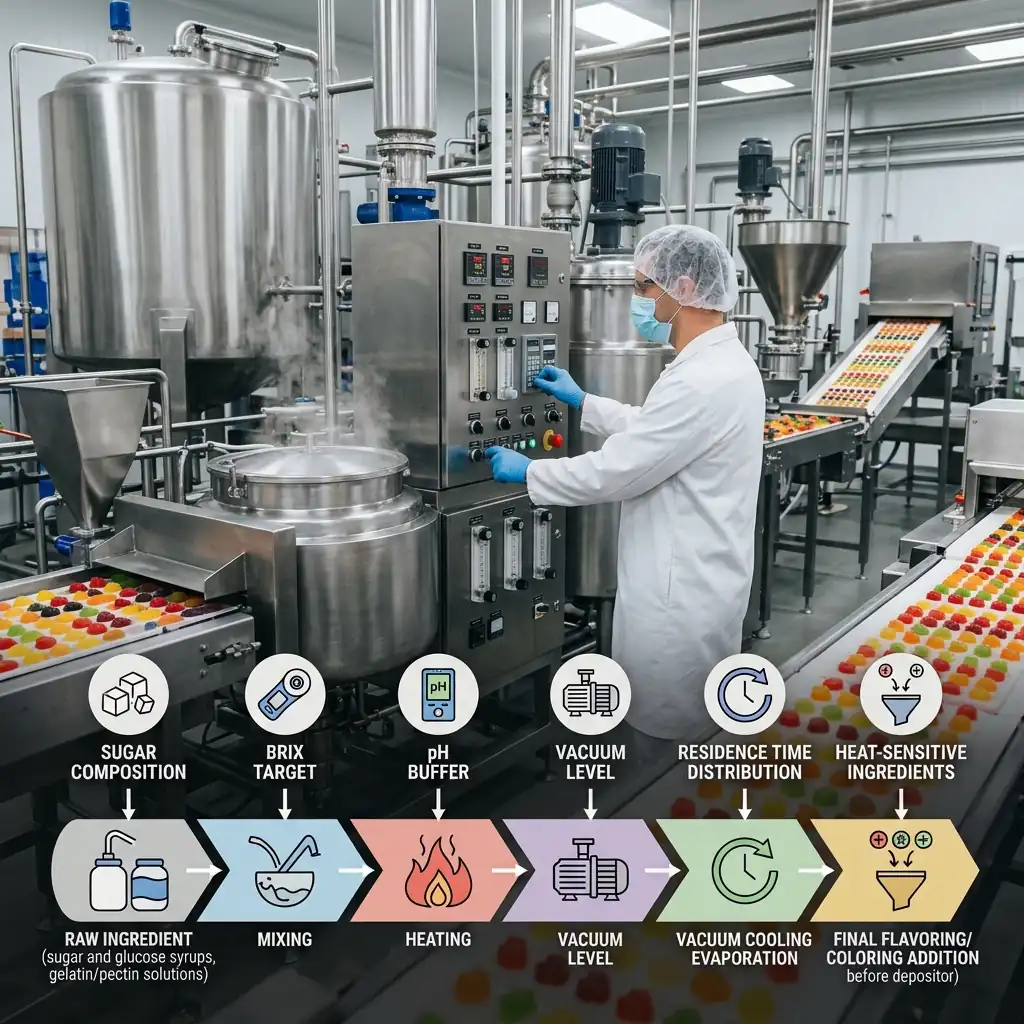
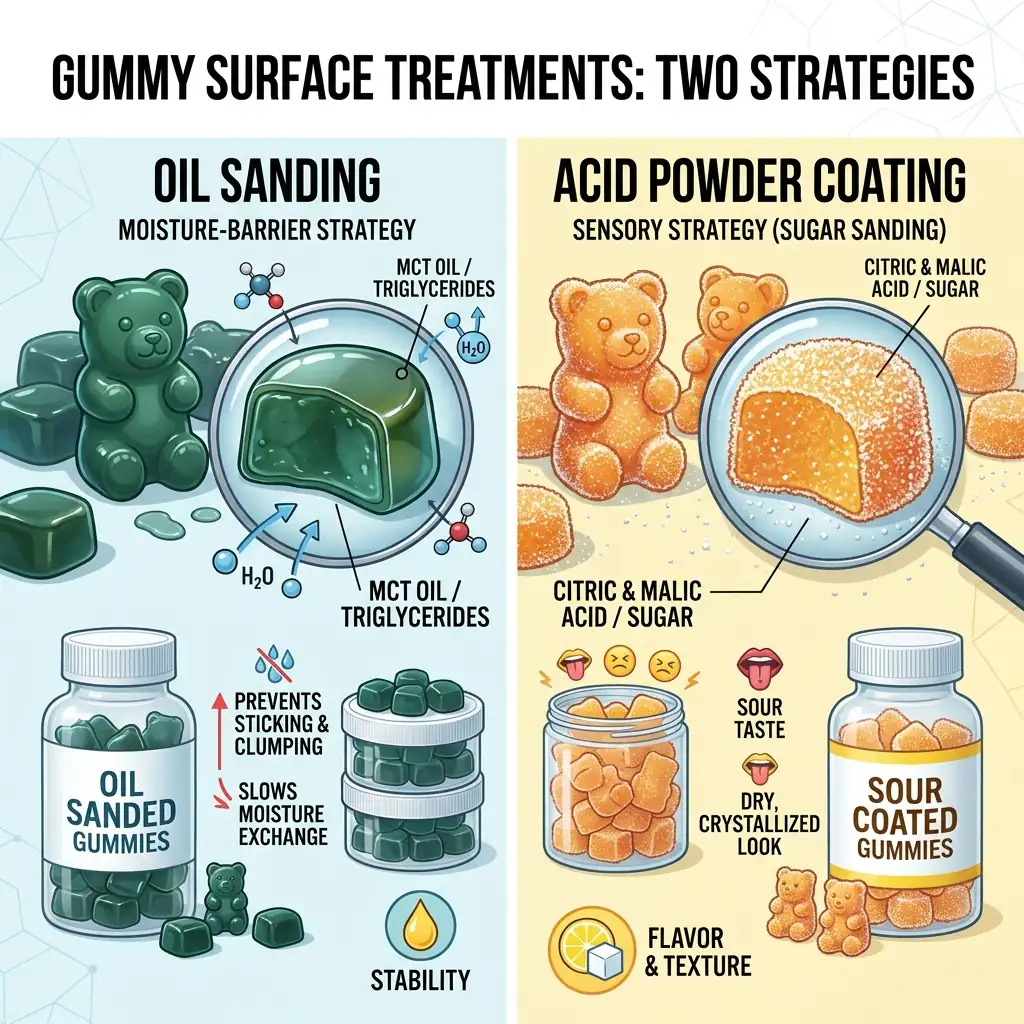
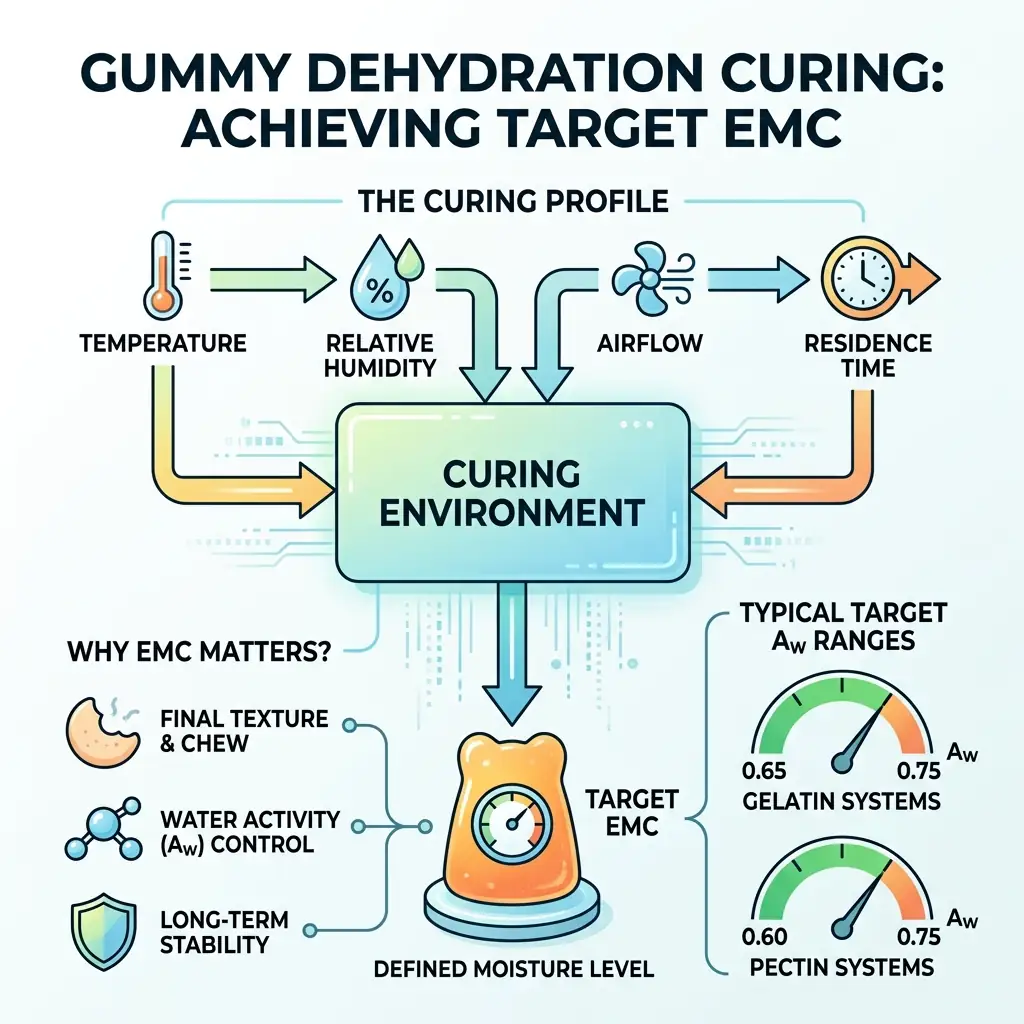
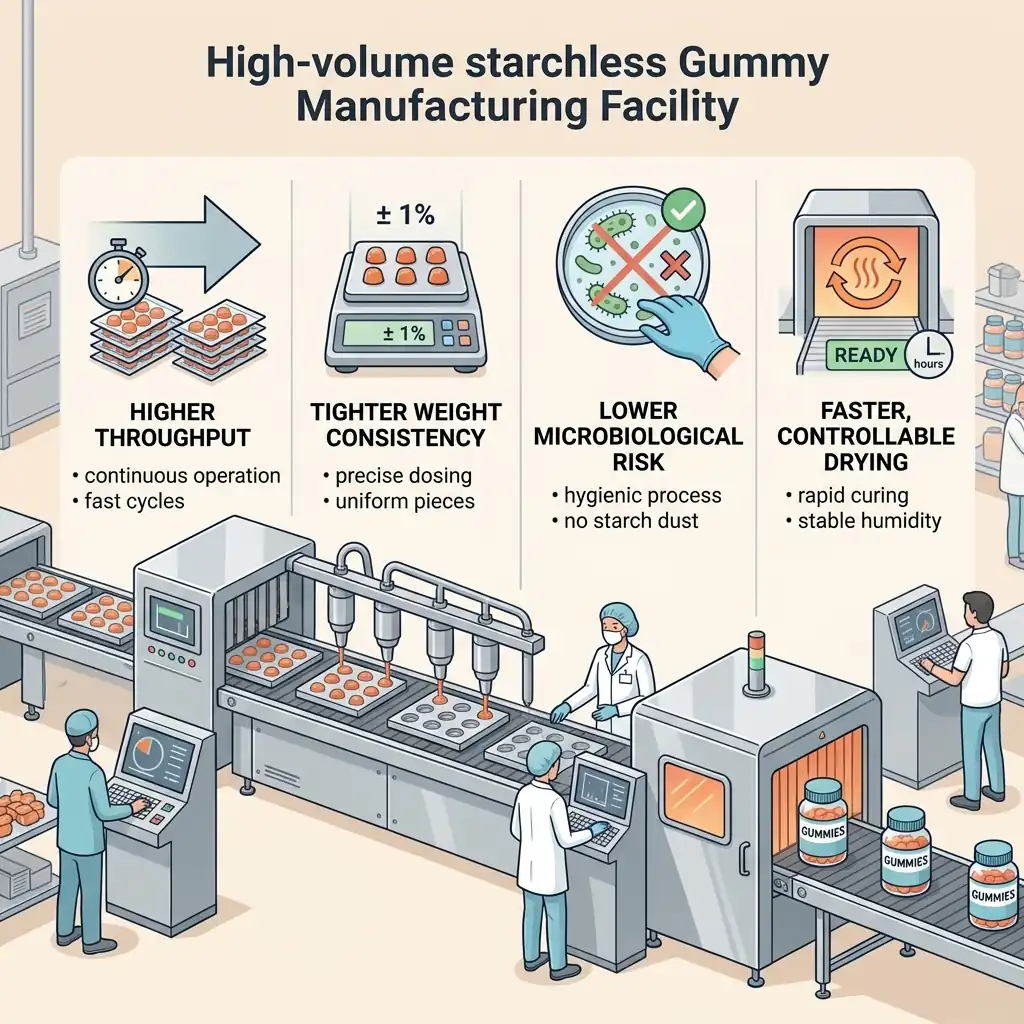
Processing costs cover starch molding or silicone molding, drying, demolding, and coating operations. A standard gummy production run requires 18 to 36 hours of machine time including setup, cooking, depositing, drying, and quality inspection. Labor, energy, and equipment depreciation are factored into this segment. Manufacturers with higher daily throughput—such as facilities producing 16 tons per day—can distribute fixed overhead more efficiently, resulting in lower processing costs per unit.
Quality Control and Testing
Every batch of gummy supplements must undergo testing for weight consistency, active ingredient potency, microbiological contamination, and heavy metal content. Third-party lab testing typically adds $300 to $800 per batch. For a 30,000-unit order, this translates to approximately $0.01 to $0.03 per unit. Brands working with manufacturers holding ISO22000, HACCP, and GMP certifications benefit from integrated quality systems that reduce the likelihood of batch failures and associated costs.
Packaging Costs
Packaging accounts for 20% to 35% of total per-unit cost. Standard options include PET bottles with induction seals and printed labels, while premium options include custom-molded bottles, holographic labels, and individual sachet packaging. A standard 60-count PET bottle with a printed label costs approximately $0.15 to $0.35 per unit, whereas custom packaging can push this figure above $0.60 per unit.
MOQ Explained: Why Manufacturers Set Minimums
Manufacturers set MOQs to ensure economic viability of each production run. Gummy production involves significant setup time: cleaning equipment, preparing starch boards or silicone molds, calibrating depositing machines, and conducting first-article inspections. These fixed costs remain constant regardless of whether the run produces 5,000 or 100,000 units. When you make gummies at scale, the fixed setup cost—typically $1,500 to $4,000—becomes negligible on a per-unit basis at higher volumes.
Most established gummy supplement manufacturers set MOQs between 10,000 and 50,000 units. Startup-friendly manufacturers may accept orders as low as 5,000 units, but the per-unit premium can be 40% to 80% higher than standard MOQ pricing. Some factories require MOQs of 100,000 units or more to activate their most competitive pricing tiers.
Technical Parameter Reference Table
| Parameter | Entry-Level (Low MOQ) | Mid-Range (Standard MOQ) | High-Volume (Bulk) |
|---|---|---|---|
| MOQ Range | 5,000 – 10,000 units | 10,000 – 50,000 units | 50,000 – 500,000+ units |
| Per-Unit Cost (Unpackaged) | $0.12 – $0.25 | $0.05 – $0.12 | $0.03 – $0.07 |
| Per-Unit Cost (Packaged) | $0.40 – $0.75 | $0.20 – $0.45 | $0.15 – $0.30 |
| Setup Fee | $1,500 – $3,000 | $1,000 – $2,500 | $500 – $1,500 (often waived) |
| Lead Time | 25 – 40 days | 20 – 30 days | 15 – 25 days |
| Mold Type | Shared/Standard molds | Shared or semi-custom molds | Fully custom molds included |
| Formulation Customization | Limited to base formulas | Moderate customization | Full custom R&D |
| Gelling Agent Options | Gelatin only | Gelatin or pectin | Gelatin, pectin, carrageenan, agar |
Practical Insights Across Key Operational Dimensions
Production Scalability
New brands should plan their manufacturing roadmap in phases. An initial order of 10,000 to 20,000 units allows market validation without excessive capital commitment. Once product-market fit is confirmed, scaling to 100,000+ units can reduce per-unit costs by 30% to 50%. Selecting a Gummy Factory with sufficient capacity—such as facilities capable of 5,000 tons annual output—ensures that scaling does not require switching suppliers, which would trigger new setup costs and compliance re-verification.
Quality Control Integration
Quality control in gummy manufacturing must be embedded at every stage, not treated as a final checkpoint. In-process controls include brix measurement of the cooking slurry, weight verification of deposited gummies, and drying time monitoring. Post-production controls include texture analysis, visual inspection for sticking or deformation, and laboratory assay of active ingredient content. Manufacturers operating under pharmaceutical-grade GMP standards with 100,000-class cleanrooms provide the most robust quality assurance framework for gummy supplements.
Regulatory Compliance
Gummy supplements sold in the United States must comply with FDA dietary supplement regulations under DSHEA. This includes proper labeling (Supplement Facts panel, identity statement, net quantity), adherence to Good Manufacturing Practices (21 CFR 111), and adherence to permissible ingredient lists. For brands targeting international markets, additional certifications such as HALAL, KOSHER, BRC, and FSSC 22000 may be required. Working with a manufacturer that already holds these certifications eliminates the need for the brand to pursue them independently.
Formulation Stability
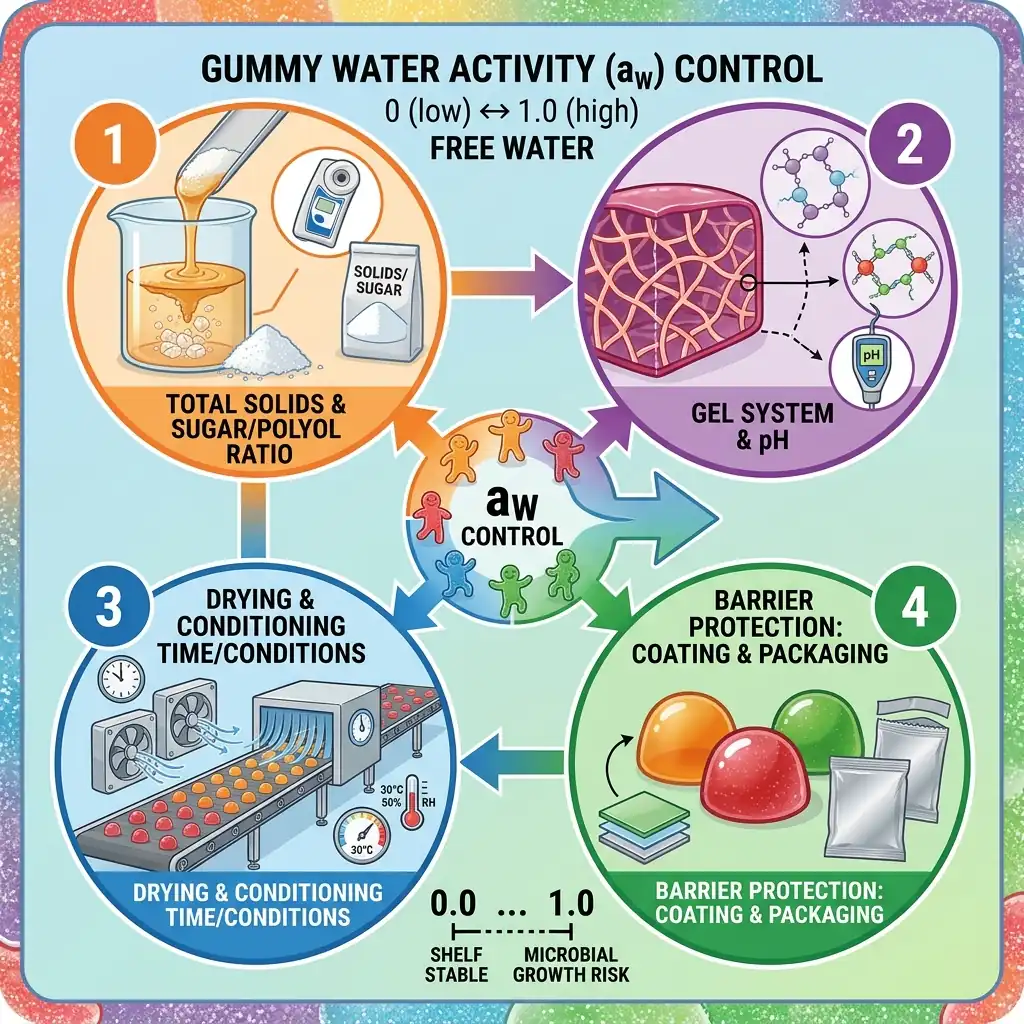
Gummies are inherently susceptible to heat, humidity, and light degradation. Formulations containing heat-sensitive actives (such as probiotics or certain vitamins) require specialized processing conditions—lower cooking temperatures, reduced drying heat, or post-production cold storage. Pectin-based gummies offer better thermal stability than gelatin-based alternatives but require more precise control of pH and calcium ion concentration during production. Factories with advanced R&D laboratories can conduct accelerated stability testing to validate shelf-life claims before production.
B2B Decision Framework: Selecting the Right Manufacturing Partner
Evaluating Manufacturing Capability
When evaluating a partner for Gummy Supplement Manufacturing, B2B buyers should assess four core capabilities. First, production capacity: confirm daily and annual throughput to ensure the supplier can accommodate growth. Second, formulation breadth: verify that the manufacturer can work with multiple gelling agents, active ingredient formats (powders, liquids, extracts), and dietary restrictions (vegan, sugar-free, non-GMO). Third, quality infrastructure: request documentation of cleanroom classification, laboratory capabilities, and certification portfolio. Fourth, packaging integration: determine whether the supplier offers in-house packaging or relies on external contractors, as this affects cost, lead time, and quality consistency.
Private Label vs. Custom Formulation
Brands choosing private label gummies can leverage pre-developed formulations, significantly reducing time-to-market and R&D costs. Private label programs typically have lower MOQs (5,000 to 15,000 units) and faster turnaround (15 to 25 days). Custom formulation programs require initial R&D investment—typically $2,000 to $8,000 for formula development and stability testing—but offer differentiated products with proprietary blends that cannot be easily replicated by competitors. The choice between these paths depends on the brand’s competitive strategy, budget, and timeline.
Cost Negotiation Levers
B2B buyers can negotiate manufacturing costs through several levers. Committing to multi-run contracts (e.g., three production runs over 12 months) often unlocks 5% to 15% discounts. Consolidating multiple SKUs into a single production run reduces setup costs per SKU. Selecting standard bottle sizes and label formats avoids custom tooling fees. Providing raw materials directly (if the brand has established supply chains) can reduce the manufacturer’s material markup, though this shifts quality liability and requires clear contractual terms.
Supply Chain Risk Mitigation
Single-source manufacturing creates significant supply chain risk. B2B buyers should either qualify a secondary manufacturer as a backup or work with a supplier that operates multiple production lines capable of handling their product. Additionally, contractual provisions for raw material price escalation, minimum lead time guarantees, and batch failure liability should be established before the first production run. Manufacturers with in-house raw material sourcing and testing capabilities offer greater supply chain resilience than those dependent on external brokers.
Conclusion
Gummy supplement manufacturing costs and MOQs are determined by the interplay of formulation complexity, production volume, packaging specifications, and quality requirements. New brands benefit from starting with standard MOQ ranges of 10,000 to 30,000 units to validate market demand, then scaling to higher volumes where per-unit economics improve substantially. Selecting a manufacturing partner with demonstrated capacity, comprehensive certifications, and flexible MOQ policies is the most consequential decision a new gummy brand will make. Prioritize suppliers that offer a clear scaling path from trial runs to full commercial production without requiring a partner change.
FAQ
What is the typical MOQ for gummy supplement manufacturing?
Most gummy supplement manufacturers set MOQs between 10,000 and 50,000 units. Some manufacturers accept orders as low as 5,000 units for trial or market-test purposes, though per-unit costs will be higher at these volumes.
How much does it cost to manufacture one gummy supplement unit?
The fully packaged per-unit cost ranges from $0.15 to $0.75 depending on order volume, formulation complexity, and packaging type. Unpackaged gummy cost alone typically falls between $0.03 and $0.25 per unit.
Does a lower MOQ always mean higher per-unit cost?
Yes. Fixed setup costs (mold preparation, equipment calibration, batch testing) are distributed across fewer units at lower MOQs, increasing the per-unit cost by 40% to 80% compared to standard or high-volume orders.
What certifications should a gummy manufacturer have?
Essential certifications include GMP, ISO22000, HACCP, and FDA registration. Additional certifications such as HALAL, KOSHER, BRC, FSSC 22000, and Vegan are important for brands targeting specific consumer segments or international markets.
Can I start with a private label gummy and later switch to a custom formulation?
Yes. Many brands begin with private label products to establish market presence, then transition to custom formulations as they grow. It is advisable to select a manufacturer that offers both services to ensure a seamless transition without changing suppliers.
How long does a standard gummy production run take?
Lead time from order confirmation to finished goods delivery typically ranges from 20 to 30 days for standard MOQ orders. This includes raw material preparation (3-5 days), production (3-5 days), drying and curing (2-4 days), quality testing (3-7 days), and packaging (3-5 days), plus shipping time.
About Shenzhen Gothink Biotech Co., Ltd.
Shenzhen Gothink Biotech Co., Ltd. is a leading nutrition supplement supplier and dietary supplement manufacturer based in China, providing comprehensive OEM, ODM, CMO, and CDMO services for global health brands. Our end-to-end turnkey solutions cover product consultation, formulation development, custom design, manufacturing, packaging, and marketing support, enabling brands to efficiently transform concepts into market-ready products.
Our R&D team is led by co-founders and chief scientific advisors with postdoctoral and visiting scholar experience at the California Institute of Technology, Emory University, and Ohio State University. Their expertise in plant extraction and biomanufacturing drives our formulation innovation and quality assurance capabilities. Our chief scientist, a professor and doctoral advisor at the University of Science and Technology of China, has conducted postdoctoral research at Cold Spring Harbor Laboratory, Emory University School of Medicine, and The Ohio State University, with over 30 publications in prestigious journals including Science and PNAS.
We specialize in custom manufacturing across multiple supplement formats, including gummy, capsule, tablet, powder, liquid, and drop supplement production. Our GMP-certified manufacturing facility features a 100,000-class cleanroom with a daily output of 16 tons and an annual production capacity of 5,000 tons. Our 10,000-class pharmaceutical-grade R&D laboratory supports precise and innovative formulation development, with approximately 2,000 new product formulations researched annually.
We hold a comprehensive portfolio of certifications including ISO9001, ISO22000, HACCP, FDA, HALAL, GMP, KOSHER, BRC, FSSC 22000, PJPH, and Vegan, ensuring world-class quality and regulatory compliance across all target markets.
Our gummy contract manufacturing services utilize natural gelling agents such as pectin and carrageenan, supporting vitamin gummies, herbal-infused gummies, vegan gummies, and low-sugar options with full OEM/ODM customization. We offer flexible MOQ structures—from small trial runs to full-scale bulk production—serving online sellers, retailers, established brands, and startups alike. With integrated OEM/ODM services spanning formulation, design, compliance, and export logistics, we provide a reliable, scalable manufacturing partnership for brands at every growth stage.