
For most clumping complaints in gummies, the root cause is not packaging alone but moisture migration to the surface. When surface water activity rises, gummies become tacky, stick together, and form blocks in the bottle or pouch. Choosing between oil sanding and acid powder coating is a core formulation and process decision that directly affects stability, texture, and shelf life. An experienced Gummy Manufacturer evaluates this choice based on gel system, water activity, active ingredient hygroscopicity, and target sensory profile, not just appearance.
Direct Answer: Which Coating Prevents Clumping Better?
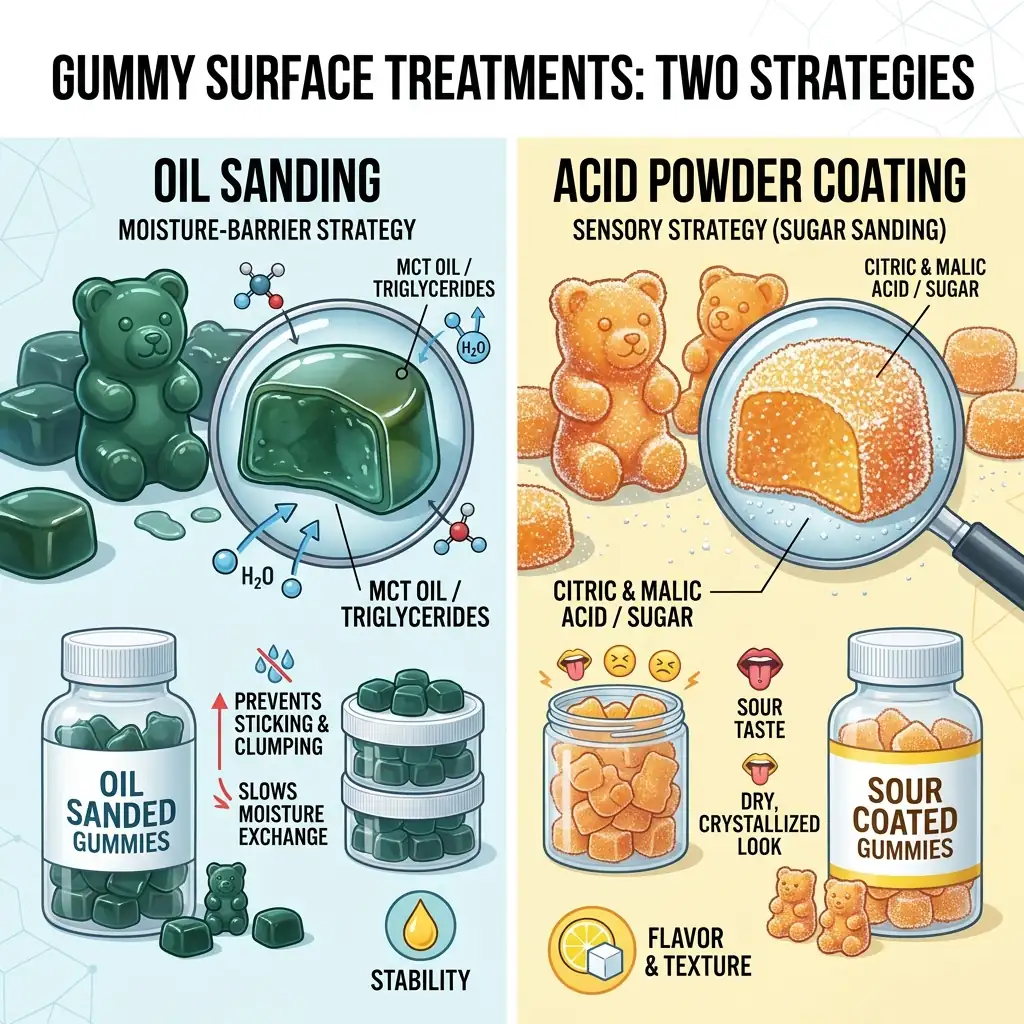
Oil sanding is a moisture-barrier strategy. A thin layer of fractionated oil, typically MCT oil or caprylic/capric triglycerides, coats the gummy surface to reduce surface tack and slow moisture exchange with the environment. It is the most effective option for preventing clumping and sticking during bulk storage and in-bottle stability.
Acid powder coating, often called sugar sanding or sour sanding, is a sensory strategy. It is a dry blend of fine sugar and food acids such as citric acid and malic acid that delivers sour taste and a dry, crystallized look. It does not create a moisture barrier. Because both sugar and food acids are hygroscopic, this coating can actively attract moisture and increase the risk of clumping if drying, water activity, and packaging are not tightly controlled.
If your priority is anti-clumping and long-term stability, oil sanding is lower risk. If your priority is intense sour flavor, you need an acid coating, but you must accept additional controls in Gummy Manufacturing to manage moisture.
Why Moisture Migration and Clumping Matter for Private Label Gummy Brands
Moisture migration happens when water moves from the higher water activity interior of the gummy to the lower water activity surface or to the surrounding air inside the package. For a private label gummy brand, this creates commercial problems: gummies stick together, sugar coating dissolves into a wet syrup layer, flavor and color bleed, and consumer complaints increase.
Three factors drive this risk. First, many actives are hygroscopic, such as vitamin C, magnesium citrate, and certain botanical extracts. Second, pectin and low-sugar systems often finish at higher water activity than gelatin systems. Third, insufficient curing or conditioning leaves excess free water that later migrates to the surface during distribution.
Buyers search for coating comparisons because they see clumping after 2-3 months at 25°C/60% RH or after summer transit. The technical decision after reading this article should be which coating matches your gel system and active loading, what water activity target to specify, and what packaging barrier is required.
What Is Oil Sanding in Gummy Manufacturing?
How Oil Creates a Moisture Barrier
In commercial production, oil sanding occurs after curing and drying. Demolded gummies are transferred to a coating drum or polishing pan. A controlled spray of oil, usually 0.1% to 0.5% of gummy weight, is applied while the drum turns at low speed. The oil spreads into a continuous hydrophobic film that lowers surface energy and physically reduces gummy-to-gummy adhesion.
The logic is simple. Water does not easily cross an oil layer. This slows surface moisture uptake when relative humidity rises in the warehouse or during shipping. It also reduces oxygen contact with the surface, which helps with color stability for natural colors.
Common oils include MCT oil, fractionated coconut oil, and blends with a small percentage of carnauba wax for dry touch. The choice depends on flavor neutrality, vegan claim requirements, and allergen considerations.
When Oil Sanding Is Preferred
Oil sanding is preferred for high-dose or hygroscopic formulas, probiotic and postbiotic concepts that require low water activity, pectin gummies with higher finishing moisture, and any product packed in bulk bags or large-count bottles where pressure increases contact and sticking. It is also preferred for vegan pectin gummies where starch residue from molding must be removed and replaced with a clean anti-stick layer.
From a process view, oil is more forgiving during scale-up. It does not change surface pH and does not interfere with gelatin or pectin gel structure after setting.
What Is Acid Powder / Sugar Sanding Coating?
Composition and Function
Acid powder coating is not a single ingredient. It is a dry blend applied to a slightly tacky gummy surface so crystals adhere. Typical composition is 80% to 95% fine sugar or low-moisture dextrose plus 5% to 20% acid blend. Citric acid gives sharp sourness, malic acid gives longer sour perception, and tartaric or fumaric acid is sometimes used to control hygroscopicity and cost.
The coating serves flavor and visual purposes. It provides immediate sour impact, masks bitterness from minerals or botanicals, and gives a premium crystallized appearance that consumers associate with sour gummies.
Why Acid-Sugar Systems Increase Clumping Risk
Both sugar and food acids attract water. Citric acid is particularly hygroscopic. When relative humidity in the package rises above 60%, the acid-sugar layer starts to dissolve into surface moisture. That creates a concentrated syrup film. That film is sticky and bridges between gummies, leading to clumping.
The acid layer also lowers surface pH to 2.5-3.8. For gelatin systems, prolonged exposure to low pH and moisture can hydrolyze protein and cause softening or syneresis. For pectin systems, surface acid can create uneven texture if pectin was already acid-set during cooking. This is why timing and amount of acid coating matter.
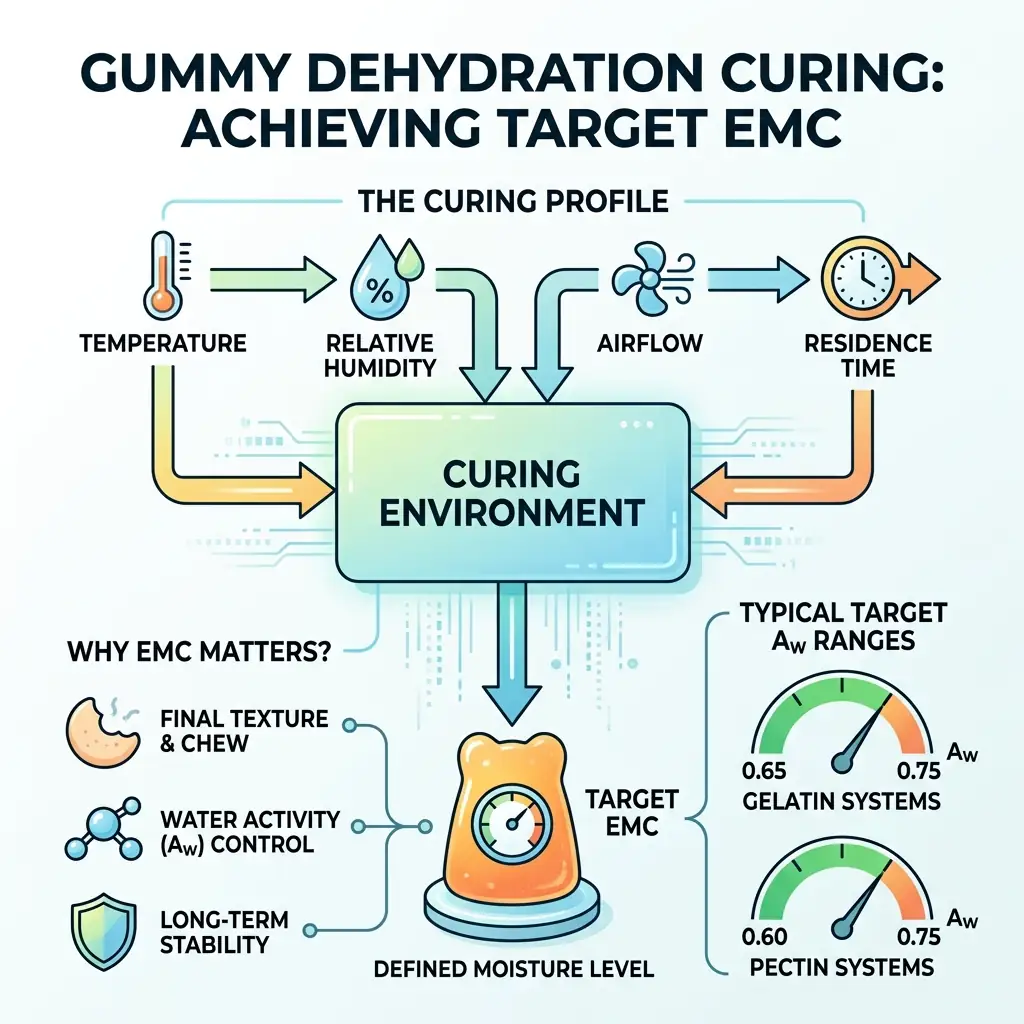
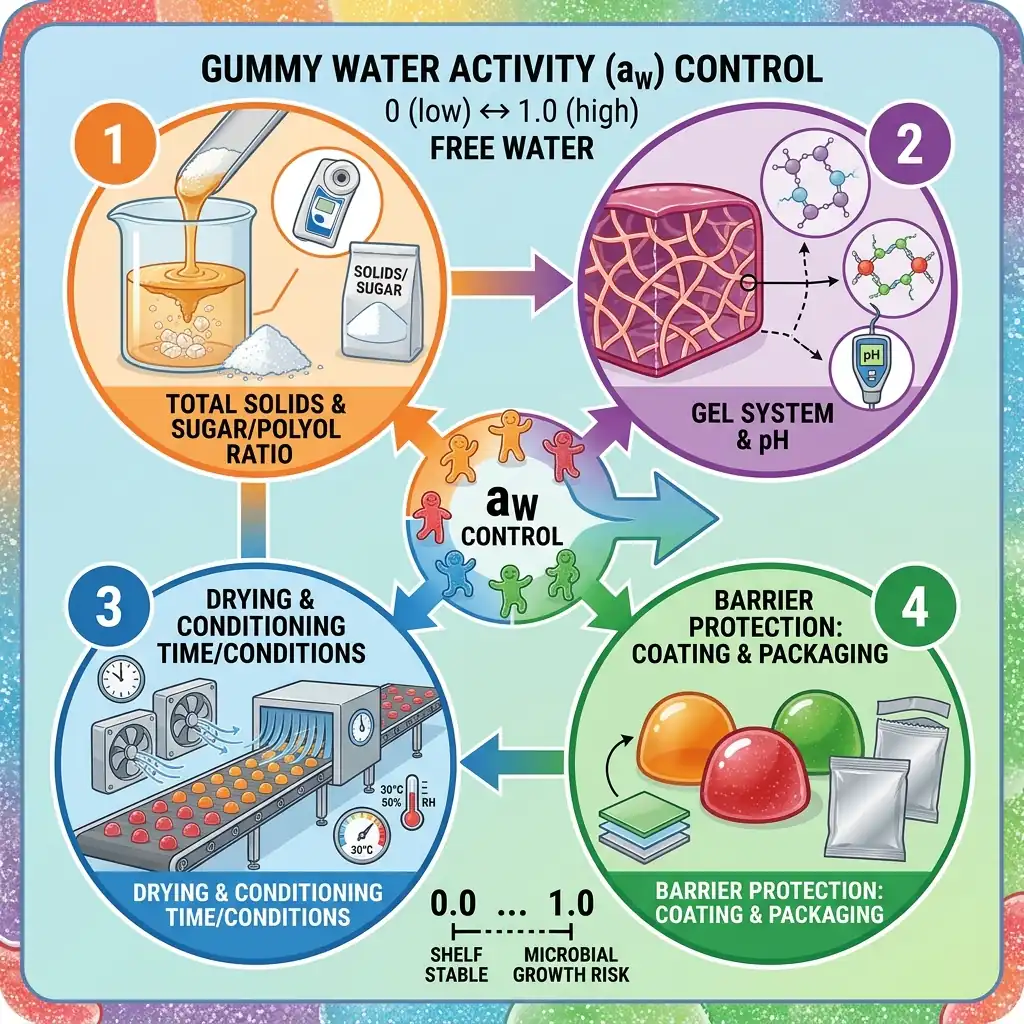
To make acid coating work, the Gummy Manufacturing process must deliver a lower water activity core, typically 0.60-0.68 for gelatin and 0.65-0.72 for pectin, plus extended curing and a moisture-barrier package.
Oil Sanding vs. Acid Powder Coating: Technical Comparison
Use this comparison when reviewing specifications with your manufacturer.
| Criterion | Oil Sanding | Acid Powder / Sugar Sanding |
|---|---|---|
| Primary Purpose | Anti-stick, moisture barrier, polishing | Flavor, sour taste, visual texture |
| Moisture Protection | High. Hydrophobic film slows moisture migration | Low to negative. Hygroscopic, can attract moisture |
| Clumping Prevention | Strong at bulk and finished pack stages | Weak unless aw and packaging are tightly controlled |
| Impact on pH | Neutral, no pH shift | Lowers surface pH, can affect gelatin stability |
| Sensory Impact | Clean, glossy, slight oily touch if overdosed | Sour, dry, crunchy, masks bitter notes |
| Compatibility With Hygroscopic Actives | Better. Reduces surface tack from vitamin C, minerals | Challenging. Risk of dissolution and stickiness increases |
| Packaging Sensitivity | Moderate barrier sufficient, but oil can show on pouch films | Requires high-barrier pouch or bottle with desiccant and induction seal |
| Equipment | Oil spray system, polishing pan, controlled dosing pump | Sanding drum, powder feeder, dedusting unit, humidity-controlled room |
Some brands request dual coating: light oil first, then acid-sugar. This can work, but oil reduces adhesion of sugar crystals. The sequence, spray rate, and drum time must be validated, otherwise you get uneven coating and oil weeping.
How Coating Choice Interacts With Gel System, pH and Water Activity
Gelatin vs. Pectin vs. Starch
Gelatin gummies set by cooling. They tolerate moderate oil and can achieve lower water activity, often 0.60-0.68, after 24-48 hours curing. They are sensitive to surface acid and heat. High acid coating on an under-cured gelatin gummy can cause surface hydrolysis and softening.
Pectin gummies set by pH and soluble solids. High-methoxyl pectin needs pH 3.2-3.6 to set. Low-methoxyl pectin sets with calcium. Pectin systems often finish at higher water activity than gelatin and have a shorter, more tender texture. They benefit more from oil for anti-stick because they are naturally tackier. Acid powder coating must be added only after pH is stable, or texture becomes grainy.
Starch-molded gummies carry residual starch. That starch itself is hygroscopic. Most manufacturers remove starch by air dedusting before coating. Oil replaces starch as the anti-stick layer.
Water Activity Control During Curing
Curing or conditioning is the controlled drying step after depositing. Air temperature, humidity, and time reduce moisture from about 20-24% after cooking to 12-18% finished. This step determines final water activity. If curing is shortened to meet lead time, surface moisture remains high and any coating, especially acid-sugar, will fail quickly.
For clumping prevention, specify finished water activity and moisture content in your specification sheet. Require the manufacturer to measure water activity with a calibrated meter on every batch, not just moisture by loss-on-drying. Water activity correlates better with microbial risk and tackiness.
Manufacturing Process: Where Coating Fits and Why It Fails
For this topic, the relevant stages are depositing, cooling and setting, drying or conditioning, coating, and packaging.
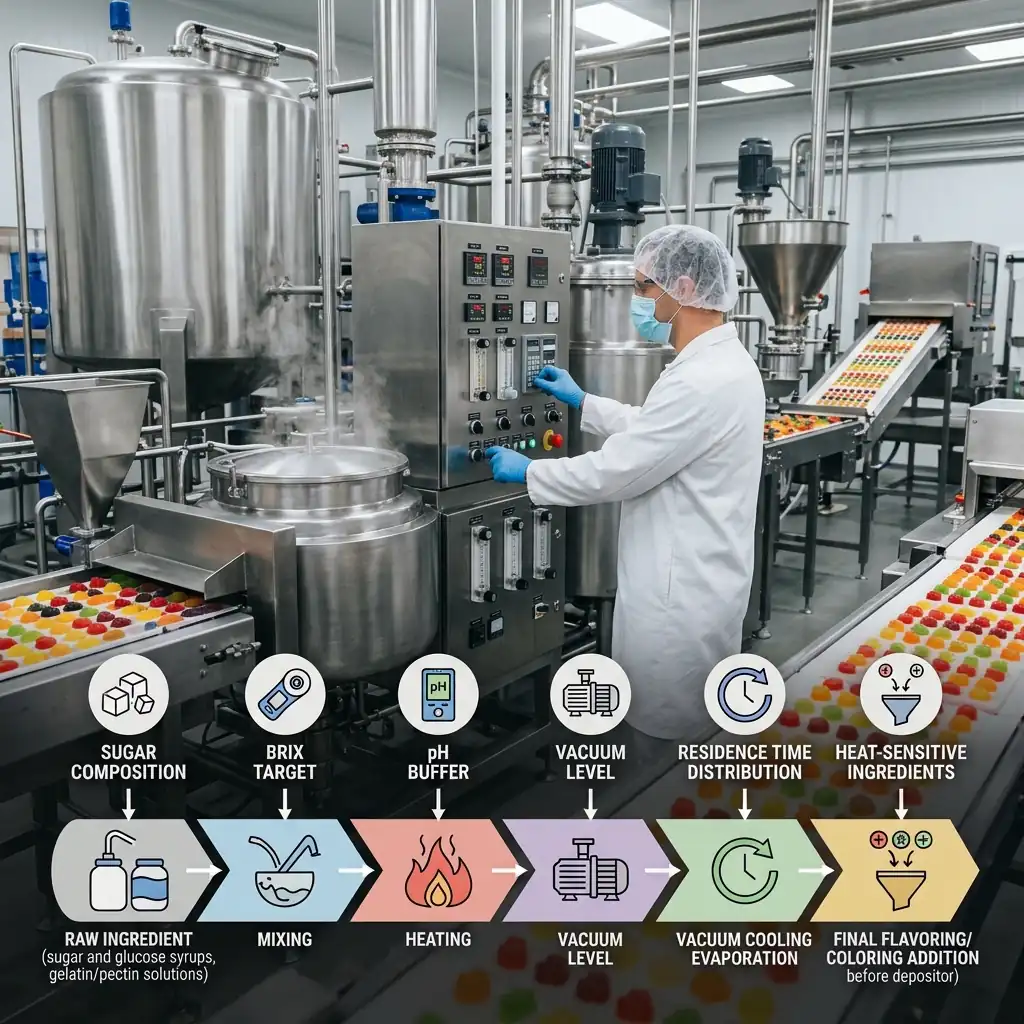
Depositing and cooling: Gummy mass is deposited at 70-85°C depending on gel system. Active ingredients that are heat-sensitive, such as vitamin C or certain botanicals, are added after cooking, at low temperature, to reduce degradation. Uneven depositing creates size variation, which leads to uneven drying.
Drying and conditioning: Trays enter a curing room at 20-25°C and 30-50% RH for 24-72 hours. For pectin, drying is shorter but more sensitive. Under-drying is the most common cause of later clumping. Over-drying creates a hard, rubbery texture and weight loss that affects count per kilogram.
Coating: Oil is sprayed at low volume with continuous tumbling. Acid powder is applied by sprinkling while gummies are slightly tacky, then tumbled briefly and passed through a deduster to remove loose powder. Humidity in the coating room should be below 45% RH for acid coatings. If humidity is higher, powder clumps before it contacts the gummy.
Packaging: After coating, gummies should rest 2-6 hours before packaging to allow surface equilibration. Packaging in high humidity without this rest locks moisture in. For acid-coated gummies, use a high-barrier PET bottle with induction seal or a metalized stand-up pouch with a desiccant sachet if the market allows.
How a Gummy Manufacturer Controls Clumping at Scale
At commercial scale, preventing moisture migration requires controls beyond coating choice.
- Formula design: Reduce hygroscopic load where possible. For example, replace part of citric acid with less hygroscopic malic or fumaric acid, or use coated vitamin C. Balance humectants like glycerin and sorbitol. Excess glycerin improves chew but raises tackiness.
- Process control: Monitor Brix after cooking, depositing temperature, curing time, and final water activity. Keep oil addition rate consistent via peristaltic pump, not manual pouring. For acid coating, keep powder particle size consistent and moisture below 0.3%.
- Environmental control: Maintain coating and packaging rooms at controlled humidity and temperature. Seasonal changes in southern China and other humid regions can double clumping risk if HVAC is not controlled.
- Quality control: Test water activity, texture, surface tack by hand evaluation, and conduct a 7-day open-clump test and accelerated 40°C/75% RH test in intended packaging. Microbiological testing should include yeast and mold, since high water activity supports mold growth before clumping is visible.
- Batch traceability: Record lot numbers for gel, acid, sugar, and oil, plus curing room data. This helps isolate root cause when clumping appears after shipment.
Companies like Shenzhen Gothink Biotech Co., Ltd. run GMP-certified lines with a 100,000-class cleanroom and 10,000-class R&D lab, which allows pilot trials to test oil vs. acid coating on the same formula at small scale before committing to commercial batch size.
Cost, MOQ and Packaging Implications for Private Label Gummy Projects
Oil sanding typically has lower direct material cost and lower operational complexity. Oil usage is low, and no sugar recycle or dedusting loss is involved. MOQ is driven mainly by gel system and mold size, not coating.
Acid powder coating adds cost in three ways: the acid-sugar blend itself, loss during coating and dedusting, and longer curing time plus stricter packaging. Sugar dust also requires more frequent equipment cleaning to avoid cross-contamination between sour and non-sour runs. For a private label gummy project with sour flavor, expect a higher packaging cost if you need a high-barrier pouch or desiccant.
Packaging compatibility matters commercially. Oil can leave visible spots on transparent pouches and affect heat-seal strength if overdosed. Acid powder can abrade pouch films and create pinholes if crystals are too coarse. Discuss oil percentage and powder mesh size with your manufacturer during quotation.
MOQ flexibility depends on whether the manufacturer can run small coating trials. Ask if pilot batches can be coated both ways for stability comparison. This avoids locking into a coating that fails in your target market climate.
How to Evaluate a Gummy Manufacturer for Coating Capability
When evaluating suppliers for products where clumping is a known risk, verify specific capabilities rather than general claims.
- GMP, ISO22000, HACCP, and BRC or FSSC 22000 systems with documented environmental monitoring for coating rooms.
- Water activity and texture testing on every batch, with retained samples under accelerated conditions.
- Ability to run gelatin and pectin systems and explain why they recommend one for your active.
- Oil spray and powder feeding equipment with weight-based control, not manual addition.
- R&D capability to reformulate acid level, humectant level, and coating ratio to reduce clumping without losing sour taste.
- Packaging options including bottle, pouch, and jar, with compatibility testing for oil staining or sugar abrasion.
- Export experience with moisture-barrier documentation and shelf-life validation for humid markets.
- Clear specification review process where you provide active dosage, desired sourness, count per bottle, and target shelf life.
Common Mistakes Buyers Make
- Requesting strong sour coating on a high-dose hygroscopic formula without allowing lower water activity or extended curing. The result is syrup formation in the bottle.
- Choosing pectin for vegan claim but keeping the same curing time and water activity target as gelatin. Pectin often needs different drying and more effective anti-stick coating.
- Overdosing oil to fix clumping caused by under-drying. Oil masks tack temporarily but does not fix high water activity.
- Using coarse sugar crystals for visual effect. Coarse crystals puncture the surface, release interior moisture, and increase clumping later.
- Skipping desiccant or induction seal for cost reasons on acid-coated gummies shipped to humid regions.
Checklist: What to Provide to Your Manufacturer
To get an accurate OEM/ODM quotation and a stable formula, provide:
- Active ingredients, dosage per serving, and any heat sensitivity or hygroscopicity concerns.
- Gel preference: gelatin, pectin, or open to recommendation, plus vegan, halal, or kosher requirements.
- Flavor profile: sour or non-sour, desired sour intensity, sugar or sugar-free.
- Target gummy weight, shape, and count per package.
- Target water activity and shelf life, and destination market climate.
- Packaging format: bottle, pouch, or jar, and whether desiccant is acceptable.
- Any prior clumping or stability issues with existing product or competitor reference.
FAQ
Does oil sanding affect flavor or vegan status of my gummy?
When used at 0.1% to 0.5%, MCT oil has minimal flavor impact. For vegan claims, choose 100% MCT or coconut oil without beeswax. If carnauba wax is added for dry touch, confirm its percentage and vegan certification. Always ask for allergen and ingredient statement documentation.
Can I have sour taste without acid powder coating to avoid clumping?
Yes. Sourness can be incorporated into the gummy mass itself during cooking by adding acid solution at the end of the process. The surface remains oil-coated for anti-clumping, while sourness is internal. The sour impact is less immediate than sanded gummies, but stability is much better. This is a common solution for vitamin C or mineral gummies where clumping risk is high.
What water activity target should I specify to prevent clumping?
For gelatin gummies, aim for 0.60-0.68 finished. For pectin gummies, 0.65-0.72 is typical but requires good oil barrier and low-humidity packaging. Above 0.75, both gelatin and pectin gummies will show higher tack and yeast/mold risk. Your manufacturer should measure and record this on the certificate of analysis.
Why do my acid-coated gummies clump only in summer?
Acid-sugar coatings are moisture-sensitive. When warehouse or transit temperature and humidity rise, the coating absorbs moisture and dissolves. The syrup layer bridges gummies. Fix this by lowering core water activity, reducing citric acid in the blend, switching part to malic acid, adding a light internal oil pre-coat, and upgrading to high-barrier packaging with induction seal and desiccant.
Which coating is better for high-dose vitamin C or magnesium gummies?
Oil sanding is generally lower risk. Vitamin C and magnesium salts are hygroscopic and increase surface moisture. Adding a hygroscopic acid coating compounds the problem. If you need sour flavor for taste masking, consider internal acid plus oil coating, or a dual system validated through accelerated stability testing.
How should I test for clumping before placing a large OEM order?
Request pilot batches with both coating options if applicable. Test in intended commercial packaging under 25°C/60% RH and 40°C/75% RH for 1, 2, and 3 months. Check for tack, clumping, sugar dissolution, weight gain, and water activity change. Also conduct a bulk-bag test: store 5 kg in a PE liner at 30°C for 48 hours and evaluate flowability and sticking.
Does coating affect regulatory documentation?
Yes. Oil and acid coating ingredients must appear in the ingredient list and specification sheet. The type and amount of oil affects allergen and processing aid declarations in some markets. Acid coating affects pH and may affect preservative efficacy assessment. Provide your target market to your manufacturer so documentation reflects local labeling rules.
Next Step: Selecting the Right Coating for Your Formula
Oil sanding and acid powder coating solve different problems. Oil prevents moisture migration and clumping. Acid powder delivers sour flavor and visual appeal but increases moisture sensitivity. The right choice depends on active loading, gel system, target water activity, and packaging barrier for your sales region.
If you are developing a new private label gummy where clumping is a concern, share your active dosage, desired taste, gel preference, and shelf-life target. A capable manufacturer can run side-by-side curing and coating trials, measure water activity, and recommend a coating ratio and packaging solution that balances sensory and stability.
Review formulation options and manufacturing process controls before finalizing your specification, and request an OEM/ODM quotation that includes water activity, coating percentage, and accelerated stability data in the proposed package.
Jack Luo|Senior Technical Advisor, Nutrition Research Center Representing Gothink Biology, a GMP-certified dietary supplement manufacturer based in Shenzhen, China.
Explore more: gummy formulation knowledge center and manufacturing process insights